 Goldendoodle
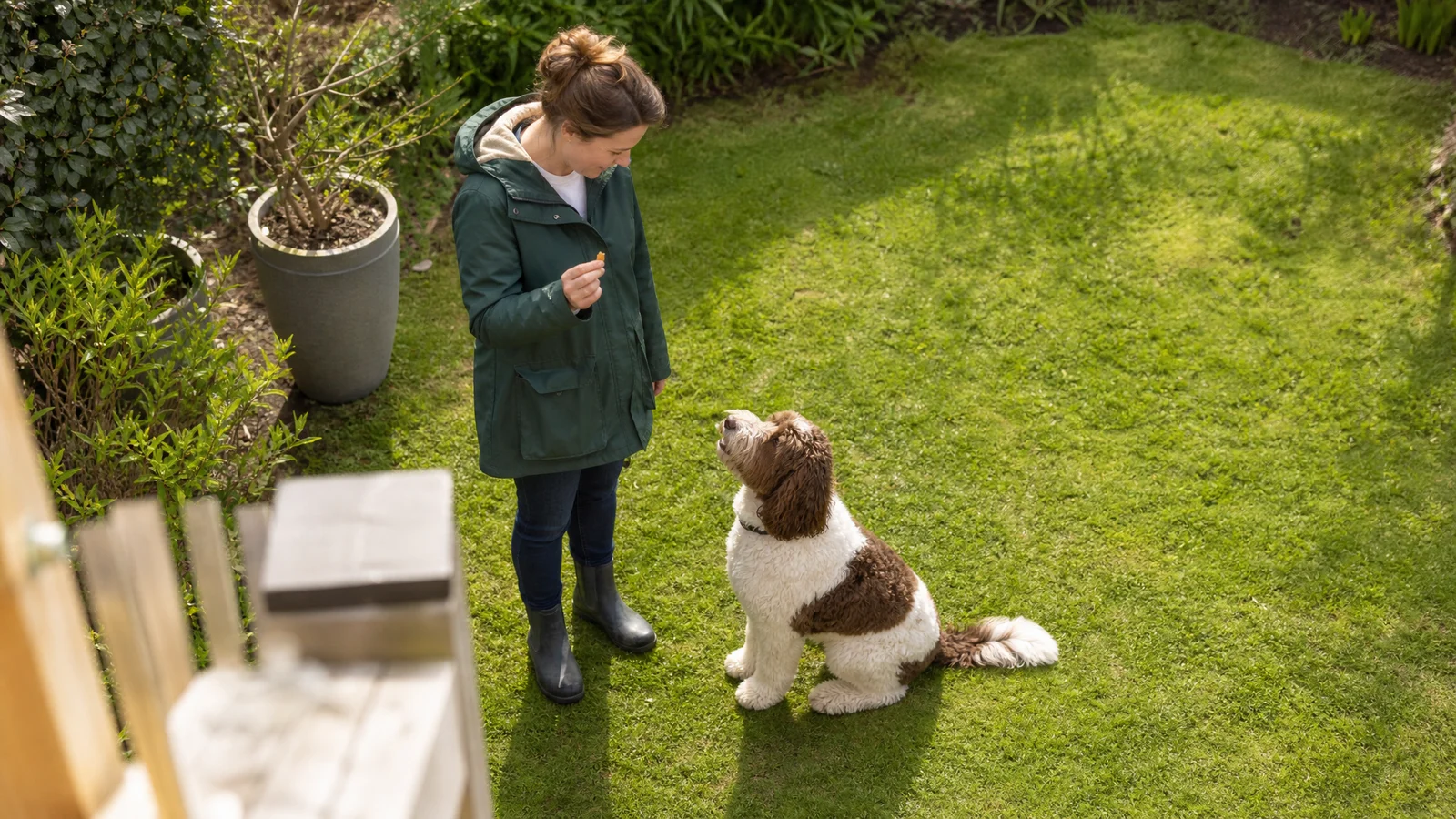
You will hear that a Goldendoodle practically trains without help, and the first week with one makes the claim easy to believe. The first cues land quickly, the tail never stops, and training starts to look like a formality.
Half of that is true. The half that is not tends to appear later, at the park, around company, or once the teenage months begin. Goldendoodles are often quick learners, but a cue your dog has learned and a cue your dog will answer anywhere are different achievements, and only the second keeps a household calm. Which one you are getting decides how much of a plan you need.
This page sorts out where the easy reputation comes from, what the stubborn label usually hides, and how to build cues that hold up, with a few short answers at the end.
Why Goldendoodles Get Called Easy to Train
The reputation has real roots, and they sit in the two breeds behind the cross. Both parents are known as willing students, which is why so many people expect a Goldendoodle to arrive cooperative.
The Golden Retriever side has the clearer paper trail. On the Golden Retriever's AKC profile, the breed is described as outgoing, loyal and eager to do your bidding, which makes them very easy to train, and the trainability scale rates them 5 of 5, the end labeled Eager to Please.
The Poodle side brings its own reputation for quick intelligence and for pleasing the person in front of it when training stays fun. It also brings a mind that wants something to do, so a Goldendoodle may show up with plenty of ability and just as much appetite for tasks.
Notice the word may. A Goldendoodle is a cross with no breed standard to pin down what any one dog inherits, so a puppy can lean toward the retriever's easy affection while a littermate leans toward the Poodle's busy mind. You learn which mix you have by training the dog in front of you, not by reading the label on the litter.
What People Usually Mean by Easy
It also helps to separate what people mean by easy. Some mean a dog who picks up a new cue after a handful of treats. Others mean a dog who wants to please, and others mean a dog whose cues still work with a squirrel in view. A Goldendoodle can score high on the first two and still need work on the third, which is how a puppy who looks like a star early on can leave an owner puzzled later.
That is the honest version of easy to train: a head start rather than a guarantee. The rest of this page is about where the head start runs out, beginning with a side of quick learning that surprises people.
A Quick Study Picks Up the Wrong Lessons Too
A dog who learns fast learns everything fast, including lessons you never meant to teach. A Goldendoodle who loves company will find that attention from people is often the best thing that happens all day, and anything that earns it gets repeated.
Our habit is to ask what a behavior is earning before asking what the dog is thinking, and the answer is often a payment nobody decided to make. These are the usual suspects:
- Jumping up. Hands reaching down, eye contact and even a push away all hand the bouncing dog the attention they came for.
- Grabbing a sock: a chase across the living room turns a stolen sock into the best game of the afternoon, and the grab becomes more likely next time.
- Following the leash toward people pays off whenever you let the pull carry you over to say hello, which teaches that pulling is how introductions happen.
In the moment, the simplest move is to stop paying for the wrong version. Turn away, stand still or hand over a toy, and give your attention to the very next moment with four paws on the floor. Quick learners notice the change fast, and that same trait now works for you.
None of this makes your dog willful. It means the lessons are working, just not the ones on your list.
Decide ahead of time what you will pay for, such as four paws on the floor or a loose leash on the way to a greeting, and arrange the moment so the wanted behavior is the one that earns the hello. Our guide to polite Goldendoodle greetings walks through that exchange with visitors, and the same thinking carries over to every walk.
Training a Cue to Hold Up Away From Home
Quick learning has a catch on the good side too. A dog learns a cue as a whole picture: the room, the light, your posture, the treat pouch and the absence of anything better to do. Change enough of that picture and the cue can look brand new, which is easy to mistake for stubbornness.
The fix is a ladder, not more repetition. Start in a quiet space with no distractions, and once the basics are solid, bring in small distractions such as toys, other pets and people. After that, move to places like the yard or driveway, and finally to public spaces such as a park or a pet supply store. That order matches the progression in AAHA's training tips, and it works because every rung changes the picture only a little.
Turning One Dial at a Time
Raise one thing at a time. When a cue falls apart on a new rung, you asked for too much at once, and the answer is to drop back a rung instead of repeating the cue louder. From where we sit, these are the dials worth turning one by one:
- Place. A new room, a new yard or a new street each count as a fresh picture, even when the cue and the treat stay the same.
- Company: add a family member before a stranger, and a stranger standing still before a visitor who walks up to say hello.
- Distance from the excitement can start wide and shrink slowly, because a dog far from a squirrel is solving a different problem than one close to it.
- How Long You Ask: a cue held for a moment is easier than one held while the world goes by, so lengthen it last.
Move up when the cue comes smoothly several times in a row, with no pause and no glance around first. Each miss points at the last thing you changed. A Goldendoodle who answers promptly in the living room and drifts at the park has not decided to ignore you. The picture shifted before the habit was ready.
Training With Rewards a Goldendoodle Values
Every rung of that ladder assumes your dog still wants what you are paying. A friendly Goldendoodle may find people and other dogs more fascinating than any treat on a busy sidewalk, so your reward is competing with a crowd, and a dull one loses.
Behavior staff at the Dumb Friends League explain the job in their positive reinforcement explainer: the trick is to find reinforcement valuable enough for the learner to stay engaged. Their reminder that certain breeds are not more defiant than others, though they often have different needs, skills, intelligence and activity levels, is worth keeping in mind whenever a Goldendoodle drifts.
Finding the Reward That Wins
So test your rewards instead of assuming. Offer a few options, such as small soft treats, a quick game with a favorite toy or an enthusiastic word and a scratch, and watch which one makes your dog lean in. The winner changes with the setting, so keep a better prize in reserve for the hardest places and spend the everyday ones at home.
Variety helps too. A treat that works every time can fade into background noise, so rotate between food, a short game and warm praise, and let the rotation surprise your dog a little. A playful Goldendoodle may value a quick tug or a tossed toy more than another biscuit once the cue is solid.
This is also where the stubborn label usually loses its grip. A Goldendoodle who walks away from a dry biscuit beside a playground is making a sensible trade, not a statement about you. Upgrade the pay, shrink the distance and ask again before you decide anything about the dog's character.
Training Through a Goldendoodle's Teenage Months
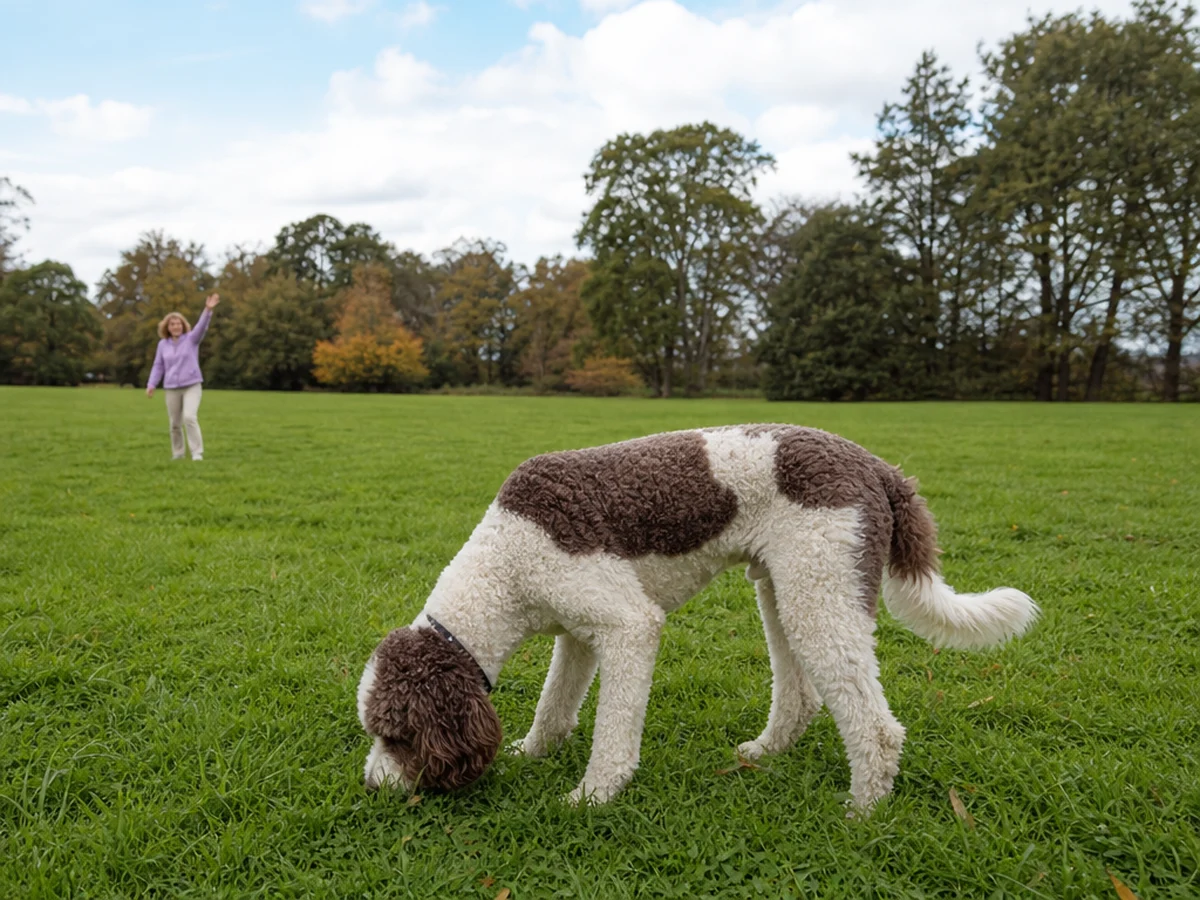
Even a well-built ladder gets shaken when adolescence arrives. A puppy who sailed through the early lessons can start to seem like a different dog, and that is a normal stretch rather than proof you trained badly.
Here is the familiar picture, as laid out in Cornell's teenage years guide: puppies seem to have forgotten many of the good habits they used to have, and they may ignore you when you call. Most puppies reach adolescence around 6 months old, though it can start later. Adolescence generally ends around 18 months of age, but it can go until 2 years old depending on the breed or dog.
Where a cue is shaky, set your dog up to succeed. A leash or a fenced yard keeps a missed recall from turning into a game of chase, and chase is a very good reward for the wrong thing. Treat these months as a refresher course. Go back to the quieter rungs of the ladder, keep lessons short, pay generously and expect the cue that was reliable at the park to need rebuilding there. The earlier lessons are still in there, even when they are hard to see.
Resist the urge to read this stretch as a verdict. Our Goldendoodle puppy training timeline shows where these months sit in the larger picture, and your regular veterinary visits are a good place to mention anything that seems like more than ordinary adolescent noise.
What Owners Still Ask About Trainability
Labels settle nothing in the moment, so these answers stay with the small decisions that follow from them, like what to do right after a cue goes unanswered or how to read a dog who greets every stranger before you.
Should I repeat a cue my dog ignored?
Say it once. A cue repeated until it works teaches your dog that the first few tries do not count, and a missed cue usually means the picture changed. Step closer, lower the distraction or make the request easier, then ask once and pay the moment your dog answers.
Does a slow start mean my dog is dull?
No. Dogs differ in how quickly they pick up a given skill, and a skill that clicks late can still be built. Smaller steps and better rewards usually matter more than waiting for a switch to flip. If a dog who was learning well suddenly stops responding, mention the change at your next regular veterinary visit.
Can a quick learner get bored with training?
Yes. A fast learner finishes a lesson quickly and then needs something new to think about, which is why one extra cue or a nose game beats a longer session of the same drill. Our Goldendoodle brain games collect ideas that fit around everyday routines.
Is it bad that my dog loves strangers?
Not at all. Warm greetings are part of the friendly nature many Goldendoodles show, and they say little about the bond with you. The practical task is making you the source of the best rewards, so practice cues near friendly people and pay well for a dog who checks in with you first.
Easy Dogs Are Easy to Stop Teaching
Underneath all of those answers sits one more risk, and it hides inside everything that makes a Goldendoodle appealing. The first wins arrive so fast that they are easy to mistake for the finish, and a cue that works in the kitchen gets quietly filed under trained.
A quick learner repays steady asking. One more room, one more visitor and one more tempting smell are all within reach of a capable mind, and that is what smart really means here: the ability is there, and it grows into habits only as far as the asking goes. Stubborn is rarely the right word for a dog who was simply never asked the harder question.
The harder stretches are where an e-book earns its place, and ours for Goldendoodle owners works through every skill your dog will need, thoroughly and without jargon, free to anyone who joins the list on this site.
 Training basicsAre Goldendoodles Good With Kids?
 Training basicsIs a Goldendoodle the Right Dog for You? What Training Takes
 Training basicsHow to Choose a Goldendoodle Trainer
