 Goldendoodle
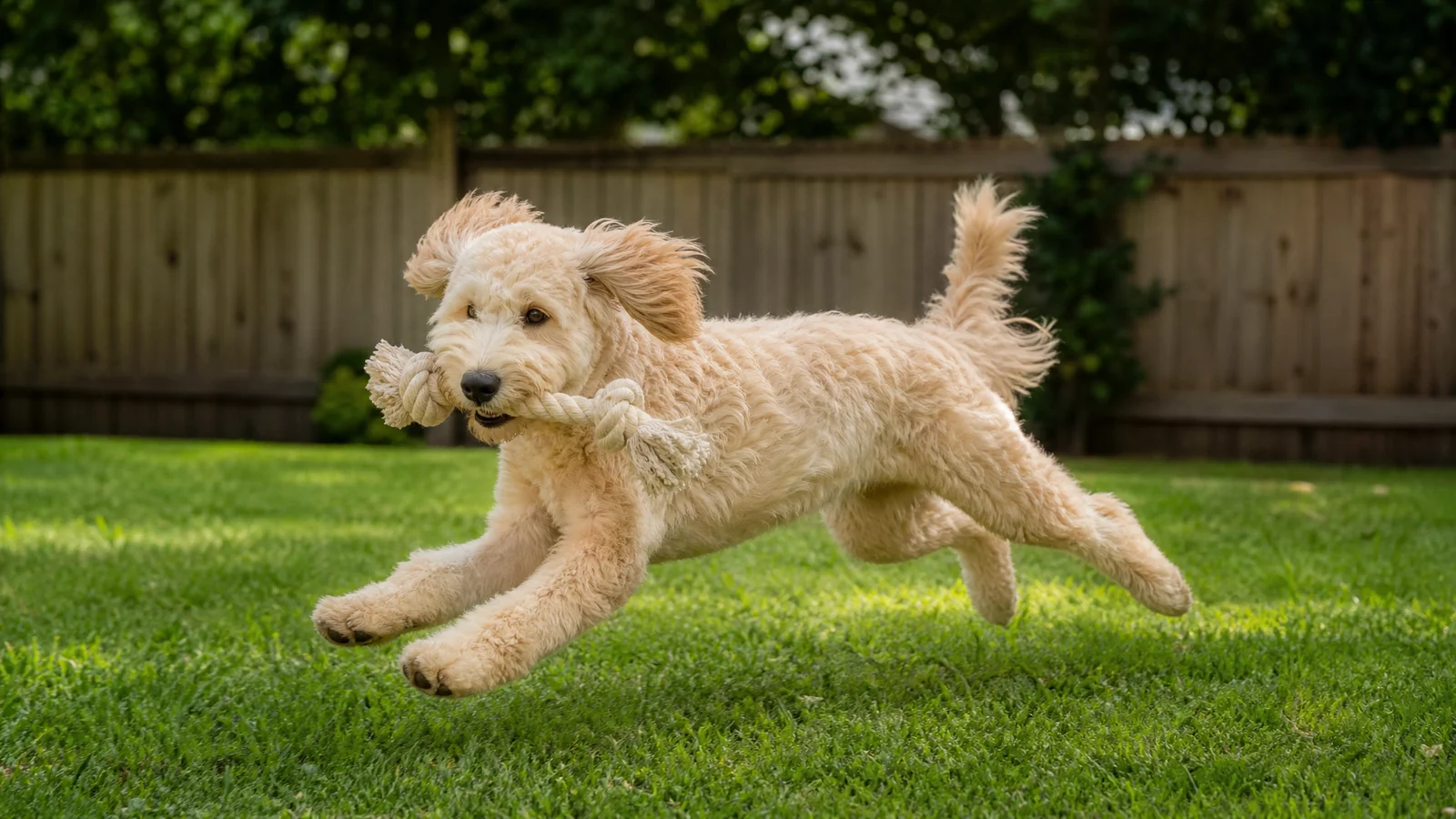
The bounce and the wide-open hello that charmed everyone at four months are still there at nine, only now they arrive on a dog with longer legs and far more momentum. That mismatch between a sweet nature and a growing body is what adolescence feels like in a Goldendoodle.
Cues you were proud of can start to wobble. A sit needs a second request, a recall works in the kitchen but not at the park, and a calm greeting turns into a leap. Nothing is broken. The wobble has an ordinary cause, and it responds to patient, reward-based practice.
This guide explains how long adolescence tends to last, where manners slip first, how to practice so skills hold, and how to hand out freedom as your dog earns it.
How Long Goldendoodle Adolescence Really Lasts
The ordinary cause is timing and wiring, and neither follows a calendar. Treat the whole span as one long season instead of a single bad month.
What the Ranges Say
A Goldendoodle is a cross, so the general ranges below describe dogs in general, not a Goldendoodle calendar, and your own dog's behavior is a better clock than any chart.
- Timing: Most puppies reach adolescence around six months, though it can start later, and it generally ends near eighteen months but can last until two years depending on the breed or the dog.
- Wiring: The brain region for self-control is still developing during that stretch, so teenagers are often more impulsive than adults and may overreact to situations (Cornell's teenage-years guide).
Why the Season Helps
A Goldendoodle may carry the eager, people-loving streak of both parent breeds, and if yours does, that helps, because a dog who enjoys working with you is easier to coach through a messy stretch. A wobble at fourteen months is no surprise inside the season, and our Goldendoodle training timeline shows how each skill builds from the first weeks onward, so you can see where this season fits.
Where Good Manners Wobble First
Knowing the window helps, but what you will actually notice is the moment a manner slips. The first cracks tend to show up wherever self-control carries the most weight: a sit that stalls when a neighbor walks by, a wait at the door that lasts half as long, a hello that turns from a wiggle into a leap, and a recall that sailed across the yard but now loses to an interesting smell.
Veterinary teams know this stretch well. The time from about six months to three years can be the most challenging for owners as a dog matures socially and behaviorally, as the AAHA life-stage checklist describes it. That is a long window, which is why one clever fix rarely settles everything and steady practice does.
A Goldendoodle with the open, friendly outlook of both parent breeds has even more reasons to drop a cue mid-sentence, because everyone and everything is worth a look. Each leap at a visitor that earns attention teaches that jumping pays, so greetings usually deserve your earliest attention.
Greetings show it best: the person at the other end of every hello part of your training plan. Before the door opens, ask who is on the other side: a toddler, an older relative, a delivery driver with full arms. For those arrivals, put your dog on a leash or behind the gate, then pay for paws on the floor once the greeting settles. Your Goldendoodle still gets the party, and everyone walks away unbruised.
Short Sessions That Work Through Adolescence
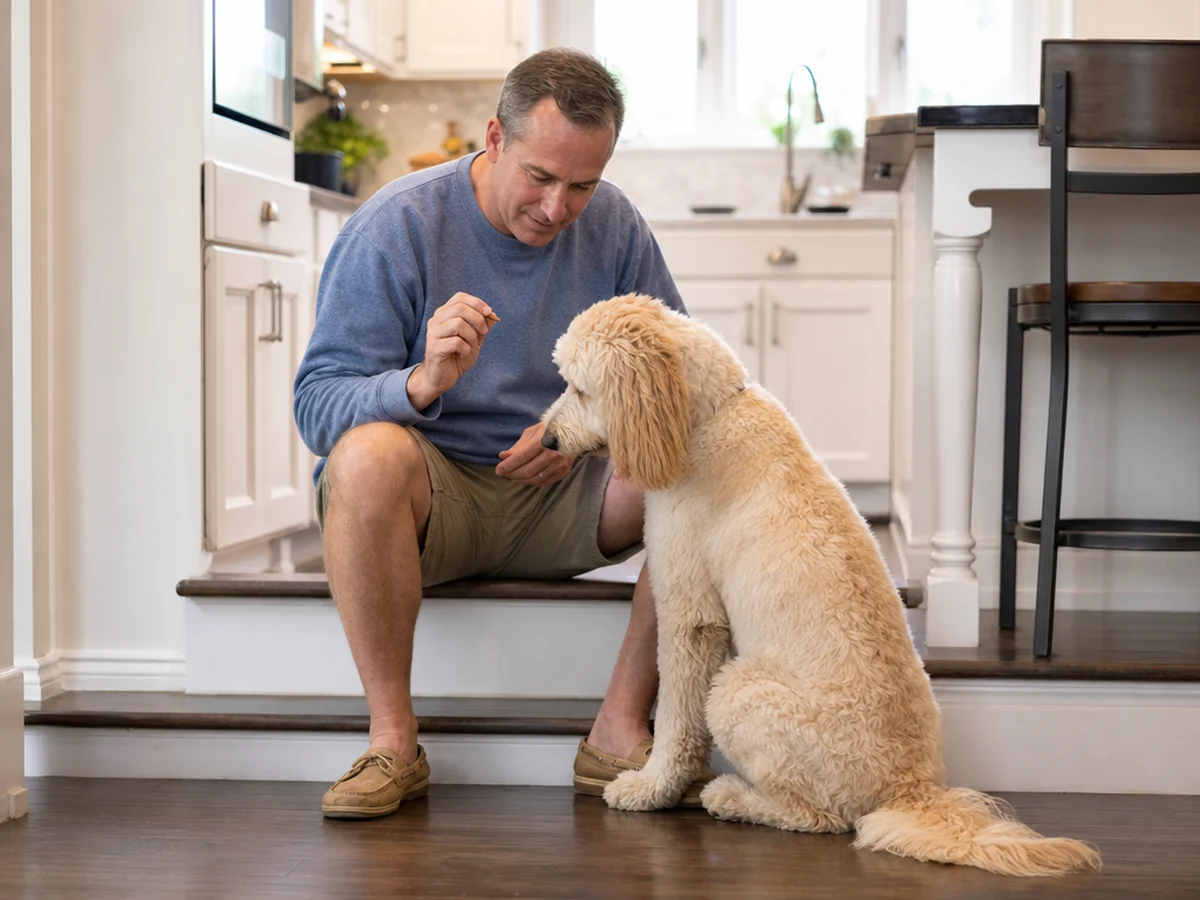
Because the wobble comes from an unfinished brain and a bigger body, the fix is more clarity, not more pressure. Dogs at this stage are more capable of learning commands and tricks than in earlier phases, and training them during adolescence is crucial, as laid out in Texas A&M's puppy timeline. So the goal is not to wait out the teen months but to use them, in sessions short enough that attention never runs dry.
When a cue goes soft, work through these four steps in order. They keep practice winnable, which matters more than speed while your dog's self-control is still catching up.
- Lower the Difficulty First: Ask for the cue where it is easiest, such as a quiet room, and pay well so your dog remembers the cue is worth doing.
- Raise the value of the pay. A teenager with a lot on their mind may shrug at an everyday treat, so bring out something better, or a quick game of tug, for the cue that matters most this week.
- Add one distraction at a time. Begin with a family member walking through, then try a new room, then the yard, and step up only when your dog handles the current level comfortably.
- Quit while it is still fun: End on a win after a few minutes, because short, successful rounds build a dog who comes back to the next session keen, while a long slog ends in frustration.
Expect to repeat the early steps often, because that repetition is the work, not a sign you have failed. For a dog who struggles to settle between rounds, our excitability and settling guide goes deeper, and each step you add here is one more place your dog gets to be right.
Widening a Goldendoodle's World, One Freedom at a Time
Practice rebuilds skills, but freedom decides when they get tested. A teenager's world grows every week, with longer walks, more visitors and more of the house, and each new privilege is an exam your dog may not have studied for. We like to hand freedom out in small, boring pieces.
A long line on walks, a fenced yard with you standing in it and a gate across the kitchen are not punishments. They keep a young dog from rehearsing the wrong answer while the right one is still new, and that matters because whatever gets rehearsed is what shows up next.
Before you widen the circle, check each of these three signs against the freedom you have in mind. A freedom is ready when its matching sign is a clear yes.
- Recall holds near distractions. Your dog turns to you at the first call in a place as busy as the one you plan to use, which is when a long line can come off. Our Goldendoodle recall training guide walks through the method.
- Walks stay loose-leash: The leash stays slack on your usual route, so a longer lead or a new neighborhood is a fair next step. Follow leash training a Goldendoodle if this one is still shaky.
- Greetings stay polite with a guest at the door: paws stay low and your dog settles within moments, so the gate can open without a leap.
If one sign is still a no, keep that freedom on a leash, a long line or behind the gate a while longer, and pay your dog for every step toward yes. Nothing about this is slow for its own sake: each freedom you hold back is one your dog cannot yet get wrong.
Smaller Calls Adolescence Asks You to Make
Some choices sit outside any single cue: how long to lean on gates, what a bad week means and whether another class is worth it. These three are worth settling before they turn into daily debates.
Do we still need baby gates and a crate?
For now, yes, whenever nobody can watch. A teenager's urge to chew or grab can outrun their self-control, so a gate or a crate during unsupervised stretches stops habits you would later have to undo. Treat both as temporary tools and retire each one gradually, once your dog has shown good judgment around it day after day. Our crate training guide covers the setup.
Does a rough week mean training failed?
Rarely. Adolescence is uneven, and one bad week often says more about distraction, excitement or a missing rung on the practice ladder than about your dog's character. Compare several weeks side by side: if easy cues are returning faster, you are on track. A sudden, strange change in behavior is the exception, so keep regular veterinary visits on the calendar and call your vet sooner if something looks off.
Is another class worth the time?
It can be. A reward-based class gives you real distractions, other dogs and a trainer who can spot timing slips you cannot see yourself. Visit once without your dog if you can, and choose an instructor who teaches with treats and play rather than pressure.
A Goldendoodle's Joy in a Bigger Body
Nothing about adolescence makes a Goldendoodle less delighted to see people. What changes is the force behind the delight: a leap that was a funny surprise from a small puppy can knock over a child or a neighbor once your dog has put on size and strength.
Adolescence is only one chapter of a long job. Our free Goldendoodle e-book handles the other chapters too, covering what a dog needs to learn at every age, and it reads like a patient coach rather than a textbook.
 BehaviorTraining an Older or Adopted Goldendoodle
 Training basicsHow to Teach a Goldendoodle to Come When Called
 Puppy trainingGoldendoodle Puppy: What to Expect and How to Start Training
