 Goldendoodle
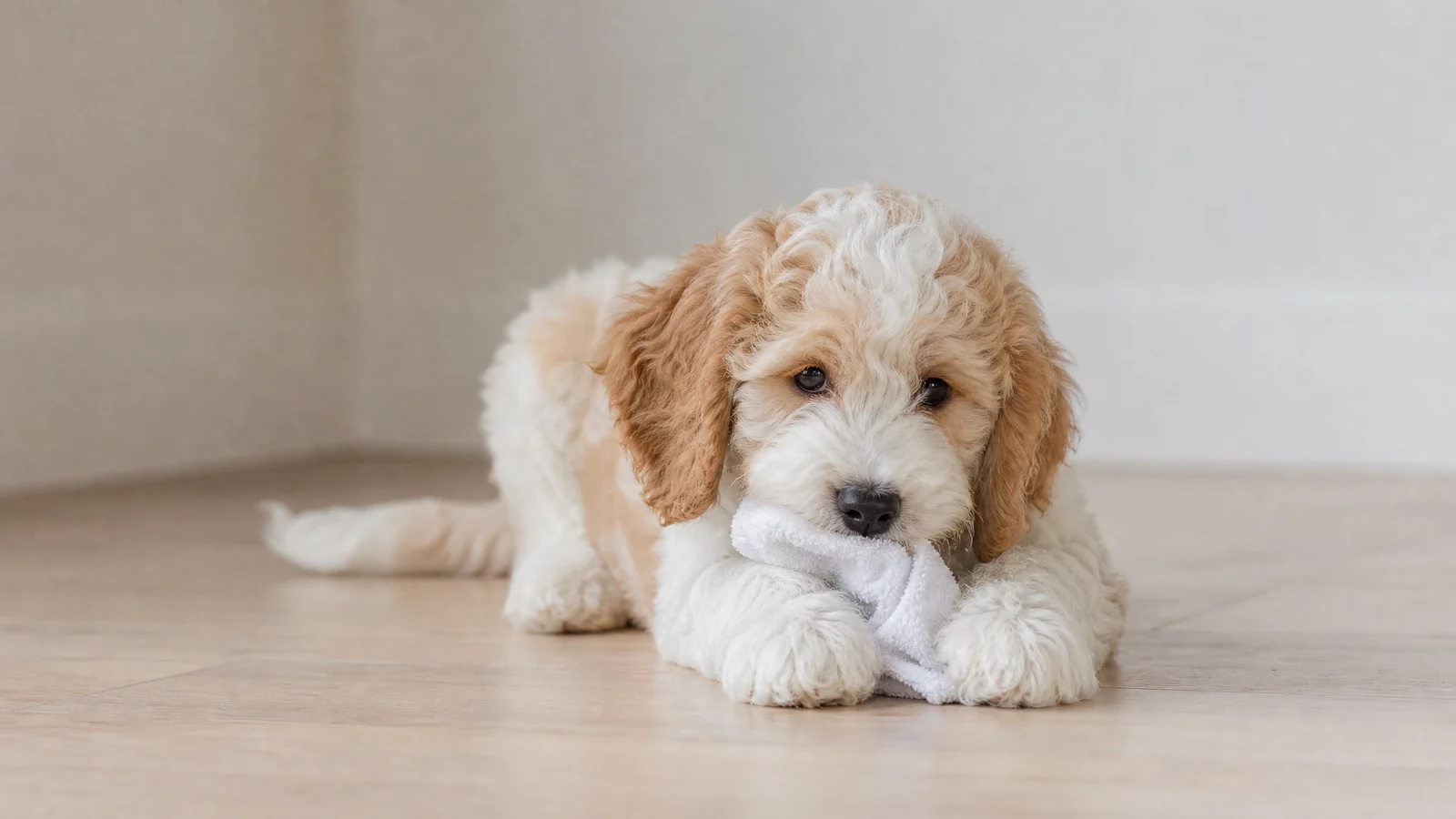
A Goldendoodle puppy greets the world with a wagging body and an open mouth, and between three and four months that mouth is busier than it has ever been. Adult teeth are arriving, and your hands, sleeves and shoelaces are all easy to reach.
Two separate things are driving the chewing and the grabbing, and each has a plain, reward-based answer. Sore gums need something good to chew, while a sociable mouth needs a better game than your wrist. Neither one calls for scolding.
Below, you'll find what teething actually changes at this age, the chews worth keeping around, a calm routine for the moments when teeth touch skin, and answers to a few side questions.
Teething Is Only Half of a Goldendoodle's Busy Mouth
Before choosing a fix, it helps to know which half of the mouth you are dealing with. Teething is the physical half: adult teeth begin to grow in when a puppy is 12 to 16 weeks old, and the gums may be a bit sore while they do.
Sore Gums and the Teething Timeline
Biting tends to peak around 13 weeks, and all the adult teeth are typically in place by 7 months. That puts your puppy inside the busiest part of a months-long process, so expect the chewing to keep going well past this month. It also means the sore-gum chewing is real rather than a bad habit, and it deserves an outlet instead of a lecture. Our puppy training timeline shows where this stage sits in the bigger picture.
The Social Half of the Mouth
The other half is social. The Golden Retriever and Poodle sides of the family are both described as playful and people-oriented, so a Goldendoodle puppy may well treat the people in the house as the best playmates available. A hand that waves, a sleeve that swings and a pant leg that flaps all look like invitations.
Telling the halves apart changes what you do next. A puppy who gnaws a chair leg or a knuckle in a quiet moment is most likely after pressure on sore gums, so a chew solves it. A puppy who lunges at moving sleeves in the middle of a game wants company, so a better game solves it.
Chews That Give Sore Gums Something Good to Do
Sore gums are the easier half to answer, because the fix is an object instead of a skill. Puppies teethe for about six months, and the process usually creates some discomfort that chewing can ease. If your puppy is teething, try freezing a rubber toy: the cold rubber will soothe their gums, but stay close so no pieces get chewed off and swallowed.
Six months is a long time to leave a puppy guessing, so build a small toy box before your puppy builds one from your belongings. A mix of textures gives you something to offer at every mood:
- A soft rubber toy that fits in the freezer, so a cold one is always ready when the gums are at their worst.
- A rope or fabric toy for the puppy who loves to shake and tug, retired the moment threads start coming loose.
- A stuffed toy that looks nothing like anything in your closet, so a sock never counts as fair game.
Keep only a few out at a time and rotate them every few days, because a toy that has been out of sight comes back feeling new. Never hand over an old shoe as a toy, since a puppy cannot tell your old sneaker from your new one.
On days when you cannot watch, make the puppy's world smaller. A gate, a pen or a short stay in the crate keeps cords and shoes out of reach, as long as the crate stays a calm place and never a punishment. Our guide to crate training a Goldendoodle covers building that habit, and our trade-up chew games help a puppy who already prefers shoes.
When Goldendoodle Teeth Land on Skin
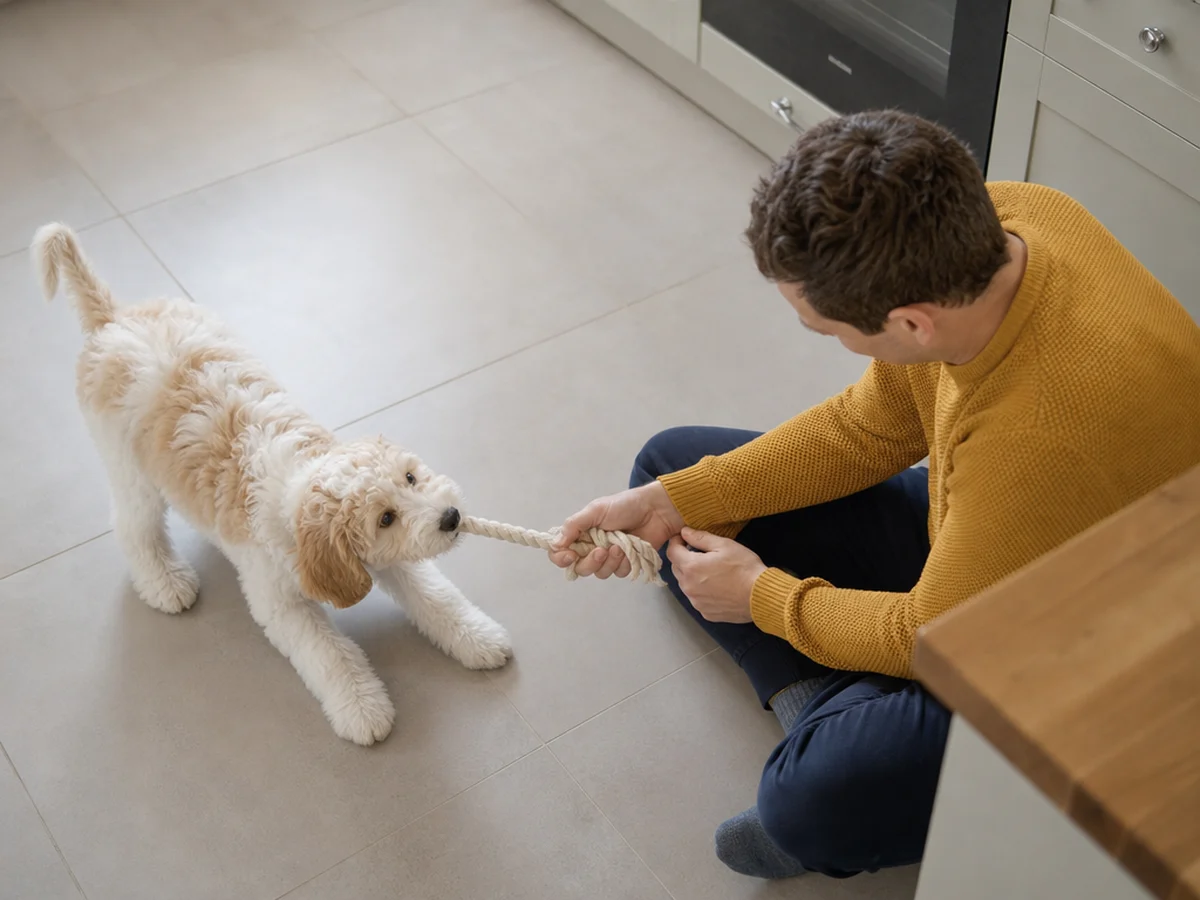
A good chew handles the gums, but it does nothing for a puppy who has already found your hand. That is the moment to teach, because teaching bite inhibition, which means showing a puppy how to use their mouth gently, is key to preventing problem behavior as they grow up. A Goldendoodle puppy who loves company will bring that mouth to every hello, so what you teach now goes along with every visitor later.
Teeth on skin will happen anyway, so a plan for those moments matters more than a rule against them. Here is the routine we suggest, with the reason behind each step:
- Keep a toy in your hand or pocket before play starts, so the better option is already there at the moment your puppy decides what to grab.
- When teeth find a sleeve or a finger, go still instead of pulling away, because a flapping sleeve or a jerking hand makes the grab more fun.
- Offer the toy and praise the second teeth are on it, then keep playing, since a puppy learns faster from what earns the game than from what ends it.
- If the teeth go back to skin, end the game by stepping out of reach, behind a gate if you have one, and give your puppy a short break before you return with the toy in hand.
Run the routine the same way each time and expect your puppy to test it, since teeth and excitement arrive faster than manners do. The game always stops when teeth touch skin and always comes back when they touch a toy, and that contrast only teaches when the fun on the other side of the break is worth returning for.
Trade Instead of Prying
When your puppy grabs something that is not a toy, show a tasty treat, let the item drop, praise, and hand back something that is allowed. Pulling things out of a puppy's mouth can lead a puppy to guard the prize or run off with it, and chasing a puppy who has bolted only makes the game better. Call them to you and pay with a treat instead. Our Goldendoodle biting guide carries the full soft-mouth routine further.
Teething Questions Beyond the Chew Toy
The routine above covers the main moments, but a few side situations deserve their own answers. These are the ones that matter most at this age, and each has a short, practical reply.
Is fetch a good outlet for a mouthy puppy?
Yes, in short and gentle rounds. Poodles are known for an impulse to retrieve and Golden Retrievers are retrievers by name, so a Goldendoodle puppy may love carrying things, and a toy in the mouth is a mouth that is not on your hand. Toss the toy a short way, praise the pick-up, and trade it for a treat or another toss. Our fetch and retrieving games guide has more ideas for later.
Why does greeting time turn so mouthy?
Excitement has to go somewhere, and for a puppy the mouth is the nearest outlet. Keep a toy by the door, hand it over before your puppy reaches full speed, and say your real hello once the mouth is busy with it. Ask visitors to follow the same order, toy first and hello second.
What if my puppy shreds a toy?
Take it away calmly and swap it for something sturdier, because loose pieces are easy to swallow. Watch how each new toy holds up to your puppy's teeth before leaving it out unsupervised. If your puppy does swallow something or seems off afterward, call your vet, and mention anything unusual about their mouth at regular vet visits.
Is puppy class worth it for mouthing?
A good class gives your puppy a room of other puppies who will let them know when play gets too rough, plus an instructor who can coach you in the moment. Ask whether the groups are all puppies and whether the staff use reward-based methods. Class adds to the routine at home, but it does not replace it.
Why Rest Belongs in a Puppy's Mouth Plan
One piece of the plan sits outside everything above, and it does not look like training at all. Owners link puppy mouthing to being overtired, or to wanting attention that has not come, and a puppy who has missed a nap has very little patience left for any of the steps above.
So put sleep on the schedule beside the chews and the games. A pen or crate with a safe chew, a dim room and a few quiet minutes after play give an overtired mouth a chance to switch off, and the puppy wakes up ready to try again. Some of the best mouth training you will do this month is carrying a grabby puppy to bed.
A rested puppy with a settled mouth is the first piece of a well-mannered Goldendoodle, and our e-book maps out every training need that follows, in full detail and with the jargon left out. Ask for a copy through this site at no cost.
 BehaviorGoldendoodle at 1 Year and Up: When Do They Calm Down?
 Puppy trainingHow to Socialize a Goldendoodle Puppy
 Training basicsHow to Teach a Goldendoodle to Sit
