 Goldendoodle
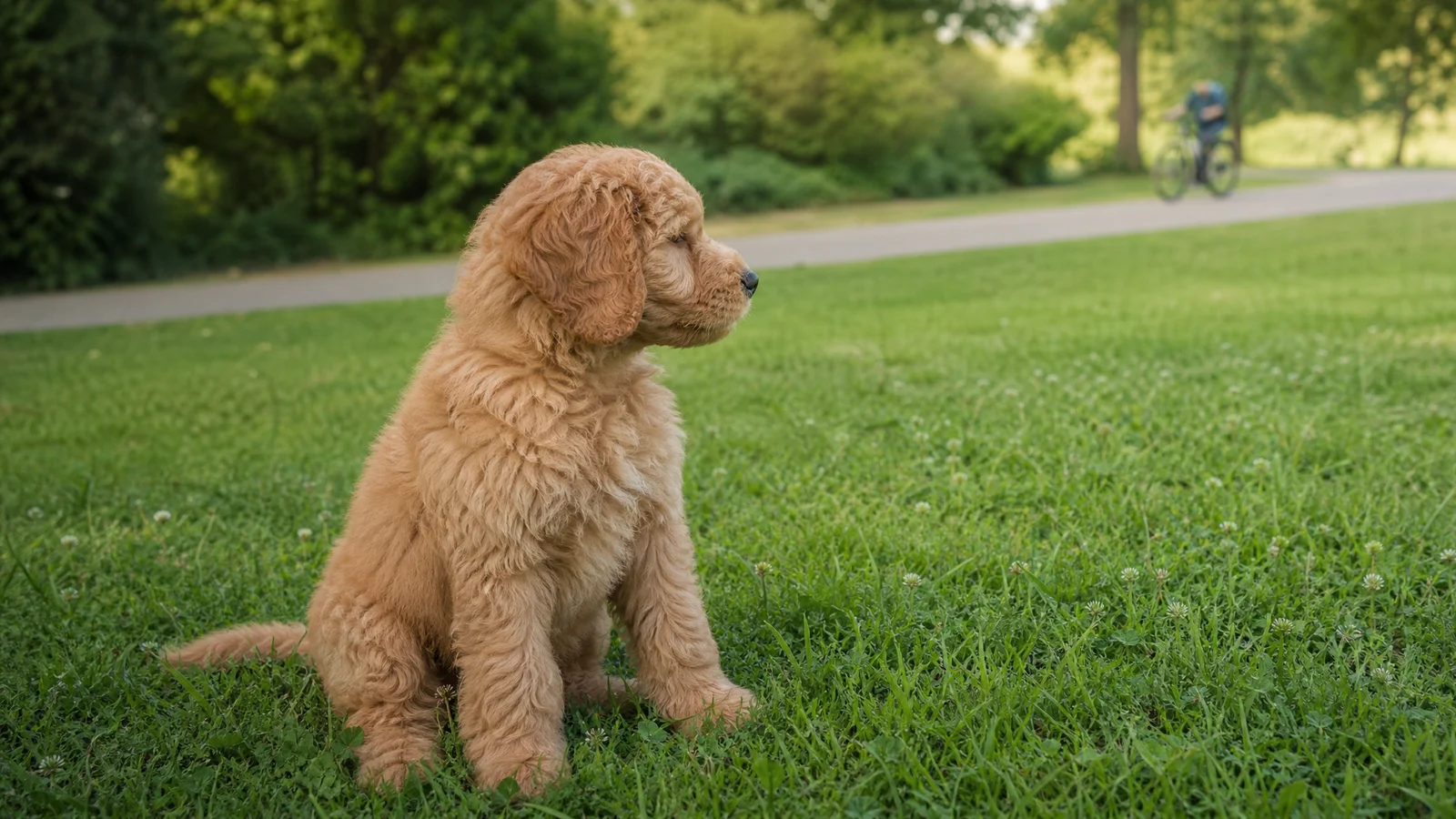
Your Goldendoodle puppy probably does not need convincing that people are wonderful. Both parent breeds are outgoing, so the harder job in these early months is showing your puppy that the rest of the world is just as easy to enjoy.
Socializing means giving a young puppy many small, pleasant first meetings with sounds, surfaces, places, dogs and people while learning comes easily, and making sure each one ends well. A puppy who has only ever met friendly hands at home can still freeze on a slick clinic floor, flinch at a skateboard or stare down a barking dog behind a fence.
Read on for a plan you can run in short sessions: how to split the work into projects, how to pick the right distance, and what to do when a moment goes badly. Each step is small enough to fit into an ordinary day.
Socializing a Goldendoodle Puppy Means More Than Meeting People
Meeting people is the one part of this job that tends to take care of itself, which is exactly why it can hide the gaps. A friendly puppy may greet a stranger like an old friend and still have no idea what to make of a vacuum cleaner, a wet tile floor or a stroller rolling past. Socialization is the whole range of these, each met in a way that leaves your puppy feeling good about it:
- sights and sounds
- surfaces and handling
- places
- dogs and people
It pays to start early, because the best time to begin socializing falls between 3 and 14 weeks of age for puppies, when they are most open to learning about their surroundings. A broad range of positive experiences in that stretch can help prevent fearful, reactive or aggressive responses later.
A puppy who has just come home is already partway through that stretch, so the plan below starts small and starts now. Your aim is not to cram in every experience. It is to make each one a good memory, because a scary first can be slow to soften.
One more thing shapes the plan. Because one parent breed is also known for watchfulness, a particular Goldendoodle puppy may lean wary instead of wide open. The same approach works for both kinds, with a slower pace for the careful one.
Splitting a Goldendoodle's World Into Small Projects
Starting small is easier when the task itself is small, and a single outing rarely is. A walk through a pet store hands a puppy slick floors, rolling carts, unfamiliar dogs and a stranger's outstretched hand inside a minute, and no puppy has practiced for all of that at once.
So treat each kind of experience as its own small project and work on them one at a time, in whatever order your week allows. Within a project, begin with the easiest version you can find, and make it harder only after your puppy stays loose and curious through it.
Six Projects, Easy Version First
Each row below pairs a gentle first step with a harder step for later, so you can see how one lane grows without a leap. Pick the row that matches something your puppy will meet this week and start there.
| Project | Easy first version | Harder version later |
|---|---|---|
| People | A calm adult stands still at a distance while treats arrive for your puppy | A visitor walks past, then crouches and waits for your puppy to approach |
| Dogs | Watching a steady dog across the street while your puppy nibbles treats | Walking beside a calm dog at a relaxed distance, with a brief sniff only if both stay loose |
| Places | Sitting in the parked car at the edge of a quiet lot | Walking a quiet store aisle, then a busier sidewalk |
| Sounds | A household sound played so softly it barely registers, with food | The same sound at everyday volume, then in a different room |
| Surfaces and objects | A baking sheet or box lying flat on the floor with kibble scattered around | Stairs, wet grass or a plastic tarp underfoot on a loose leash |
| Handling | A gentle touch to a paw or ear, followed by a treat each time | A brush, a towel rub or a lifted lip, as a groomer or vet would do |
Notice that every row grows in the same direction: the thing stays the same while the distance shrinks, the volume rises or the setting gets busier. Handling and play have fuller lessons of their own, so see our Goldendoodle handling lessons for the first and polite play with other dogs for the second.
Running a Socialization Session at the Right Distance
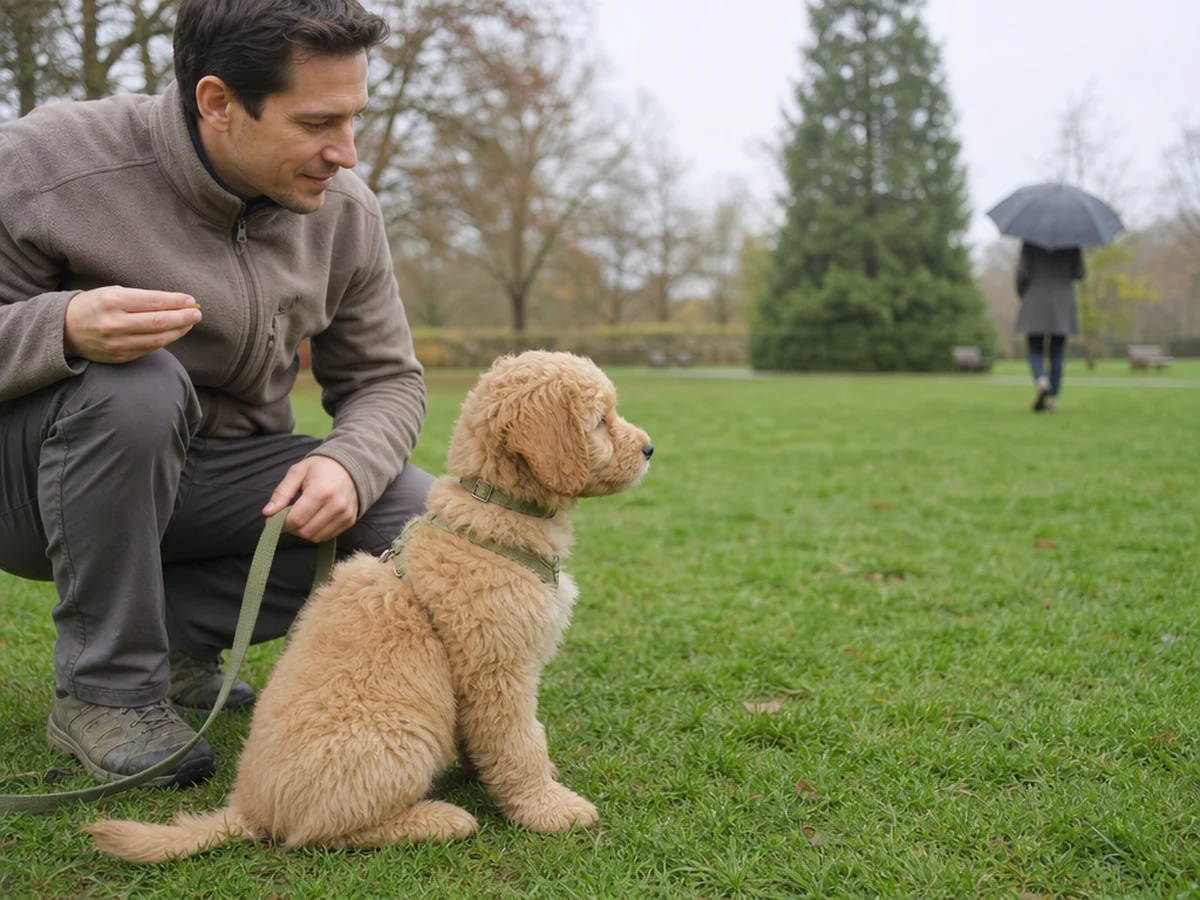
Every project runs on the same session shape, so it is worth learning once and reusing everywhere. The idea is simple: your puppy decides how close feels comfortable, and you pay for calm curiosity from that spot. That makes distance your main tool.
The Loop for Any New Thing
Whether the new thing is a person, a sound or a shopping cart, the steps below stay the same. They are short on purpose, because puppies cope better with brief, successful tries than with long ones that wear them out.
- Choose a starting distance at which your puppy can see or hear the new thing and still looks relaxed, with a loose body and an interest in the treats you carry.
- Wait for your puppy to notice it before any treat appears. A glance or a sniff is enough, and holding the food back until then makes the treat a reward for noticing instead of a distraction from it.
- Feed a few small treats, then pause and watch. A puppy who keeps eating, sniffing or glancing around loosely can stay put or move one step closer. A puppy who stiffens or turns the treat down needs more distance, so walk away a few steps and try again.
- Leave while your puppy still wants more, calmly and on a loose leash. Next time, repeat the same version before you change anything, and change only one thing at a time: closer, longer, louder or busier.
In our view, ending early is a skill worth practicing as much as any cue, since a puppy who always leaves on a good note keeps coming back willing. Moving up one step at a time also tells you exactly which change caused a wobble, which a bigger jump never does.
Reading Your Puppy Between Treats
Short sessions add up faster than they sound, and one UC Davis puppy handout sets a target of 90 different situations that come with pleasant experiences by the time a puppy is 14 weeks old, keeping early encounters brief. Stress shows up in small ways, such as a tucked tail, lip licking, yawning, shaking or ears pinned back, and when you see those signs the kind move is to take your puppy away from the scene before the experience turns into a fear memory.
That target sounds like a lot until you count a new floor, a new sound and a new face as three separate entries. A puppy from two eager-to-please breeds may keep trying to cooperate even while tense, so judge by the body rather than the effort. Loose and bouncy is a yes, and stiff and quiet is a not yet.
Socializing Practice You Can Run at Home
Home is the easiest place to run these sessions, because you control the volume, the footing and who walks through the door. Two kinds of practice fit especially well here, and neither needs your puppy to leave the living room.
Sounds, Starting Quiet
Choose a sound your puppy will meet in daily life, such as a vacuum, a doorbell, thunder or a delivery truck, and play a recording so quietly that it barely registers. Feed small treats while it plays and stop the treats when it stops, so the sound turns into the signal that good food is on its way.
Raise the volume only a little at a time, across many short sessions. If your puppy stops eating or looks worried, turn the sound back down to where the practice last went well, because that is where the next win is waiting.
Surfaces and Objects Laid Flat
Set a baking sheet, a cardboard box, a plastic tarp or a broom flat on the floor, scatter a handful of kibble around it, and let your puppy approach in their own time. Nothing should be able to tip, slide or fall onto your puppy, which is why anything tall stays lying on its side. Skip cues like sit while your puppy explores, because calm curiosity is the whole assignment.
Swap in a different object each day so that novelty itself starts to predict treats, and vary the footing the same way, with tile, carpet, a bath mat or a rubber mat. Varied footing matters because a vet clinic or a deck after rain will not announce itself, and a puppy who has already walked on tile, carpet and rubber takes it in stride.
Puppy Training Classes and Outings That Count
Once your puppy takes the home sessions in stride, the outside world adds what a living room cannot: wind, crowds, strangers who move unpredictably and dogs who do not follow your rules. A class and a few well-chosen outings are two ways to meet all of that with support.
Choosing Puppy Training Classes
Classes put your puppy among other puppies and new people in a controlled setting with an instructor on hand. Before you sign up, run through VCA's puppy class safety checks: your puppy should have had at least one set of vaccines and a first deworming at least 7 days before the first class, the class should require proof of vaccination, and it should meet somewhere easy to disinfect, ideally indoors.
The teaching side is easy to judge from the doorway, so watch a session before you commit. These are the things worth seeing:
- Puppies who want a break can take one, away from the group, without being pulled back in.
- Treats and praise do the teaching, and no puppy is held in place or pushed toward another dog.
- The instructor stops rough play early and points out what the puppies' body language is saying.
- Play is mixed with calm work, so puppies practice settling as well as greeting.
A class that checks those boxes gives your puppy practice at being around other dogs, which is a different skill from playing with every one of them. If a class misses one of these, keep looking instead of hoping your puppy adjusts.
New Puppy Training Beyond the Front Door
Between classes, ordinary outings do much of the work. Sit on a bench outside a coffee shop with a pouch of treats, ride along on errands and watch the parking lot from the car, or visit a friend's porch where a calm dog lives, and let your puppy watch life go by from a comfortable distance.
We lean toward places where dogs are welcome and people move at an ordinary pace, and we skip any crowd your puppy cannot step away from. Each outing follows the same session loop as before, and an easy one that ends well beats an ambitious one that does not.
Your veterinarian decides when a puppy is ready for classes and for places where other dogs have been. Ask at regular vet visits, and check your puppy's vaccination schedule with them before you sign up or head out.
Keep in mind that nothing here asks for a perfect score. A puppy who is relaxed in the ordinary corners of your week has the skills for most surprises.
The rare ones, like a parade or a ferry ride, can meet an adult dog who has learned that new things usually pay off. Match the work to the life you really lead, and the plan stays small enough to keep doing.
When a Moment Goes Badly for a Goldendoodle Puppy
Even a well-paced outing can go sideways: a truck backfires, a loose dog bolts over, or a stranger leans in before you can say a word. A frightened puppy has not been ruined, and what you do in the next minute matters more than the scare itself.
Move away calmly, with a cheerful voice and no lecture, until your puppy looks loose again, then offer a few treats before you decide anything else. Resist the urge to coax your puppy back toward whatever caused the scare, because pushing closer to prove all is well tends to teach the opposite. Let curiosity return on its own: a sniff of the air, a glance back, a bounce in the step.
Then replay the moment smaller on another day. If a truck startled your puppy, begin with a recording of an engine from the next room, or a parked truck seen from across the street.
Pay for calm exactly as you would in the loop above. The lesson stays the same while the version gets easier.
Some puppies need more than a smaller replay. If your puppy keeps trembling, hiding or refusing food long after a scare, or the same trigger frightens them again and again, bring it up with your veterinarian and a reward-based trainer instead of pushing on.
Plan Adjustments for Socializing a Goldendoodle
The loop works for any puppy, but what you carry, how much you fit into a day and how fast a careful puppy should go shift from home to home. These four adjustments cover most of what changes.
What should I carry on an outing?
A pouch of small, soft, tasty treats is the one essential, since this whole plan runs on them. Add a leash on a comfortable harness, water and a towel for muddy paws. A vest or bandana that says your puppy is in training can also help you ask strangers for space.
How many outings fit in one day?
Fewer than most people expect. Puppies tire quickly, and a tired puppy copes worse, so space new experiences with chew time, naps and quiet rest in a crate or pen. Stop for the day when your puppy stops taking treats. Our Goldendoodle crate routine guide covers making that rest spot a happy place.
Is a cautious puppy behind schedule?
No. A careful puppy uses the same projects at a smaller scale: more distance, shorter sessions, quieter places and more treats per experience. The early weeks matter, so fill them with the gentlest versions rather than waiting for bravery to arrive on its own.
Does socializing end when the puppy window closes?
No. The window is when learning comes easiest, not the last time it works. Keep adding new people, places and surfaces through adolescence and beyond, in the same easy-first way, and keep paying for calm responses so the skills stay fresh.
Socializing for the Goldendoodle Life You Actually Have
Each of those adjustments comes down to one question: what will your puppy's ordinary week hold? Every puppy in these months is being prepared for one particular adult life, and yours has a street with its own noises, a clinic with its own floor, a mail carrier and perhaps a flight of stairs or an elevator. That real week, more than any universal checklist, is the yardstick for everything above.
A confident puppy is the raw material for everything else you will teach, and our free Goldendoodle e-book takes up that teaching too, giving every need a dog like yours will have thorough coverage in wording that stays clear from start to finish. Sign up through this site and a copy arrives in your inbox.
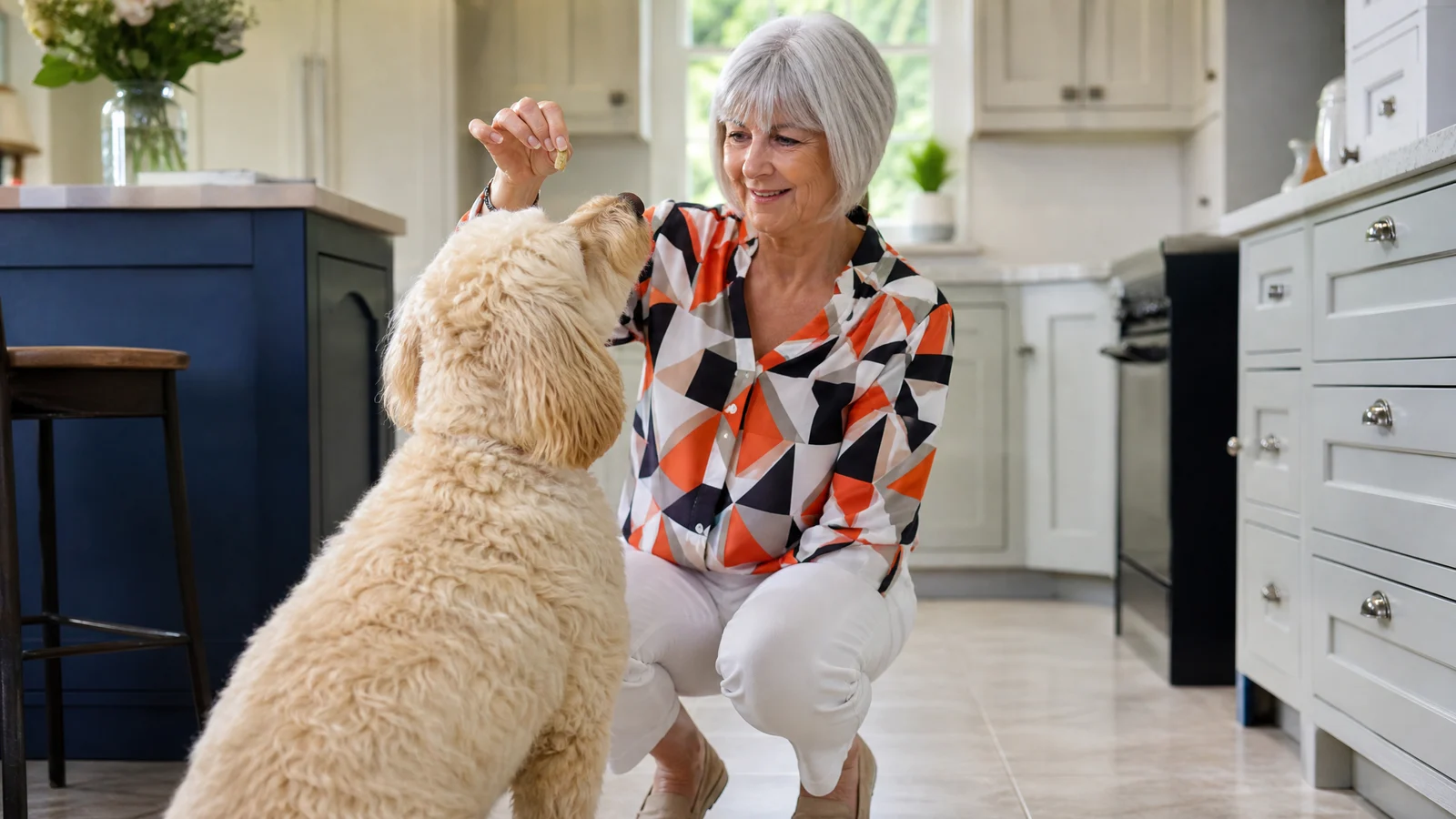 Training basicsHow to Teach a Goldendoodle to Sit
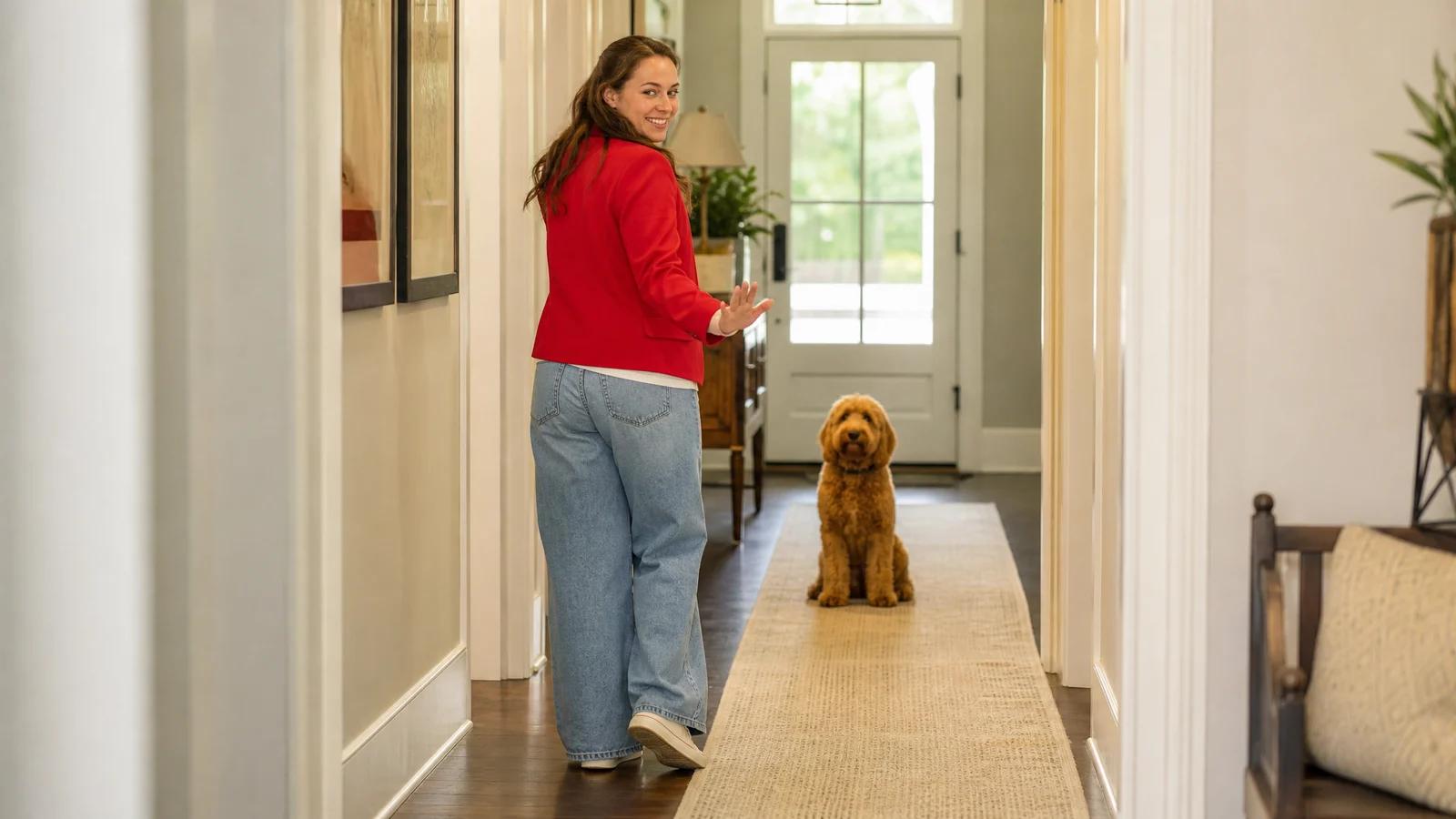 Training basicsHow to Teach a Goldendoodle to Stay
 Training basicsHow to Teach a Goldendoodle to Lie Down
