 Goldendoodle
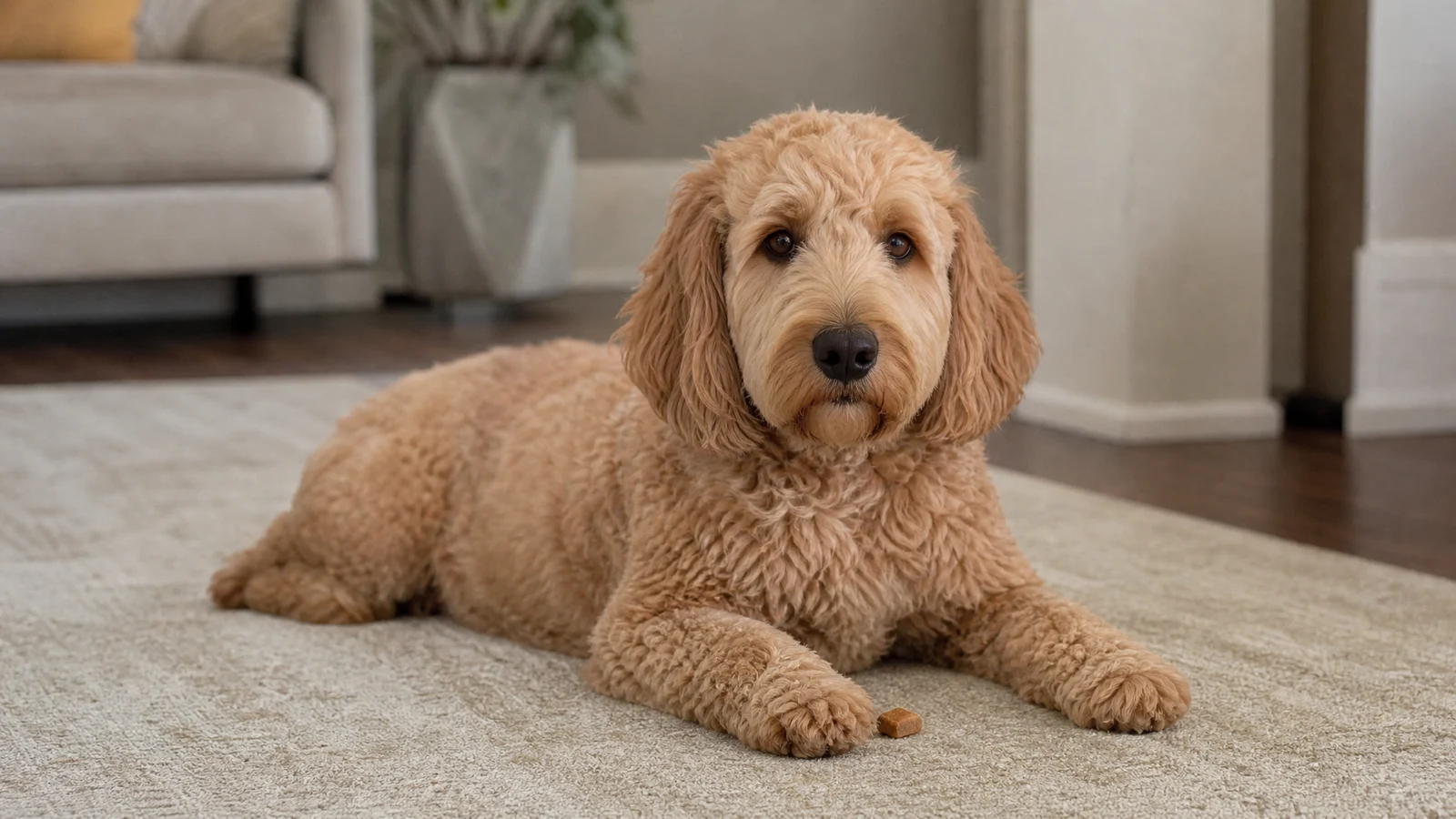
A full-body Goldendoodle welcome can fill a hallway in seconds, and a dog who can lower onto the floor on request takes up far less of it. That is what a down buys you, and it is a friendlier lesson to teach than most owners expect.
A Goldendoodle may inherit the people-focus of both parent breeds, which suits a lesson built on a treat and a slow hand: the dog already wants to watch you, so the work is mostly timing and patience. Below, the steps run from the first lure to a spoken word, then through the usual stalls and a few questions owners ask once practice is underway.
Food does the guiding, never a push or a pull, so your dog stays free to say no at every step. That keeps the lesson something a dog can enjoy rather than endure.
Where a Goldendoodle's Down Needs to End Up
Before a treat moves, it helps to know exactly what you are paying for. A finished down has the chest and both elbows on the floor, with the hips settling behind them, and that front half touching down is the part we reward. Whether the back legs land squared or tipped to one side matters far less.
Footing decides more than most owners expect, because many dogs hesitate to lie down on cold, slippery or uneven ground. A rug over tile or a patch of soft grass gives your dog an easy yes. Dogs with arthritis or stiffness may find the movement difficult, and if lying down seems painful, the next step is a call to your vet rather than more practice. A routine vet visit is also a good moment to mention a dog who avoids lying down at home.
Keep small, soft treats within reach, and pick one marker word, such as "yes", for the instant the elbows touch down. This page covers only getting into position. Staying settled afterward is a separate skill, and our mat training for Goldendoodles guide covers it.
Teach a Goldendoodle to Lie Down From a Sit
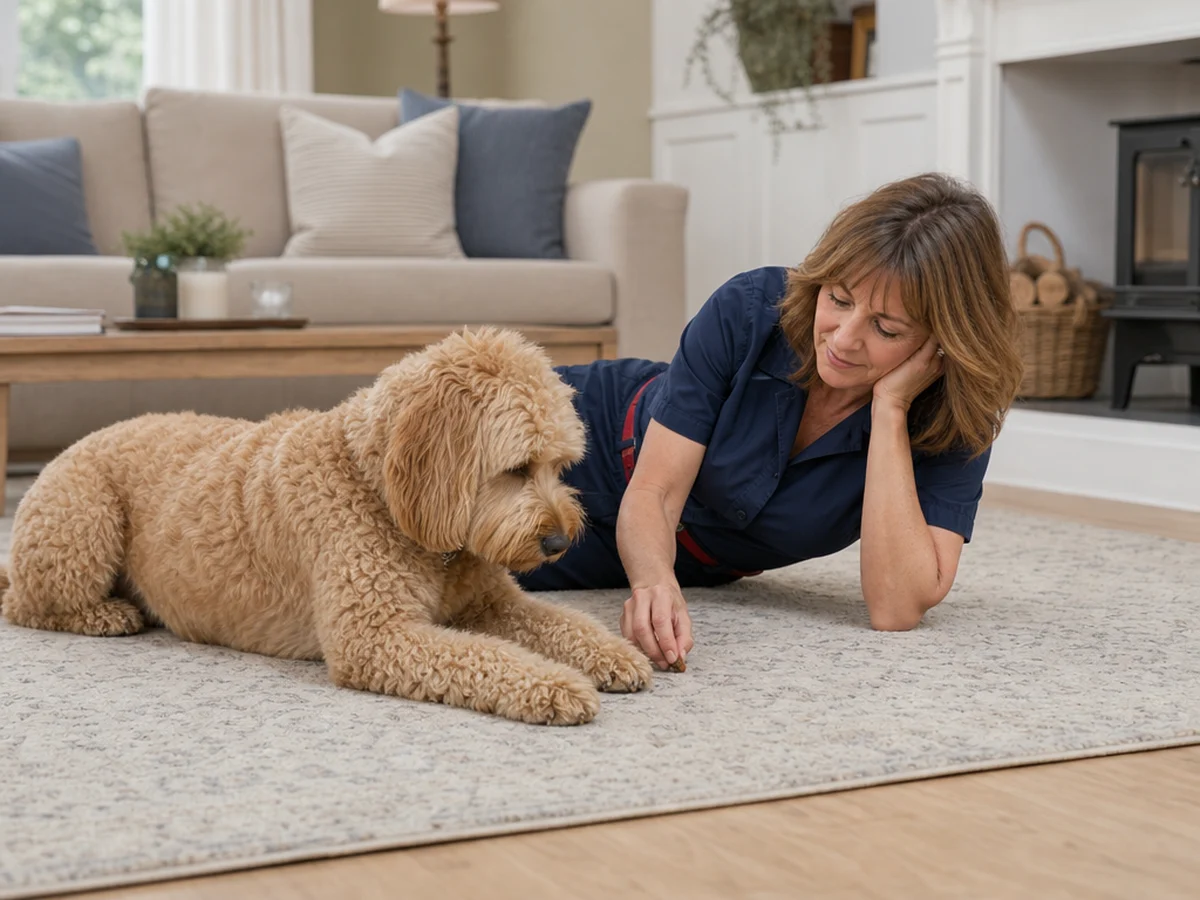
With the floor chosen, the first lesson is only a nose following a treat. Work through the stages below in order, and move to the next only when the current one goes smoothly several times in a row.
- Start from a sit. Ask your Goldendoodle to sit facing you, then hold a treat at their nose so they know it is there. If sitting is awkward for your dog, start from standing and lower the treat more slowly.
- Lower the lure slowly: Draw the treat straight down between the front paws, close to the chest, at the speed of a slow sigh. The head follows the nose and the elbows fold. A hurried hand sends many dogs stepping backward instead.
- Pay Where They Land: Say your marker as the elbows touch the floor, then feed the treat low, between the paws, so there is no reason to stand up to get it. If your dog lowers only part of the way, pay that effort and ask for a little more next time.
- Release and reset with a word such as "okay", then ask for a sit and begin again. When the fold comes quickly and smoothly several times in a row, the lure has done its job.
Those four stages are the whole first lesson, and the payment point lines up with this AKC cue lesson, which gives the treat when the dog's elbows touch the floor to start, and which says never to use force to put a dog into a down. A pressed dog has no way to say yes, while a dog who folds on their own is practicing what you want to cue later.
Goldendoodle Down Command Training Without the Treat in Hand
A down that only appears when food is visible is still a lure, so the next job is to make the food disappear without losing the fold. First, repeat the same slow downward motion with nothing in your hand, and pay from your other hand or a pouch the moment the elbows land. Many dogs keep following the hand they have followed all along, so the movement becomes the signal.
Then shrink the motion a little at a time, from a full sweep to a small point or a flick of the wrist, paying every time your dog folds. If your dog hovers or stands, the change was too big, so go back to the previous size for a few repeats.
Once the hand signal is dependable, add the word. Say "down" once in a calm voice, pause for a beat, then give the hand signal.
In our experience the word works best when it comes first, because it has to predict the movement; if the hand leads, your dog learns to watch the hand and ignore you.
After that, change one thing at a time: a second room, a different rug, a visitor sitting quietly nearby. Pay every success while the habit is new, then thin the treats gradually, since cutting them too fast lets the down fade.
Fixes for a Down That Pops Back Up
Even a tidy lesson stalls in a few predictable places, and most of them trace back to where the treat is going. If your Goldendoodle stands up instead of lying down, check the lure first. Sometimes the fix is pulling the treat straight down, because a lure that drifts forward instead of down can make a dog stand up to follow it. Try the repeat again from the sit, slower and closer to the floor.
Some Goldendoodles fold the front end and leave their hips in the air, as if taking a bow. Pay the bow at first, since the elbows are the hard part, then slow the last few inches of the lure and finish it just behind the paws so the nose travels a little back toward the chest. The hips often follow the nose.
Other dogs back away from a hand that looms over them. A big Goldendoodle can feel crowded by a treat that arrives from above, so sit lower yourself, on a stool or the floor, and use smaller movements.
Puzzles That Come Up in Down Practice
Each of these puzzles comes from a dog guessing what earns the treat, so the answers are mostly about making that guess easier. None of them means the lesson has failed.
Should I pay for downs they offer?
Yes, when you notice one during practice time. A down your dog chooses is the best one to pay, so mark it, feed it low and say nothing. Once those offers arrive regularly, say your word just as the fold begins, which ties the word to the movement.
Why does sit turn into a down?
Lying down has paid before, so an unsure dog goes to the answer that worked. Ask once, wait a moment, and pay only for the sit you asked for. If the mix-up continues, give the sit a few easy repeats with a hand that travels up.
What if my Goldendoodle wanders off?
Let them go. A dog who leaves mid-lesson is telling you the session ran long or the treats were not worth the effort, so end it there and try again later with a shorter session and a better treat. Calling them back to finish teaches very little.
Why Paws-Off Needs a Word Besides Down
One thing can quietly undo all of this: a word that means two things. It is easy to say down to a dog who has just jumped on a guest, and now the word asks for a fold onto the floor in one moment and for four paws on the ground in the next. A dog cannot tell which you meant, so the answer gets sloppy.
Give paws on people their own word, such as "off", and say it the moment paws land. Then ask for the down as the thing to do instead, and pay it, because dogs learn best when shown what to do rather than only what to stop. Our guide to common Goldendoodle behavior problems has more on greetings. That way down stays a request with one answer.
From doorway manners to coming when called, every cue that follows a down gets the same patient care in our free Goldendoodle e-book. Add your email to our reader list and a copy heads your way.
 Training basicsHow to Teach a Goldendoodle to Heel
 Training basicsHow to Teach a Goldendoodle to Leave It
 Training basicsHow to Teach a Goldendoodle to Focus on You
