 Goldendoodle
12 Goldendoodle training topics
Every common Goldendoodle challenge, with first steps and guides to read.
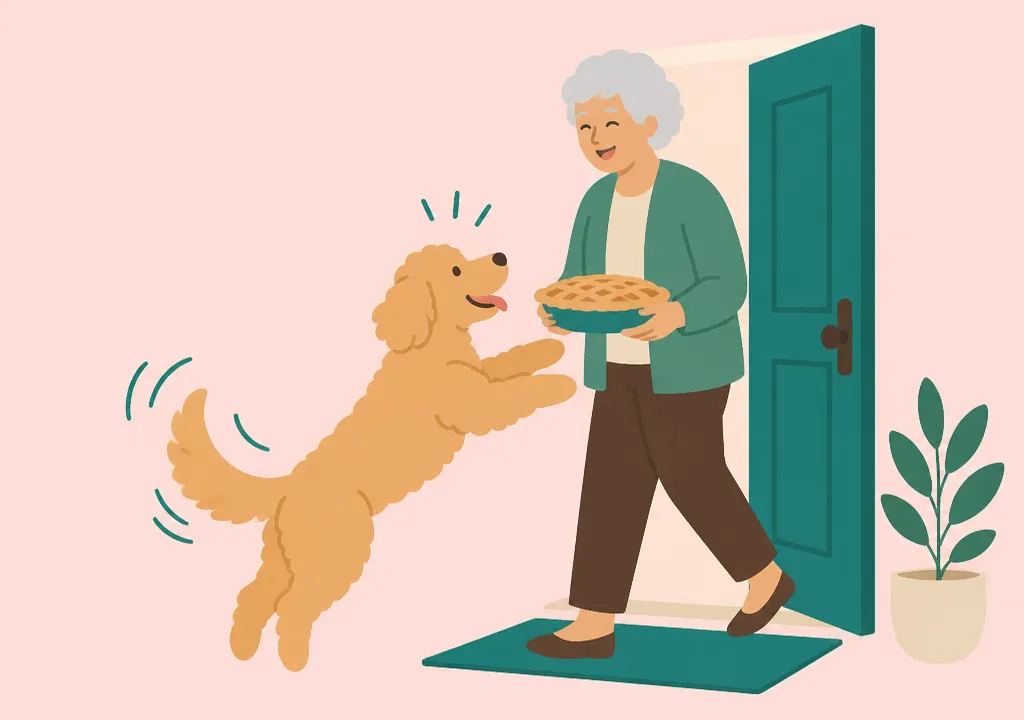
Jumping on guests
Turn a big golden welcome into a polite hello.
A visitor carrying a coat, a bag and a hot drink cannot also manage a bouncing Goldendoodle with perfect timing. If the greeting plan depends on that person spotting every lifted paw, the plan asks too much of the guest. A better welcome gives the host responsibility for the dog and leaves the visitor with one simple job.
That division matters for a friendly dog who finds moving people exciting, although friendliness is never guaranteed by Golden Retriever and Poodle ancestry. This guide separates entering the house from saying hello, then works through the host's setup, the helper's approach and the role of everyone watching. These pieces become a short practice visit in which grounded paws earn attention without making the front door a crowded training arena.
Read the full guide: Turning a Goldendoodle's Big Welcome Into a Polite Hello
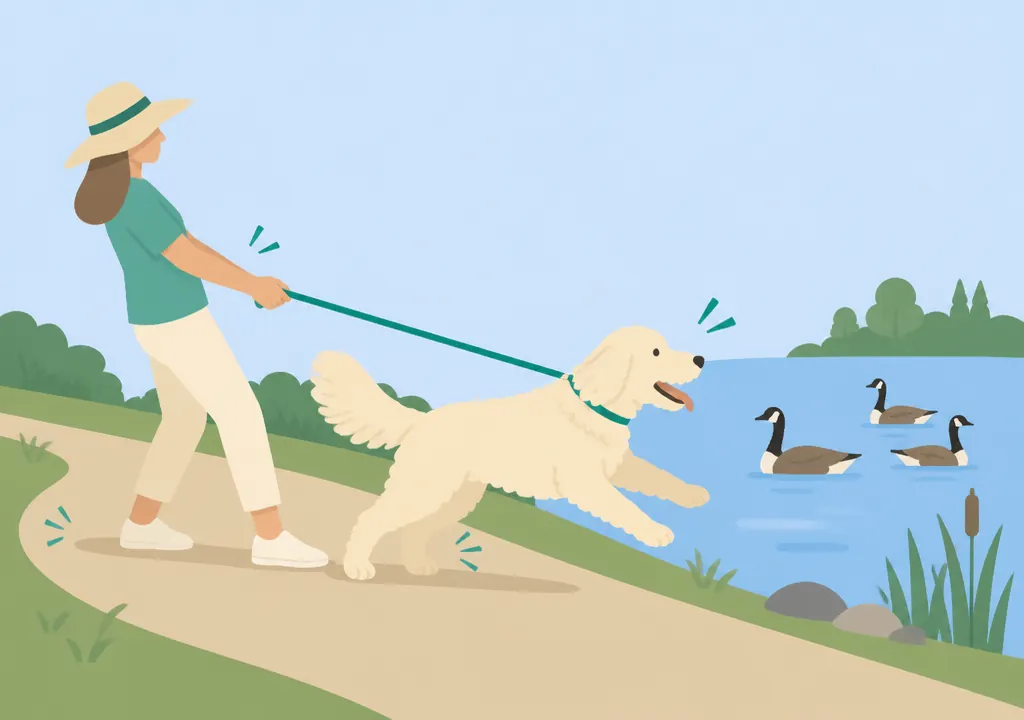
Pulling on walks
Help a strong, happy doodle walk at your pace.
A familiar walk can change character at one corner. Your full-grown Goldendoodle moves comfortably beside a quiet lawn, then pulls hard toward a narrow sidewalk filled with approaching people. Treating the entire route as one lesson hides the difference between a place where learning is possible and a place where safe passage takes all your attention.
Adult size makes those decisions practical, not merely cosmetic. Choose walking equipment and routes for the dog in front of you, since a Goldendoodle's parentage cannot tell you exactly how large, strong or socially confident they will be.
Read the full guide: Leash Training a Full Grown Goldendoodle Who Pulls or Lunges
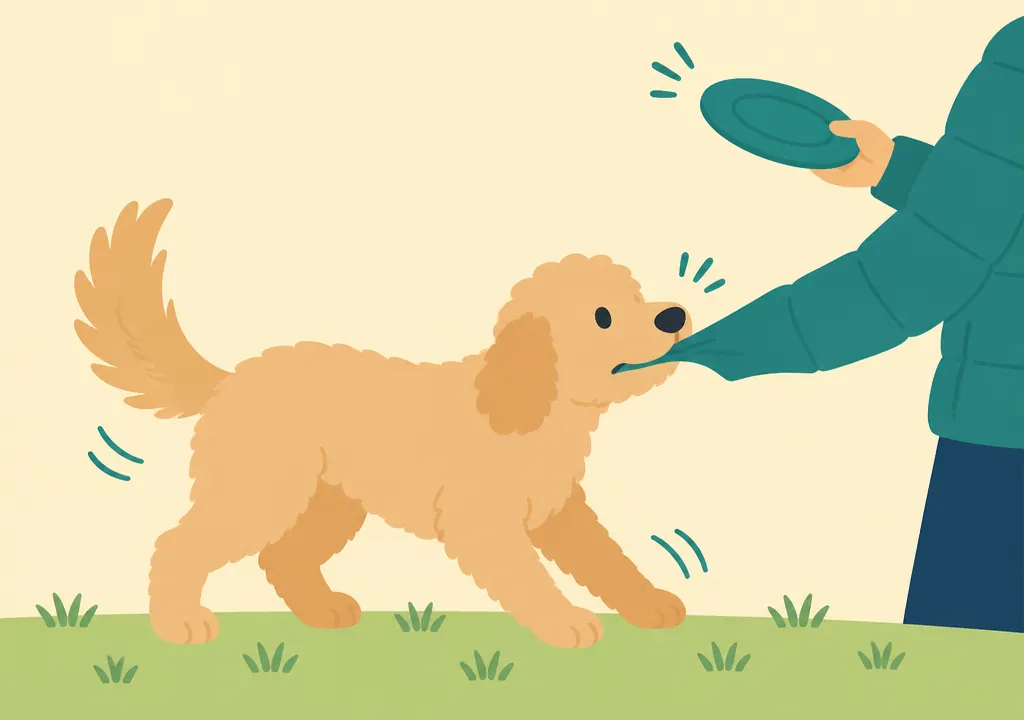
Grabbing sleeves in play
Give a mouthy retriever the right thing to hold.
Teeth on a moving sleeve and teeth on a hand holding a brush may look like the same Goldendoodle puppy problem. The moment before contact can tell a different story. One puppy may be inviting a chase, while another is asking for an uncomfortable interaction to stop. Offering a toy without noticing that difference can leave the original problem untouched.
This guide uses the contact itself to choose the next step. We will look at hands during play, clothing during movement and mouthing during handling, then put rest and consistent adult responses around those lessons. Your puppy may enjoy carrying because of their retriever ancestry, but their own behavior supplies the useful evidence. The goal is comfortable interaction with people, with appropriate objects available for the mouth to explore.
Read the full guide: Goldendoodle Biting: Teaching a Puppy Soft Mouth Manners
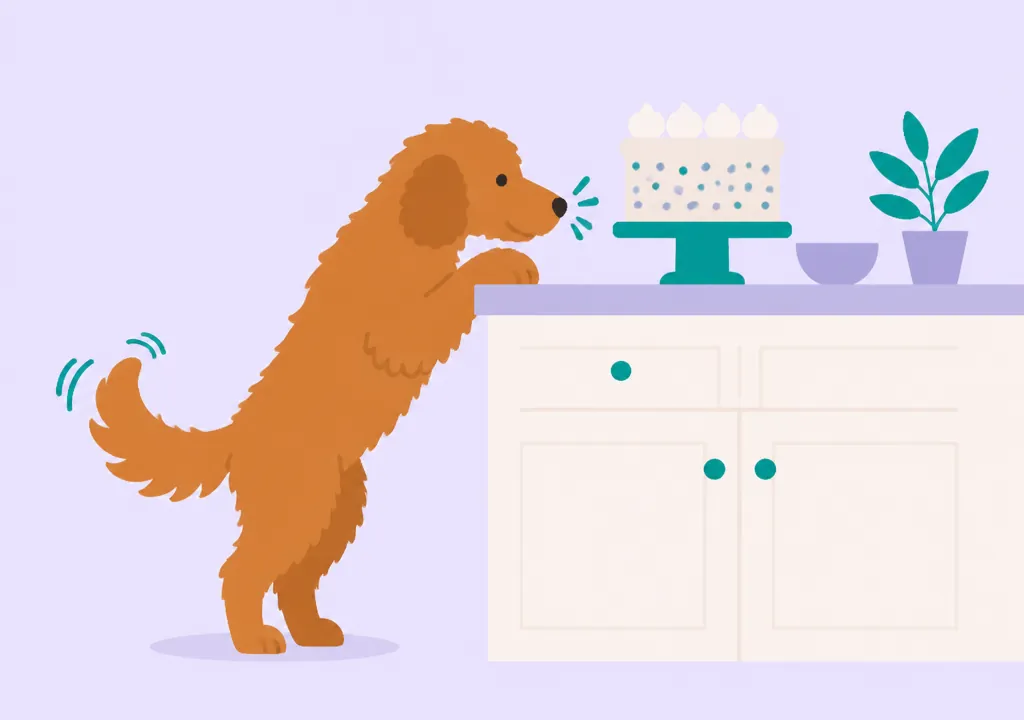
Counter surfing
Keep a tall, food-loving doodle out of the kitchen.
A mat cue can fail for several different reasons in a Goldendoodle kitchen. The dog may follow your movement, watch the food cupboard or leave only when rewards become less frequent. Repeating the cue cannot tell you which problem you have, and adding a longer wait may make the wrong part of the lesson harder.
Use this guide as a small investigation, with food securely stored and no cooking underway. We will compare a quiet baseline with one changed condition, then choose a repair from what the dog actually does. The mat exercises are alternatives to test separately, not a ladder every dog must complete in order. A clear record should help the next adult understand the lesson too, while sensible kitchen management continues protecting the counters.
Read the full guide: Counter Surfing Goldendoodles: Management and Mat Training
Coming when called
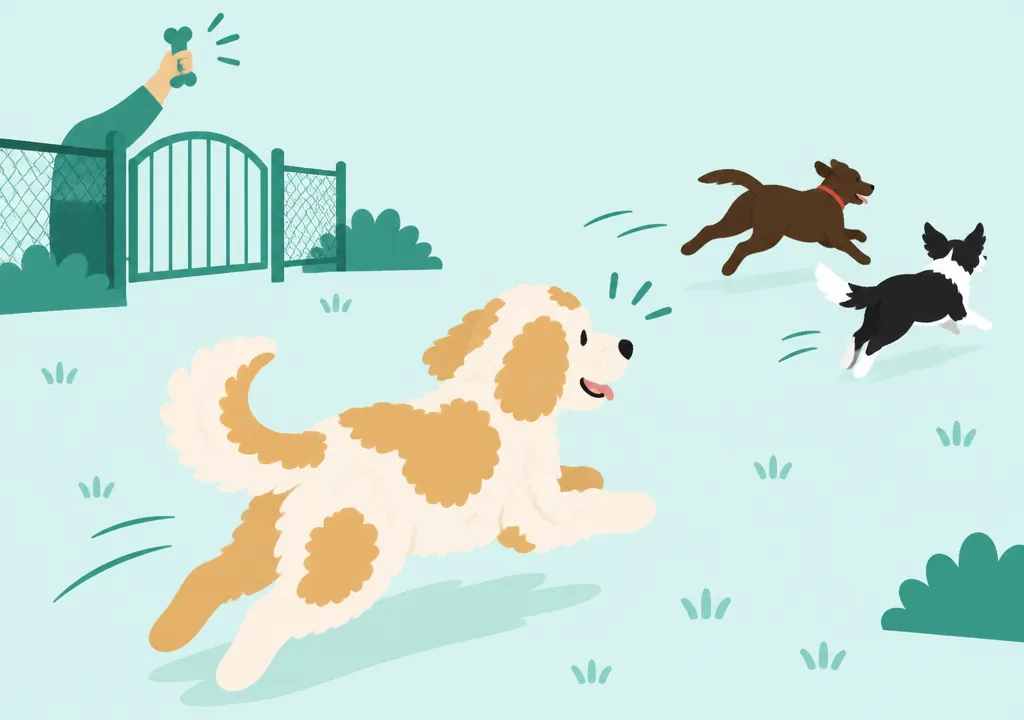
Make coming back the best game at the park.
Recall is easiest for a Goldendoodle who has a job they enjoy. Their cross can inherit a Golden Retriever's working drive, a Poodle's retrieving or scenting aptitude, a different mix or little enthusiasm.
The full guide compares nose work, agility foundations, retrieving games and assistance work through a low-pressure audition.
Staying home alone
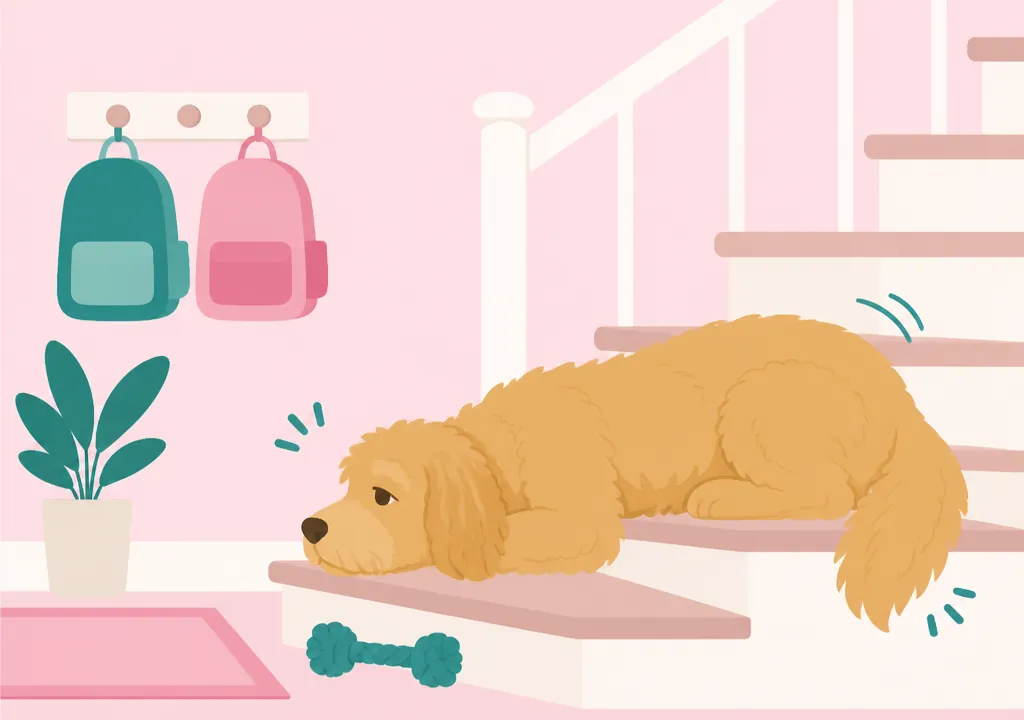
Help a people-loving doodle enjoy calm time apart.
Some Goldendoodles nap in the crate and others panic at the latch. Both parent breeds rate 5 of 5 for affection with family, so pace decides whether the crate becomes a den or a panic rehearsal.
The full guide covers crate training step by step and growing it into calm alone time.
Barking for attention
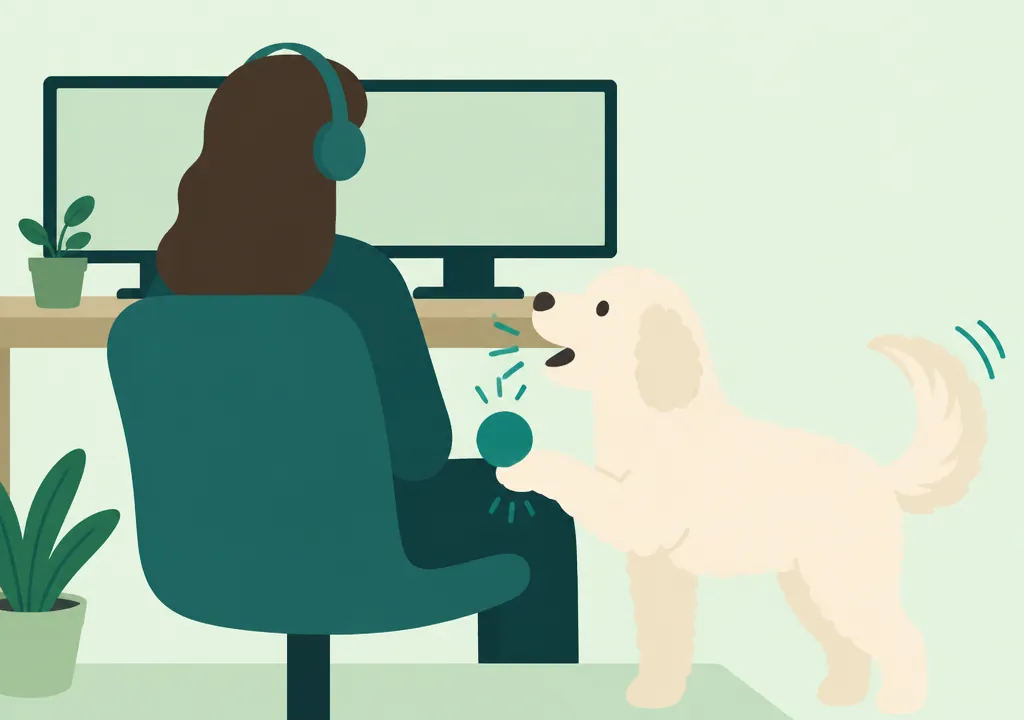
Teach a quiet way to ask for play.
A Goldendoodle waiting silently beside the toy basket still has a question. If nobody notices until they bark, the noisy version may become the reliable way to start a game. Teaching quiet requests therefore requires a change in the person's response as well as a new behavior for the dog.
The other half of the lesson is what happens when play cannot begin immediately. This guide covers a recognizable request, a prompt yes and a gradually taught not-now response. We will also distinguish play requests from barking about an unmet need, worry or discomfort. A Goldendoodle may enjoy close involvement with people, but that does not mean every bark has the same purpose or that every quiet request must launch a long game.
Read the full guide: Teaching a Barky Goldendoodle to Ask for Play Politely
Grooming and mats
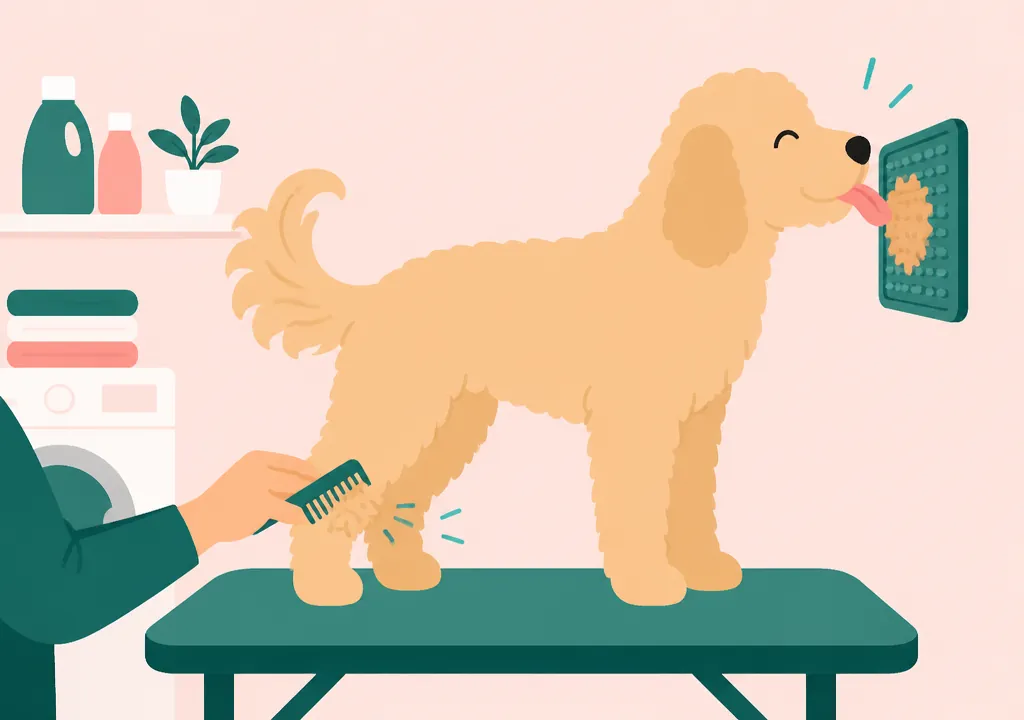
Make brushing that thick coat a calm routine.
Calm brushing starts with a puppy used to being handled. For the Golden Retriever parent, standard guidance is puppy classes plus gentle exposure between seven weeks and four months, and a Goldendoodle absorbs habits just as fast.
The full guide is the puppy timeline from 8 weeks to 2 years, handling included.
Chewing shoes and socks
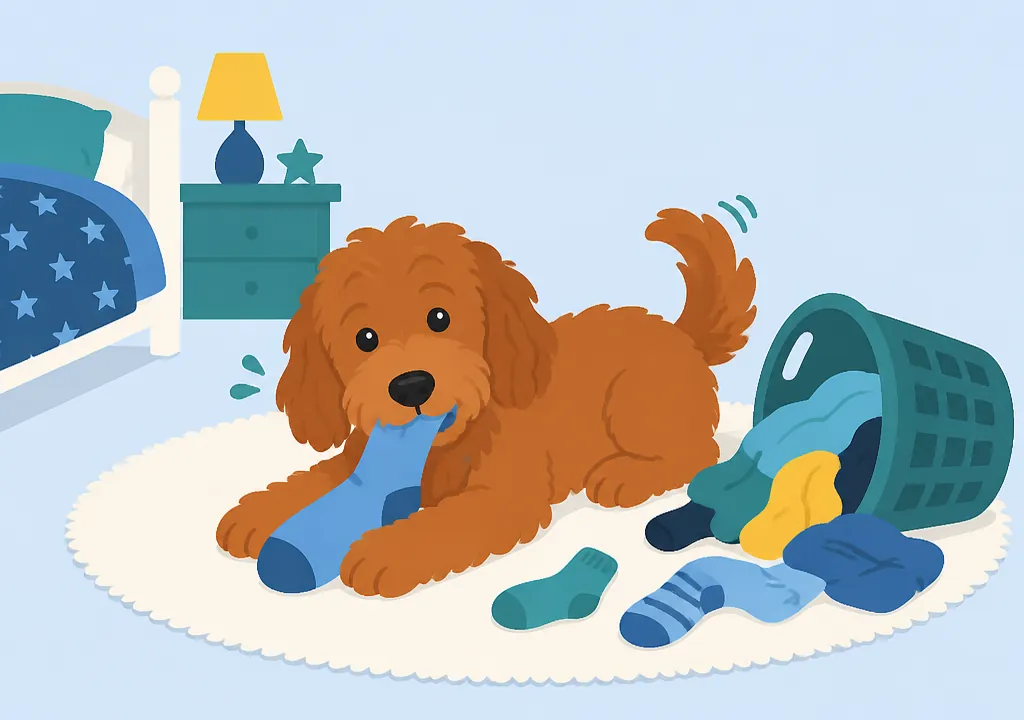
Swap socks for chews worth carrying.
A missing sock and a sock visibly held in a Goldendoodle's mouth call for different decisions. You may need veterinary advice about possible swallowing, a safe way to recover an object or a better place to store laundry. Treating all three as a drop-it lesson can delay the response that matters most.
This guide separates those decisions before building the longer-term chewing plan. We will cover recovery without a chase, practice trades with permitted objects and storage at the places shoes actually come off. Carrying and chewing also need different outlets. A Goldendoodle may enjoy both, but a toy suitable for a brief supervised carry is not automatically suitable for prolonged chewing or time without anyone watching.
Read the full guide: Goldendoodles Who Chew Shoes: Trade-Up Games and Better Chews
Rough play with dogs
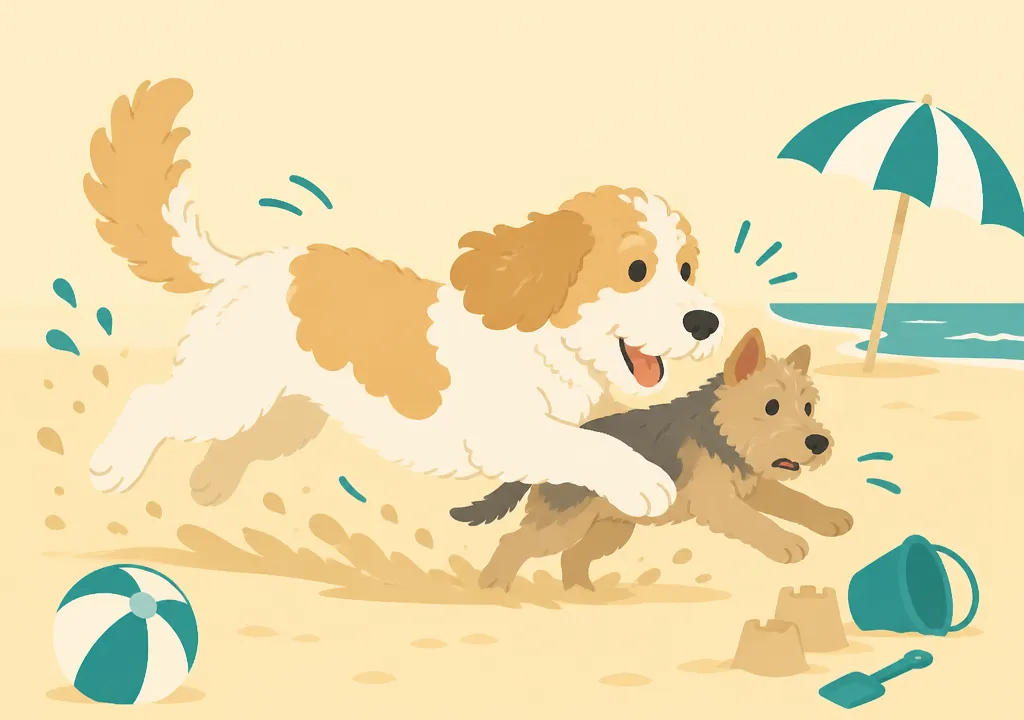
Polite play for a very social doodle.
Polite play and safe fetch share the same missing pieces, the return, the release and the calm reset. A Goldendoodle may inherit carrying, chasing or water interest from either parent and still skip what keeps play friendly.
The full guide troubleshoots fetch and water play, from pickup and release to outdoor safety.
Exercise while growing
Protect young joints with the right mix.
Short, gentle trick sessions give a growing puppy mental work without the hard running that strains young joints. Goldendoodle puppy tricks work best as brief conversations, always asking what the puppy can choose comfortably today.
The full guide is a reward-based skill tree of puppy tricks, with safe movement and clear endings.
The teenage months
Keep skills steady while your doodle grows up.
House training often wobbles as a Goldendoodle grows up, usually because a puppy got distracted outside and never finished. Both parent breeds rate 5 of 5 for trainability, so the habit returns fast once the setup is right.
The full guide covers potty training rather than adolescence, the routine and the fixes.