 Goldendoodle
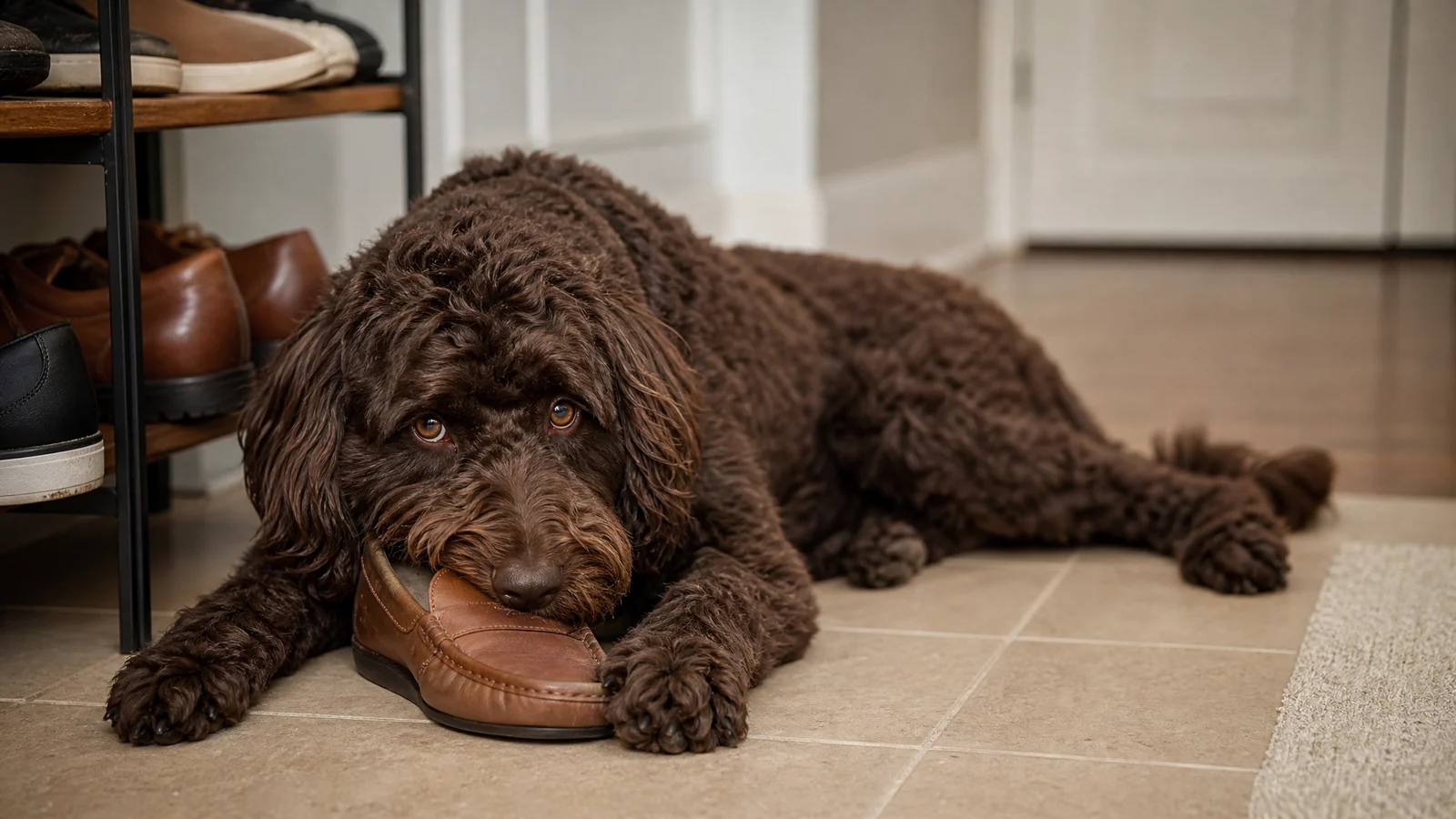
A missing sock and a sock visibly held in a Goldendoodle's mouth call for different decisions. You may need veterinary advice about possible swallowing, a safe way to recover an object or a better place to store laundry. Treating all three as a drop-it lesson can delay the response that matters most.
This guide separates those decisions before building the longer-term chewing plan. We will cover recovery without a chase, practice trades with permitted objects and storage at the places shoes actually come off. Carrying and chewing also need different outlets. A Goldendoodle may enjoy both, but a toy suitable for a brief supervised carry is not automatically suitable for prolonged chewing or time without anyone watching.
Before Recovering a Goldendoodle's Chewed Object
Check what is known about the object. Is it whole, damaged or missing entirely? If a sock, shoe fragment or other unsafe material may have been swallowed, contact your veterinarian promptly even if the dog initially seems comfortable.
PDSA explains that swallowed objects can obstruct the gut. Tell the clinic what may be missing and when access occurred. Follow their instructions rather than waiting for symptoms or trying to make the dog vomit yourself.
- Breathing difficulty or collapse is an emergency that needs immediate veterinary help.
- Possible swallowing or a damaged object with missing pieces needs prompt advice, even without an obvious problem.
- A harmless object still held by a relaxed dog may be suitable for a familiar voluntary exchange.
- Stiffening, growling or guarding means you should create space and seek a safe professional plan.
Keep children and other pets away while you assess the situation. Several people approaching can make a dog more likely to retreat with the item. One calm adult can contact the clinic or arrange an appropriate response while everyone else stays clear.
This article provides general training information, not treatment for swallowed objects. Contact your veterinarian promptly about suspected ingestion, and follow professional instructions before giving anything or attempting to induce vomiting.
A Trade for a Low-Risk Object
Use this approach only when the dog is relaxed, the item is not an immediate hazard and an exchange can be offered safely. Prepare something the dog values without rushing toward their face. A familiar treat or suitable toy may make leaving the object worthwhile.
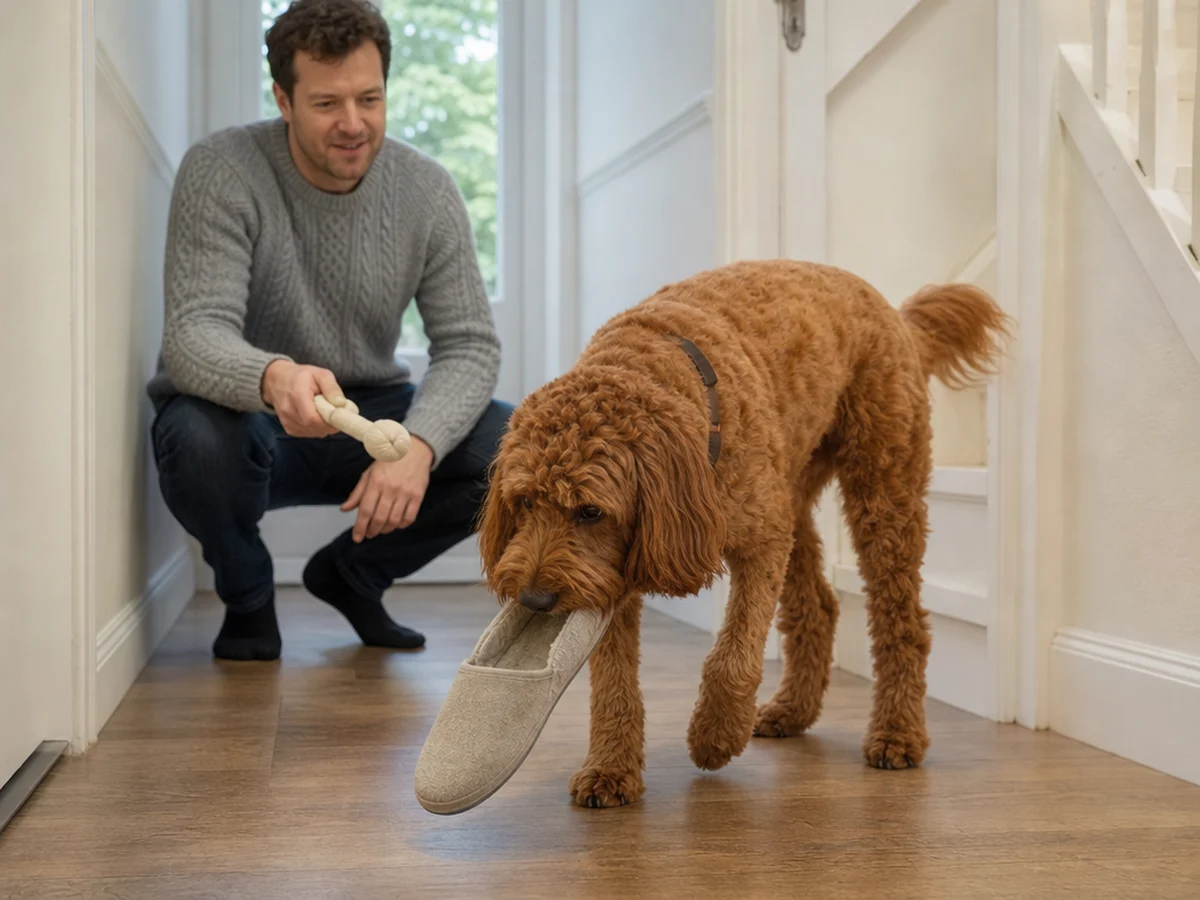
Invite the dog to choose the alternative, allowing enough space that they do not feel cornered. Deliver the reward away from the item after they release it. Recover the object only when they are clearly separated from it and doing so is safe.
Humane World advises trading for better options instead of turning possession into a chase. The useful lesson is that a person approaching can bring a good exchange. Repeated conflict over objects can make future recovery more difficult.
If the dog remains over the item or moves back to it as you reach, stop and create space. Do not treat the offered food as permission to reach into an uncertain situation. A qualified professional can help you build a plan for guarding or unreliable releases.
After a successful exchange, secure the object and check it for missing pieces. A released shoe is not proof that no material was swallowed beforehand. Contact the clinic when that question cannot be answered confidently.
Keep your response proportionate. A harmless toy exchange can remain ordinary and quiet, followed by another appropriate activity together.
Goldendoodle Chewing Trades With Permitted Toys
Teach voluntary release with objects the dog is allowed to have. Choose a quiet setting without other dogs or people competing for attention. The practice should make giving something up predictable, rather than reproduce the urgency of finding a sock in the mouth.
A Permitted Toy Starts the Lesson
Offer a suitable toy the dog enjoys but does not guard. After brief engagement, present an appealing alternative nearby and wait for a voluntary release. Mark that release and deliver the reward without reaching toward the mouth.
Return the safe toy when appropriate so release does not always mean losing it. A Goldendoodle who enjoys carrying can learn that handing over an object often keeps the game going. That history makes an eventual necessary removal easier to understand.
Dogs Trust describes this fair-trade exercise using a toy and a better offer. Add your release cue when the action is becoming predictable. Say it before the expected release, then reward, rather than repeating it over a dog who is not ready to let go.
Keep enough distance between the dropped toy and the reward that you can see a clear change of activity. If the dog tries to hold both, choose an easier object or a more appealing reward. The lesson needs a voluntary choice, not a puzzle in which the person repeatedly reaches for a contested item.
Other Objects Change the Difficulty
Once release is familiar, practice with another permitted toy of similar value. Keep the setting and timing easy. A more exciting texture, another person's presence or a moving game can each make the task harder.
Do not use socks as training props. Their availability is the habit you are trying to prevent.
A leave-it cue addresses an item before it enters the mouth, while a release cue addresses something already held. Keep those meanings separate in daily practice. Using the same word for approaching, carrying and swallowing gives the dog less useful information.
The Goldendoodle fetch and release guide can help turn a permitted toy into a cooperative game. Begin with comfortable land-based exchanges. An exciting outdoor game should not be the first place you test whether a new release cue works.
Shoes Need Storage Where People Remove Them
Follow the household's actual shoe route. Footwear may collect beside the front door, under a desk or near the couch, while socks appear beside a hamper rather than inside it. Put accessible closed storage at those points instead of relying on everyone remembering a distant closet.
The ASPCA's destructive chewing advice includes putting valuable belongings out of reach. Make that prevention practical for the busiest person at home. A storage system with a lid that is awkward to use may be left open during the very moments it is most needed.
- Use a closed shoe cabinet or another secure location the dog cannot open or reach.
- Place worn socks directly in a closed hamper instead of a temporary floor pile.
- Separate the dog from laundry sorting when supervision will be divided.
- Ask visitors where their belongings can be stored before the Goldendoodle gains access.
Check what happens during transitions. A child changing after school or an adult packing a gym bag may create access even when the room is usually tidy. Manage the dog comfortably elsewhere during those busy minutes.
One successful theft does not mean the storage plan is useless. Identify the specific opening and close it. Prevention becomes reliable through ordinary habits that people can repeat, not through expecting everyone to watch the dog continuously.
Goldendoodle Carrying and Chewing Need Different Outlets
Watch what the dog does after finding an item. Holding it while following someone is different from settling down to tear pieces off. Choose permitted activities for the behavior you see, and avoid assuming a retrieving background guarantees gentle treatment of every object.
An Object to Carry With You
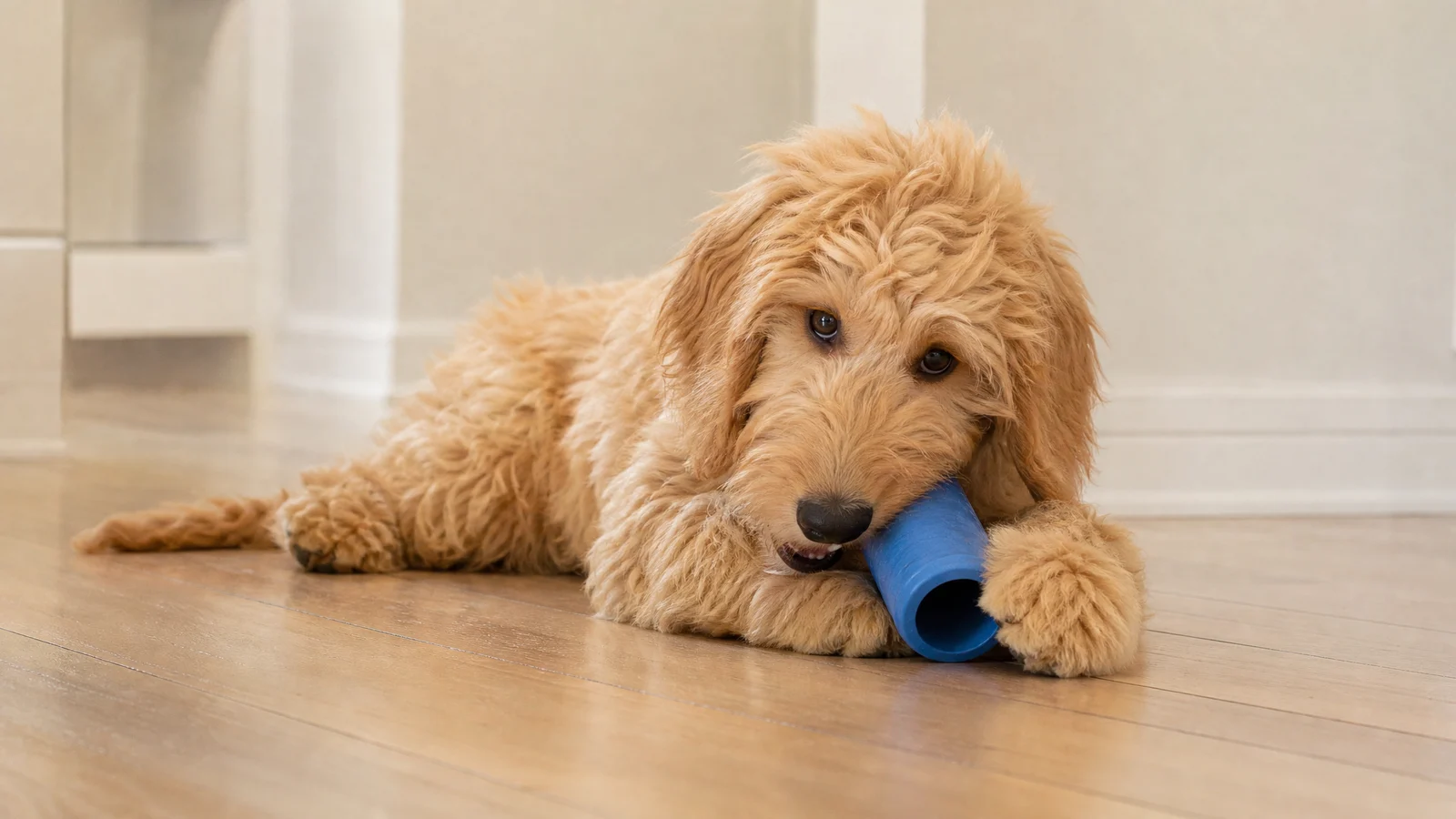
Offer a suitable carrying toy before a predictable transition, such as a family arrival. Let the dog hold it during a short supervised interaction if they remain comfortable. The toy should fit their mouth without being easy to swallow or containing loose parts they can remove.
End the activity with a familiar exchange when the toy needs to be put away. If carrying makes the dog rush into people or guard the object, choose another activity and seek appropriate help. The outlet should improve household life rather than move the difficulty elsewhere.
An Object to Chew Under Supervision
Choose chew items with your veterinarian's advice about the dog's size, teeth and chewing style. Inspect each item during use and retire it when damage creates loose pieces or another hazard. A durable label cannot tell you how this individual Goldendoodle will use it.
Stay available to notice changes. A toy used gently yesterday may be pulled apart today. Avoid leaving a dog with an unfamiliar item while you are absent, particularly when they have a history of swallowing material.
If the dog does not enjoy chewing the options offered, use other appropriate activities rather than insisting. Sniffing, simple searches or calm interaction may suit the moment better. Chewing is one outlet within a day that also needs rest and company.
When Trades Become a Shoe-Stealing Routine
A clever dog can learn that obtaining a shoe starts an enjoyable exchange with a person. That possibility does not mean withholding a needed trade during an actual incident. It means changing what happens beforehand so theft is no longer the easiest route to interaction.
Reward permitted toy choices before shoes appear. Offer a short carrying game when the family arrives, then store footwear while the dog is occupied safely. Notice a quiet approach too, so possession of something forbidden is not the only way to get attention.
Our quiet play requests lesson gives the dog another clear way to ask. Use that separately from recovery practice. A dog can learn both a reliable release and an appropriate request without shoes becoming the link between them.
Compare the setting after each incident. Repeated theft during laundry folding suggests an access problem, while carrying objects toward a busy person may suggest an interaction pattern worth addressing. Avoid assigning one motive to every episode when different adjustments may be needed.
After the Chewed Shoe Is Put Away
Once immediate safety is addressed, repair the next opportunity rather than replaying the incident with the dog. Secure the belongings, inspect the permitted toys and arrange a short trade lesson at a calm time. Discuss repeated nonfood eating and changes in chewing comfort during regular veterinary visits.
Your Goldendoodle benefits from a clear distinction between objects they may use and belongings kept inaccessible. Useful carrying games, safe chewing opportunities and dependable exchanges support that distinction. The lasting improvement is fewer urgent recoveries because the household has made appropriate choices easier to find.
 BehaviorPolite Play Between a Social Goldendoodle and Other Dogs
 Puppy trainingGoldendoodle Puppy at 8 to 12 Weeks: The First Month Home
 Puppy trainingGoldendoodle Puppy at 4 to 6 Months: What Changes
