 Goldendoodle
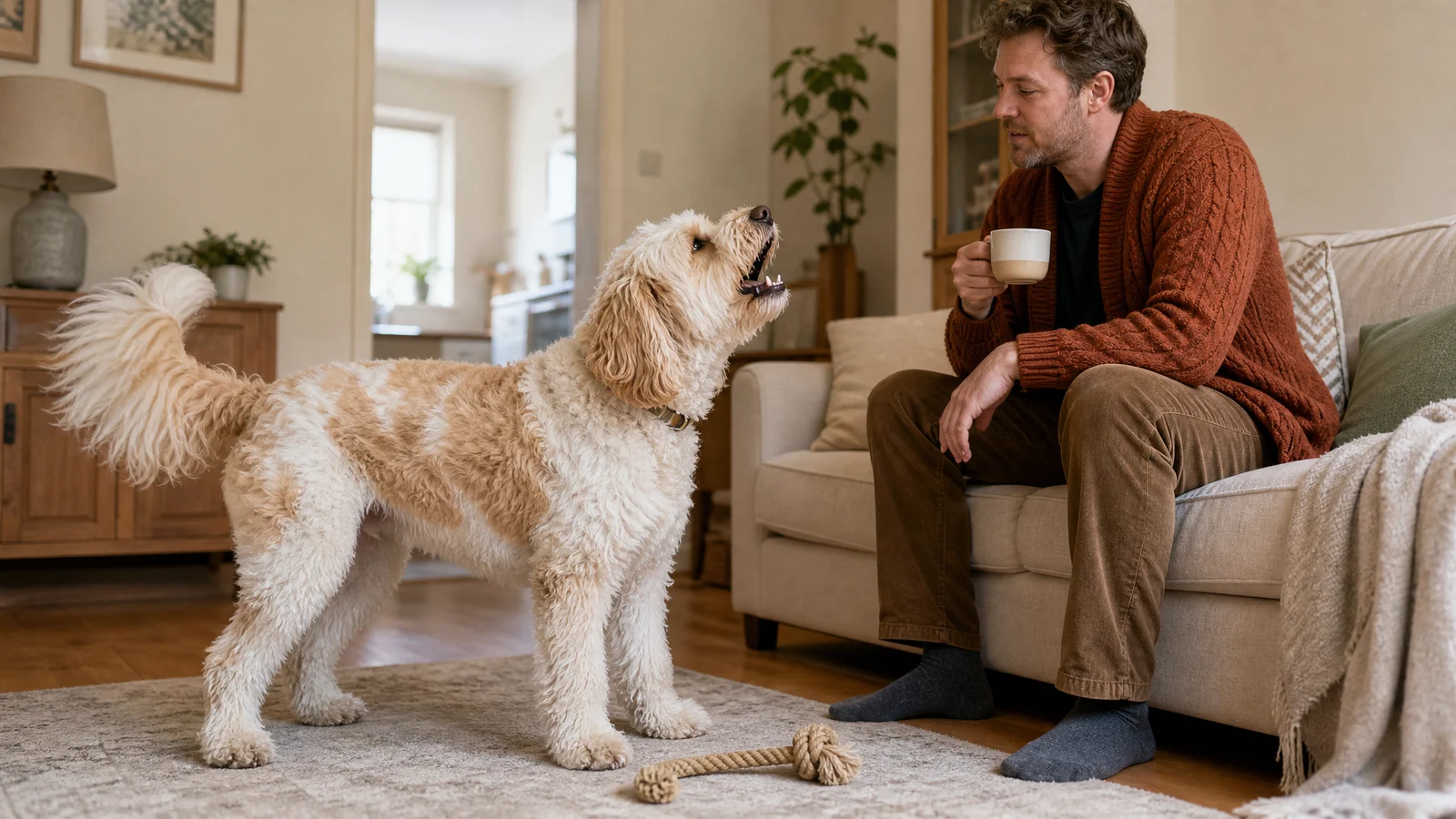
A Goldendoodle waiting silently beside the toy basket still has a question. If nobody notices until they bark, the noisy version may become the reliable way to start a game. Teaching quiet requests therefore requires a change in the person's response as well as a new behavior for the dog.
The other half of the lesson is what happens when play cannot begin immediately. This guide covers a recognizable request, a prompt yes and a gradually taught not-now response. We will also distinguish play requests from barking about an unmet need, worry or discomfort. A Goldendoodle may enjoy close involvement with people, but that does not mean every bark has the same purpose or that every quiet request must launch a long game.
Is the Goldendoodle Barking for Play?
Watch where the dog looks and what happens next. Barking directed at a person near a toy, followed by a game, suggests one pattern. Barking while staring through a window, pacing near an exit or reacting to a sound needs a different investigation.
Check ordinary needs before deciding the dog is making a demand. Water, bathroom access, suitable activity, company and rest all matter. A dog who needs help should not have to remain silent for a long period before receiving it.
The ASPCA's barking guidance distinguishes functions and describes teaching an alternative way to obtain attention. Use that distinction to keep the lesson narrow. This plan addresses a dog seeking ordinary interaction, rather than a dog frightened by an event or distressed by separation.
- Notice whether the dog approaches a person or remains focused on something elsewhere.
- Write down the human action that follows, including talking, reaching for a toy or walking to a door.
- Check whether the dog can relax after the need is met or stays unsettled.
- Seek advice when barking changes suddenly or the explanation remains uncertain.
A short recording from a normal household moment can help you see the sequence. Avoid provoking barking to obtain one. The useful evidence is what already happens when the dog wants access to you and how you respond.
A Quiet Play Request for Your Goldendoodle
Choose an action you can notice and the dog can offer comfortably. Bringing an appropriate toy, standing beside a designated toy basket or sitting a little away from your chair can each work. Pick one for the first lesson instead of expecting the dog to understand several possible requests.

A toy-carrying request may suit a Goldendoodle who already enjoys holding objects. It is less suitable for a dog who becomes tense over possessions or repeatedly mouths the person's hands. The request should reduce conflict, so choose a simple grounded position if carrying adds difficulty.
Make the location visible. A dog quietly waiting behind your office chair is easy to miss, especially when you are wearing headphones. Place the request spot where you can notice it without the dog entering a doorway or pressing against moving chair wheels.
Practice when you are available. Notice the chosen action, acknowledge it and begin a brief activity the dog enjoys. If they need help finding the spot, invite them there before any barking starts, then reward the successful arrival with interaction.
Keep the first request easy. The dog should not need an elaborate sequence to ask for company.
A Prompt Yes Makes Quiet Requests Useful
Respond while the dog is still quiet, rather than waiting until they become frustrated. Your acknowledgment can be a familiar word followed by a short game or comfortable contact. Use a reward the dog actually wanted, since food will not always substitute for interaction.
Be realistic about the commitment. If you can offer a brief toy game, do that and finish clearly while the dog remains engaged. A request does not require a long outing, but it should initially produce an answer the dog can recognize.
Asking for a sit after barking and then immediately throwing a toy may make the entire sequence predictable. The dog learns that barking begins the conversation. Arrange additional chances to reward the quiet request from the start, with the toy available before frustration develops.
PDSA explains that human attention can reward barking. Even looking over or speaking may matter to the dog. Put that useful attention into the earlier behavior you want, rather than spending the whole session responding after the noise begins.
Let the dog finish the short interaction with something manageable to do next. An easy sniffing opportunity or familiar resting place can help the transition. Repeatedly starting an exciting game and ending it abruptly may create a new source of frustration.
A Brief Not-Now Response Without More Barking
Teach temporary unavailability only after quiet requests regularly work. Begin when the dog is comfortable and their needs are met, with a delay so small that waiting is easy. This is practice for a normal pause in human attention, not a test of how much frustration the dog can tolerate.
The First Pause Is Almost Nothing
Acknowledge the request, use a simple chosen phrase and pause briefly before beginning the promised interaction. Stay nearby and keep your own activity quiet. At first, the dog should experience only a small, understandable gap between requesting and receiving an answer.
If barking starts, the delay was too demanding for that repetition. Stop escalating the lesson and reset with an easier situation. Do not keep lengthening the wait while the dog becomes louder, and do not use this exercise when a bathroom trip or other essential need should be met immediately.
Use the same phrase sparingly. Repeating it throughout a long phone call does not teach the meaning any more clearly.
A Short Human Task Comes Between
Once a brief pause is familiar, add a tiny ordinary action such as placing a book on the desk. Then return to the interaction. The task should fit within the wait the dog can already manage, rather than becoming an excuse for a much longer delay.
Change the task separately from the duration. Looking at a screen, speaking on the phone and leaving the room can mean different things to a dog. Begin with the least disruptive version while remaining close enough to observe comfort.
A meeting that lasts far beyond the dog's current skill needs management, not a harder repetition. Arrange suitable activity, rest and bathroom opportunities beforehand, with help from another person when needed. The brief training phrase cannot replace a workable household schedule.
The Bark-Pause-Reward Pattern
Listen for a repeated loop in which the dog barks, waits a beat and receives a game. A quiet gap is useful, but if every reward follows the same opening bark, the overall pattern may remain attractive. Shift practice toward moments before the dog needs to interrupt you.
Do not make this a contest over who can wait longer. Check needs and stress first, then use an easy opportunity to reinforce the alternative. When the dog cannot offer it comfortably, adjust the setting or seek help instead of insisting on silence.
- Prepare the toy before the usual request time so quiet approaches are easy to answer.
- Reward voluntary use of the request spot even when no barking preceded it.
- Keep early delays short enough that the dog does not need to restart the conversation noisily.
- Notice whether your own movement toward the toy repeatedly happens only after a bark.
A request can also become too persistent without much barking. If the dog repeats it constantly, examine the daily pattern of activity and rest. The objective is understandable communication, not replacing noise with an exhausting sequence of sitting, standing and presenting toys.
Attention Outside the Barking Lesson
Offer company before the dog must ask for every interaction. Predictable opportunities for walks, play and quiet time together make it easier to teach brief waiting. Avoid relying on one big burst of exercise to compensate for a day with little contact.
Dogs Trust advises addressing the reason behind barking. A dog who lacks suitable activity needs that need met alongside training. A dog who is worried needs support that fits the worry, even if the noise happens beside your desk.
Use your Goldendoodle's preferences to choose activities. Some enjoy carrying or searching for a toy, while others settle more easily after relaxed sniffing. Our Goldendoodle exercise and brain games guide helps build a routine around the individual response.
Quiet companionship counts as interaction too. Sit nearby while the dog rests, or offer gentle contact if they seek it. Not every moment of attention needs to raise excitement or produce another game.
A Household Agreement About Goldendoodle Requests
Tell other adults what the chosen request looks like and how to respond. One person noticing the basket while another waits for barking can keep both strategies alive. Agree on an easy initial response everyone can offer without inventing new cues.
- Keep the request action and location consistent during the first lessons.
- Answer quiet requests promptly during practice and keep promised pauses manageable.
- Arrange care before long unavailable periods instead of relying on the waiting phrase.
- Share observations about changed needs, unusual barking or difficulty settling.
Visitors need only a simple instruction to leave the teaching to the supervising adult. They should not have to judge whether the dog has waited long enough. Our Goldendoodle visitor greeting routine gives them a separate role when arrivals are the exciting event.
Keep notes about the human response as well as the dog's sound. A quiet request that was repeatedly missed tells you where the arrangement needs work. Improving visibility or preparing an activity earlier may help more than adding another cue.
When Barking Needs Another Kind of Help
Bring persistent changes in vocal behavior to regular veterinary visits, and contact the clinic sooner for sudden changes or signs of illness. Barking accompanied by distress, repeated pacing or difficulty being left alone needs an assessment beyond this play-request lesson.
A qualified reward-based professional can observe whether the request is clear and whether the household can respond consistently. Seek that help when frustration keeps escalating or the dog cannot settle despite appropriate care. You do not need to wait for the situation to become intolerable.
Progress means quiet communication earns a dependable answer and brief delays remain comfortable. Keep noticing the Goldendoodle before the bark, and keep the day's real needs visible alongside the training. The dog should gain a clearer way to reach you, not lose their ability to ask.
 CareHow to Groom a Goldendoodle: Teaching Your Dog to Enjoy Handling
 BehaviorGoldendoodles Who Chew Shoes: Trade-Up Games and Better Chews
 BehaviorPolite Play Between a Social Goldendoodle and Other Dogs
