 Goldendoodle
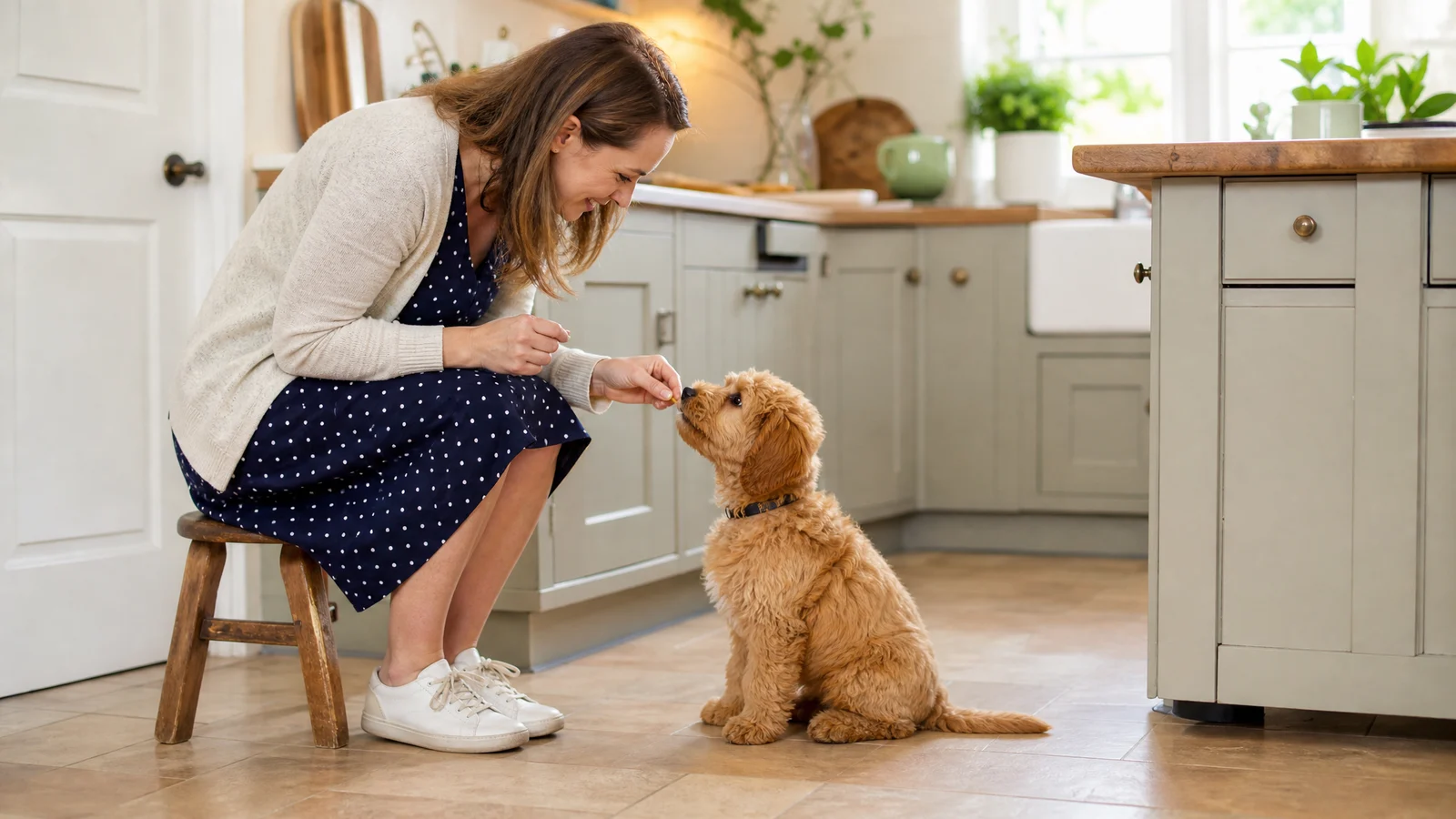
The usual advice is to start early. For the Golden Retriever parent, the standard guidance is puppy classes plus gentle exposure to a wide variety of people, places and situations between seven weeks and four months, and that window works as a sound anchor for a Goldendoodle too. Owners report something messier: dogs who adore everyone, mouth the guests, and stay bouncy long after you expected calm.
That gap matters because a friendly, eager dog absorbs good and bad habits at the same speed. Our team has spent years focused on how this breed behaves and learns, and we built this guide around what you actually see and hear at home.
We'll walk you through the stages from eight weeks to two years, then trace mouthing, whining, shyness and teenage selective hearing back to their causes, and finish with what to expect once your dog is past two.
Goldendoodle Puppy Training Stages
Age bands give you a map, but dogs vary, and Goldendoodles come in sizes that mature on different clocks. Treat the stages below as a picture of what you will probably see, and expect your own dog to run ahead in some areas and lag in others. The Golden parent is known for keeping puppyish behavior into adulthood, and a Goldendoodle may inherit that streak, so every stage stays playful.
Puppy Stage
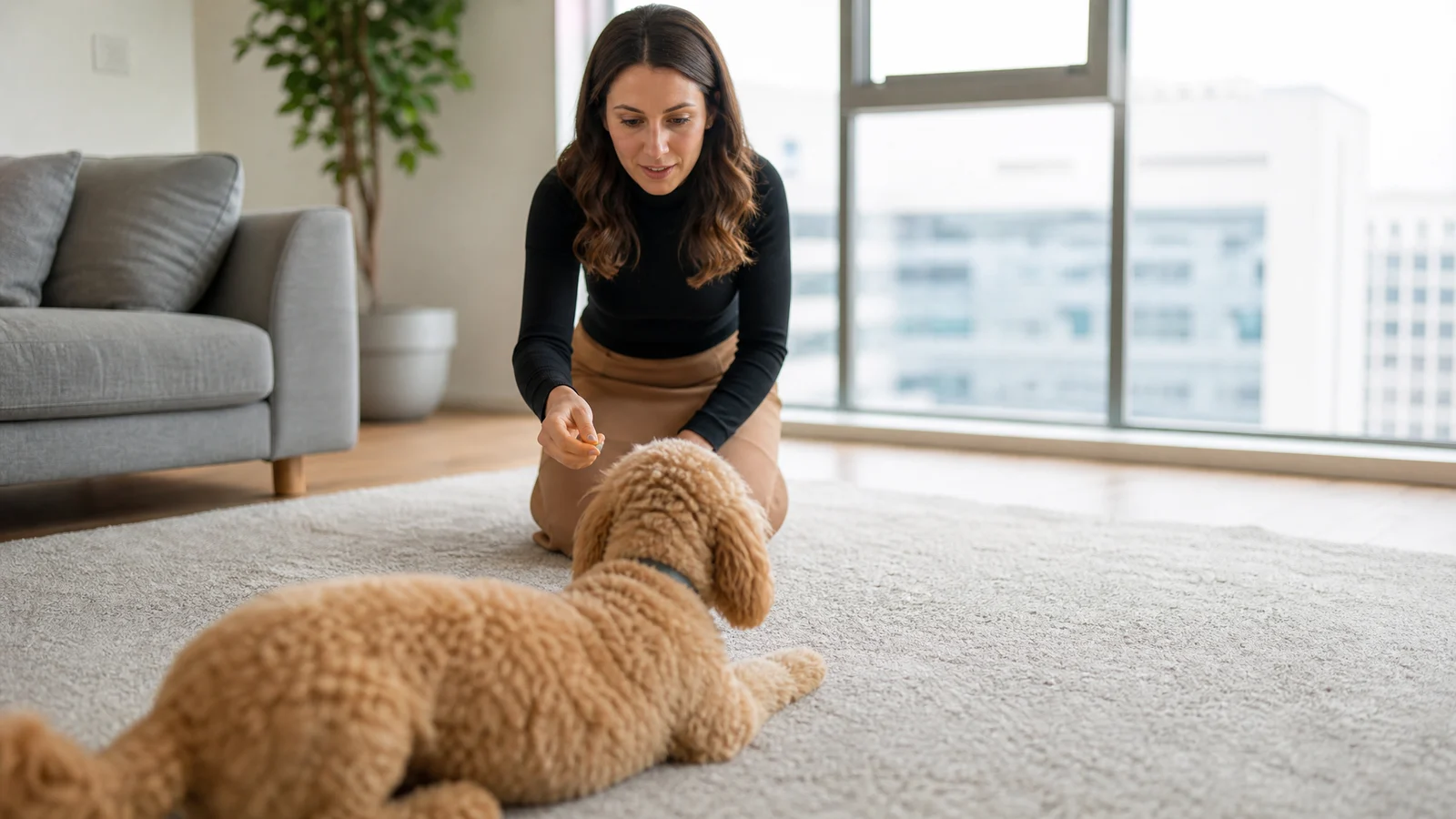
Your puppy comes home wanting to meet everyone. Owners describe dogs who spot a person from far away and wiggle the whole way over, and that charm is your raw material. Socialization is most productive between 3 and 14 weeks, so you are inside the window on day one. Keep sessions short, reward name response and sit, and build potty trips around meals and naps.
Greeting manners need their own practice. A puppy who loves people can get so excited that the hello turns physical, with mouthing, grabbing or swatting at someone who only wanted to pet. The same dog may sit calmly for strangers in public and turn boisterous at home. Rehearse greetings in every setting, and reward a closed mouth and four paws down each time. Manners are learned place by place, so practice where the real hellos happen.
Adolescent Stage
From around six months, expect slower responses, more testing and a few reversals you thought were finished. House training is the classic one. Some puppies go weeks without an accident and then have one with no warning, right after waking or while waiting at the door for shoes. Owners trace these to slack routines, a different walker while they were away, guests arriving, and changing poop habits around six months.
Go back to basics instead of assuming the training failed. Take your dog out after meals and stay out until they go, a fix that cleared up many cases, including stretches of refusing to poop on schedule. Brief any substitute walker on your routine. Night trips may need an alarm until the bladder matures. Excitement peeing at the door can last for years, so ask guests to ignore your dog until the first rush passes.
Young Adult Stage
In the second year your dog looks grown and sometimes still acts like a puppy. Excitability does ease with age, but the timing varies widely. Owners report dogs who were tolerable around age two, very chill by three, and roughly normal by five, while others were still very excitable at 3½. Plan for the long haul rather than one stage.
Keep sessions playful, reward calm, and treat each plateau as normal. Regular checkups with your veterinarian matter too, since an abrupt shift in how your dog acts can sometimes have a physical cause.
Mouthing and Chewing in Puppy Training
Mouths are how Goldendoodle puppies study the world, greet people and ask for things, so read the context before you pick a fix. Owners link mouthing to being overtired, to wanting attention for a potty trip or play and not getting it, and to excitement when someone arrives. Keep the response kind, because current evidence backs reward-based methods only for every kind of dog training.
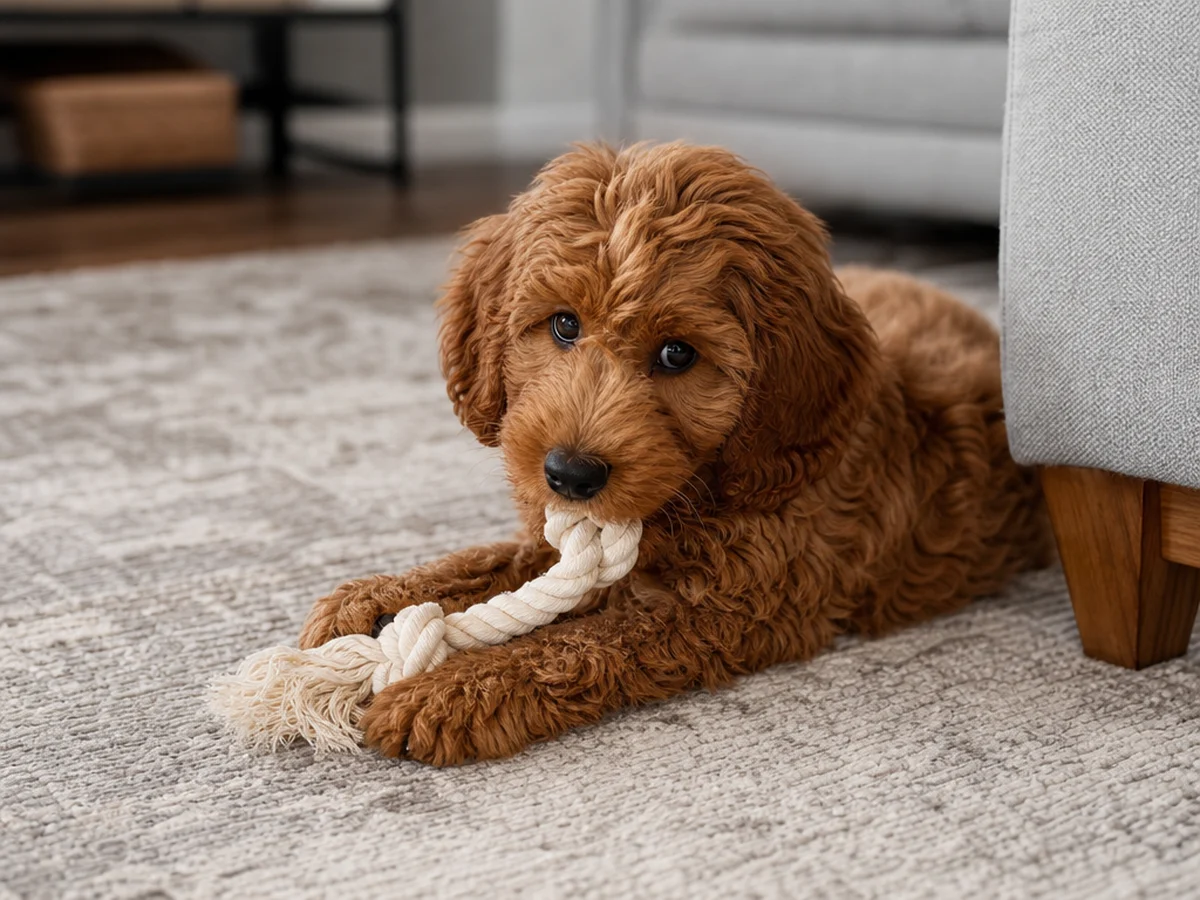
Teething Pain
You see chewed table legs, shoes and hands, and you hear steady gnawing. Teething drives much of this in young puppies, so relief is the real need. Rotate a handful of durable chew toys so each one feels new, and trade any stolen item for a treat or a better chew. Some puppies skip people and go for furniture, and the same redirect works. Mention sore gums at a regular vet visit.
Play and Greeting Mouthing
Play mouthing looks like a puppy who turns bitey the moment someone they love walks in, then goes for legs, pants or skirts and ignores the toy you offer. Excitement is the cause, so lower it first. Stop moving, say a calm interrupt word, and turn away. This often calms the moment. If it does not, a short break in a safe, boring spot resets the mood.
Calm greetings can be trained, and owners report real changes within about a week. Try these setups:
- Greet your dog outside first, then move indoors and allow only calm petting.
- Send your dog to a mat or ottoman for scratches and cuddles when you arrive, and reward them there.
- Use a gate or leash for guests so you control the first moments, and ask visitors to ignore your dog until the rush passes.
- Supervise every meeting with children, since an excited hello can include a swat at a face.
Some Goldendoodles keep mouthing into adulthood without any pressure, taking your arm to lead you somewhere or your whole hand as a hello. That differs from puppy biting and is usually friendly. Hand over a toy and reward them for holding it. A mouthing phase can last about six months, and it can return in a new place such as daycare, so restart the basics there.
The Carrying Instinct
The Golden parent was bred as a gundog, and some Goldendoodles love to grab things in their mouths. You may see a dog who builds a nest from your dirty laundry after you come home. Keep a soft toy by the entrance and hand it over as you walk in. Trade for treats when a item you want back goes missing, and play carry-and-trade games with toys. A full mouth is a quiet mouth.
Whining and Barking in Puppy Training
Noise is information, so decide what you are hearing before you respond. The Poodle parent rates higher for barking and watchfulness than the Golden parent, so a Goldendoodle could land anywhere on that range. Match the sound to the situation:
- Whining in the crate or at night in the first weeks usually means the room is new and you are far away. Move the crate closer, add a chew, and widen the gap slowly.
- Whining at you often means your dog wants a potty trip or play. Check the potty need first, then reward quiet moments so polite asking is what pays.
- Barking at passersby, doorbells and sounds is alerting. Call your dog to you, reward quiet, and give them a job like finding a treat on a mat.
- Barking or pacing while you are busy is boredom. Both parents have high mental stimulation needs, so a food puzzle, scent game or short training session beforehand helps.
- Crying or barking when you leave is attachment. Leave for a moment, return calmly, stretch the time gradually, and give a stuffed chew as you go.
- Whining before a walk or at the door is excitement. Wait for a breath of quiet before you clip on the leash or open the door.
Age changes the response. Young puppies cry from need and unfamiliarity, so meet the need and build routine. Teenagers bark more from boredom and alerting, so add exercise, brain work and a quiet cue you reward. If distress is intense, or you see repeated accidents only when your dog is alone, ask your veterinarian for advice. Reward the quiet you want instead of chasing the noise you do not.
Shy Goldendoodle Puppy Moments
Most Goldendoodles are outgoing, since both parent breeds are described as open to strangers. So a puppy who freezes at a hat, a skateboard or an outstretched hand surprises owners. Treat it as a moment, not a verdict. The Poodle parent's standard lists shyness as a major fault, and a Goldendoodle may inherit those traits, which is why early, positive socialization matters.
Before Four Months
This is the window that counts. Introduce new people, surfaces, sounds and places in small, gentle doses, each paired with treats. Let your puppy approach at their own speed and give distance when they back away. Sign up for a puppy class, and a few calm meetings will beat one crowded afternoon.
This is general information, not medical advice. Your veterinarian can tell you which places are safe for your puppy given their vaccine schedule, so check before you plan outings.
After Four Months
The window narrows but does not shut. New wariness can show up in the teen months, so keep exposure going. Start far from the trigger, reward calm looks, and close the gap slowly. End before your dog gets stressed, and never force a greeting. Invite calm, friendly dogs and people over.
If fear lingers or turns into aggression, ask your veterinarian for a referral to a qualified, reward-based behavior professional. Confidence is built in small, rewarded steps.
Ignoring Cues in Puppy Training
A dog who once spun into a sit now stares past you. Teenage selective hearing is common, and patient reward-based training brings most dogs through the phase well behaved. Your dog is not forgetting. The world got more interesting, their body got bigger, and cues practiced only in the kitchen stop paying anywhere else. Eagerness to please fades when your reward stops competing.
Distractions
Rebuild focus the way you built it at the start, with the difficulty dialed down:
- Drop back to a quiet room and ask for easy cues with strong treats.
- Add one distraction at a time, starting far away.
- Raise reward value as distractions rise, using real-life rewards like a sniff or a game.
- Use a long line in open spaces so recall practice stays safe.
- End sessions while your dog is still keen.
Consistency
Every person in the house must ask the same way, use the same cue words and reward the same behavior. As one guide to jumping puts it, the whole family follows the program all the time, because a dog cannot be allowed to jump in some situations and not others. Greetings are where households slip most, so agree on one door routine and keep it. The teen months test your steadiness more than your dog's.
Training Your Goldendoodle Past Two
Past two, the work shifts from teaching to upkeep. What stays is the breed's sociable, mouthy, playful core, and the greetings you shaped will still need light maintenance. What settles is the raw excitability, though on its own schedule. Some dogs mellow by two or three, others take until five, and a few stay bouncy at 3½. Plan accordingly.
Expect a few minutes of practice most days rather than long sessions. Keep a settle cue sharp, rehearse door and guest routines, and add fresh challenges such as new tricks or scent games, since both parent breeds need mental work. Excitement peeing may linger for years, so keep asking guests to ignore your dog at first. For deeper patterns, see our guide to Goldendoodle behavior problems.
Book regular vet visits, and mention any sudden shift in behavior when you go. Training a Goldendoodle is a long game, and the dog who greets you with a full-body wiggle is worth the years of steady, playful practice.
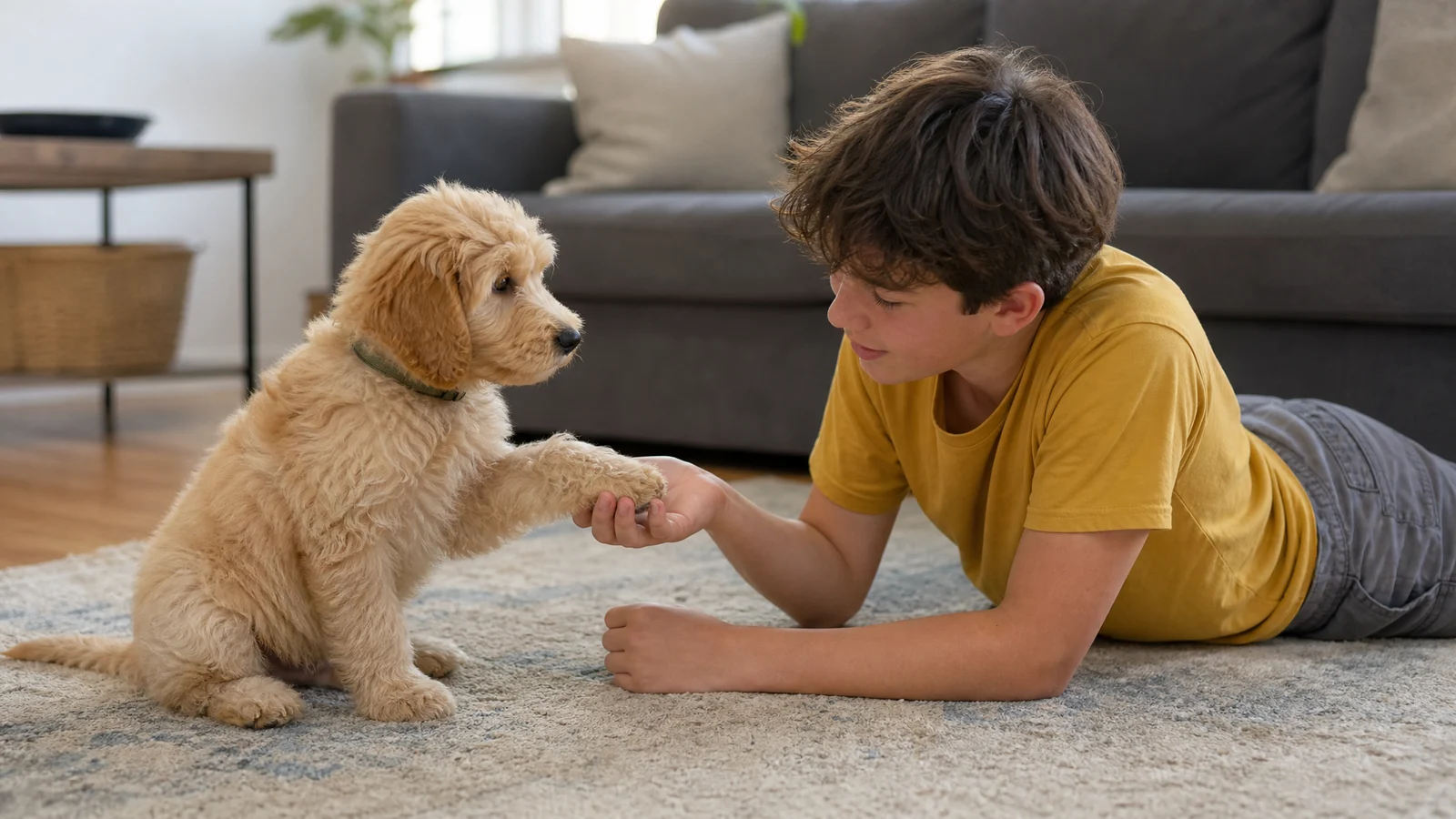 Exercise and jobsGoldendoodle Puppy Tricks: A Reward-Based Skill Tree
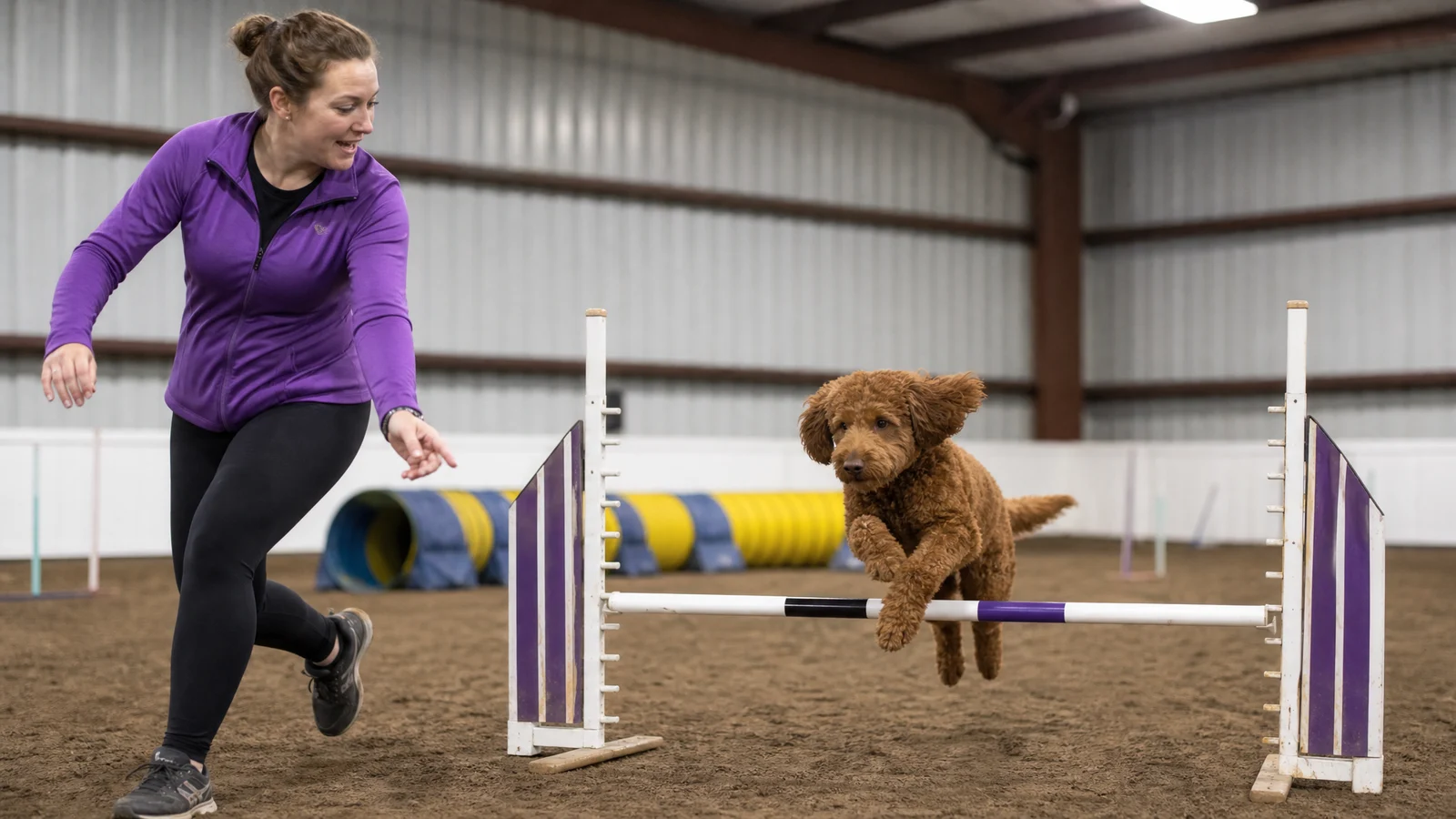 Exercise and jobsGoldendoodle Sports and Jobs That Fit the Individual Dog
 Training basicsHow Do You Train a Goldendoodle? A Reward-Based Guide for Owners
