 Goldendoodle
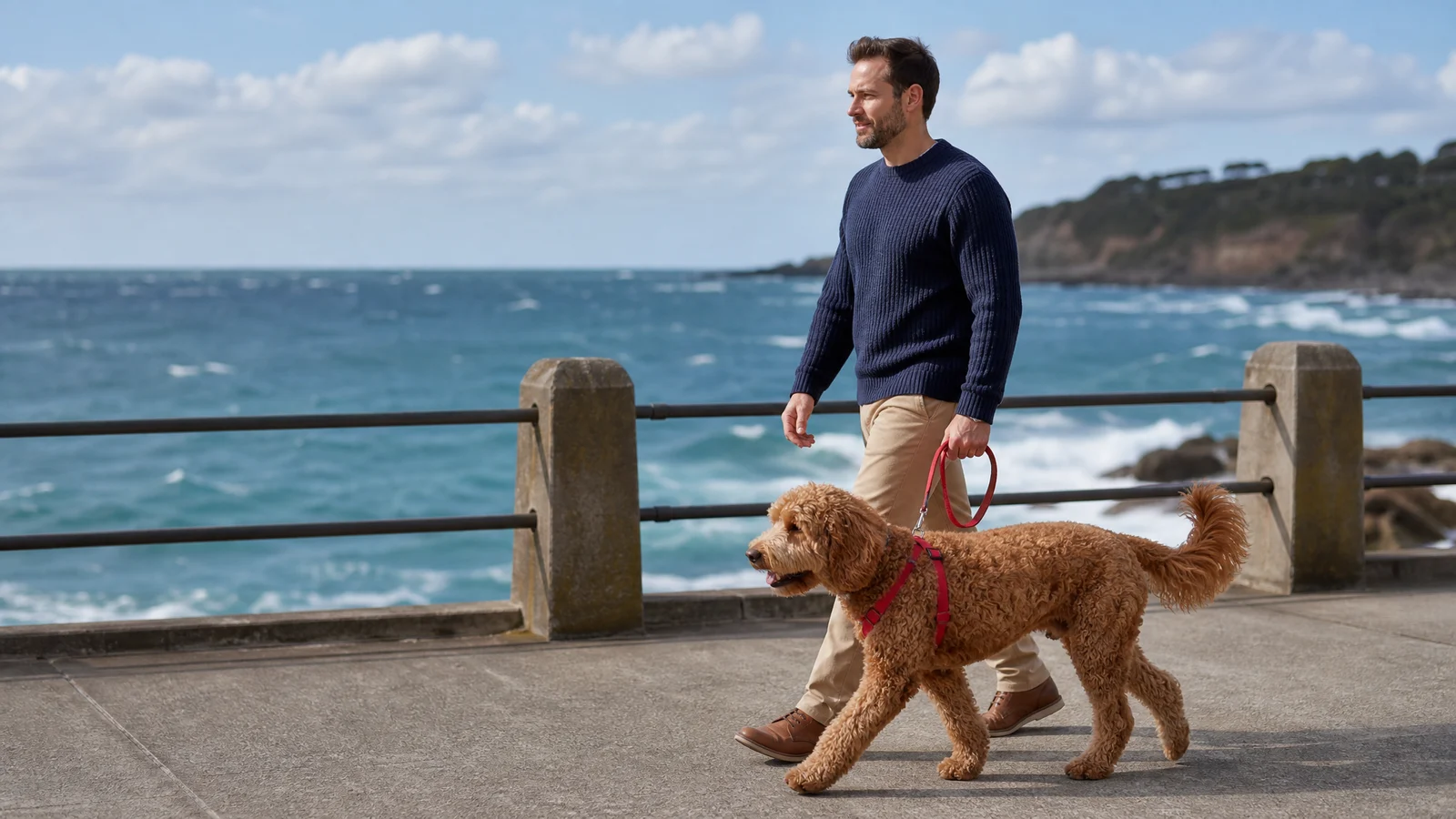
A familiar walk can change character at one corner. Your full-grown Goldendoodle moves comfortably beside a quiet lawn, then pulls hard toward a narrow sidewalk filled with approaching people. Treating the entire route as one lesson hides the difference between a place where learning is possible and a place where safe passage takes all your attention.
Adult size makes those decisions practical, not merely cosmetic. Choose walking equipment and routes for the dog in front of you, since a Goldendoodle's parentage cannot tell you exactly how large, strong or socially confident they will be.
Below, we divide the route into teaching space, necessary transit and available exits. You will build loose-leash steps where success is realistic, distinguish lunging from ordinary pulling and decide when a shorter outing offers better practice than completing the usual loop.
A Route Audit Before Goldendoodle Leash Training
Walk through the route in your mind before taking the dog out. Identify blind corners, narrow gates, stretches beside fast traffic and places where other dogs often appear. Your first training location should offer space to stop or turn without blocking someone else's path.
Space for the Person Holding the Leash
Choose steady footing and a secure grip that leaves your hand free of wrapped leash loops. Keep loose loops clear of your feet. A large adult dog can change direction quickly, so your exit should not depend on stepping backward over a curb or through parked bicycles.
If you cannot safely retain the leash when your dog surges, get in-person help before repeating the difficult route. A reward-based professional can assess equipment, handling and suitable practice locations together. A longer walk is not worth rehearsing a situation in which you may lose control.
Space for the Dog to Notice Things
Look for a stretch where your Goldendoodle can see people or dogs from a comfortable distance. The useful distance is the one at which they can still respond and move with you. It changes with the setting, the approaching individual and the dog's state that day.
A quiet hour can make an ordinary sidewalk usable. An open grassy area may help too, provided access is permitted and there are no loose dogs approaching. Avoid turning another person's dog into a stationary training prop.
| Part of the route | Useful task | Reason to change plans |
|---|---|---|
| Open, quiet stretch | Practice a few rewarded loose-leash steps. | The dog cannot disengage from the surroundings. |
| Narrow necessary passage | Move through safely with close attention. | A person or dog removes the available space. |
| Quiet side path | Exit, pause and decide whether to continue. | The path leads toward another unpredictable encounter. |
Leash Equipment for an Adult Goldendoodle
Fit equipment to current measurements and movement, not the puppy size on an old label. A comfortable harness and suitable leash should let the dog walk naturally while giving you secure control. Check fastenings, wear and fit before using equipment in a more demanding location.
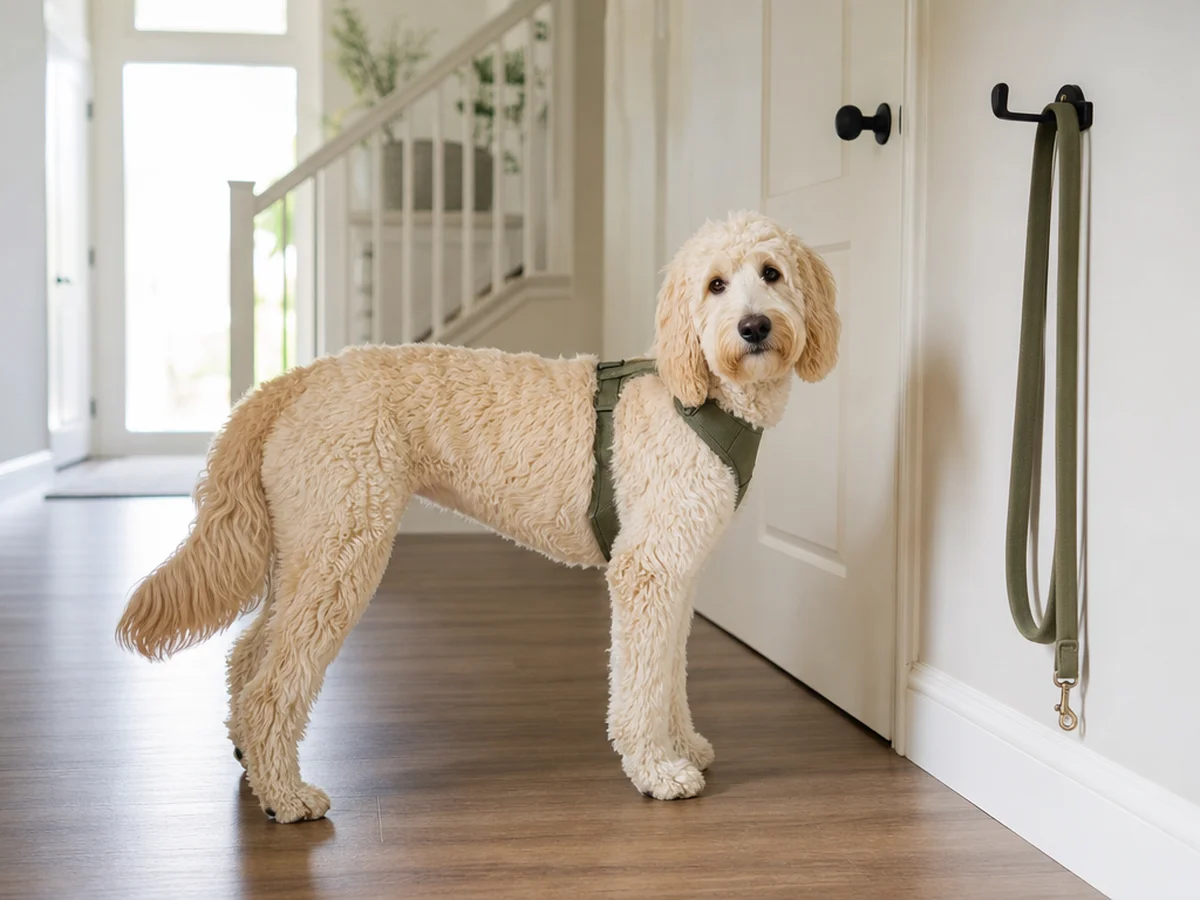
Coat can make fit harder to judge by sight alone. Feel beneath the fur and check the manufacturer's fitting guidance, then watch for twisting as the dog walks. Recheck after a groom or a body change instead of assuming the same strap setting will always work.
Introduce unfamiliar equipment in a calm place with rewards for voluntary participation. Put it on briefly, allow easy movement and remove it before the dog becomes worried. The equipment should be familiar before the street adds traffic, smells and approaching people.
Use enough leash for a comfortable curve where space allows, while keeping the dog out of roads and other people's path. Extra length near a blind corner can create an encounter before you can see it. Adjust the available room smoothly as the surroundings change.
AVSAB's reward-based training guidance supports teaching a useful alternative and arranging conditions for success. Equipment supplies safe connection while you do that teaching. It does not explain to the Goldendoodle which walking choices will earn a reward.
Loose-Leash Lessons on an Easy Stretch
Pick a short area without a destination the dog is straining to reach. Begin when they can notice you and accept a familiar reward. You are teaching movement on a slack leash, so an exact heel position or continuous eye contact is unnecessary.
- Reward the dog for standing near you while the leash has a visible curve.
- Take an easy step and mark the moment they move without tightening the line.
- Deliver the reward close enough that the dog can collect it without crossing in front of your feet.
- Add a small amount of travel while rewarding the useful steps before a surge develops.
- Finish with permission to explore a safe nearby scent, while retaining comfortable leash control.
The RSPCA's loose-leash exercise uses rewards and pauses in forward movement to teach this distinction. In your practice stretch, stop when tension begins if it is safe to do so. Resume when the dog returns to comfortable slack, making the next stretch easier.
A repeated pull, return and treat sequence means rewards may be arriving too late. Pay attention to the steps before pulling. Mark those while the line is still loose so coming back after a surge does not become the only part of walking that pays.
Keep the first attempts small. Success in a quiet area does not oblige you to tackle a crowded street.
Return to the easy stretch on another day before expanding the route. A dog may need several relaxed visits to use a newly learned walking skill without close prompting. Notice whether they begin to stay nearby of their own accord, rather than waiting until you have shown them food at every step. That choice gives you something useful to reward.
Use familiar reward words from your Goldendoodle foundation training. Adding several new cues while you are also learning leash handling makes feedback less clear. One known marker and a simple invitation to move are enough to start.
Lunging Changes the Goldendoodle Leash Plan
Pulling toward a scent and lunging at an approaching dog are not automatically the same problem. Excitement, frustration or worry can produce similar outward movement. Avoid assuming a social-looking Goldendoodle simply needs permission to greet everyone.
The Dog Wants to Reach Someone
A dog who expects every person to offer attention may find a busy path frustrating. Practice noticing people from farther away and reward a willing return of attention. Let most encounters end with comfortable passing rather than access to the stranger.
Battersea's leash frustration advice distinguishes dogs frustrated by restricted social access and recommends teaching useful movements in quiet settings first. Do not apply that explanation automatically to a dog who may be afraid. Observation and individualized support matter when the cause is unclear.
The Dog Wants More Distance
Turning away, slowing down or becoming tense can precede an outward lunge. Give the dog room before demanding a sit beside the approaching trigger. A clear exit may be more helpful than offering better food while the person or dog continues closing in.
Keep regular veterinary visits and bring up new reluctance to walk or a sudden change in tolerance. If lunging is frequent, ask for a qualified behavior assessment. Training choices should fit the reason the dog is struggling, not just the noise or movement you can see.
The Encounter Arrives Without Warning
Use an already practiced turn to leave when possible, then reward once you have space. Safety takes priority over a polished response. If the dog cannot follow a cue, manage the connection and get clear rather than repeating words while the situation becomes harder.
After an intense encounter, choose the simplest route home. Note where a safer exit would have helped.
Narrow Passages Need a Leash Transit Plan
A narrow path is often a poor classroom because neither participant can create much space. Check the far end before entering and wait in a wider area if someone is approaching. Your dog can be rewarded for standing or sniffing comfortably while you make that decision.
Move through when the route is clear, maintaining a leash length that protects other users without restricting every natural step. Keep rewards accessible so you do not stop in the narrowest point to search a pocket. A calm passage is useful even if it contains no formal exercise.
If a surprise closes the route, use a safe side space or retreat while room remains. Avoid squeezing past another dog to preserve the planned loop. A Goldendoodle's enthusiasm does not give them permission to crowd someone who has no easy way to leave.
Public greetings can wait for a suitable location. The polite Goldendoodle greeting lesson explains how people can help with those interactions. Walking past quietly is a separate success and should remain available even when the other person wants to say hello.
Joining Goldendoodle Leash Practice Into an Outing
Combine one teachable stretch with a comfortable exploration area and an uncomplicated route home. That is enough for an initial outing. Your dog needs opportunities to use their nose and move naturally alongside the short periods when you are giving precise walking feedback.
Choose the return route before extending the outward journey. A dog who walks well away from home may have less attention left for the same crowded corner on the way back. Turning early can preserve both the training and your ability to finish safely.
Change one challenge at a time. You could use the same quiet route with a different adult handler, or the same handler at a slightly busier time. Combining new equipment, new surroundings and a new person makes it difficult to identify what caused a setback.
Another adult should see the route choices as well as the reward technique. Show them where you pause, which corners you avoid and where there is room to turn away. A shared plan is more useful than telling them the dog is now trained to walk nicely.
The Route Change That Improved the Walk
Afterward, record the stretch where slack walking was easiest and the place where the plan stopped working. Next time, adjust that location, timing or exit before asking for more distance. Progress can mean an adult Goldendoodle passing one familiar corner comfortably, with a handler who knows when to practice and when to choose another way.
 Puppy trainingGoldendoodle Biting: Teaching a Puppy Soft Mouth Manners
 BehaviorCounter Surfing Goldendoodles: Management and Mat Training
 BehaviorTeaching a Barky Goldendoodle to Ask for Play Politely
