 Goldendoodle
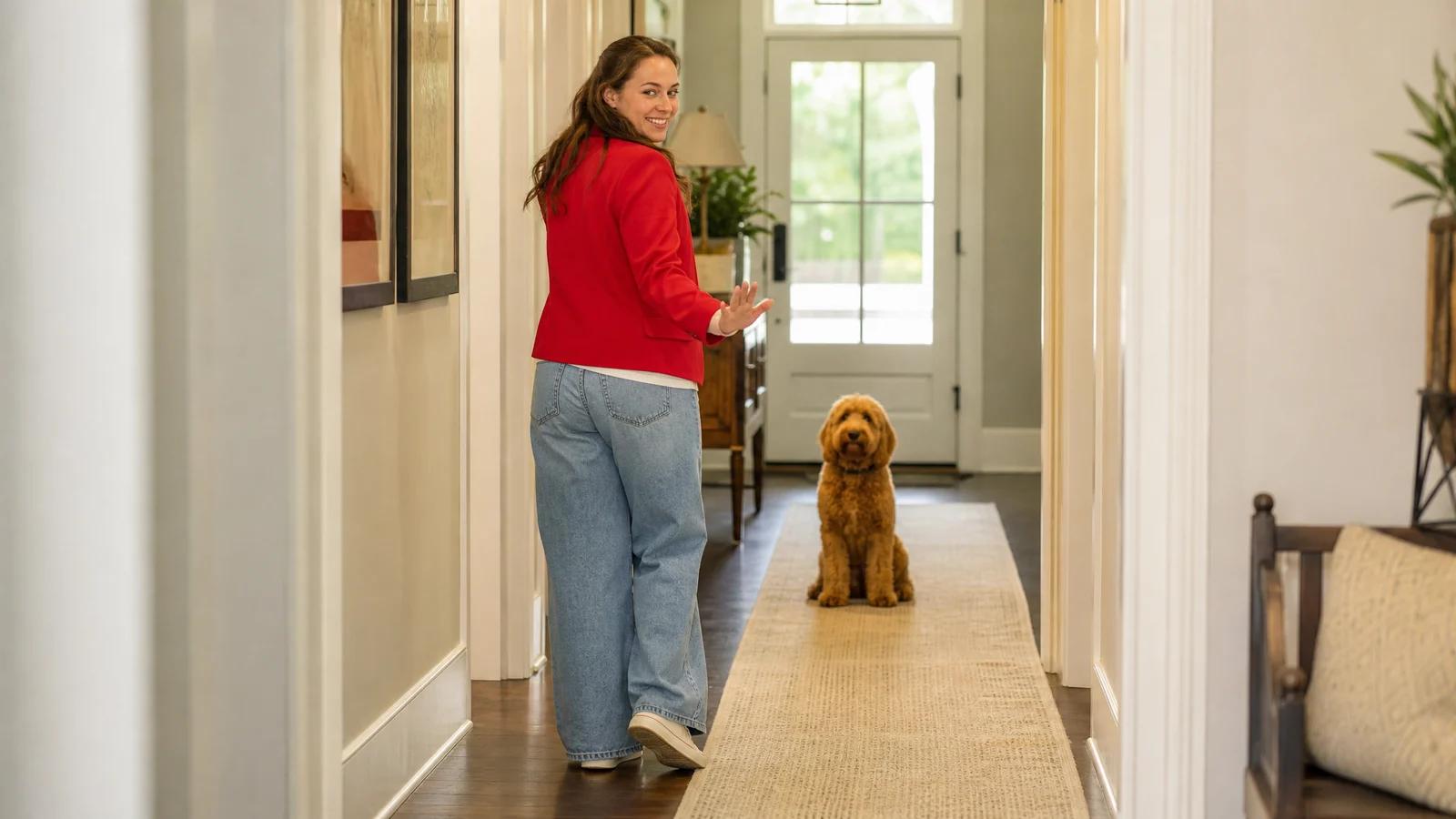
Many Goldendoodles are experts at following you from room to room, which makes a stay the one cue that asks for the exact opposite. That reversal is why a lesson that looks easy on paper wobbles the first time you take a single step back. The good news is that a stay gets built, not demanded.
It starts with a word that tells your dog they are free to move again, grows one small piece at a time, and only then meets the real world of doorbells, towels and visitors. Rewards pay for the holding itself, so your dog learns that staying put is how good things happen. Below you will find the stages in the order we teach them, plus fixes for the moment a visitor or your own footsteps pull your dog out of position.
Stay and Wait Are Two Different Cues
Before any treat comes out, settle which cue you are teaching, because stay and wait are different jobs. Guidance from Cornell's veterinary college separates wait from stay: wait is a temporary hold-back where the position does not matter, such as pausing at a doorway, while stay means holding a position until you return or release. That difference decides where each word belongs.
- Wait fits a doorway, a crate door or a food bowl on its way down, where your dog should expect the next instruction within moments.
- Stay is for the times you step away and come back.
- A mat is a different job again, and our Goldendoodle mat training guide covers that one.
Keep each word meaning a single thing, because a dog who wants to be near you will test every blurry cue. A Goldendoodle may carry a sociable streak from both parent breeds, so the clearer the picture of what each word asks, the less your dog has to guess.
Teaching the Release Word Before the Stay
Every stay ends the same way, so start with the ending. A hold is only fair to ask for once your dog knows what lets them off the hook, and a short word that never turns up in ordinary conversation does that best, since a release you say by accident teaches your dog that holding means nothing. Run this drill in a quiet room:
- Ask for a sit or a down your dog already knows.
- After a second, hand over a treat calmly and say your release word right away.
- Encourage your dog to stand up and move by stepping away or patting your legs, and praise them as they go.
- Repeat until your dog gets up the moment they hear the word.
Say the word in a bright, upbeat voice, because the release is the one moment your Goldendoodle is allowed to bounce, and that burst of fun is part of what makes holding worthwhile.
Training a Goldendoodle to Stay in Place

With the release in place, the hold itself can grow. A stay asks a dog to keep a position no matter what is going on around them, so it helps to split it into three separate parts: duration, distance and distraction. Work on one at a time, in that order, and make the other two easy whenever one gets harder. Begin somewhere dull, and let the surroundings get livelier only when the hold feels easy.
Time First, Right Beside You
In the early rounds we keep things almost boring on purpose. Stay close, keep the room quiet, and ask for a sit or down. Wait a second or two, then calmly hand over a treat and give your release word. Add a little time on each round, and always pay while your dog is still in position, because a treat that arrives after they get up rewards the leaving instead of the holding. Once the hold is steady several times in a row, add a little more.
Adding the Goldendoodle Stay Command
Once your dog holds for a comfortable stretch, start saying the word. Say it once, just as they settle, so it labels something they are already doing, and add a flat palm held out like a stop sign if you want a visual cue too. Keep your voice and praise low-key while the hold lasts. A burst of excitement is the easiest way to pop a Goldendoodle out of position, so the cheerful voice belongs to the release, not to the stay.
Distance, Then Distractions
A step back looks like an invitation to a dog who follows you everywhere, so keep your body quiet: no leaning, no beckoning hands. Ask for the stay, take one step back, return right away, then pay and release. Grow the distance a step at a time, and always walk back before you release, because letting go from across the room may teach your dog that running to you is what that spot means.
Distractions come last, and they start tiny: a clap, a dropped spoon, a ball rolling by. Whenever a new challenge arrives, make the others easier, so a dog who holds well in a quiet room is only asked for a few seconds with the ball in play. Gentle Goldendoodle handling practice goes much further when your dog already knows how to hold still on request.
When a Social Dog Breaks the Stay
Even a well-built stay breaks sometimes, and in a sociable dog the reason is often friendly rather than defiant. Knowing the usual patterns makes the repair quicker:
- Following you: A step back reads like an invitation, so walk back, pay at the spot and make the next step smaller.
- Greeting a visitor. People arriving is the biggest distraction a friendly dog meets, so give company its own practice.
- Creeping forward a paw at a time means the hold ran longer than your dog could manage, so pay sooner and let the length grow back more slowly.
In every case the repair is the same: calmly guide your dog back to where they were left, make the next try easier, and skip the scolding, since a dog who is still learning needs a clearer picture, not a louder voice. If a dog who used to hold still suddenly cannot, mention it at your regular veterinary visits and keep sessions easy until then.
Details Behind a Social Goldendoodle's Stay
A few small choices decide whether a stay survives a real afternoon, and most of them involve how fast you ask for more, how you sound and who else happens to be in the room.
How Fast Can the Holds Get Longer?
Slowly enough that your dog is right almost every time. The best guide is to keep each jump small: a dog who holds for 15 seconds is not ready for a full minute next, and a hold that falls apart means the jump was too big.
Should I Keep Praise Quiet During a Stay?
Yes, while the hold lasts. Calm praise and an occasional quiet treat keep an excitable dog from deciding the party has started, and the big, happy voice arrives with the release, where it works as part of the reward.
Why Does Company Break My Goldendoodle's Stay?
A person arriving is the best thing that can happen to a friendly dog, which is why company can beat a treat. Rehearse with one quiet helper first and pay whenever the hold survives, then let the hello itself be the release, so your dog learns that holding still is how greetings begin.
Is a Wiggling Goldendoodle Still Staying?
A wagging tail and a swaying body can still count, as long as the paws stay planted and your dog remains in the spot. Pay for the position and ignore the wiggles for now, then ask for a stiller hold later once the basics are easy.
Using the Stay on Towel and Brush Days
Once the basics hold, a stay does its best work in small handling moments: wet paws after a rainy walk, a brush through a tangle, a harness waiting to be clipped on. Ask for a short stay, do one small piece of the task, then pay and release. A Goldendoodle who learns to stay put for the towel is learning that your hands are nothing to dodge or pounce on, and each calm towel day makes the next brushing or harness easier for both of you.
Holding still for a towel is a small chore with a big lesson inside it, and our Goldendoodle e-book brings that same calm pacing to every skill still on your dog's list, written plainly and with generous detail. It carries no price tag for readers, and the sign-up box on this site starts the process.
 Training basicsHow to Teach a Goldendoodle to Lie Down
 Training basicsHow to Teach a Goldendoodle to Heel
 Training basicsHow to Teach a Goldendoodle to Leave It
