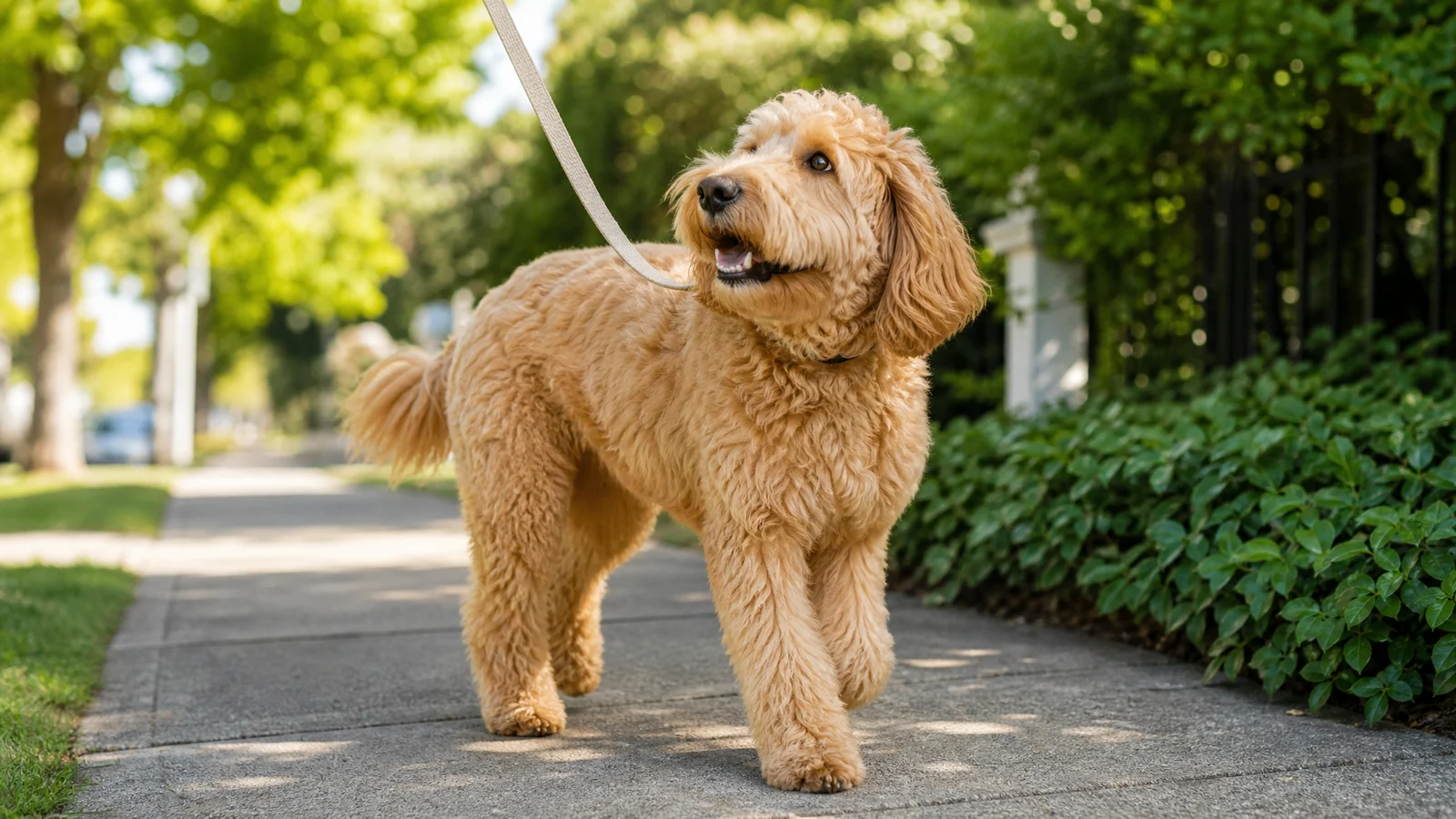
 Goldendoodle
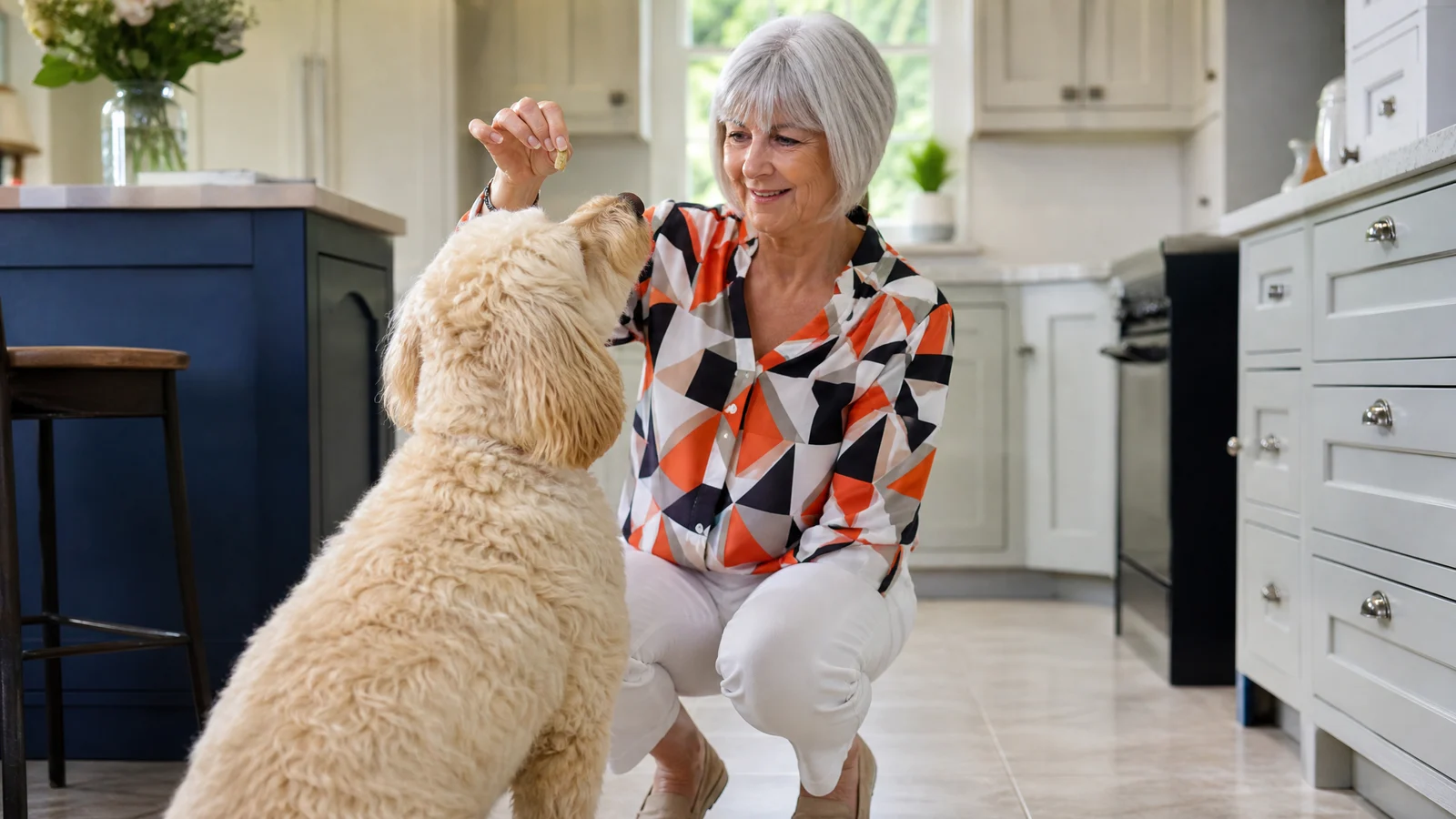
Nearly everything about a Goldendoodle's first sit happens in the few inches between your fingers and their nose. Hold the treat too high and they hop for it, send it too far back and they step away, and in the right spot their rear drops to the floor almost on its own. That is good news in a household with a bouncy, people-loving dog, because a sit gives all that enthusiasm one clear job at doors, bowls and hellos.
Both parent breeds are known for liking people and for training that stays fun, so a Goldendoodle may well treat these lessons as a game. Below, you'll find the hand path that puts a rear on the floor, the stages that swap the treat for a signal and then a word, and fixes for the stalls along the way. Keep every session short and cheerful.
Positive Reinforcement for Goldendoodle Training Starts With Sit
A treat does two jobs in this lesson. It steers the head, and when the head tips up and back the rear folds down underneath it, so the method is a hand path rather than a push. It also pays for the result, which is how a Goldendoodle learns that sitting is worth repeating. Our Goldendoodle training guide shows where this reward-first approach leads once the sit is working.
Set the scene before the first treat. Pick a quiet room, because a dog who loves company will notice every footstep in the hall, and cut the treats tiny and soft so a whole session never turns into a meal. Then decide how a sit will end: a cheerful "okay" and a step backward tells your dog the job is over, which gives every sit an ending they can count on.
Lure the First Sit in Four Moves
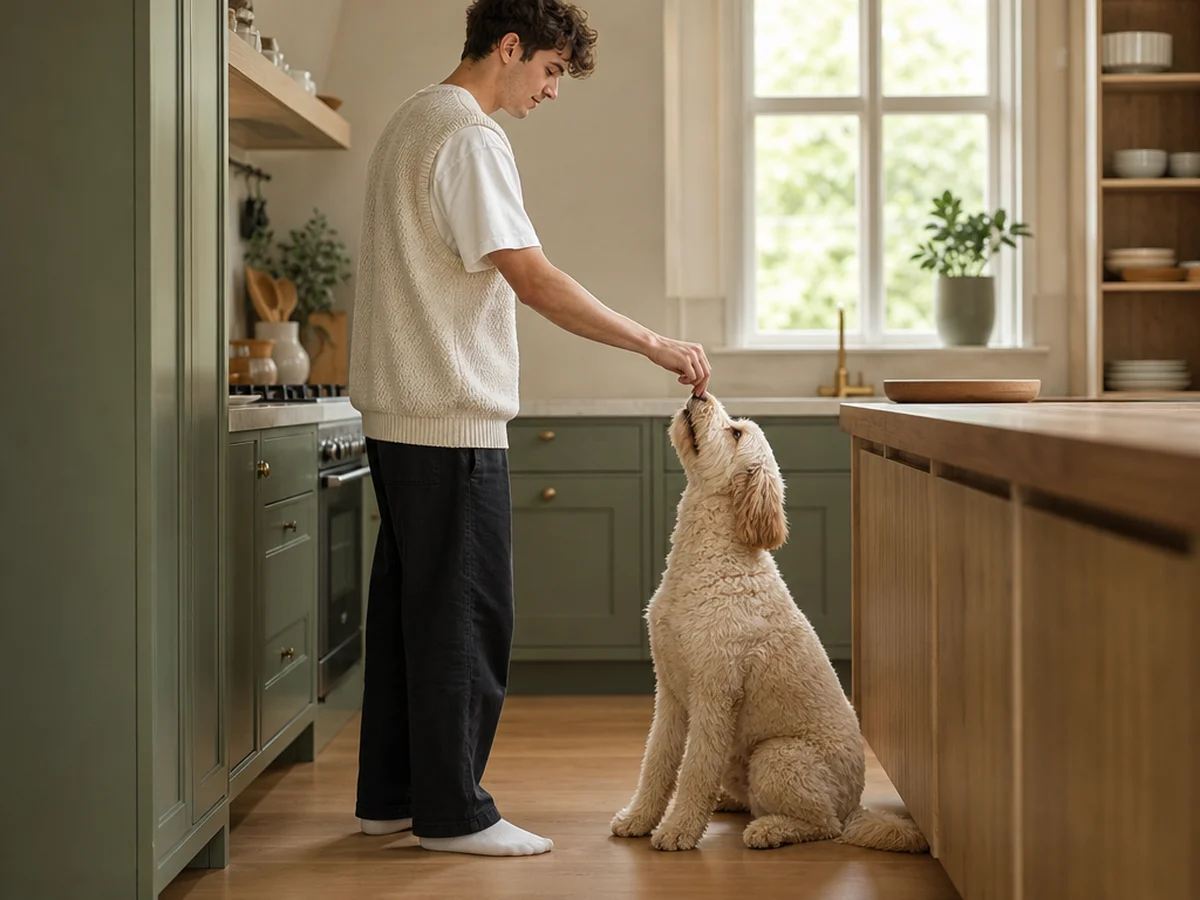
With the room and treats ready, the lesson itself is four moves in a fixed order. Stay on each one until it feels almost boring, because a dull repetition is a dog who understands.
- Hold the treat at the nose: keep it close enough to sniff but not to snatch, and wait until all four paws are planted so the path starts from a standing dog.
- Draw it up and back. Move your hand slowly over their forehead, staying close to the nose, so the chin lifts and the rear lowers instead of the whole dog leaping.
- Pay the instant the rear lands with a bright "yes" and the treat while they are still sitting, because the timing is what they will actually learn from.
- Between tries, let your dog stand or take a step, then begin again so each sit starts from the top and the rear has to travel all the way down.
Move three is where lessons are won or lost, because timing is the whole message. A sit that is paid only after the dog has stood back up teaches them they are rewarded for standing, so keep your treat hand ready near your chest and deliver the moment the rear touches down.
Once the rear drops smoothly several times in a row, you are ready for the next stage. Until then, keep the hand low and slow, because a dog who has only just got the idea needs the same picture again.
Naming the Goldendoodle Sit Command
Once a rising hand reliably lowers the rear, your dog already knows how to sit. What they lack is a name for it and a reason to do it when no treat is showing.
First, make the same motion with an empty hand and keep the treat in your other hand or pocket. Mark the instant the rear lands and pay from that hidden supply, so the hand comes to mean sit and the treat becomes the thank-you rather than the bait.
Then give the word its job. We add it only now, because a name means little until your dog knows the move. Say "sit" once, in your everyday voice, and follow it with the hand motion. After a few rounds your dog starts folding down as the word lands, and the hand can shrink to a small lift of your fingers. Repeating the word teaches that the first one was optional, so leave a quiet moment for the answer.
Carrying the Sit Into New Rooms
New places come last, and they feel like new lessons to your dog. Ask from their other side, from behind you and from a few steps away, then try the hallway and the yard, offering a bigger hand or a closer spot whenever the sit wobbles.
Once the word works, pay most sits but not every one, so a sit stays worth giving when your pocket is empty. The same ladder of a quiet room first and busier ones later works for recall training too, so the patience you spend here pays off twice.
When the Sit Bounces Up or Backs Off
Even a good hand path stalls now and then, and each stall points at something you can adjust. Change one thing per round so you can tell what worked.
- They hop up. The treat is rising too high or too fast, so lower it and slow down until the chin lifts without the paws leaving the floor.
- They step backward: the hand is traveling too far back too soon, so shorten the path or work with your dog's back near a wall or sofa.
- They lie down when the treat drifts toward the floor, so keep the lure level with the nose until the rear lands.
A little bounce is effort, not defiance, so keep the mood light and pay the first calm try generously. If the lure does not interest your dog at all, wait for the sit instead. Because dogs frequently assume the position on their own throughout the day, you can catch your Goldendoodle in the act, mark the instant the rear lands and pay.
Sit is also a physical ask. MSPCA-Angell's sit guidance says older dogs or dogs with hip pain or other chronic pain should not be required to sit, and that a simple wait will do just as well. If sitting ever looks uncomfortable for your Goldendoodle, stop the lesson and mention it at your next regular veterinary visit.
Household Questions Once the Sit Works
Three details sit just outside the lesson itself. They are how your hand adapts to a Mini or a Standard, what dinnertime does to the habit, and who else in the house may give the cue.
Does my dog's size change the lure?
The path is the same at every size: up and back, close to the nose, so the chin lifts and the rear lowers. Your reach is what changes. A Mini's nose is nearer the floor, so kneel or crouch and keep your hand low, while a Standard can follow a hand from a standing position without much stretching.
Will sitting at the table become begging?
It can, if every sit beside your plate earns a taste. Choose the moments where a sit gets paid, such as at the door, the food bowl and the leash hook, and let a sit by your chair earn a calm word and nothing more. Better still, give mealtimes a different job: mat training sends dinner company to a spot of their own.
Can everyone at home give the cue?
Yes, as long as everyone uses the same hand path and the same single word. Let each person run a few practice rounds while you watch and pay, because a hand that rises a little differently, or a word that drifts from "sit" to "sit down," splits one lesson into several.
A Sit Has No Room for a Bounce
Strip the stages away and a finished sit is four paws and a rear on the floor, weight settled, chin level. A Goldendoodle in that shape cannot also launch at the doorway, which is why this one small habit does so much work in a house full of greetings. Your dog still gets to say hello; they just do it from the floor.
Our free Goldendoodle e-book treats every cue that follows sit the same way, with a clear path and a reason behind each move, so your dog's whole training lives in one easy read. Register here, and a copy comes to your inbox.
 Training basicsHow to Teach a Goldendoodle to Stay
 Training basicsHow to Teach a Goldendoodle to Lie Down
 Training basicsHow to Teach a Goldendoodle to Heel
