 Goldendoodle
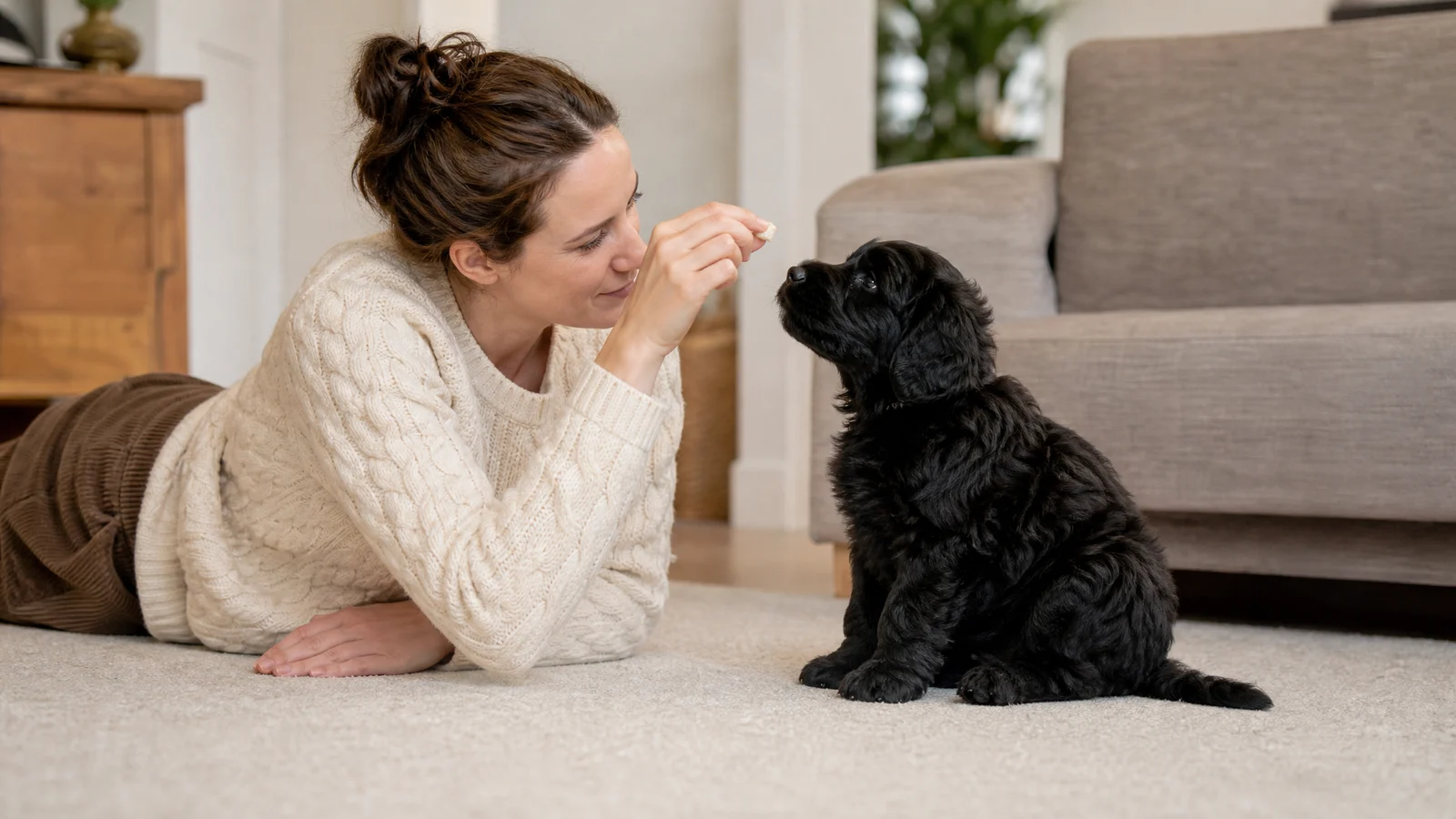
The habits that matter most in a Goldendoodle puppy's first weeks are also the easiest to start: a predictable day, a reward for choices you like and short, gentle introductions to everything new. None of them needs special gear, and all of them can begin before your puppy has learned a single cue.
That is good news if the early weeks already feel crowded. Training begins when the puppy walks in, and most of it looks like ordinary living rather than lessons. What shapes the outcome is steadiness, with everyone in the house rewarding the same things and the puppy never asked for more than they can manage yet.
Below, we cover what to expect as training begins, the daily routines that make learning possible, the first short lessons, careful introductions to the world and the early troubles that have guides of their own.
New Puppy Training Starts at the Door
Waiting for a puppy to settle in before teaching anything sounds sensible, but the settling is already the first lesson. From the moment a Goldendoodle puppy arrives, they are learning what the house expects, so the useful question is what they are learning, not whether they are.
Puppies are best adopted at about 8 weeks, and from then until about 16 to 20 weeks they pass through a window of receptiveness when dogs are most receptive to learning how to deal with new situations. After that, dogs keep learning from exposure, just at a much slower rate. The first few months carry extra weight, then, without turning into a deadline.
A Goldendoodle puppy may arrive with some of the warmth both parent breeds are known for, since both are described as affectionate and people-oriented, but a cross can take after either side. So we plan around the puppy who is actually in front of us: one who likely wants company, explores with their mouth and learns fastest from what earns a reward.
What Most Puppy Households Notice Early
A handful of things turn up in nearly every household during the early weeks. None of them means the puppy is off track, and each one gets a plan later on this page.
- Mouthing: Puppies explore with their mouths, so hands, sleeves and shoes become interesting for a while, which is a normal part of growing up rather than a sign of a bad temper.
- Indoor accidents. House training takes time and supervision, and a puppy learns where to go only as fast as the household makes the right spot easy to reach.
- Complaints about being alone are common in a puppy who has just left their littermates, which is why time apart works best when it is taught in tiny pieces.
- Big feelings about new things: A new sound, surface or visitor may bring excitement or worry, and the reaction tells you how much distance and patience that moment needs.
Seeing these as ordinary early-weeks business keeps a typical puppy day from looking like trouble. It also tells you what to prepare for before the first evening arrives.
Routines That Hold a Puppy's Day Together
Mouthing, accidents and complaints about being alone all get easier to manage once the day has a shape. As a shelter's puppy 101 toolkit puts it, establishing a consistent routine is key in the first weeks, and the reason is practical. When meals, potty trips, naps and play land in a similar order each day, your puppy can predict what comes next, which leaves more attention free for learning.
Build that day around a few fixed points. A resting place that is quiet but not cut off from the household gives your puppy somewhere to recover, and our guide to crate training a Goldendoodle shows how to make that place a happy one. A regular potty spot gives accidents fewer chances. Visit it after meals, naps and play, and pay your puppy well when they go there; the guide to potty training a Goldendoodle puppy holds the full method.
Between those fixed points, your puppy needs supervision more than freedom. Until they have learned what is theirs to chew, keep them where you can see them, or in their resting place when you cannot, and trade a good chew for the shoe whenever one gets interesting.
Everyone in the house helps the day hold its shape here, because a puppy allowed on the couch by one person and shooed off by another learns that rules depend on who is watching. Agree on a few house rules and a few cue words early.
Short Lessons a Goldendoodle Puppy Can Finish
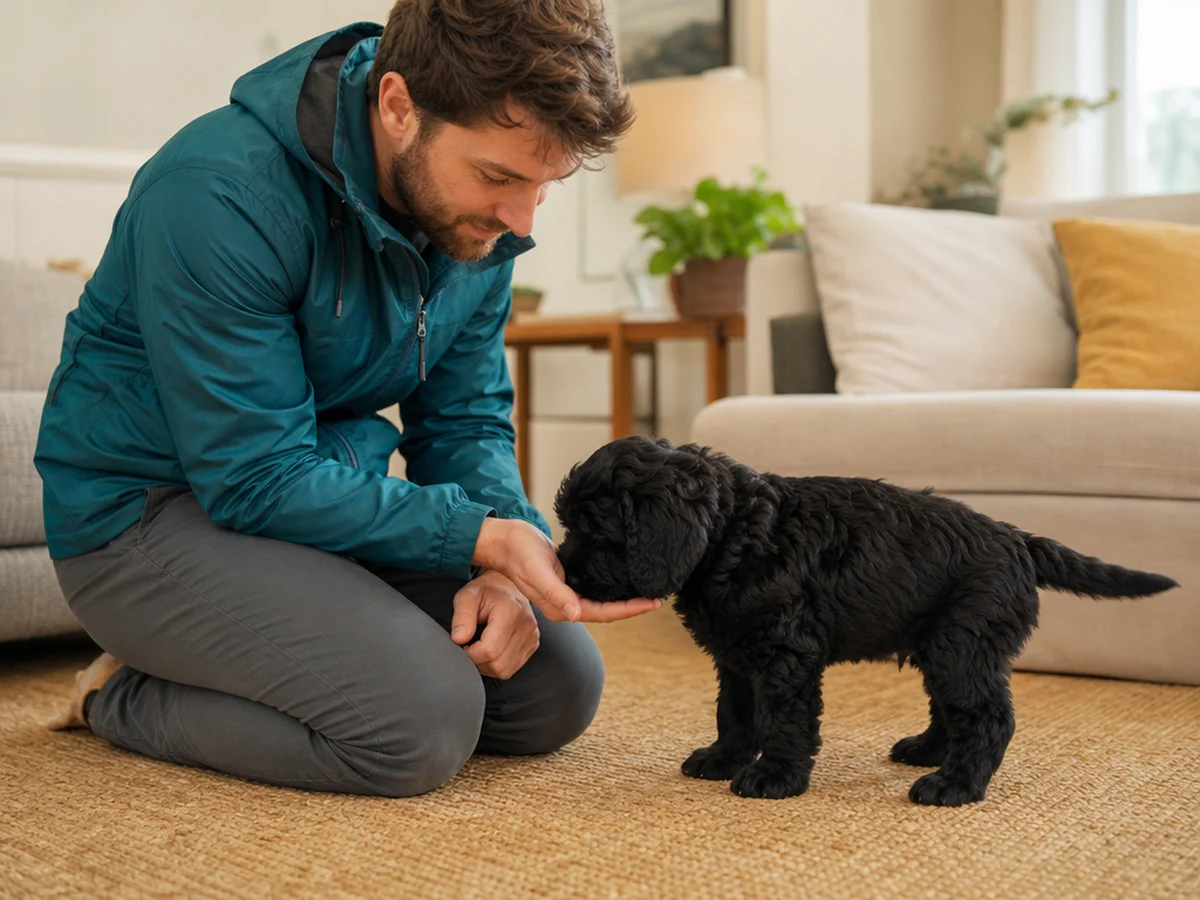
With the day in shape, lessons can fit inside it as small, finished things. Puppies have short attention spans, which is why a sensible session runs for about five minutes per session and why a day of practice can aim to average no more than 15 minutes in total. In practice that means one or two cues, a handful of rewards and an ending before the puppy loses interest, so they come away wanting the next round, which is the first sign the lessons feel like play.
Work out early what your puppy will work for. Dinner kibble can do the job for some puppies on quiet days, a softer and smellier treat is worth saving for harder moments, and a favorite toy or an excited word of praise can pay just as well. Whatever you choose, deliver it quickly, because a reward that arrives late pays for whatever came in between.
A Name Worth Turning Toward
Start with the puppy's name, because it is the cheapest cue you will ever teach. Say it once in a bright voice, and the instant your puppy glances your way, say a short marker word such as yes and hand over a treat. Practice in quiet rooms until the name begins to mean that something good is about to happen, which is exactly what you want when you need their attention somewhere busier.
If they do not look, resist saying it louder; wait a moment, make a small noise and pay when they turn. That keeps the name from turning into a request the puppy learns to ignore.
A Sit Worth a Treat
Sit is often the first cue a puppy learns, and it earns its place because it gives an excitable puppy an easy way to ask for a greeting, a meal or a game. Lure the position rather than pushing it, in this order:
- Hold a treat at your puppy's nose and let them sniff it without taking it.
- Slowly lift your hand up and back over their head, so their nose follows the treat and their rear end lowers.
- The moment their bottom touches the floor, say your marker word and give the treat.
- Repeat until the sit comes smoothly with the hand movement, then say the word sit just before you start the motion.
- Finally, make the same motion with an empty hand and pay from your other hand.
Move from one step to the next only when your puppy does the current step smoothly several times in a row. If they back away or jump up, hold the treat lower and closer. If they stall completely, return to the step before without any fuss, because an easier step is quicker than a longer argument.
Coming Over a Few Steps
Coming when called starts as a game across a hallway rather than a command across a park. Say the puppy's name and a cheerful come, step back and reward the instant they reach you, then let them return to whatever they were doing. That release matters, because a puppy who is only called when the fun ends soon stops hurrying over. Once it feels easy indoors, our guide to recall training for a Goldendoodle shows how to stretch it outdoors.
Goldendoodle Puppy Socialization at a Gentle Pace
Lessons build habits at home, but the world is the larger classroom, and it needs more care than a sit does. Quality matters far more than quantity: a puppy who meets children who frighten or overwhelm them is not being socialized to children, only learning that children are frightening. A puppy would benefit more from meeting one quiet, polite child at a time, and the dog park is not an appropriate place for a young puppy either.
So aim for a few good meetings rather than many. Let your puppy notice a new person, object or sound from a distance where they stay relaxed, pay with a treat while they look, and move closer only if their body stays loose. If they stiffen, stare or refuse food, you were a little too close, so add distance and try a quieter version another day.
People and Visitors
A Goldendoodle puppy may want to greet every person in sight, and the way early greetings go teaches them what greeting means. Ask visitors to stay low and quiet, let the puppy decide when to approach, and pay four paws on the floor. Short, gentle handling by a few familiar people each day also builds comfort with touch, and our handling and grooming practice guide takes that further.
Other Dogs and Outings
Choose calm, friendly adult dogs for early meetings, keep them short, and end them before anyone gets overexcited. Ask your vet which places are safe before your puppy's shots are complete, and keep regular vet visits on the calendar so your puppy's health and handling stay in good hands. If a puppy shows strong fear that does not ease with distance and treats, bring in a reward-based professional trainer early.
Sounds and Surfaces at Home
Ordinary life makes good practice material. Let your puppy walk on tile, a rug and a folded towel, watch the vacuum while it is switched off, and hear a pan lid clink from across the kitchen, with a treat for staying relaxed each time. Make each new thing a little bigger or louder only after the last one has stopped mattering.
Normal Puppy Mess and the Guides That Handle It
Even with a steady routine and careful introductions, the early weeks bring mess, and most of it deserves a guide of its own. What we see most often is that the first move for each trouble is smaller than owners expect, so here is that first move with the full method one link away.
Mouthing gets a toy rather than a scolding. When teeth land on a sleeve, offer something chewable and pay the moment your puppy takes it, then read our Goldendoodle puppy mouthing guide for the whole soft-mouth plan. Accidents get a calm cleanup and a look at the schedule, since an accident usually means the trip outside came too late.
Being Alone and Chewing
Complaints about being alone call for tiny separations practiced while you are home, long before you need to leave. Chewing trouble calls for fewer tempting objects within reach and plenty of trades, which our trade-up chew games explain well. And when you wonder what is normal at each age, the puppy training timeline lays the stages out in order.
Early Puppy Questions That Change a Session
Names, naps and the order of play are small details, but each one changes how a session goes. Each answer below is short and rests on rewards rather than pressure.
What if my puppy dozes off mid-lesson?
Then the lesson is over, and that is a useful message. A tired puppy learns very little, so let them sleep, keep the next session shorter and try again after they wake. A puppy who dozes off is telling you the session ran longer than their attention could.
Can I say my puppy's name all day?
It is better not to. A name that predicts something good, like a treat or a game, keeps its pull, while a name used for every passing remark fades into background noise. Save it for moments when you want a look, and never use it to announce something the puppy will dislike.
Do lessons go before or after play?
For an excitable puppy, a short burst of play first can take the edge off, and the lesson that follows may go more smoothly. Stop the play before the puppy is worn out, though, because a very tired puppy cannot concentrate. Play can also serve as the reward at the end of a lesson.
Keeping a Goldendoodle Puppy's Lessons Playful
Play turned up even in that last answer, and it is the thread that holds this page together. Nothing here asks for a stern face: the lessons are short, the rewards are things a puppy likes, and the introductions move at a speed the puppy can handle. A good session usually looks like play with a purpose, and a puppy who enjoys the work comes back eagerly, a trait the Golden Retriever parent is described as having.
So let the first weeks be fun. Cheer when your puppy checks in with you, end a lesson early when the day has gone sideways, and keep the mood light even when nothing seems to stick. The training gets done either way, but the enjoyment keeps everyone in the house willing to try again tomorrow.
Lessons that stay playful are a habit worth carrying through a Goldendoodle's whole training, and our free e-book follows that same spirit across everything else your dog will have to learn, in clear and thorough detail.
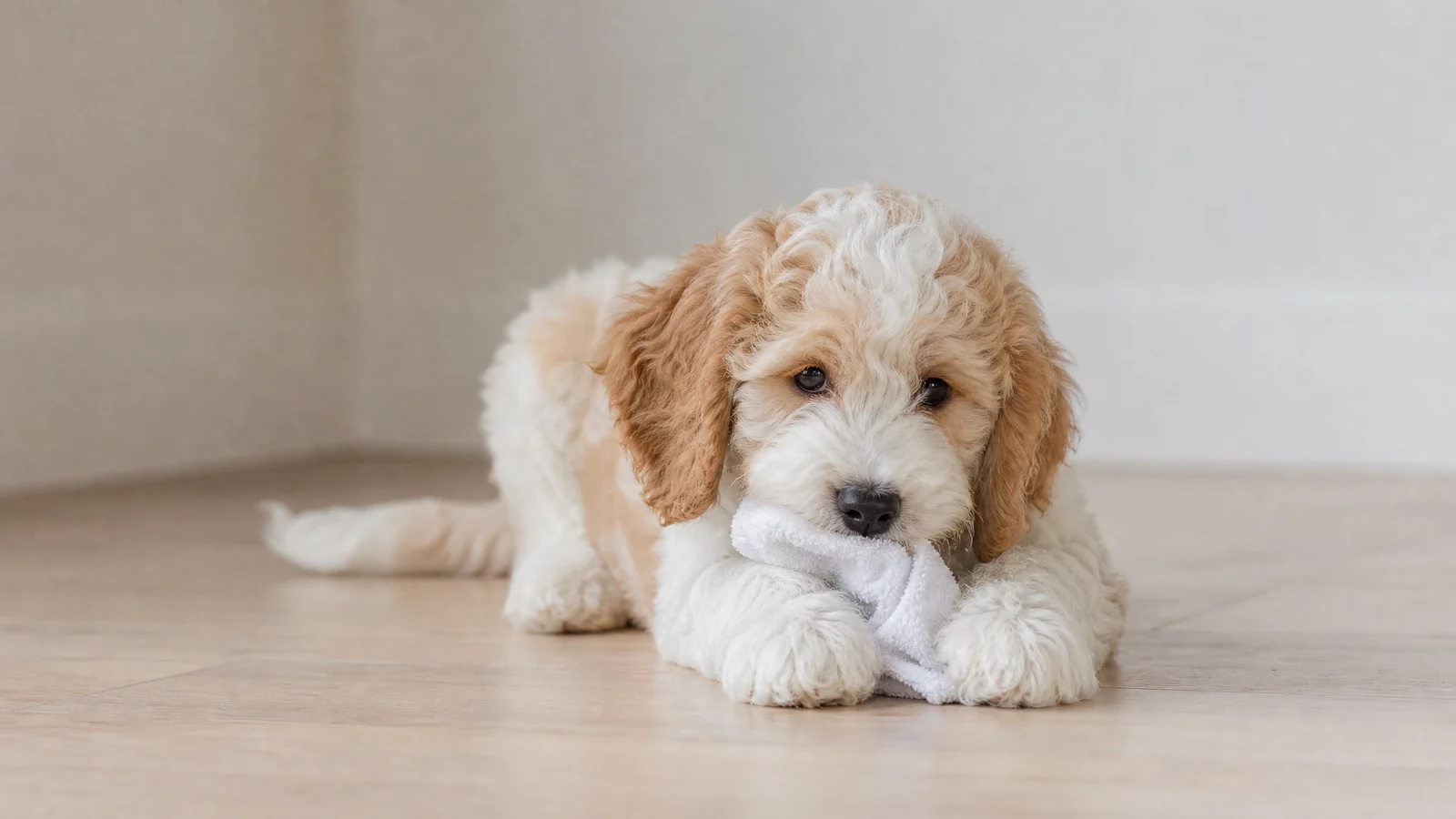 Puppy trainingGoldendoodle Puppy at 3 to 4 Months: Teething and Mouthing
 BehaviorGoldendoodle at 1 Year and Up: When Do They Calm Down?
 Puppy trainingHow to Socialize a Goldendoodle Puppy
