 Goldendoodle
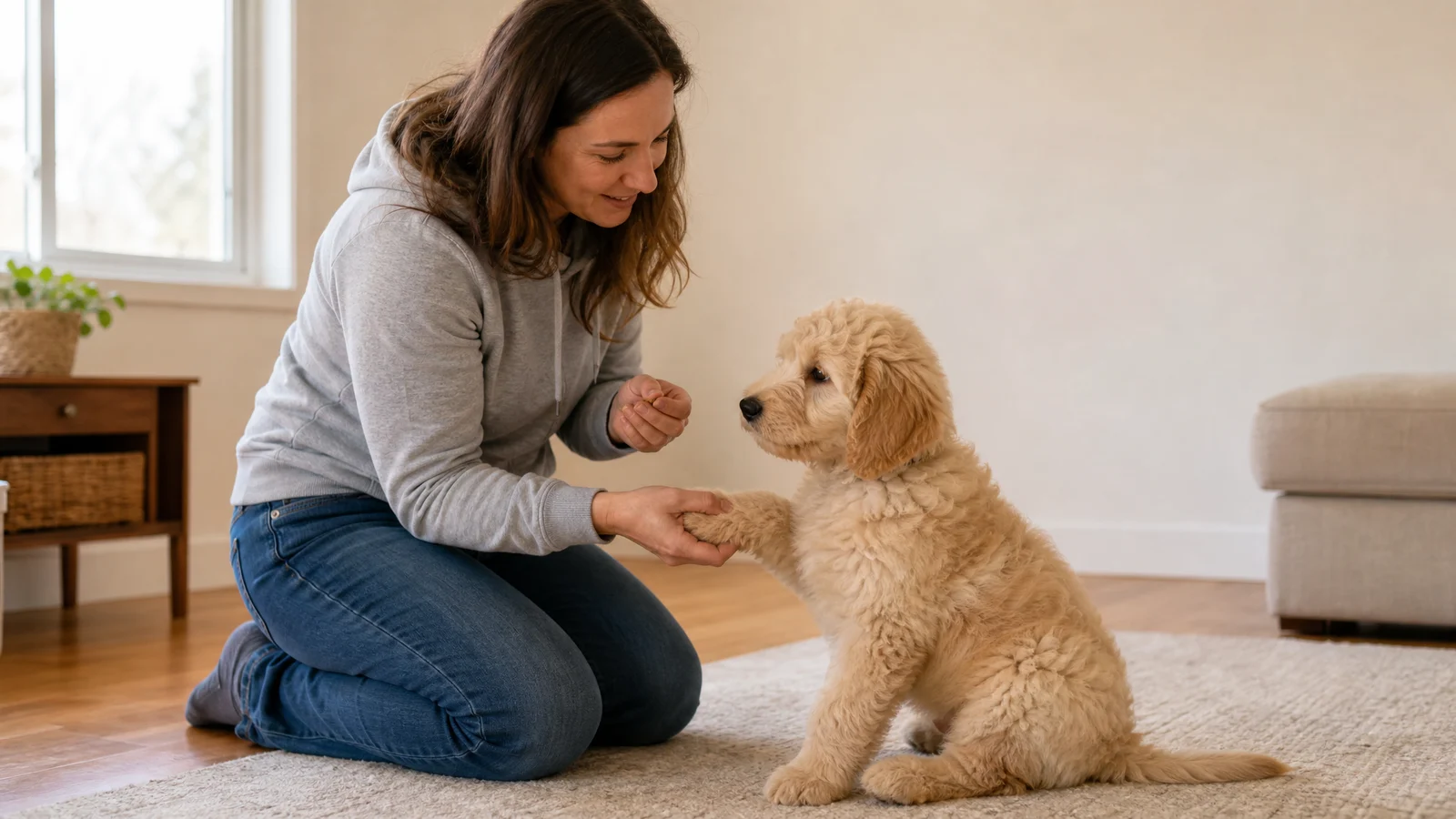
Walk a Goldendoodle puppy into a room and the room rearranges itself around them. Visitors crouch, neighbors lean in, and every hand within reach wants a turn.
That welcome is the best part of the first month and also its main job. Puppies generally come home at 8 weeks or a little later, which leaves a short stretch before the easy learning about people, places and handling starts to narrow, so what you let in matters more than how much you fit in. A friendly puppy makes it tempting to say yes to everything, and a plan keeps that yes from turning into a flood.
Below, we sort the month into what to protect, what to start and what can wait. Each choice comes with its reason, so you can adjust it to the puppy in front of you.
Why the Weeks Before Twelve Count for a Goldendoodle Puppy
The calendar is the reason for sorting at all. Puppies generally do not go to new homes until they are 8 weeks old or older, and the critical period for socialization narrows at 12 weeks and ends sometime between 12 and 18 weeks of age, which is why Wisconsin Humane Society's guide says to start the plan from the moment the puppy arrives. You are arriving late in that window, so every choice in the first month carries weight.
A Goldendoodle changes the job in a useful way. Both parent breeds are known for their friendliness toward strangers, so many Goldendoodle puppies arrive wanting to greet everyone, and a cross may well inherit that. Our trainers' short answer is to treat these weeks as protected time, which comes down to three things:
- Keep it to a few experiences.
- Choose each one well.
- End each one before the puppy tires.
The month becomes less about coaxing a shy puppy forward and more about teaching hellos that stay pleasant for everyone when the puppy is fully grown. Everything after twelve weeks has its place in our Goldendoodle puppy timeline, so this page stays with the first month.
Who Gets to Meet Your Puppy First
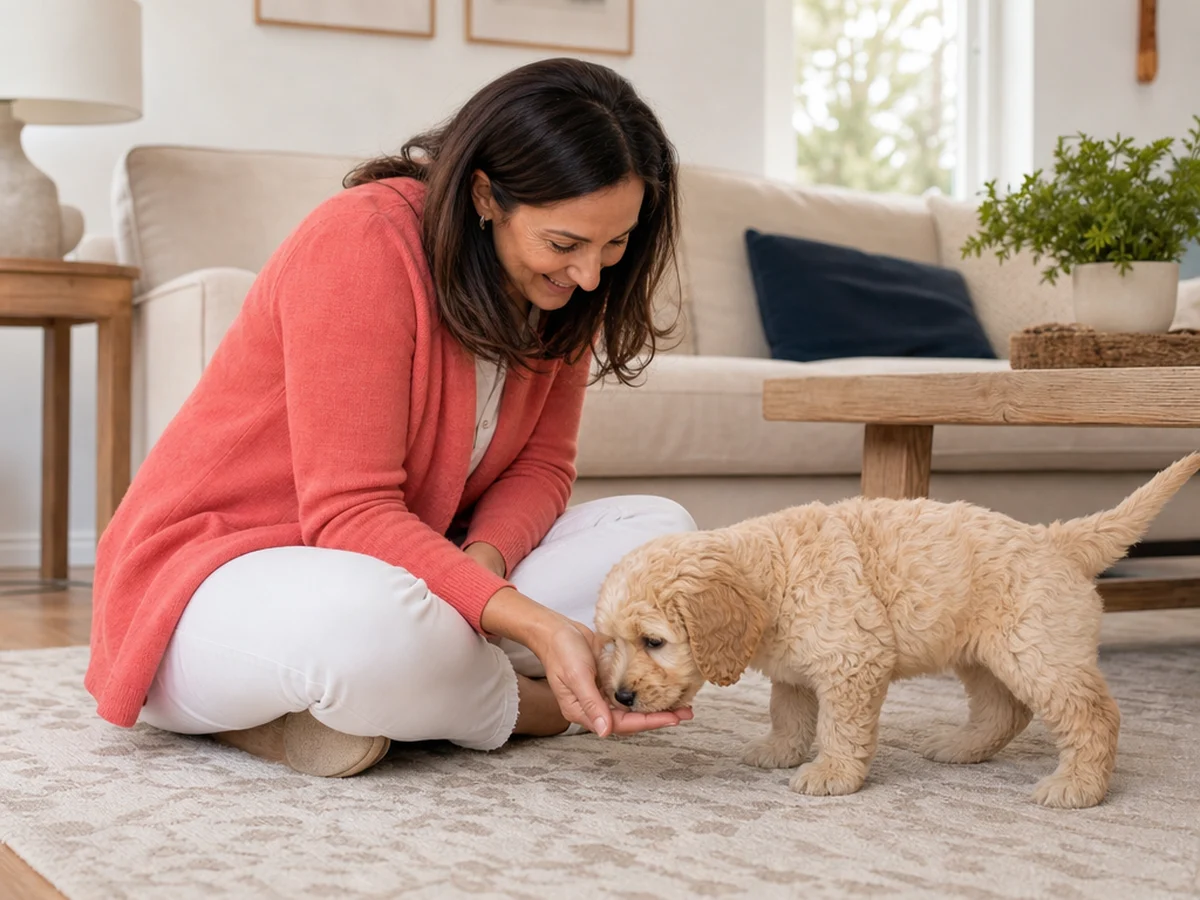
With the month protected, the guest list is the first thing to edit. Friendliness is a head start rather than a plan, because a puppy who loves strangers will happily rehearse jumping up and grabbing sleeves, and each rehearsal is easier to prevent than to undo.
A simple rhythm covers most meetings. When an unfamiliar person appears, pause and give your puppy a treat. If the puppy shows interest in the person, let them walk over, and let the person offer one more small treat. That rhythm comes from Fear Free's puppy socialization tips, with one condition worth keeping: it should be the puppy's choice to investigate, so a hesitant puppy is never nudged forward.
Visitors need a script too, because excited people tend to do exactly what excites a puppy. Hand them three habits before they step inside:
- Crouch and wait. A visitor who lowers to the puppy's level and lets the puppy come over gives a Goldendoodle an easy place to put their front paws, which is the floor.
- Hands Low, Voice Soft: Reaching over a puppy's head or squealing is the quickest way to start jumping and mouthing, so hands stay low and voices stay warm but quiet.
- Let the puppy end it when they turn away, sniff the floor or head back to you, because a hello the puppy can leave is one they will want again.
A quick word at the door is enough to set all three. Some days the kindest answer is no, and a friendly "We are practicing hellos, so not today" protects the lesson at no cost to the stranger. Our Goldendoodle socializing guide covers the wider circle of kids, dogs and strangers once this first month is behind you.
Where a Puppy Can Go Before the Shots Are Done
People can come to your puppy, but places cannot, so the next question is where a puppy can safely go while the vaccine schedule is still under way. The honest answer is a short list, and it starts at home.
Short car rides and new objects such as leashes and brushes make good first experiences. For an unvaccinated puppy, public settings such as dog parks or pet supply stores are best skipped, and a backyard or a friend's yard makes a safer outing. A new place does not need to be far away to count as new.
Outings at this age need no agenda. A short drive that ends somewhere pleasant teaches a puppy that cars are ordinary, and a few quiet minutes in the clinic parking lot with treats makes the front door familiar before it ever matters. Skip cue practice while you are there. A puppy soaking up a new place is already doing the work, and asking for a sit only adds a second job.
Your veterinarian knows your puppy's vaccine schedule and what is circulating locally, so ask which outings are fine this week before you widen the circle.
Teaching a Goldendoodle Puppy to Enjoy Being Handled
Meetings and outings both end the same way, with hands on the puppy, so handling deserves a little practice of its own. The brush from that first-experiences list is a natural place to start, because a Goldendoodle's coat may need regular brushing and trims depending on which parent's coat the puppy takes after.
Keep the rounds short and happy, with a few treats ready and the puppy relaxed before you begin. A puppy who is already wound up will not learn to enjoy a brush, so wait for a calmer moment:
- Show the brush, let the puppy sniff it, and give a treat while it is still in view.
- Make one gentle stroke along the shoulder, then pause and treat, so the puppy learns that the brush predicts something good.
- Add one new touch at a time, such as a paw, an ear flap or a lip lifted for a quick look, with a treat after each.
- Stop while the puppy still looks interested, because ending early is what makes them willing to hold still next time.
Short and boring beats thorough here. Our Goldendoodle grooming guide carries the longer version, and if handling turns into chewing on your hands, the Goldendoodle puppy biting guide covers the mouth-manners side.
Regular veterinary visits count as handling practice too. Ask the clinic team to say hello to your puppy, bring treats, and let the first checkup be a series of small, pleasant touches.
Mid-Meeting Questions About Your Puppy
Plans for the month hold until a real puppy meets a real person, and then you need a decision on the spot. These three answers are written for that moment.
What if my puppy startles at something new?
Pause and give the puppy room to look. Tossing a treat a little closer to the new thing, rather than carrying the puppy toward it, lets them decide how near to go, and you can end the session whenever they say no.
Should visitors hand my puppy treats?
A bold puppy can take a small treat from a visitor once they have walked over by choice. A hesitant puppy does better when the visitor tosses the treat on the floor and looks away, so the puppy never has to reach toward a stranger's hand.
Which dogs make good first meetings?
Choose calm adult dogs you already know to be gentle with puppies, and ask your veterinarian whether your puppy is ready for the meeting. Keep it short and let the puppy leave whenever they want, since a brief, quiet hello beats a long, lively one.
Choosing Which Hands Reach Your Puppy
The crowd a Goldendoodle puppy draws is not a problem to solve. It is a steady supply of attention, and you decide where it goes. A calm child on the floor gets a yes, a rushing group at the park gets a smile and a wide berth, and a stranger with grabbing hands gets a friendly not today.
That is the whole skill of this month: not shielding the puppy from the world, but standing at the door of it and choosing, one hello at a time. Hellos are only the first item on a long list, and our free Goldendoodle e-book carries your puppy's training forward from here, covering every need in full and explaining each step plainly.
 Puppy trainingGoldendoodle Puppy at 4 to 6 Months: What Changes
 Training basicsGoldendoodle Temperament: What It Means for Training
 Puppy trainingGoldendoodle at 6 to 12 Months: Adolescence Begins
