 Goldendoodle
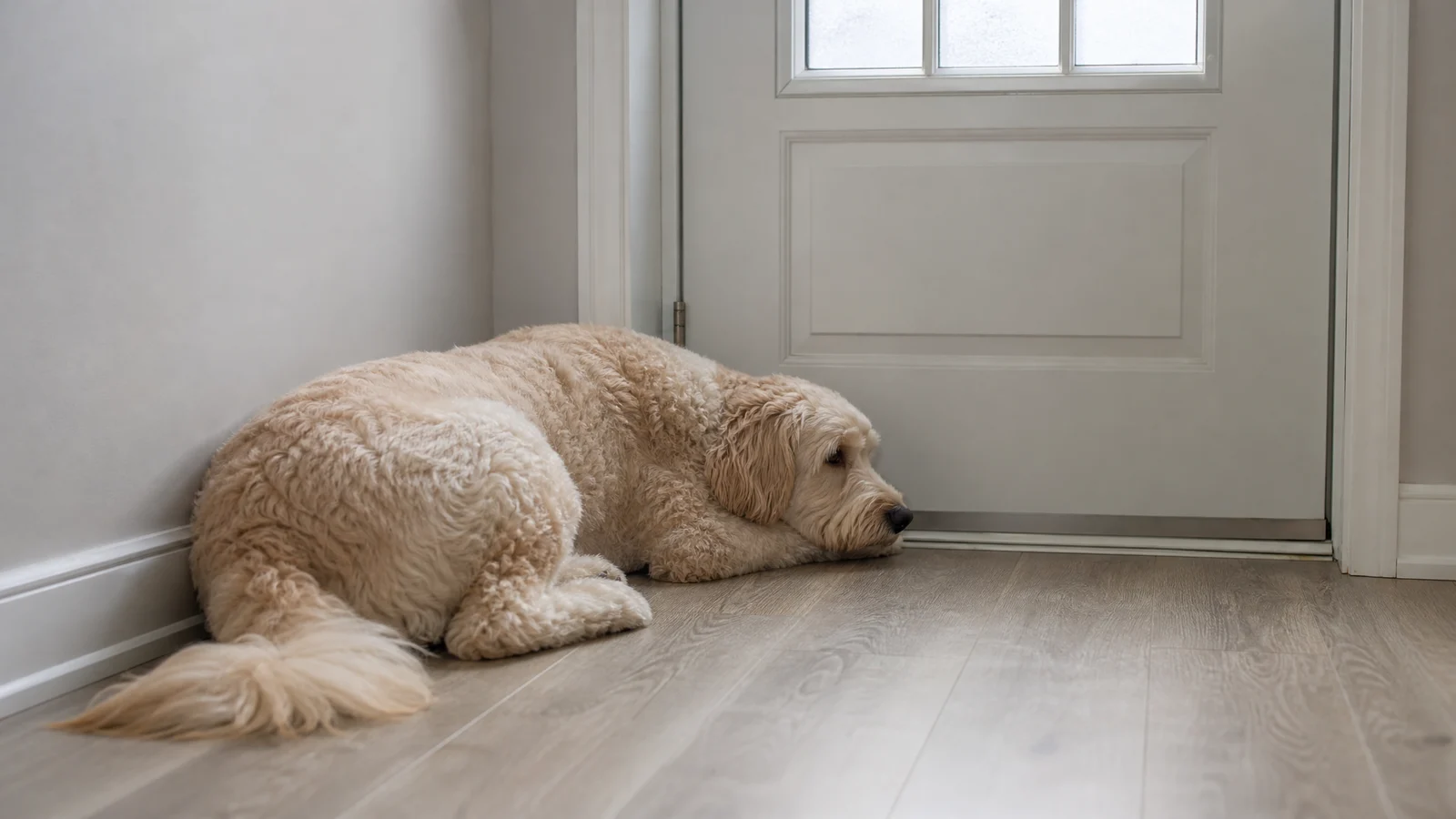
The first step with a Goldendoodle who struggles when you leave is not leaving, and that can feel backwards when the door is where the trouble shows. Before any door practice begins, your dog needs company for the hours they cannot manage alone, because a long, frightening absence can undo the calm you are building, however tempting it is to start at the front door.
This is a careful general method rather than a promise for any one dog, and some Goldendoodles will need a professional alongside it. In this guide you will find the company plan first, then the setup work that makes the door calmer, and last the signs that your dog needs more help than practice can give.
Goldendoodle Alone Training Starts With Company
The urge to test your dog at the door is natural, but the real starting point is how much time apart your Goldendoodle can handle today, and for some dogs the honest answer is none. Both parent breeds are devoted, people-oriented dogs, so a Goldendoodle may find time apart harder than you expect. As Goldendoodle people, we would rather begin from the dog's actual limit than from the schedule we wish they could keep.
That means arranging cover for every stretch beyond the limit: a sitter, a dog walker, doggy day care, or a stay with a friend or relative. Time that goes past what your dog tolerates is not practice, however short it feels to you, because distress that drags on can make the next absence harder. Cover also buys you room to train in small, comfortable pieces instead of in the middle of a crisis.
Coming Home to a Mess
A chewed cushion or a puddle by the door can feel like a message, but the right response is to clean it up quietly and change the plan, not the dog. Texas A&M points out that, oftentimes, separation distress shows up in symptoms that mimic misbehavior, and it advises against scolding or punishing a dog because it might make them more upset and fearful, since the behaviors involved are not a matter of the dog defying you or getting even.
If you suspect the crate is part of the problem, our Goldendoodle crate training guide covers that question, so this page can stay with the practice itself. Nothing here asks you to shut a worried dog away as a cure.
A Settle Spot to Teach While You Are Home
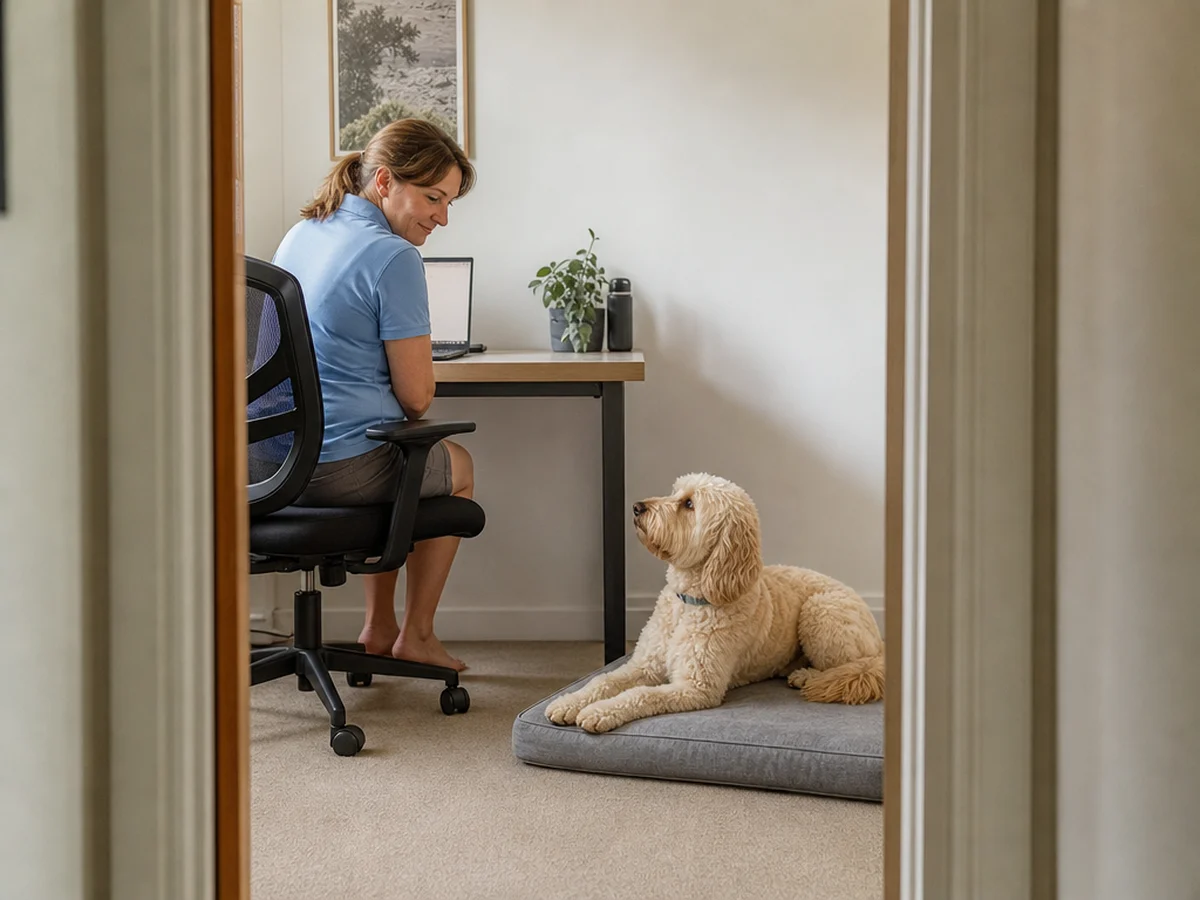
Company keeps your dog out of trouble, but practice needs somewhere to stand, and a place that already means rest gives it one. You can teach that place while you are still in the house, long before anyone leaves.
Choose a mat or bed that will stay in one spot. Reward your dog quietly for lying on it while you are nearby, with a calm word and a small treat, then let them rest. Over time the spot becomes a place where good things happen to a dog who is doing nothing, which is the feeling you want them to carry into your absence. Our Goldendoodle mat training guide shows how to teach the cue itself.
Once the spot means rest, put up a baby gate so your dog cannot always follow you. Hand over a food-filled toy and step out of sight while you stay in the house, then return before the toy is empty, because a dog who finishes early may start to bark or whine. Open the gate and let them finish the toy. If something outside sets your dog off, such as people walking past a window, block the view from the room where they settle. Why start at home?
Your dog learns that being apart can be comfortable while you are only a few steps away, and you can see exactly how they handle it. Every later step leans on that.
Keys, Coats and Other Signs You Are Leaving
A calm settle spot gets tested the moment something predicts that you are about to go. For many dogs the trouble starts well before the door opens, with the shoes, the keys and the coat.
The fix is to make those objects dull by handling them at times when you are not going anywhere. These rehearsals make a good start:
- Wear your shoes while you read or answer email, so they stop announcing a departure.
- Put your coat on to fold laundry, then take it off again, because a coat alone should not mean you are leaving.
- Carry your keys or bag to the kitchen rather than the door, so they join the ordinary things in the house.
- Walk to the door, touch the handle and return to the couch, which shows your dog that approaching the door does not always end in a goodbye.
- On real departure days, slow your own pace and keep the exit unhurried, since a rushed, flurried goodbye can signal that something big is happening.
Run the rehearsals at calm moments, not right before a real departure, and watch your dog as you would watch a recording. Barking, pacing, panting, ears pulled back or hiding all mean the cue is still too big, so make the rehearsal duller and try again later.
On real departure days, give the food toy a few minutes before you leave instead of at the door. The aim is a dog who is already busy and settled when you walk out, rather than one who is already worried.
Goldendoodle Anxiety Training for the First Stretch Alone
Once keys and coats pass without a flinch, the door itself is the next thing to shrink. The San Francisco SPCA frames the work as a game: your dog holds a sit-stay or down-stay several feet from the entrance, four small treats sit on the floor out of reach, you walk out, and as you close the door you give a release word so your dog can eat them, all at a pace slow enough that your dog doesn't become distressed by your departure.
Rungs Toward the Closed Door
That slow pace is the rule for everything below. Here is how we would climb toward the closed door:
- Make the stay solid first, because the game falls apart if your dog cannot hold it while you take a few steps and come back.
- Put one piece of food on the floor a few feet in front of your dog and crouch over it so it cannot be stolen, then release them to eat once they are relaxed.
- Build to several pieces and stand up before you release, which teaches your dog that patience at a distance earns the food.
- Take a step toward the door before the release, and let each new move become the moment of release: touching the knob, rattling it, opening and closing the door, stepping partway through.
- Step all the way through with the door left open, then close it briefly and hand over a long-lasting food toy with the treats, so that a closed door predicts something wonderful.
- Repeat the idea at a closet door, then a back door you rarely use, and save the front door for last, because it is the door that most often means you are leaving for real.
Lengthening the Absences
Once the door feels boring, lengthen your absences gradually and unpredictably, and only if your dog tolerates them well. If worry shows at any rung, go back to the last one where your dog was comfortable and stay there longer, and let an easy rung stay easy before you add anything.
When Being Alone Still Goes Badly
Careful practice does not work for every dog, and a rung that keeps going wrong is a sign to change who is helping, not to push harder. Regular vet visits belong in any dog's care, and a sudden change in how your Goldendoodle copes with being alone is reason enough to call.
Start With a Vet Visit
Tufts' veterinary school says dogs who show frequent anxious behavior should see their veterinarian as soon as possible, because pain, itching, illness and discomfort can all lower a dog's threshold for anxiety and should be ruled out. In practice, that puts a vet visit ahead of more training.
Stop When Practice Backfires
Pausing can be the kindest move. VCA Animal Hospitals says that if a dog does not tolerate even a short departure, or shows distress at any point in training, it is important to discontinue the exercises, because some dogs become "sensitized" instead of "desensitized" and further training can be detrimental. In that case you should consult a veterinary behaviorist, and it may be necessary to use a pet sitter or day care facility meanwhile.
So a dog who gets worse with practice does not need a firmer plan. They need a different kind of help, and a professional who works with reward-based methods can build one around what you have seen at the door.
Daily Details That Shape Alone Practice
Practice is mostly the same few moves repeated, so the details around them do a lot of work: how you say goodbye, how you read a bad day, and what you do when the gate becomes the fight.
Should I ignore my Goldendoodle before I go?
Not completely, and not with fanfare either. Keep goodbyes low-key, with a quick calm word or nothing at all, then go about your business. A long, emotional send-off can signal that something worth worrying about is happening. Give a brief, calm hello when you come back as well.
Why was my Goldendoodle fine yesterday but not today?
Dogs notice small shifts in the home. A new sound, building work nearby, a change in who is home when, or a rug that used to muffle noise for a sound-sensitive dog can all make alone time harder, and a day with less exercise or play may leave a Goldendoodle with more to work off. Look for what changed before you decide practice has failed, then make the next session easier and check that daily movement is in place with our Goldendoodle exercise guide.
What if my Goldendoodle claws at the gate?
Clawing or chewing at a gate usually means your dog wants out and cannot get there. Step back to a version they handled quietly, with you in sight and a food toy to work on, and make the next step smaller than the one that went wrong. If the frantic behavior carries on even at that easy level, treat it as the stop signal described above and get help rather than pushing on.
A Smaller Step From Company to Goldendoodle Alone Time
How hard your leaving lands for a Goldendoodle may depend on how the hours with you in the house are spent. A dog who is never apart from you while you are around meets a closed door as a sudden change, while a dog who already spends a little ordinary time on their spot a room away finds it a much smaller one.
Let that apartness live inside normal life: your Goldendoodle settled on their spot while you cook, answer email or fold laundry, and you drifting back when it suits you. Being near you and being a little apart then become two ordinary parts of the same day, and your dog has less distance to cross when you do leave. A free Goldendoodle e-book from us takes in all of your dog's training needs, with full coverage that stays easy to understand.
 BehaviorGoldendoodle Leash Reactivity: What Helps
 BehaviorHow to Stop a Goldendoodle Pulling on the Leash
 Exercise and jobsHow to Teach a Goldendoodle to Shake and High Five
