 Goldendoodle
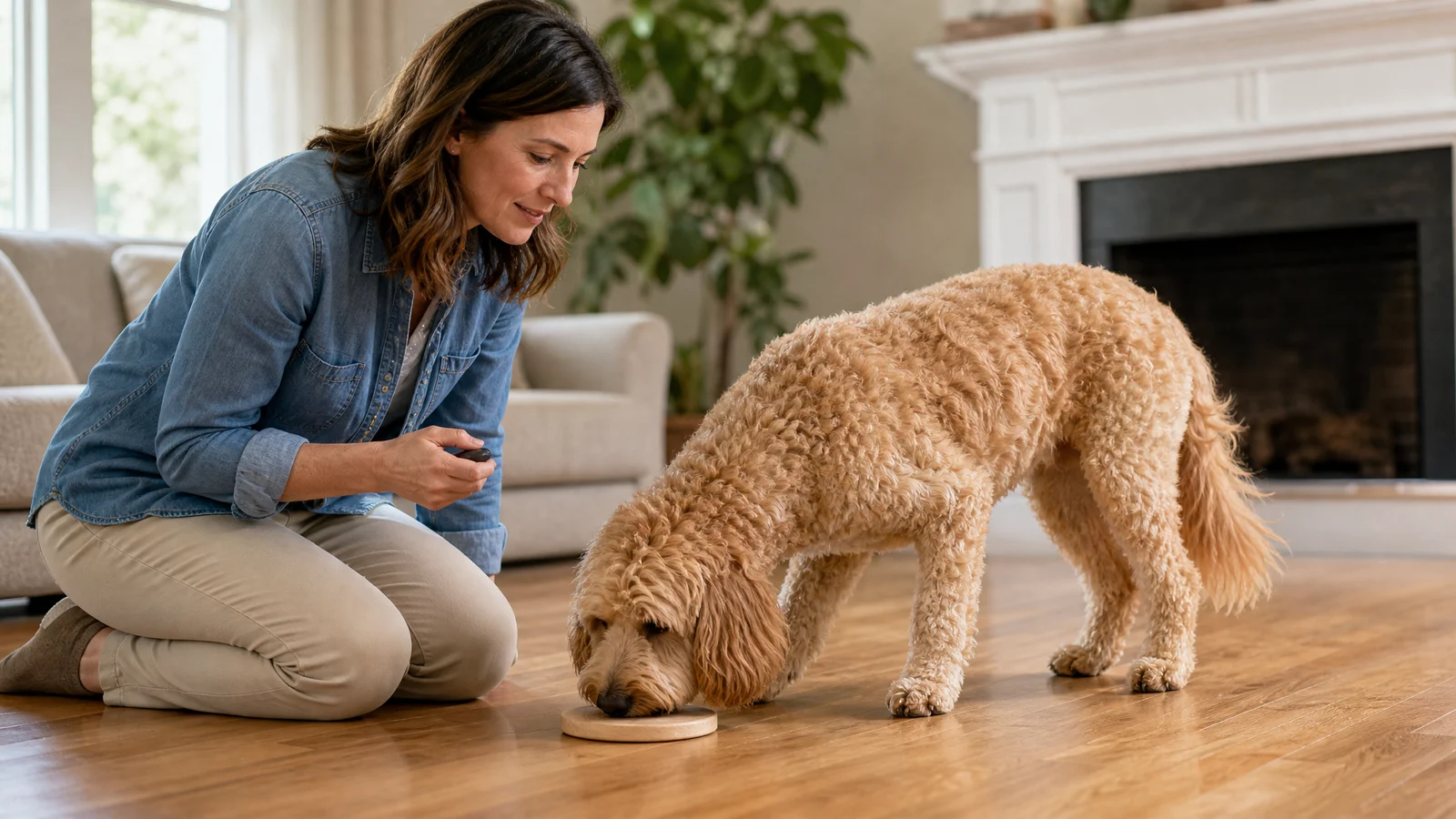
Clicker training asks very little of you: a clicker or a short word, a pocket of treats, and the patience to teach nothing at all in the first session. That last part surprises most owners, because the opening lesson is not a trick. It is the sound itself, and everything your Goldendoodle learns afterward rides on it. Done well, it lets you tell your dog exactly which instant earned the treat.
Both parent breeds are described as eager to please, so many Goldendoodles take to this quickly, though an eager dog can also race ahead of your timing. This page follows the work in the order you will meet it, and each stage says what to do when your dog stalls.
Clicker Training for Goldendoodles Begins With the Sound
The sound you pick has to mean one thing and be easy to make cleanly, so choose a clicker or a short word you never use otherwise. Our habit is to keep it strictly for lessons, which lets it stay exciting. Then comes charging: teaching your dog that the sound is followed by a treat. Use a quiet room, a pouch of small treats and a loose dog with nothing asked of them.
- Click, then pay. Make the sound and hand over a treat straight away. Your dog is learning that the sound predicts food, and the shorter the gap, the faster that lesson lands.
- Change the moment. Wait until your dog has sniffed the floor or wandered a few steps before the next click, so the sound belongs to the treat and not to one pose or to staring at you.
- Watch the head. When the click makes your dog glance toward your hand or pouch, the sound has started to mean food, and you can move on.
- Fix a weak reaction. If your dog shows no interest in where the treats come from, trade the treat for something tastier and the room for a quieter one before you carry on.
Dogs differ in how fast they catch on, but the American Kennel Club's clicker guide says that after about 10 to 20 repetitions your dog will understand that the marker predicts a coming reward. Treat the head swing in step three as your proof, since a count on paper cannot see your dog's face.
Rehearsing Your Timing First
Timing matters as much as the sound, and you can rehearse it without a dog with a ball-drop drill: click at the instant a dropped ball lands, which is harder than it sounds.
In real sessions, reward your dog within three seconds of the click. If the sound startles them, muffle it by clicking inside your pocket, and if they stay unsure, use a short word instead.
A click that lands late marks whatever your dog did next, which is why a few practice drops are worth the minute. If your dog seems newly jumpy about everyday sounds as well as the clicker, mention it at a regular veterinary visit.
How to Use a Clicker for Goldendoodle Training
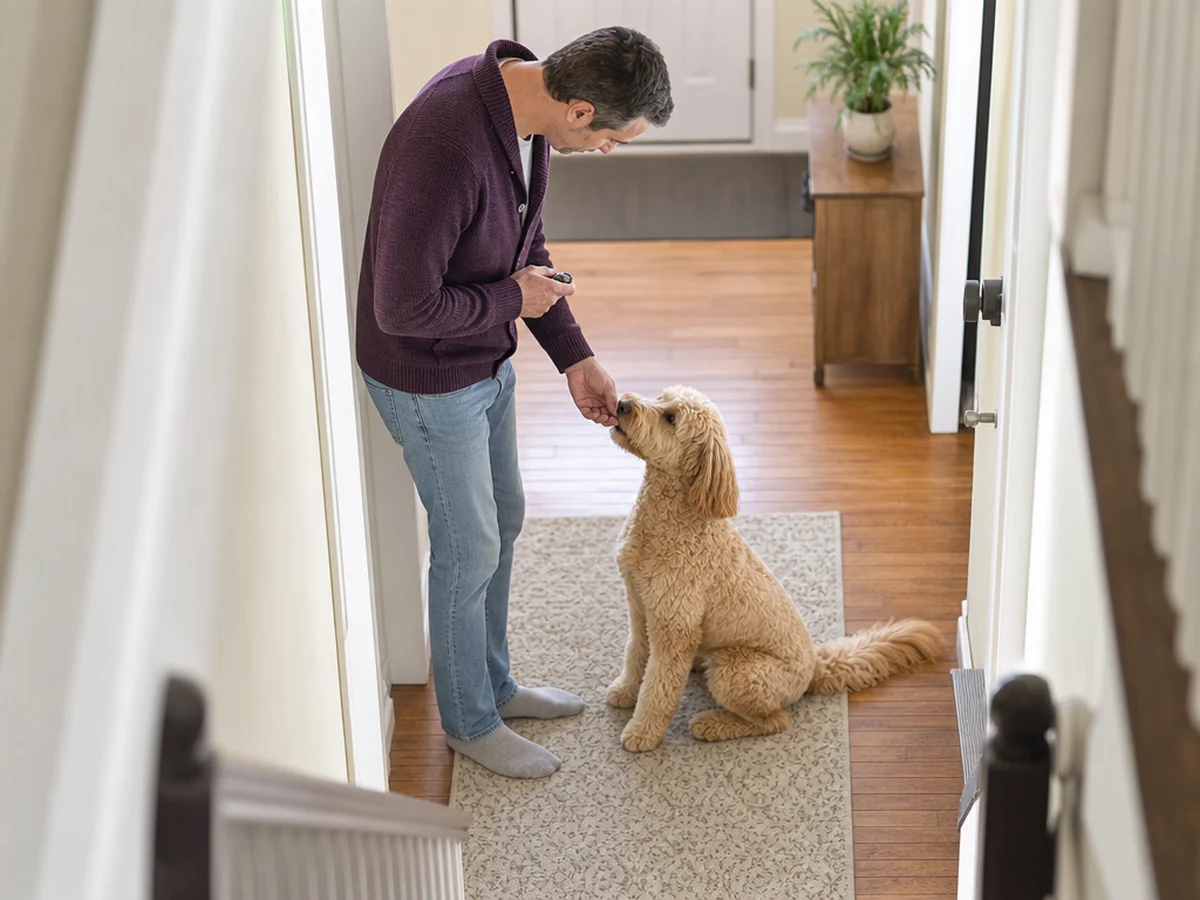
A charged click is a question waiting for a behavior, and a hand touch is a gentle first answer. If you are new to clicker work, starting with hand targeting is a sensible choice, because your dog only has to do something they already love, which is sniff your palm.
Four Stages From Palm to Distractions
Work through the stages in order, because each one rests on the one before it. Every item says what you hold, when to click and pay, when to move on and what to try if your dog stalls.
- The palm. Hold a flat hand, palm out, an inch or two from your dog's nose. The instant their nose touches it, click, then deliver the treat right in front of your open palm so the reward lands where the behavior happened. Repeat until your dog bumps your hand eagerly several times in a row. If they hold back, rub a little treat scent on your palm, or click a lean toward it and ask for a bit more each time.
- The word. Say "touch" just before you present the hand, then click on contact and pay as before. When your dog answers quickly and cleanly several times running, you are ready for distance. If they hesitate, drop back to the silent palm for a few tries.
- The distance. Present your palm a few inches farther away, then higher, lower and off to one side, building toward several feet. Click each contact. A dog who stops and looks at you has met a step that was too big, so shrink it and pay for the shorter reach.
- The distractions. Repeat in another room, then with a family member nearby, then outdoors. The touch will look sloppier in each new place, so pay generously for the first good one.
Why Stalls Usually Mean a Smaller Step
Every stage works for the same reason: the click lands on one clear instant, contact, and the treat arrives at the palm so your dog learns where success happens. When a stage stalls, we find the fix is almost always a smaller step, not a louder cue or a longer session.
Moving Treats Out of Sight in Clicker Sessions
A touch your dog performs only while you flash a treat in your other hand is not finished, because the food is doing the asking and the click is along for the ride. Hide the treats in steps, and keep paying every click, so your dog learns that the click itself is the promise.
Start with the treat hand held behind your back or against your chest, click on contact and bring the food out afterward. Next, keep the treats in a pouch at your belt and fetch one after each click. Then leave them on a nearby shelf and walk over to them. If your dog starts staring at your pocket or your hand, go back one step until the touch happens without the glance.
Food is not the only payment either. A favorite toy or a quick game of tug can pay a click too, and mixing rewards keeps your dog curious about what comes next instead of fixed on the pouch.
Everyday Details Behind Clicker Practice
Two decisions tend to follow the first successful touch, and they point in opposite directions: what to teach next, and when to stop clicking. Both are easier to settle now than in the middle of a session, with a hungry dog watching your pocket.
What Should I Click After the Hand Touch?
Choose a behavior your dog already knows, such as a sit, and click the moment it happens, then pay. The same stages carry over to a trick from our Goldendoodle puppy tricks guide: make each step small, click the exact instant, and move on only when the step feels easy.
Will I Need the Clicker Forever?
No. The clicker is a teaching tool, so it retires one behavior at a time. Once your dog performs something reliably on a cue, you can reward it without the click and keep the clicker for whatever you are teaching next. New and shaky behaviors get the click, while old and solid ones no longer need it.
Warm Praise Alongside a Precise Click
A clicker can sound cold on paper, but it does one narrow job and leaves the rest to you. The click says exactly which moment earned the treat, while your voice, your hands and your delight stay yours to give. Both parent breeds are described as affectionate and people-oriented, so a Goldendoodle may light up at your praise as much as at the treat. Cheer freely, and keep the click for the instant that counts.
The same patience that carries a dog from a palm touch to a reliable cue runs through every lesson in our Goldendoodle e-book, which arrives by email after sign-up, costs nothing, and takes in every lesson your dog will need, deep enough to be useful and clear enough to read in one sitting.
 BehaviorHow to Fix Goldendoodle Separation Anxiety
 BehaviorGoldendoodle Leash Reactivity: What Helps
 BehaviorHow to Stop a Goldendoodle Pulling on the Leash
