 Goldendoodle
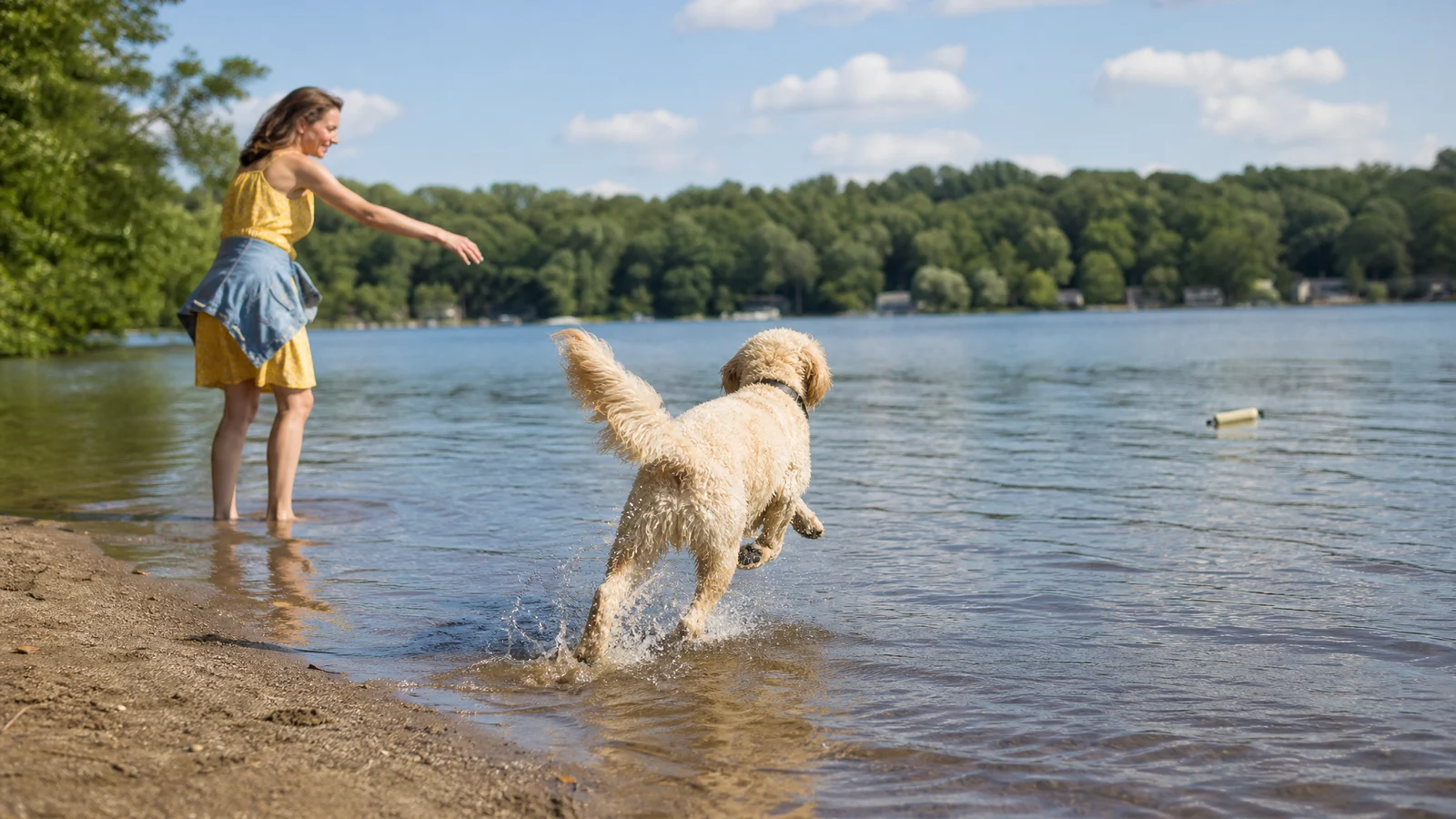
Retriever ancestry does not arrive as a finished game of fetch. A Goldendoodle may inherit interest in carrying, chasing or water from either parent, but they may also prefer another activity. Even an enthusiastic dog can pick up a toy and then miss the return, release or calm reset that makes the game safe and repeatable.
We use this field guide to separate those links before water enters the picture. You will identify problems in pickup, return and release on land, then introduce shallow water through choice. Below, the repairs cover land skills, voluntary water entry and outdoor safety. Each repair uses rewards and management. The aim is not to prove an instinct. It is to build a game this individual can understand, enjoy and leave without conflict.
Goldendoodle Fetch Training Links
Fetch contains several behaviors that often get treated as one. The dog must orient to the object, pursue it, pick it up, turn back, travel to you, release and recover for another repetition. A breakdown at one link can make the entire sequence look like stubbornness.
Test the links at close range in a quiet, enclosed area. Roll the toy gently instead of throwing it far. Observe what the Goldendoodle does without repeated cues, then reward the strongest available part.
| What Happens | Missing Link | First Repair |
|---|---|---|
| Dog watches but does not move | Pursuit interest | Use a more interesting toy and a shorter roll |
| Dog chases but leaves the toy | Pickup | Reward investigation and brief mouth contact |
| Dog picks up and runs away | Return | Shorten distance and reward movement toward you |
| Dog returns but holds tightly | Release | Trade calmly and sometimes return the toy |
| Dog completes one fetch and leaves | Recovery or continued interest | Accept the finish or offer an easier second turn |
The Golden Retriever parent was bred for hunting and can adapt to varied living situations, according to the AKC breed page. That history suggests a possible influence, not a guarantee. Build from observed behavior instead of expecting the cross to retrieve on demand.
Use a separate cue for the start of the game and put the toy away when the session ends. Clear boundaries help the dog distinguish an invited retrieve from grabbing household objects. Reward orientation back to you after storage so the finish remains cooperative.
If the Goldendoodle begins demanding throws, wait for a calmer choice and offer another suitable activity. Fetch is available through shared rules, not through escalating behavior. This protects the retrieve from becoming the only route to interaction.
Voluntary Goldendoodle Pickup Training
A dog who ignores the toy may dislike its texture, find the movement uninteresting or feel uncertain about the training pressure. Place a soft approved object on the floor and reward looking toward it. Then shape a nose touch and brief mouth contact over separate repetitions.
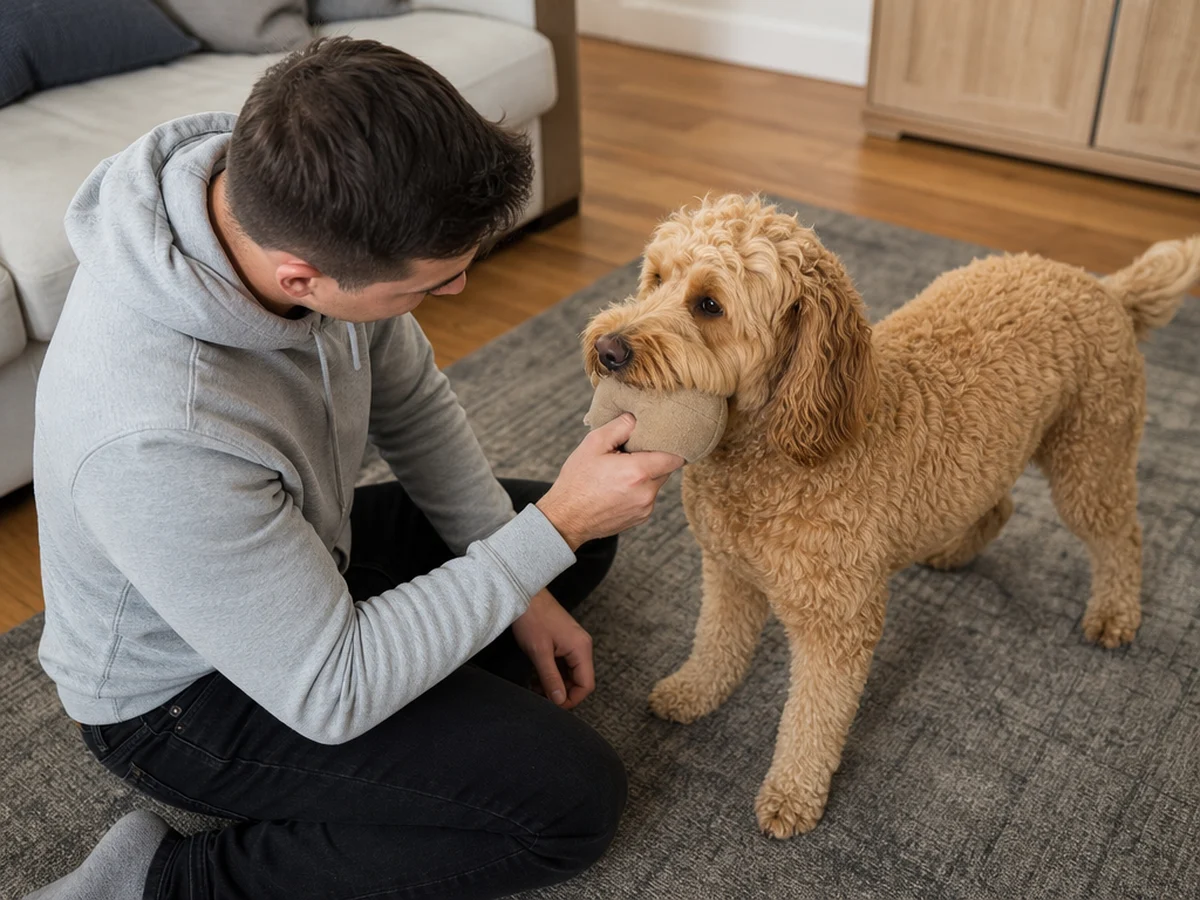
Do not push the object into the dog's mouth. Physical placement bypasses the voluntary choice you need for a stable pickup. If food around the toy causes tension, stop and seek qualified reward-based help rather than creating competition.
Change the Object Before Adding Distance
Try one alternative that is easy to carry and visible against the floor. Keep the movement small. A toy dragged quickly can create chase without improving pickup, so reward contact before making the game faster.
Once the Goldendoodle lifts the object, mark immediately and offer a trade. The first pickup can last a moment. Duration and distance belong later, after the dog understands that holding the toy leads to a predictable reward.
Stop While Interest Is Present
A single voluntary pickup can end the session. Repeating until the dog walks away teaches you only where interest ran out. Save the toy between practices if doing so keeps its value clear.
Other outlets can meet the dog's activity needs while this skill develops. The Goldendoodle exercise guide balances movement with searches and training, so fetch never has to carry the whole plan.
Goldendoodle Return Training Without Chasing
Running after a dog turns possession into a moving game. Instead, practice in a small secure area and reward any turn toward you after pickup. Move backward a step to invite approach, then deliver the reward close to your body.
Sometimes trade and return the toy so arrival does not always end access. The Goldendoodle learns that bringing an object toward you can restart play. Avoid reaching over the dog or grabbing at the mouth.
Build a Short Return Lane
Use furniture or low barriers to define a broad, safe lane without trapping the dog. Roll the toy only a short distance down it. Your position at the open end makes the route back obvious.
Fade the lane after the return becomes fluent. Increase either distance or openness, not both. If the dog begins circling away, restore the simpler setup and reward the first committed step toward you.
Reward Arrival Before Asking for Release
Mark the dog for reaching your space while they still hold the object. Then begin the trade. This separates the value of returning from the release itself and prevents the final behavior from swallowing the rest of the chain.
For broader activity choices that use searching or body awareness, see the Goldendoodle sports auditions. A dog who dislikes repetitive fetch may prefer another structured job.
Release Training Without Conflict
Release begins as an exchange. Present food near the dog's nose, mark the moment the mouth opens and deliver the reward while you collect the toy calmly. Add a cue only after the opening response is predictable.
Return the object for another brief turn when safe. This reduces the fear that letting go always causes permanent loss. If the dog stiffens, freezes, growls or moves away to guard the item, stop the game and contact a qualified reward-based behavior professional.
| Release Problem | Avoid | Try Instead |
|---|---|---|
| Dog clamps down | Pulling against the mouth | Offer a calm trade and lower excitement |
| Dog drops far away | Demanding a perfect delivery | Reward the drop, then shape closer arrivals |
| Dog snatches after release | Fast hand contests | Place the reward away while collecting the toy |
| Dog guards the object | Testing or taking by force | End access safely and seek professional help |
Give the Toy a Clear Resting Place
After the trade, place the toy in an open container and reward the dog for orienting back to you. The container marks the end of that repetition. Later, dropping the toy into it can become its own trick.
Puppies can learn this sequence through the object branch in the Goldendoodle puppy training skill tree. Keep the basket low, wide and stable. Cleanup should grow from a voluntary release, not from holding the puppy over the container.
Voluntary Goldendoodle Water Training
Start water play without throwing anything. Let the Goldendoodle investigate a calm, shallow edge while remaining free to stay on land. Reward looking, approaching and comfortable paw contact. Never place or pull the dog into water.
A Poodle parent may contribute water-retrieving interest, and the Golden parent may contribute retrieving traits. Neither influence guarantees confidence, swimming ability or a water-resistant coat in the cross. Coat type, body shape, experience and health all vary.
Keep the First Water Task on the Edge
Place a familiar floating toy at the dry edge, then barely into shallow water if the dog chooses to engage. Reward the pickup and return on land. The fetch chain should already be understood before depth adds another difficulty.
AVSAB explains in fearful-dog guidance that training needs to proceed at the dog's pace while management protects learning. Applied narrowly here, that means distance and choice around water. It does not mean every hesitant dog has a fear disorder.
End Before Chilling or Fatigue
Watch movement, breathing, coordination and willingness. Leave the water while the dog can exit easily, then provide fresh drinking water and a calm recovery period. Keep regular veterinary visits and ask your veterinarian about swimming suitability for this individual.
Do not rely on enthusiasm as evidence that conditions are safe. Water temperature, current, algae, debris and access points can change independently of the dog's desire to enter. When the environment is uncertain, choose land play.
Fetch Training Around Outdoor Distractions
An outdoor retrieve adds scent, wildlife, people and open space. Return to a leash or secure enclosure appropriate to the setting. A fetch cue that works indoors is not proof that the whole chain is ready near environmental distractions.
PDSA warns that even a well-behaved dog should be kept on a leash around livestock in its UK countryside guidance. Local laws differ, but the safety principle travels. Prevent access to animals and use secure management rather than testing fetch near them.
- Inspect the area for hazards, other users and a safe return boundary before the toy appears.
- Use an object that floats visibly for water play and is suitable for the dog's size.
- Keep throws away from steep banks, currents, wildlife and crowded paths.
- Stop when the dog cannot orient, release or recover between repetitions.
- Choose land-based searching when water or weather conditions are doubtful.
Handle a Dog Who Cannot Disengage
Some dogs become so focused on the toy that they lose the ability to pause. Reduce repetitions and insert a simple scatter or mat break away from the object. If the dog cannot eat, orient or move away, end the game calmly.
Battersea advises seeking a behaviorist when a dog cannot be safely managed at home or on walks. Its reactivity guidance addresses a broader problem, but the threshold is useful here. When play creates unsafe behavior that you cannot manage, professional observation is warranted.
Readiness for the Next Water Training Game
Before increasing distance or depth, check the whole chain. The Goldendoodle should approach the setting voluntarily, pick up the object, return, release and recover without conflict. One weak link is a reason to practice on land or at the edge, not a reason to throw farther.
Conditions also need to pass. Confirm safe entry and exit, suitable temperature, clean water, lawful access and a secure way to prevent the dog reaching wildlife or other hazards. If you cannot evaluate the water confidently, skip it.
The final check belongs to the dog. Are they choosing to reengage while still moving comfortably and responding to you? If yes, repeat at the same level before considering one small change. If no, finish with an easy land behavior and leave. A sound retrieve is built by respecting every link, including the choice to stop.
 Puppy trainingGoldendoodle Puppy Training Timeline, 8 Weeks to 2 Years
 Exercise and jobsGoldendoodle Puppy Tricks: A Reward-Based Skill Tree
 Exercise and jobsGoldendoodle Sports and Jobs That Fit the Individual Dog
