 Goldendoodle
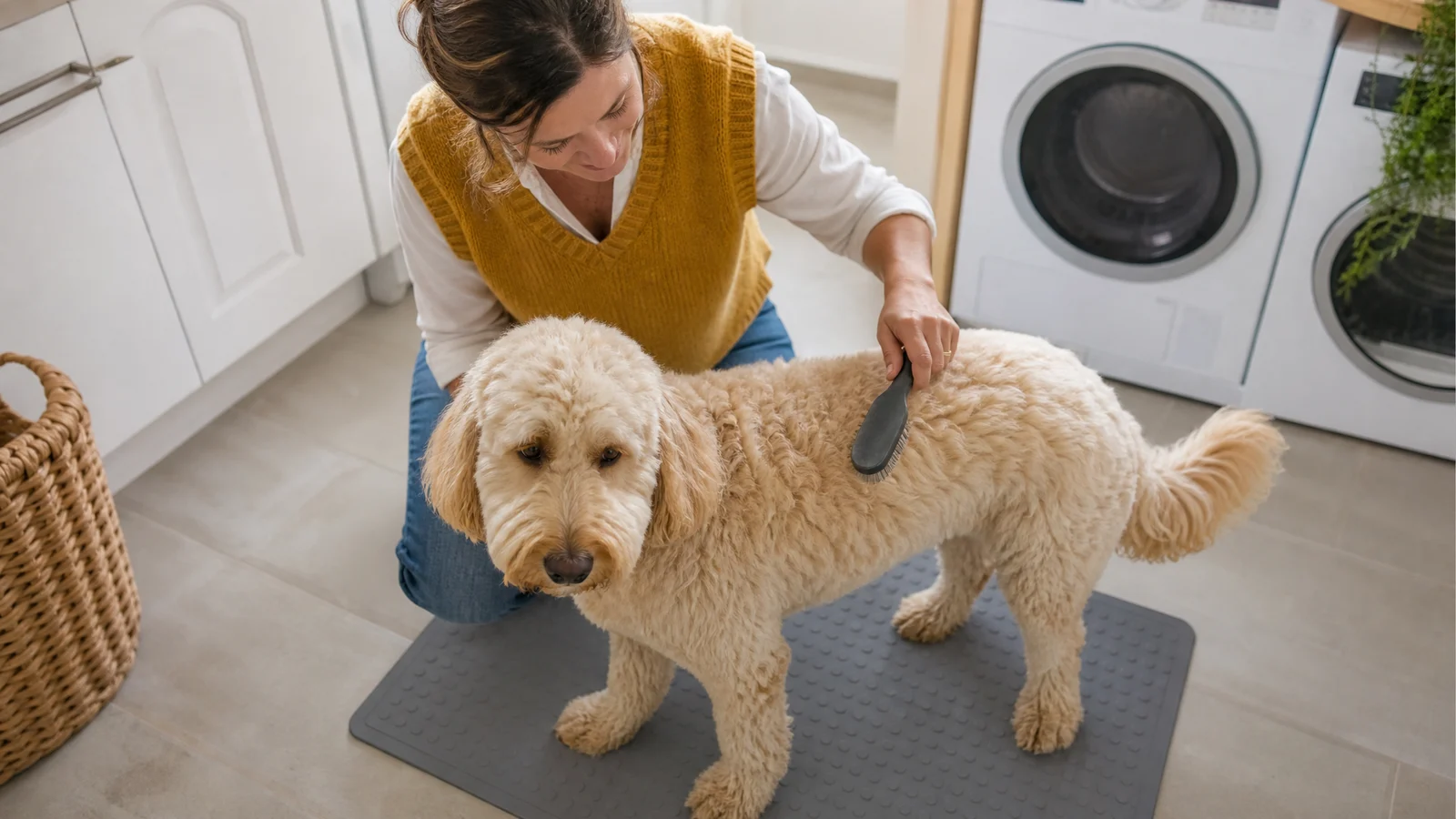
Brushing a Goldendoodle comfortably at home does not automatically prepare them for a different person, unfamiliar equipment and the sounds of a grooming salon. The coat may be the same, but almost everything around the handling has changed. A useful preparation plan makes those changes visible before the appointment.
Start with what your dog actually accepts. A brief shoulder brush, a voluntary paw presentation and tolerating a tool nearby are separate achievements. Describing them precisely helps the next caregiver begin at a realistic level.
In this guide, we build a grooming handoff from a home baseline, a clear way to begin and pause, and small lessons with touch, tools and sound. We also separate practice from care that cannot wait, so a Goldendoodle's coat stays maintained while handling confidence develops.
The Goldendoodle Grooming Baseline
Ask a knowledgeable groomer to assess the individual coat and demonstrate suitable home care. Golden Retriever and Poodle ancestry can produce varied coats, so a breed label alone cannot supply the right brush, maintenance interval or haircut. Choose the routine from the coat's condition and the dog's comfort.
Record what happens during a brief, easy session. Note the surface, position, tool, body area and amount of contact the dog accepts. A dog comfortable standing on a nonslip floor may struggle on a raised table even before a brush touches them.
Describe the stopping signs too. Turning away, pulling a paw back, repeated lip licking or becoming still can mean the task needs changing. Look at the whole interaction instead of waiting for a growl or assuming a dog who remains in place is comfortable.
| Home observation | Useful information to share |
|---|---|
| Comfortable with a brief shoulder touch | The side, position and duration that remain easy. |
| Watches the brush without retreating | Whether the tool has actually touched the coat yet. |
| Offers a paw briefly | Whether holding, nail tools or another person are still unfamiliar. |
| Moves away when a sound starts | The sound source and distance, without repeating it to provoke a response. |
Best Friends recommends gradual handling practice that stays within the dog's comfort. The baseline helps you apply that principle accurately. It also prevents an enthusiastic report of being good for grooming from becoming permission for a much harder session.
An Invitation to Begin Goldendoodle Grooming
Choose a simple voluntary action that can start practice, such as stepping onto a nonslip mat or resting the chin briefly on a supported hand. Begin with the action alone and reward it. Do not immediately attach a long brushing session to the first successful attempt.
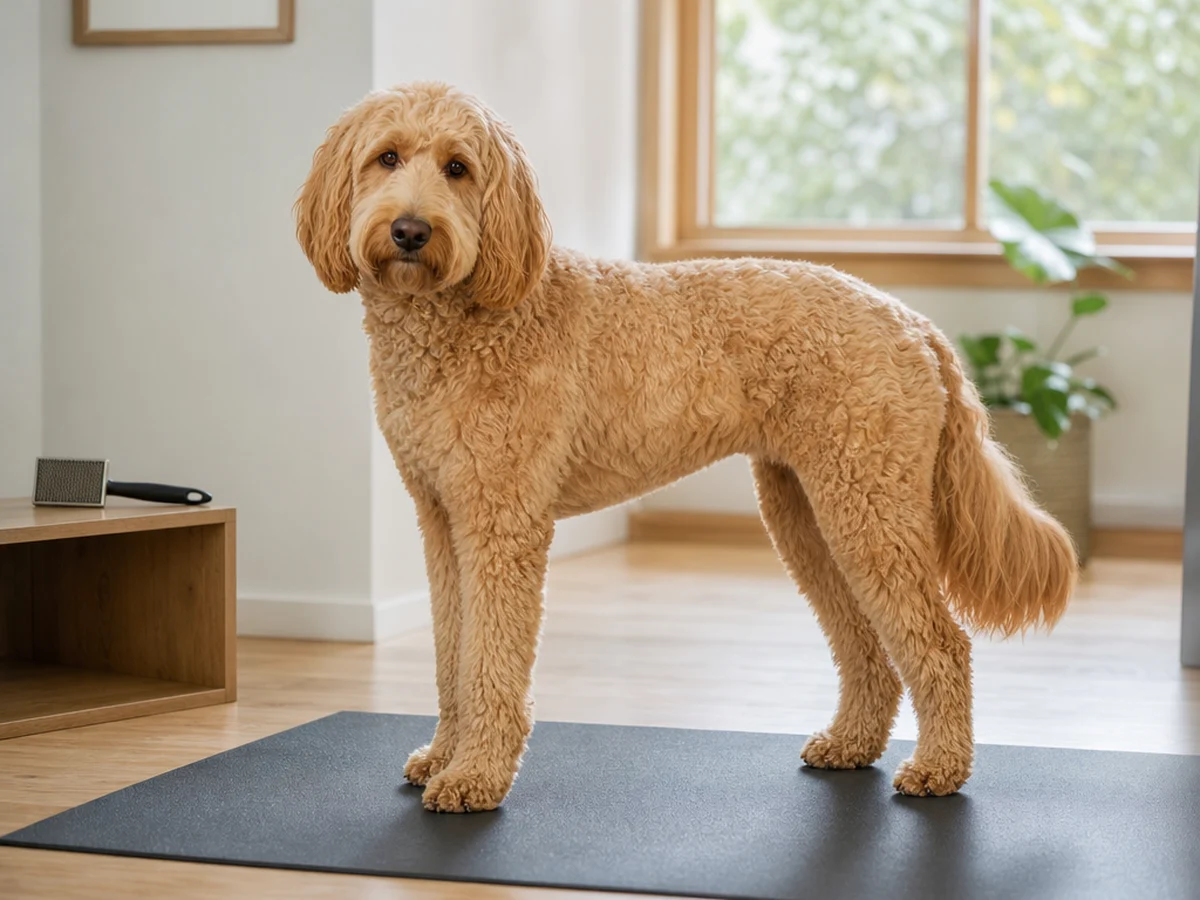
When the action is familiar, add a tiny touch the dog already accepts, then stop and reward. Release the dog from the position and wait. If they return voluntarily, you can offer another easy repetition.
The pause must be real. Remove your hands when the dog withdraws from the practice position.
A start action only works as communication if leaving it changes what you do. Holding the dog in position after they try to move defeats that purpose. Keep practice easy enough that you can stop safely whenever they ask, with necessary professional care planned separately.
Use the same marker and reward timing as the household's basic training routine for Goldendoodles. The dog should not have to decode unfamiliar signals while also learning about a tool. Make each repetition small enough that you can notice voluntary participation.
- Choose secure footing and leave a clear, safe route away from your hands.
- Reward the starting action before adding unfamiliar handling.
- Introduce one brief, comfortable touch and then remove the hand.
- Pause when the dog withdraws, and reduce the next task if they return.
Touch, Tools and Sound Are Separate Grooming Lessons
List the components of the care your dog will need, then practice them independently. Seeing a brush does not mean accepting its movement through the coat. Hearing clippers at a distance does not mean accepting vibration against the body, and neither should be assumed from a successful paw touch.
Touch Without Equipment
Begin on a comfortable body area and move gradually toward the location you need to handle. A small change in hand position can be enough for one session. Keep the contact brief and let the dog decide whether to rejoin after a pause.
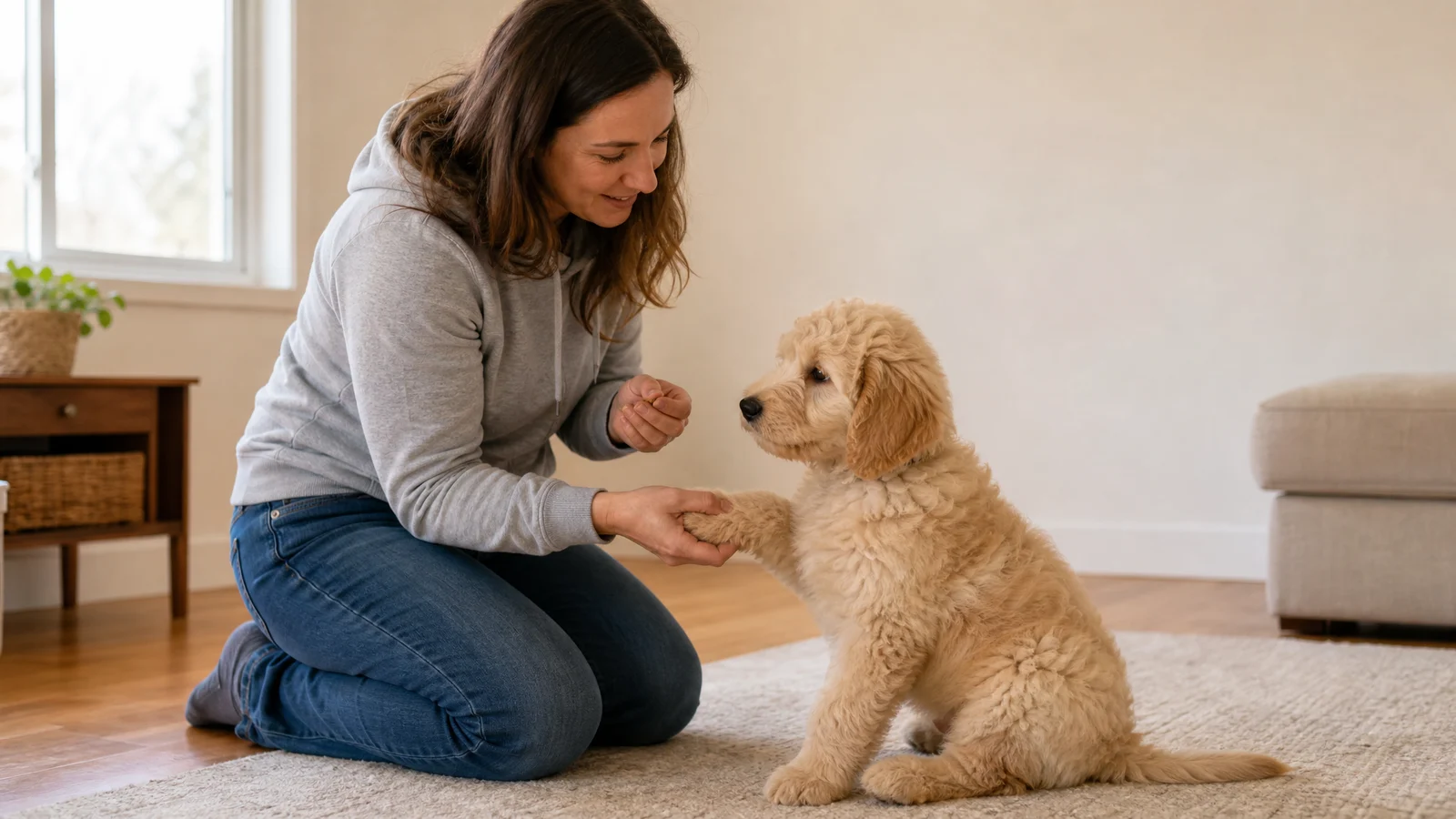
For a paw lesson, start with a familiar touch higher on the leg if that is easier. Work toward a brief touch near the paw before attempting to lift or hold it. A voluntary offer should not suddenly become prolonged restraint.
Practice near the ears with the same care, beginning where touch is already comfortable. A gentle look at the outside of an ear is a different action from cleaning. Ask the veterinary team what ear care is appropriate rather than adding products or procedures to a training session.
A Tool Before Its Working Movement
Let the dog see the brush at a comfortable distance, reward and put it down. Later, introduce a brief touch with it on an easy area. Only then try a short, gentle stroke, using the method and tool your groomer has demonstrated for that coat.
Stop if the tool catches. More pressure does not make a tangle into a training opportunity.
Keep tools organized so you can change tasks without reaching over the dog repeatedly. Introduce a comb as a new object rather than assuming it feels like the brush. A Goldendoodle who accepts one tool may still need time to understand another shape or sensation.
For nail care, ask a professional to demonstrate safe technique and suitable equipment. Handling practice can prepare the dog to offer a paw, but it does not teach the person where or how much to trim. Keep skill-building and technical competence separate.
Sounds at a Comfortable Distance
Introduce grooming-related sounds at a level where the dog can remain relaxed and move away. Let a brief sound predict something pleasant, then end it. A helper can operate equipment at a distance while you observe the dog, provided the setup remains safe.
Do not move the sound source closer during every repetition. Repeat an easy version until it becomes ordinary, then change one feature. Sound, airflow and vibration are distinct experiences, so a quiet response to one does not justify adding all three.
Discuss dryer preparation with the groomer rather than improvising exposure to strong airflow or heat. The practical goal is comfortable familiarity with the actual care setup. A home demonstration that overwhelms the dog makes the later appointment harder.
Grooming Skills With Another Person
Transfer begins with an easier task than the dog performs with you. Let another familiar adult be present while you demonstrate a brief successful repetition. Then have them offer the same starting opportunity without adding extra duration or a new tool.
The Helper Copies One Easy Action
Show exactly where the hand goes, when the reward arrives and which movement ends practice. The helper should begin with one comfortable touch. Your Goldendoodle may need more space or a different human position to accept the same action from them.
Let the dog approach the helper voluntarily. If they stay with you, reward comfortable observation without insisting on contact. Another person's willingness to help does not mean the dog is ready for that stage.
Our Goldendoodle puppy handling and mouthing discussion explains why mouth contact during touch can be a request to stop. Share that distinction with helpers. They should notice earlier withdrawal rather than wait for teeth to communicate the limit.
The Setting Changes After the Person
Once the helper's easy touch is comfortable, try an equally small lesson in another quiet location. Keep the tool and starting action familiar. Changing the person, surface and noise together gives you little information about which part worries the dog.
Ask whether the salon offers a brief introductory visit appropriate for your dog's health and vaccination status. The first useful visit may involve entering, receiving a reward and leaving. It does not need to include a complete groom to establish something positive.
The RSPCA's groomer selection advice encourages gradual familiarity with the setting and equipment. Ask how staff respond when a dog needs a pause. Their handling approach should fit the communication you have been teaching at home.
Necessary Grooming Before Training Is Complete
Coat maintenance cannot always wait for a dog to learn every handling skill. Contact a groomer early when tangles, dense matting or care needs exceed what you can manage comfortably. Describe the actual problem rather than repeatedly trying to push a brush through it.
Do not cut tight mats near the skin yourself. Ask a qualified professional how to remove them safely and how to keep future care manageable. A practical shorter style may be part of that conversation, based on the coat and the dog's needs rather than a preferred appearance alone.
ASPCA grooming and skin guidance identifies redness, sores, unusual odor and other skin changes as reasons for veterinary attention. Training cannot resolve painful skin or ear problems. Contact the clinic when those concerns appear instead of assuming resistance is simply a manners issue.
This is general grooming preparation, not diagnosis or treatment. Ask your veterinarian about painful skin, ear changes or sudden handling sensitivity, and follow their advice before using treatments or cleaning products.
Explain the gap between necessary care and current training before the appointment. The veterinary and grooming teams can help choose a safe, low-stress approach. Continue the easy home lessons separately, so urgent maintenance does not define every future interaction with a brush.
- Report the areas needing care and any veterinary instructions already provided.
- Describe withdrawal or stress signals the staff should watch for.
- Ask what can be shortened, divided or deferred without compromising welfare.
- Agree on what information you need afterward to improve home maintenance.
The Goldendoodle Grooming Handoff
Send a short factual description of the dog's current skills, preferred surface, familiar tools and stopping signals. Include relevant concerns from regular veterinary visits. After the groom, ask which parts were comfortable and which need smaller home lessons, rather than accepting a simple good-or-bad rating.
Use that feedback to choose the next brief practice task, and tell the next caregiver which part you are working on. A clearer paw offer, easier tool introduction or calmer arrival can each make the next appointment more manageable. The useful result is a maintained Goldendoodle coat and a care team working from the same accurate picture of the dog.
 BehaviorGoldendoodles Who Chew Shoes: Trade-Up Games and Better Chews
 BehaviorPolite Play Between a Social Goldendoodle and Other Dogs
 Puppy trainingGoldendoodle Puppy at 8 to 12 Weeks: The First Month Home
