 Goldendoodle
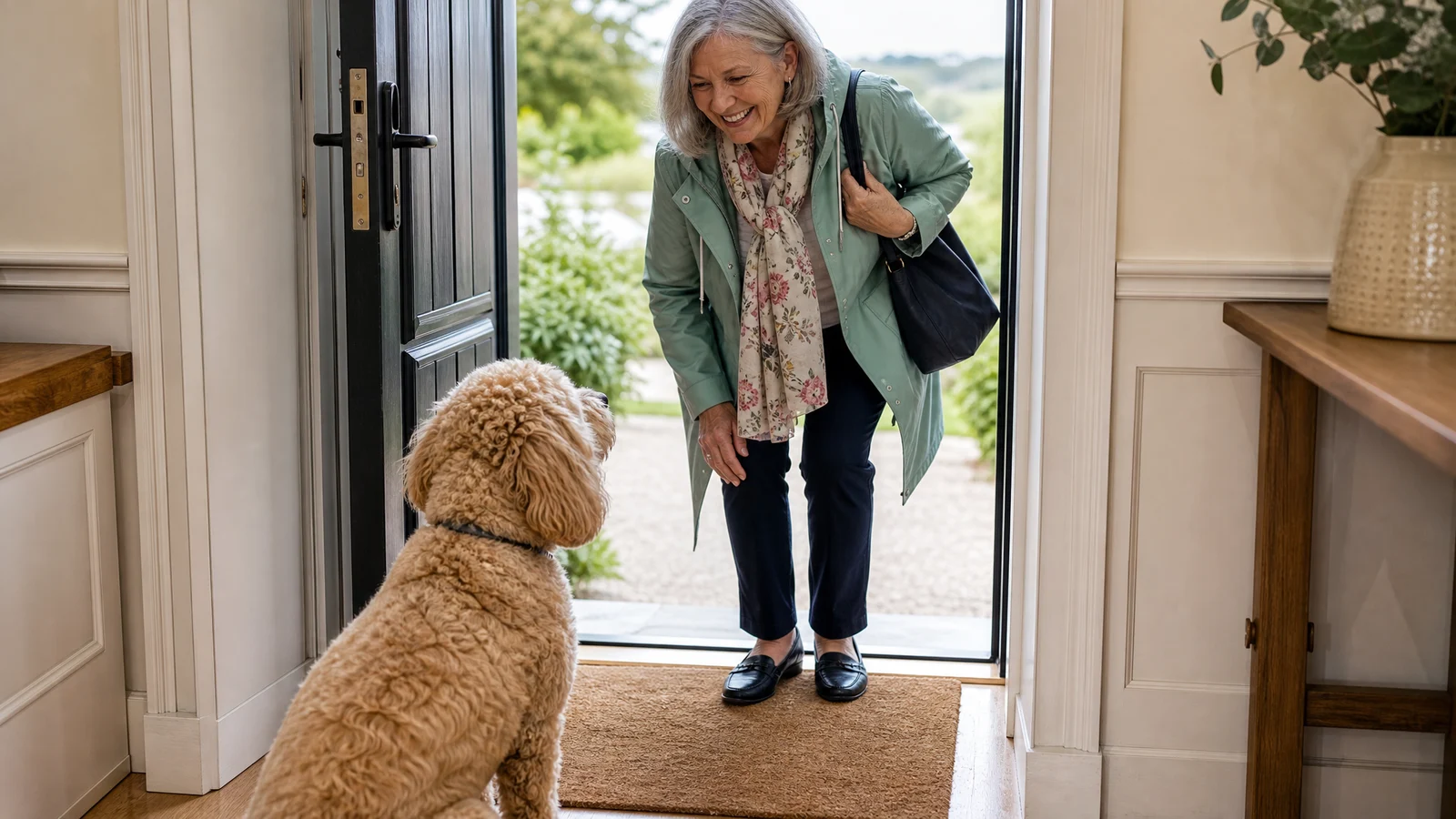
A visitor carrying a coat, a bag and a hot drink cannot also manage a bouncing Goldendoodle with perfect timing. If the greeting plan depends on that person spotting every lifted paw, the plan asks too much of the guest. A better welcome gives the host responsibility for the dog and leaves the visitor with one simple job.
That division matters for a friendly dog who finds moving people exciting, although friendliness is never guaranteed by Golden Retriever and Poodle ancestry. This guide separates entering the house from saying hello, then works through the host's setup, the helper's approach and the role of everyone watching. These pieces become a short practice visit in which grounded paws earn attention without making the front door a crowded training arena.
Entry Comes Before Goldendoodle Greetings
Arrange a comfortable waiting area before anyone knocks. A secure gate or a familiar room can keep the dog away from the outside door while you admit the guest. Choose an arrangement your Goldendoodle already tolerates calmly, with enough distance that reaching hands cannot create another jumping opportunity.
Watch the dog behind the barrier. Scrambling or climbing means the arrangement needs changing.
Try a quieter location, more distance from the door or help from another familiar adult. If your Goldendoodle struggles whenever access to people is blocked, arrange a comfortable alternative before inviting guests. Barrier practice deserves its own quiet lesson, and a real arrival is too demanding a place to begin it.
- Clear the entry route so the guest can put belongings down without stepping around the dog.
- Place rewards with the adult supervising the Goldendoodle, before the door opens.
- Choose a greeting area with steady footing and room for the person and dog to move apart.
- Tell the visitor that entering the house does not mean they need to greet the dog immediately.
Humane World explains why management and greeting practice belong together. Preventing access protects people while the dog learns an alternative. It also means a delivery or an unexpected visitor can be handled safely even when nobody has time for a lesson.
Keep early practice away from a real arrival. A helper who is already inside can stand quietly while you introduce the dog at a manageable distance. The doorbell, opening door and moving luggage can become separate lessons later, after the basic interaction is familiar.
The Host's Job During Goldendoodle Greeting Practice
The supervising adult watches the dog, delivers rewards and decides whether the helper should move. That is enough work for one person. If you also need to answer the door or help a guest, keep the dog in their comfortable waiting arrangement until you can return your attention to practice.
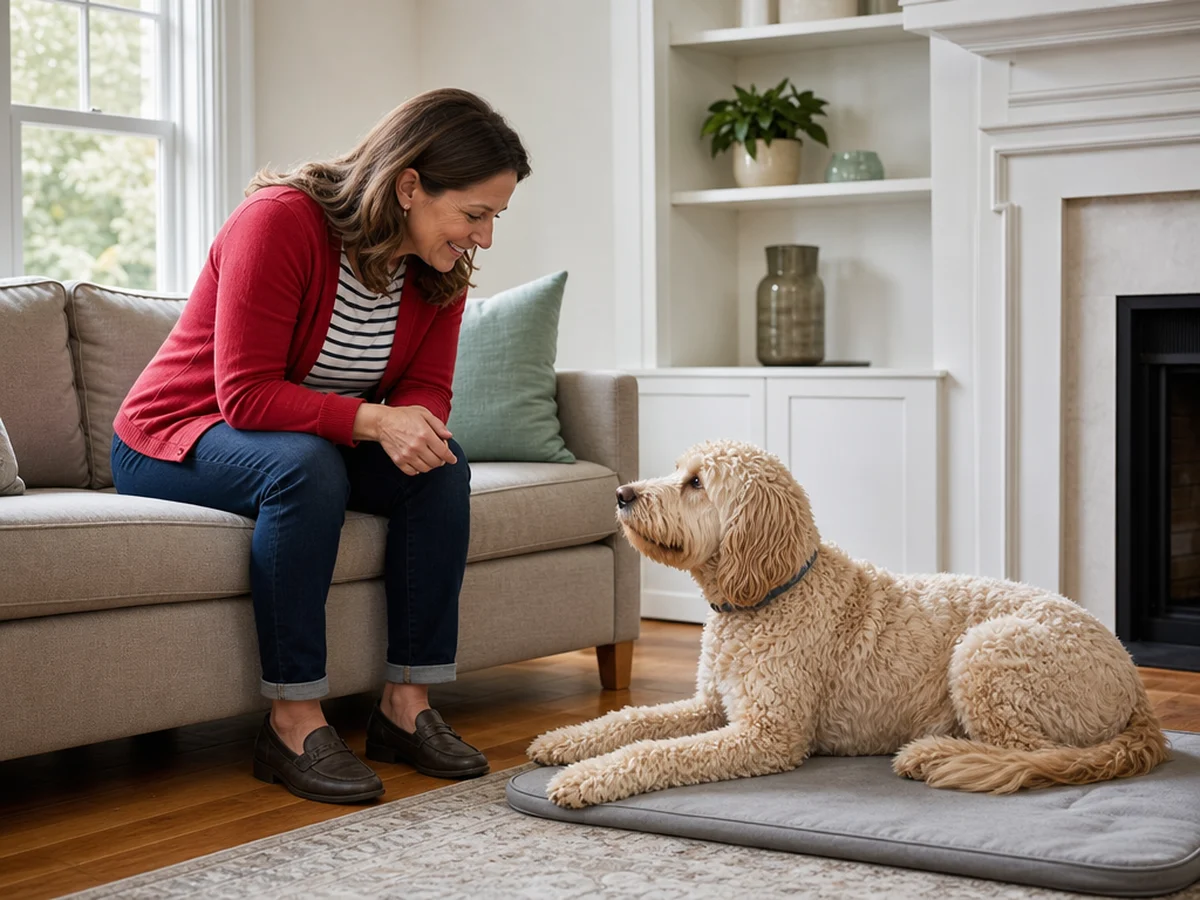
A Grounded Position Worth Choosing
Begin with the helper far enough away that your Goldendoodle can notice them without rushing. Mark a moment when all paws remain down and give a small reward low beside the dog's mouth. A natural stand is useful, and a comfortable sit can work if the dog already understands it.
The reward marks a choice, rather than a posture you need to hold in place. Allow the dog to adjust their feet and look around. Being grounded while relaxed is more useful for everyday greetings than maintaining a rigid position through mounting excitement.
Practice the same reward delivery without a helper first. Food held high can draw the dog's head and body upward. For a smaller Goldendoodle, bend enough to deliver comfortably without waving the reward above their reach.
Enough Space to Notice the Visitor
When using a harness and leash, leave a comfortable curve in the line while preventing access beyond your safe practice area. Position yourself so you can move with the dog into open space. Do not arrange the helper so close that the leash must remain tight throughout the exercise.
Watch the moment before a leap. Weight shifting forward, repeated bouncing on the front feet or losing interest in a familiar reward can mean the approach is too difficult. Ask the helper to pause farther away while you make the next repetition easier.
Give that request early. The helper can change the next step toward the dog.
A Pleasant Place Between Attempts
Invite the dog to move with you away from the helper after a brief success. Reward in the quieter area and let them investigate or rest. This is not another demand to remain motionless beside the person they want to approach.
For a Goldendoodle who becomes mouthy as excitement builds, choose a suitable toy they can carry comfortably during the break. Skip the toy if it makes them rush back toward the guest. Our Goldendoodle puppy mouthing guide explains how to separate playful mouth contact from an interaction that needs to stop.
Keep the resting option available even after several good attempts. A household member may need to take a phone call or prepare food, leaving less attention for the dog. End practice before that happens and return them to a familiar comfortable space. The visitor should never become the default supervisor merely because they are closest to the dog.
The Visitor's Job Is a Predictable Greeting
Give the helper their instructions before the dog appears. Ask them to stay quiet, approach only when invited and pause when you ask. They do not need to command the dog, distribute treats or improvise a response while the Goldendoodle is already airborne.
Approach Without an Exciting Performance
Have the visitor take one small step while you reward grounded behavior. Then pause the approach. If that is easy, repeat from the same distance before making the person closer, louder or more animated.
A person bending forward may be a much bigger change than another walking step. Introduce those movements separately. A dog who can watch an upright guest approach may still need more room when a face or hand comes down toward them.
Dogs Trust's jumping guidance emphasizes rewarding paws on the floor and allowing dogs to avoid greetings. Use the same choice here. Turning away from the person can be a sensible response, not a missed chance to demonstrate sociability.
Hands Follow the Dog's Comfort
Offer contact only if the dog seeks it with loose, comfortable movement. A brief stroke on a familiar, welcome area is enough for the first attempt. The visitor then takes their hand away while the host rewards the dog for remaining grounded.
If the dog steps back, turns their head away or becomes still, stop reaching. Wait for a fresh voluntary approach rather than following them with a hand. A wag alone cannot tell you whether touching is comfortable.
If jumping starts, end access to the person safely. The visitor can move out of reach while the host creates space, using the established barrier or an easy movement away. The next attempt should begin at a lower level of excitement, not repeat the same failed approach.
Someone who laughs, reaches over the dog or keeps calling them closer may be a lovely guest but an unsuitable first helper. Let that person enjoy the visit while the dog rests elsewhere. Reliable practice can happen with another adult who finds the instructions easier to follow.
Bystanders Change the Greeting Lesson
Other people can undo a clear rehearsal without meaning to. One guest quietly waits while another calls the dog from the sofa, and the Goldendoodle has two different invitations to solve. Ask everyone outside the exercise to leave the dog's attention with the supervising adult.
Children should not be the practice targets for a dog who jumps. An adult can manage the dog while children remain safely separated from the activity. A child standing still is not a substitute for a barrier or competent supervision.
The humane training statement from AVSAB supports arranging the environment and rewarding the behavior you want. In a busy household, that includes arranging the people. Each adult should know who is supervising before the dog gains access to a shared room.
Small dogs need this protection too. A Mini Goldendoodle jumping against legs may be physically easier to overlook, but repeated reaching and lifting can still make greetings confusing. Teach the same grounded approach and leave room for the dog to decline contact.
Visitors with mobility difficulties may need separation throughout the visit. That is a complete management decision, not a failed training session. A quiet dog nearby behind a suitable barrier can share household activity without being asked to navigate an unsafe greeting.
A Practice Visit for Your Goldendoodle
Once each person understands their part, join the pieces in a deliberately simple visit. Use one familiar helper and leave other distractions out. Begin with an arrival the dog can manage, then make the greeting optional rather than the inevitable reward for getting through the door.
- The helper enters while the dog waits comfortably, and puts belongings down before approaching the practice area.
- The host brings the Goldendoodle into view at a distance where grounded behavior is easy to reward.
- The visitor follows one approach instruction, then pauses while the host assesses the dog's response.
- If both participants are comfortable, brief contact happens before the host invites the dog away.
- The helper sits or begins an ordinary activity while the dog gets a quiet break with the supervising adult.
A guest standing up later is a fresh movement to teach, even after a calm hello. Begin with a small shift in the chair while the host rewards the dog at a comfortable distance. Full standing can wait until that movement no longer draws a rush toward the person.
Do not turn a social visit into an uninterrupted series of repetitions. Let the dog spend time in a comfortable resting area while people talk. The Goldendoodle training guide can help fit these brief lessons around the rest of the household's daily routine.
If a rehearsal deteriorates, note which human task became difficult. Perhaps the host had to leave, the helper forgot to pause or another person entered unexpectedly. Repair that arrangement before asking the dog to repeat the exercise.
Greeting Progress Before the First Jump
Count useful changes such as noticing a visitor without rushing, keeping paws down during an approach and moving away with the host. Bring changes in sitting comfort or tolerance of touch to your regular veterinary visits. Get reward-based professional help when safe separation or leash handling is difficult.
The welcome is improving when people need fewer emergency decisions. Your Goldendoodle can receive a clear invitation, the visitor can respond comfortably and the host can finish the interaction before excitement takes over. Keep those roles simple as new people join the household's practice.
 Training basicsLeash Training a Full Grown Goldendoodle Who Pulls or Lunges
 Puppy trainingGoldendoodle Biting: Teaching a Puppy Soft Mouth Manners
 BehaviorCounter Surfing Goldendoodles: Management and Mat Training
