 Goldendoodle
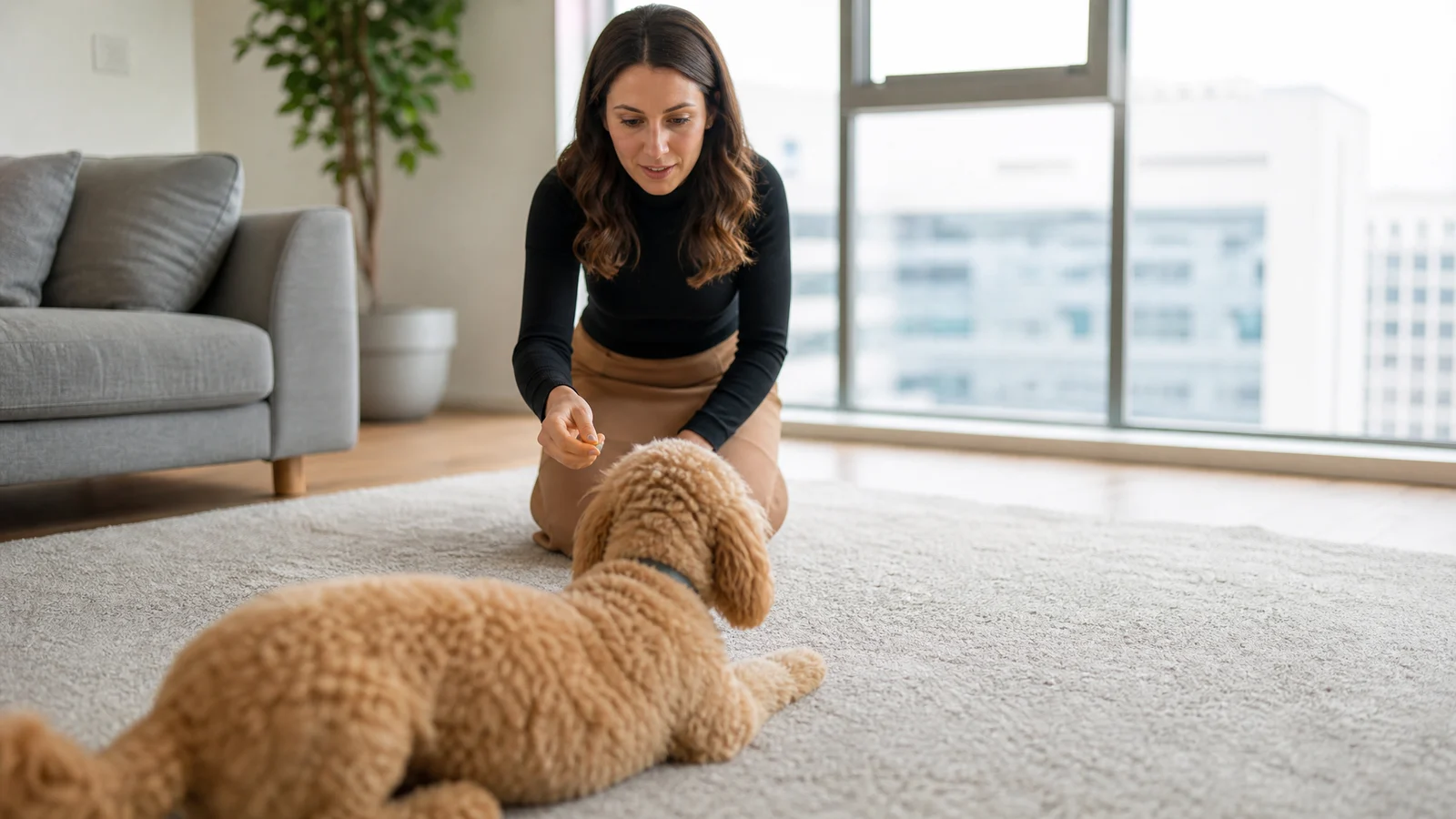
Train a Goldendoodle with short, reward-based sessions built on treats, praise and play, repeated daily instead of stretched into long drills. The AKC rates both parent breeds 5 of 5 for trainability, and it describes the Poodle as quick to please when you keep routines upbeat and enjoyable, so your dog may well be eager to learn, though individuals vary.
That eagerness is a gift with a catch. A friendly, clever dog charms past gaps in your plan, and the habits that slip through in the first months, such as jumping and mouthing, are the ones you are still managing a year later.
This article looks at training through four household situations: an apartment, a home with young children, a household with two dogs and a day when you are away at work. Pick the one that matches your life and build sessions that fit it. We have trained this breed for many years, and the article ends with two weeks of small, doable steps.
Why Reward-Based Training Suits Goldendoodles
Both parents sit at the top of the trainability scale, from self-willed at one end to eager to please at the other. The Golden Retriever is described as outgoing and keen to do your bidding, and the Poodle as extremely intelligent and easily trained. A Goldendoodle may inherit that, but there is no trainability data for the cross itself, so treat it as a likely starting point and follow your own dog's pace.
Reward-based methods suit that profile. The American Veterinary Society of Animal Behavior concludes that, based on current evidence, dog training of every kind, including work on behavior problems, should rely on only reward-based methods. For a people-oriented dog, your attention is already a strong payment, so you start with an advantage.
Mental stimulation needs rate 4 of 5 for the Golden and 5 for the Poodle, the top of a scale that ends at needs a job or activity. That is the quiet reason short sessions matter here: each one gives a thinking dog something to do. Across every household below, you can pay in any of these currencies:
- Small treats for fast repetition, counted as part of the day's food.
- Praise and calm touch, which many Goldendoodles value highly.
- Play, such as a short tug game, when your dog is already settled enough to enjoy it.
- Life rewards, like a door opening, a sniff on the walk or permission to greet a friend.
When your dog earns a treat, mark that exact moment with a short word like "yes" so they know what paid off. Then stay consistent about what you ask. A cue that means one thing on Monday and another on Friday costs you months of confusion later, which is a poor trade for a dog who wants to get it right.
Apartment Training for an Eager Goldendoodle
An apartment changes three things: the space you can use, the noise your neighbors hear and the way your dog burns energy. A Goldendoodle can live happily in a small home, but only if you replace a yard with a plan. The parents rate moderate to fairly high for energy, so daily walks stay non-negotiable.
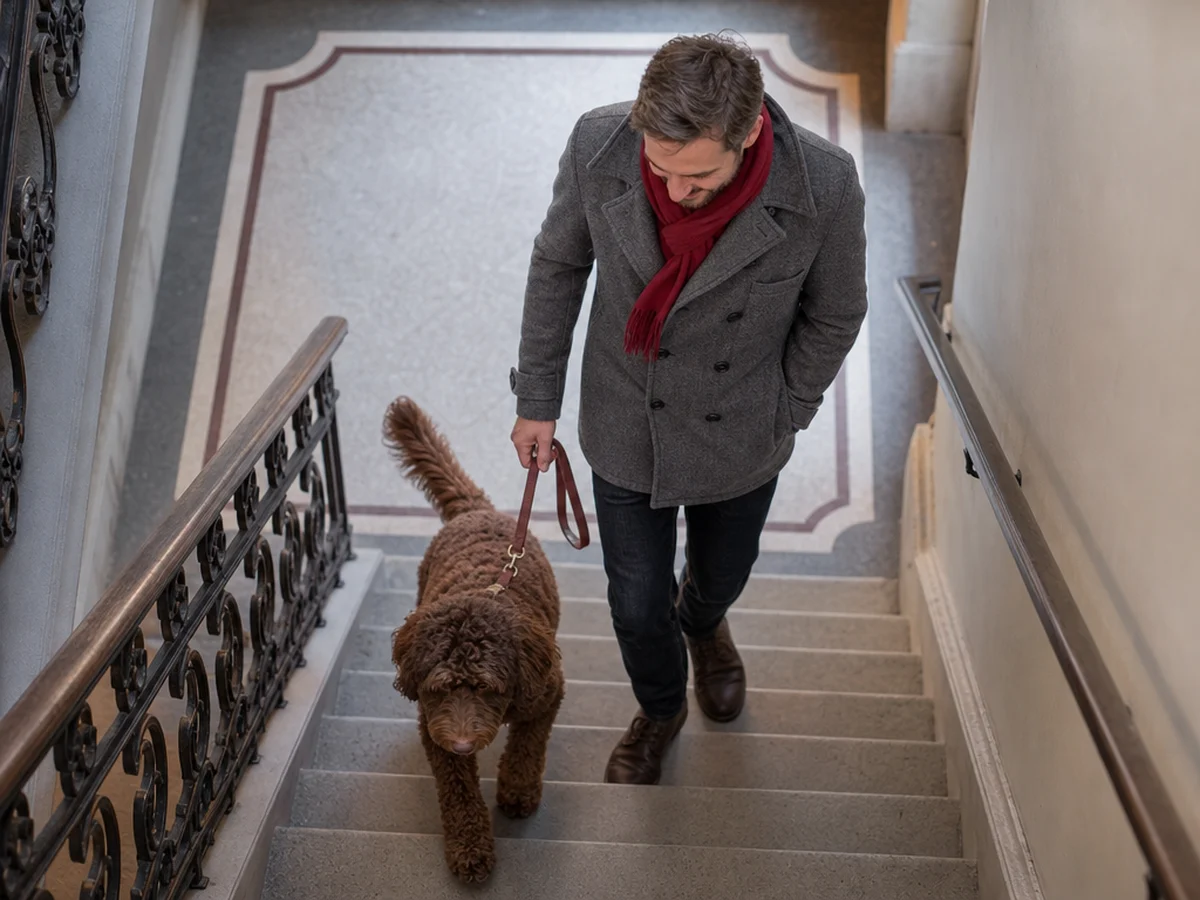
Indoors, work in short bursts. Several brief sessions fit between chores and keep a clever dog interested. Mental stimulation is an important complement to physical exercise, not a replacement for it, so use it to top up a walk, never to skip one.
- Teach a mat behavior and reward your dog for lying down on it, building time slowly. It becomes an off switch when the doorbell rings or a neighbor passes in the hall.
- Scatter treats around one room and let your dog search. Scent games tire a dog without needing floor space.
- Practice hand targeting, spins and other small tricks that need only a step or two.
- Reward quiet moments by name, so calm becomes something your dog does on purpose.
Noise deserves honest planning. The two parent breeds differ widely in how much they bark, from quiet to rather vocal, so your dog could land anywhere. Reward silence before barking becomes a habit, and meet exercise and company needs, since a bored dog in a small space often finds a voice.
Elevators, stairwells and hallways are where excited greetings show up. Teach polite arrivals early, because an exuberant dog on a landing is a bigger problem than the same dog in a yard. Your puppy also needs a reliable toilet routine, so our guide to potty training a Goldendoodle puppy pairs well with this plan.
Young Kids and a Goldendoodle Puppy's Training
Both parent breeds earn the top mark, 5 of 5, for living well with young children, and the Golden's standard describes a friendly, reliable temperament. That is encouraging, but a bouncy puppy and a small child still need an adult managing the setup. The training goal is a household where everyone asks for the same things in the same way.
Who Gives the Cues
Let an adult teach each new skill first, then hand over one simple cue at a time. A child who can say sit once, wait, and then deliver a treat calmly is a real training partner. Agree on a short list of family rules, such as no jumping and no grabbing at hands, and write it where everyone can see it.
Supervise puppy and child together, or separate them with a gate or pen. Rest matters too. Mouthing is often linked to being overtired, so a nap in a quiet space is part of the training plan.
Mouthing and Excited Greetings
Mouthing often follows a context. Some puppies get nippy when they are tired, and others when they want attention for play or a potty trip and are not getting it. Some skip people altogether and chew furniture, and they do well when pointed to a chew toy. Spotting the trigger tells you whether your puppy needs rest, attention or something to chew.
Some puppies get so excited that toy redirection fails and they go for legs, trousers or skirts. In that case, calmly end the game, step away and give a short break, then reward the moment they settle. Mouthing can last for months, and some dogs keep mouthing into adulthood, without pressure, as a way to greet or lead. Stay patient and keep rewarding calm.
Greetings and Visitor Excitement
Greetings are the other pressure point. Dogs who love people can get so excited that the excitement turns physical with visitors, even when they only mean hello. The same dog may sit politely for strangers in public and be boisterous at home, so practice in each setting. Owners also report excitability easing between about age two and age five, though some dogs are still lively at three and a half.
Structured calm-greeting practice can change arrivals quickly. Some owners greet the dog outside and allow only calm petting indoors, and some owners see a difference in about a week. Others send the dog to a set spot for cuddles, or use a short cue followed by turning away. Calm gets rewarded, and the dog learns what works.
Start social outings early. The Golden Retriever's early window for gently meeting many people, places and situations runs from seven weeks to four months, and a Goldendoodle puppy can follow the same one. Our Goldendoodle puppy training timeline shows how the later months build on it.
Two-Dog Household Training Without Rivalry
A second dog doubles the fun and the potential for friction. The parents differ here, with the Golden rated 5 of 5 for getting along with other dogs and the Poodle 3, which means with supervision. Your Goldendoodle may sit anywhere in that range, so watch the pair rather than assuming.
Begin with separate sessions. Each dog learns new skills alone, in a room without the other, so neither is distracted or tempted to steal rewards. Once a cue is solid, bring the second dog into the room on a mat or behind a gate and reward the calm dog for waiting.
- Deliver treats at your dog's own spot, not in the middle of the floor where both can race for them.
- Take turns clearly, one dog working while the other earns calm rewards for waiting.
- Share attention evenly, since competition over your lap can start small and grow.
- Keep high-value chews and toys apart, in separate rooms or crates, until you know how they handle sharing.
Excitement is contagious in pairs. Greetings at the door can turn into a double wave of jumping and mouthing, so ask each dog for a calm moment in turn. Skills that go well at home also need fresh practice in new, busy places, so build up gradually and reward calm wherever you go.
If one dog is clearly the pushier eater or toy collector, manage the setup first. Feed at a distance, pick up leftovers and run the sessions on a schedule. A small amount of planning now costs far less than untangling rivalry later.
Training a Goldendoodle Left Home All Day
A Goldendoodle is people-oriented, and a long workday tests that. Many owners hit separation trouble at some point, from puppyhood to adulthood. The pattern is that short departures that slowly get longer helped some dogs, in anything from a couple of weeks to months, and pacing the work to the dog beats any fixed schedule.
Build the workday around anchors rather than hours:
- In the morning, give a walk, a short training game and a chew before you leave, then go quietly.
- Leave something worth doing, such as a food puzzle or a stuffed chew, so being alone begins with a good thing.
- Keep arrivals calm. Wait for four paws on the floor, then greet, and use the same calm-greeting steps described earlier.
- In the evening, hold one short training session and a mental game before the long wind-down.
If crate time is part of your day, introduce it patiently. Marking and rewarding each move toward the crate, even a nose inside, then building to the whole body before adding a cue, is the approach Best Friends describes for crate introduction. Our guide to Goldendoodle crate training and preventing separation anxiety goes deeper.
Setbacks are normal. A trip with a house sitter or an unexpected return home can undo progress, so after any disruption go back to shorter absences. Some dogs improve with age or simply get used to being home alone, but some stay anxious into adulthood. Some anxiety can persist, so pacing the training to the dog is sensible, and it may help to see it as true anxiety rather than a behavior problem.
If your schedule leaves the dog alone for long stretches, arrange midday help from a walker, a neighbor or a friend. Regular vet visits are part of this plan as well, since discomfort can look like a behavior problem.
This is general information, not veterinary advice. Check with your veterinarian about treat portions and your dog's daily food, and about heavy distress, destruction or nonstop barking when alone.
Two Weeks of Short Goldendoodle Training Wins
Here is a compact plan that borrows from each case above. Practice a few short sessions every day, ending each one while your dog still wants more, and move to the next stretch only when the last goal feels easy.
| Stretch | Small goal | What to practice |
|---|---|---|
| First days | Learn what your dog works for | Test treats, praise and play, and pick a marker word |
| Rest of week one | Calm arrivals and a mat | Reward four paws down at the door and time on a mat |
| Early week two | Handle triggers | Redirect mouthing to a chew, and work each dog or child's turn separately |
| Late week two | Short alone time | Leave briefly, return calmly, and lengthen only when your dog stays relaxed |
| Day fourteen | Checkpoint | Review what is easy, what is shaky and what to focus on next |
On day fourteen, ask a few honest questions. Is the greeting calmer, does the mat hold, and is mouthing easier to redirect? Keep the skills that worked and write down the one you want to improve next, since Goldendoodles tend to reward steady, patient practice over any burst of effort.
 Exercise and jobsHow Much Exercise Does a Goldendoodle Need? Plus Brain Games
 Training basicsHow to Potty Train a Goldendoodle Puppy Without the Setbacks
 Exercise and jobsDaily Exercise and Brain Games for a Mini Goldendoodle
