 Goldendoodle
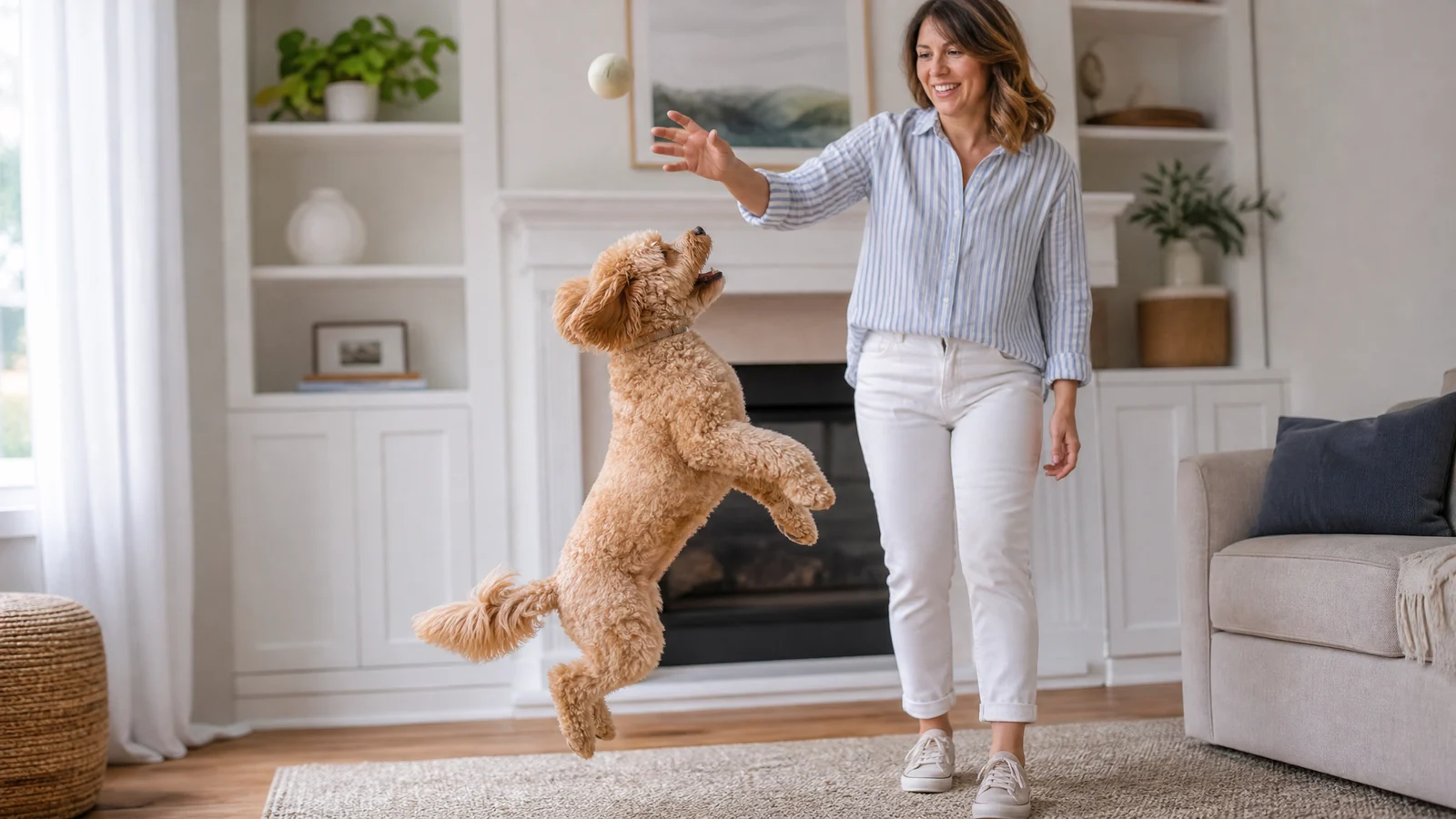
A Mini Goldendoodle can cross an apartment repeatedly and still have no useful job. Fast laps move the body, but they do not automatically provide sniffing, decision-making or a calm finish. The better small-space plan turns separate parts of the home into stations, each with one clear purpose and enough room for the dog to succeed safely.
We use this circuit to turn a hallway for controlled movement, a living room for searches, a kitchen for meal enrichment and a doorway for focus before outdoor activity. Below, the route covers movement, searching, meal enrichment and recovery. Mini size does not guarantee low energy. Parent traits are only possible influences, so choose stations by your dog's comfort, enthusiasm and recovery rather than by the label alone.
Mini Goldendoodle Exercise Stations
Walk through the home before bringing the dog into the game. Remove slippery obstacles, fragile objects and food that is not part of training. Each station should have a visible boundary, such as a mat or open patch of floor, so movement does not spill into uncontrolled jumping between furniture.
The linked Poodle parent page describes an active dog who needs good daily exercise. A Mini Goldendoodle may inherit that drive, but the cross can vary widely. The station design lets you raise or lower challenge without assuming every small dog needs the same workload.
Gather Simple Rewards
Prepare part of the dog's normal food, a favorite toy and one comfortable resting option. Use pieces small enough for repeated rewards, and count meal food as part of the day's feeding. The goal is smooth reinforcement, not a pile of extras added without regard to the dog.
Place rewards where you can reach them without making the dog chase your hands. Clear delivery helps the Mini Goldendoodle understand which choice earned the food or toy. If excitement rises too quickly, switch to food placed calmly on the floor.
Open and Close Each Station
Use a familiar cue to begin, then a consistent release and transition when the station ends. A short drink break or walk to a resting mat can separate one game from the next. These boundaries make the circuit readable instead of creating constant anticipation throughout the home.
Hallway Exercise With Control
A clear hallway offers a straight line, but speed is not its only use. Practice walking with you, turning together and stopping at a marked place. Controlled changes of direction ask for coordination and attention without needing a large yard.
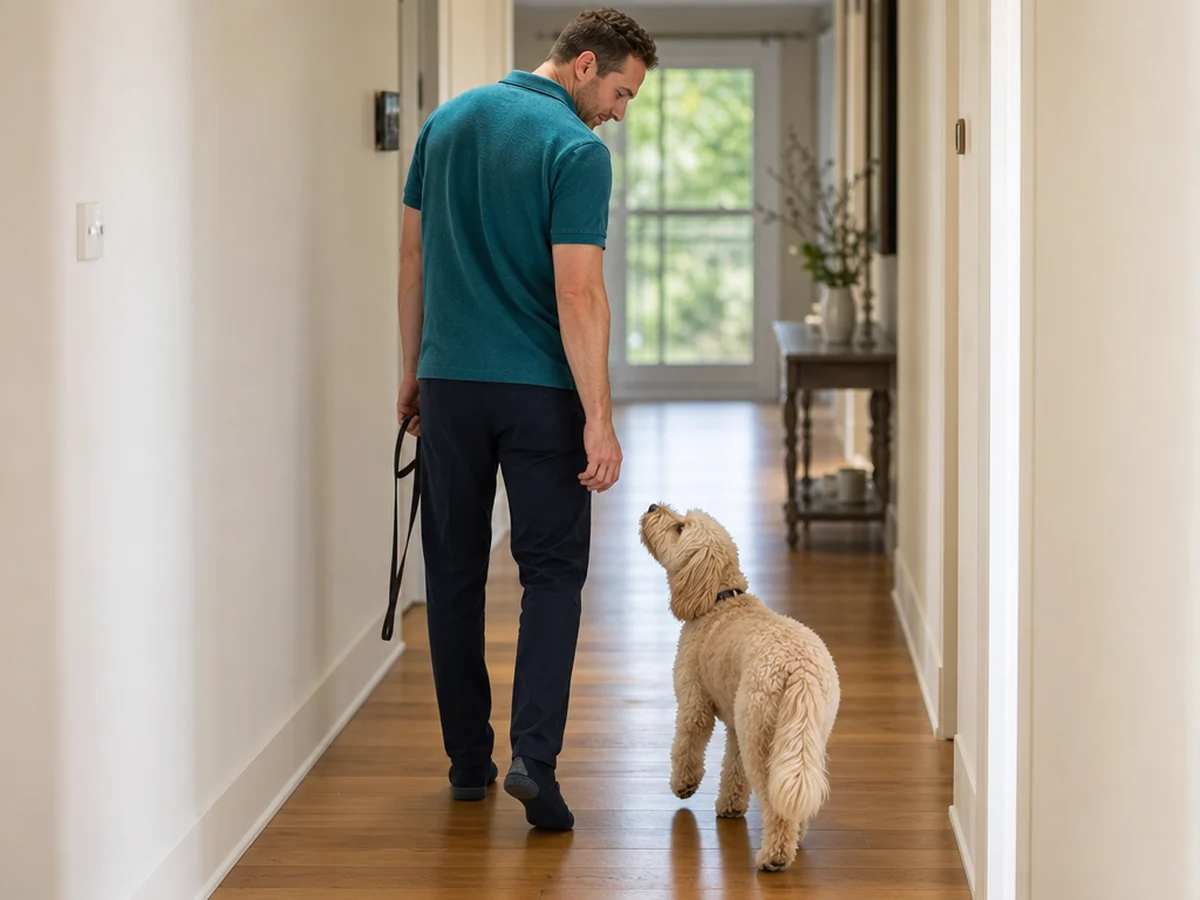
Keep repetitions low enough that footing remains secure. A small dog can accelerate quickly in a tight area, then struggle to stop on a slick floor. Add traction or choose another station when the surface cannot support the movement.
Hallway Follow and Turn
Begin with the dog beside you and reward one or two steps in the same direction. Turn gently, mark when they follow and place the reward near your leg. Build a flowing pattern only after the Mini Goldendoodle can change direction without leaping or skidding.
Vary the route with wide curves rather than abrupt spins. The game should look controlled and comfortable. If the dog bites at clothing or races ahead, reduce the distance and reward the first calm step.
Two-Mat Travel
Place two nonslip mats apart and reward the dog for moving to either one on cue. At first, stand close enough that the destination is obvious. Later, change your position while leaving the mats where the dog already understands them.
This station combines movement with a clear finish. It also gives you a foundation for sending the dog to a resting place. Keep the reward on the mat so arrival, not bouncing back toward you, completes the exercise.
Living Room Brain Games
The living room suits searching because furniture creates natural visual barriers. Start where every hiding place is easy and safe to reach. A thinking game should invite careful investigation, not force the dog under furniture or into conflict over an object.
The linked exercise guidance explains that thinking work belongs alongside physical activity and includes training, puzzles, scent work and new skills as forms of mental exercise. The circuit therefore pairs this room with movement elsewhere.
Open-Box Search
Set out several open boxes that cannot tip onto the dog. Put a treat in one while the Mini Goldendoodle watches, then release them to search. Reward the find and reset slowly so the dog uses their nose instead of attacking the boxes.
This simple search resembles an entry-level nose-work setup, but the home version does not need to become a formal sport. When the visible search is easy, place the food out of direct sight while keeping access obvious. Stop if the dog begins shredding cardboard.
Find the Familiar Toy
Place a known toy partly behind a chair while the dog watches. Use one search cue and celebrate the find with play or food. As understanding grows, hide only the toy, not an array of unfamiliar objects that changes the problem completely.
Let the dog bring the toy if they choose, then trade rather than grabbing. For a fuller retrieve sequence, the Goldendoodle training field manual develops pickup, return and release as separate skills.
Three Ways to Lower Difficulty
A game is useful only while the Mini Goldendoodle can solve it. Lowering difficulty is good training, not a concession. Use one of these changes when searching turns into random rushing.
- Move the object into partial view and shorten the search path.
- Use a more familiar reward while keeping the hiding place easy.
- Remove extra boxes or furniture barriers before the next attempt.
Kitchen Exercise Around Meals
The kitchen can turn food preparation into structured waiting and searching, but access needs management. Keep the dog away from hot surfaces, dropped hazards and crowded feet. A mat outside the working path creates a station where calm behavior can earn part of the meal.
The ASPCA notes that every meal can offer enrichment and that food puzzles provide mental stimulation. Use that idea at the dog's current skill level. An easy scatter on a safe mat can be more appropriate than a complicated device that produces frustration.
Meal Scatter With a Boundary
Place a few pieces of food across a defined mat and release the dog to find them. Keep the search area small at first. When the final piece is gone, cue the dog off the mat and prepare the next round rather than letting the search expand across the kitchen.
Increase challenge by spacing pieces more widely, not by hiding food where it could be unsafe. Watch for frantic gulping or guarding. If either appears, end the station and discuss a suitable feeding plan with your veterinarian or a qualified reward-based professional.
One New Cue
Use a few meal pieces to shape one small action, such as touching an open palm or placing front paws on a low, stable target. Reward the smallest correct step. A Mini Goldendoodle who offers the behavior readily can stop after a successful repetition rather than drilling it.
The Poodle parent's trainability may influence this cross, but it does not guarantee a particular learning speed. The Golden parent's listed temperament offers another possible influence, but a cross may inherit a different blend. Treat those descriptions as possibilities and respond to the learner present.
Keep Meal Games in Proportion
Do not make every bite difficult to obtain. Some dogs stay engaged when part of a meal is earned in games and the remainder arrives plainly. The right proportion leaves the dog satisfied and able to settle, without turning feeding into a long performance.
If the dog walks away, accept the information. Check the food, the environment and the dog's wellbeing instead of escalating the trick. A persistent appetite change belongs in a conversation with a veterinarian.
Doorway Exercise Before Going Outside
The doorway is a transition station, not a place to trap the dog in a long stay. Reward orientation toward you, a pause while equipment is handled and movement through the opening together. The lesson is that access follows calm cooperation.
Keep the door secured while the response develops. Outdoor excitement can make an easy indoor cue much harder. Practice well away from the opening first, then move the same behavior closer while using a leash or barrier for safety.
Check In and Exit
Stand beside the closed door and mark the moment the dog looks toward you. Reward, handle the leash calmly and open the door only as much as the Mini Goldendoodle can manage. If they surge, close it gently and reset farther back without scolding.
Once outside, allow a suitable sniffing period. The exit itself becomes part of Goldendoodle exercise, not merely a barrier before the real activity. Sniffing and shared movement can provide a calmer counterpoint to indoor games.
Return to the Rest Mat
Finish the outdoor portion by guiding the dog back to a familiar mat and rewarding calm contact with it. Offer water and let the household become quiet. Recovery is a trained part of the circuit rather than something expected to happen after the dog has been highly aroused.
Battersea recommends mental stimulation such as scent games, training and puzzle feeders when boredom contributes to barking. Its barking guidance does not mean every vocal Mini Goldendoodle is bored. Use context, and seek professional help when barking reflects distress or remains difficult to manage.
Tomorrow's Mini Goldendoodle Circuit
Do not run every station every day. Choose a route that fits the dog's response and the household's available space. A movement station, one thinking station and a recovery station can form a complete circuit when the Mini Goldendoodle stays comfortable and engaged.
Use these route options as starting shapes. Swap stations rather than increasing all of them together.
- On a quiet day, pair two-mat travel with an open-box search and a rest-mat finish.
- Before an outdoor outing, use one new cue, a doorway check-in and a sniffing reset.
- When space is crowded, use a meal scatter, palm target and calm return to the mat.
More advanced learners may enjoy foundations from the Goldendoodle sports audition guide. Puppies can branch into the Goldendoodle puppy training skill tree. Keep regular veterinary visits, change the circuit when physical comfort or behavior shifts, and let small-space exercise remain varied without becoming relentless.
 BehaviorTurning a Goldendoodle's Big Welcome Into a Polite Hello
 Training basicsLeash Training a Full Grown Goldendoodle Who Pulls or Lunges
 Puppy trainingGoldendoodle Biting: Teaching a Puppy Soft Mouth Manners
