 Goldendoodle
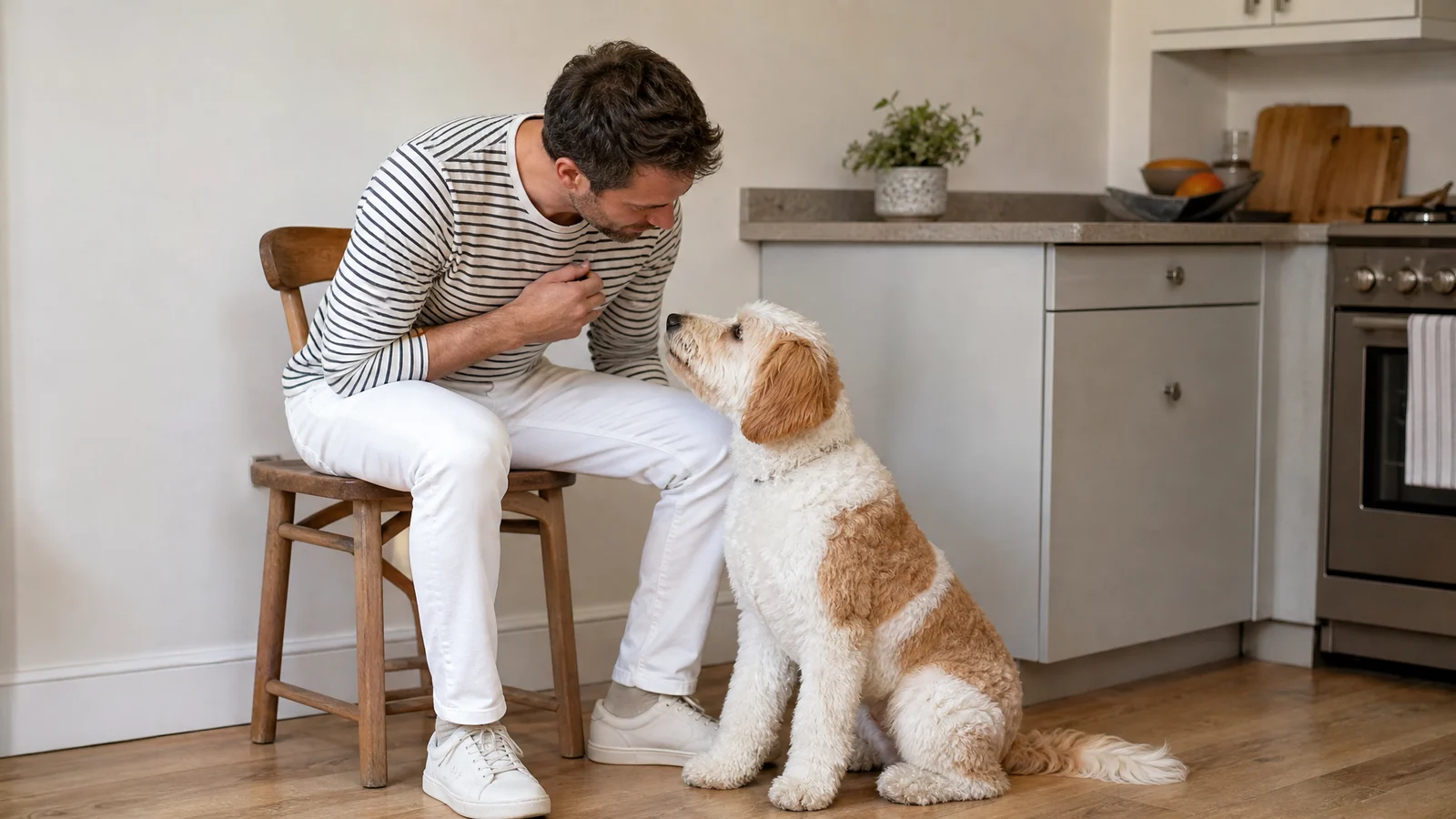
You call your Goldendoodle across the park, and the answer is a happy wag aimed at somebody else. That is rarely stubbornness. A dog who loves people has plenty to look at, and you are one good thing in a very crowded view. Teaching focus gives your dog a reason to pick you out of it.
The skill itself is small: a turn of the head toward you, paid for the moment it happens. Done well, it makes every other cue easier to ask for.
Below, you will find the stages that build the look, a short word to put on it, and a plan for carrying it from the kitchen to the sidewalk, with answers to a few practical questions at the end.
Why a People-Loving Goldendoodle Still Struggles With Focus
That crowded view is the real problem, because focus for a Goldendoodle is less about attention than about priority. Goldendoodles may inherit the people-loving streak of both parent breeds, so each of these asks for a turn of the head:
- Every visitor
- Every dog
- Every smell
Your voice has to compete with all of it. So the goal stays modest: a glance toward you when you are quiet, and later when you use a word. The first cue many people teach is exactly that, eye contact when you say your dog's name or the word “watch,” which shows your dog is focusing on you and on what you are trying to convey.
That makes the reward the whole game. For a dog who finds almost everyone rewarding, a dull treat is a weak offer, so plan to pay better than the room does.
Training a Goldendoodle to Look at You, Stage by Stage
Since a dull treat loses to a busy room, the first stage takes the room away. Pick a quiet space with the door closed and the television off, and keep a handful of small, soft treats in a pocket, where your hands can stay still. Each stage earns the next, so skip nothing on a good day.
Stage One Pays the Free Glance
Stage one asks for nothing except a turn toward you, and it works because your dog discovers the answer alone. Say nothing and follow this order:
- Stand or sit with your hands still and wait. Your Goldendoodle will sniff, wander and sooner or later check what you are doing.
- The instant their head turns your way, say “yes” or click, then pay with a treat from your pocket.
- Toss a second treat a few steps away, so your dog moves off and has to come back and look at you again.
- Repeat until the glances arrive almost as soon as you go quiet.
Move on when your Goldendoodle looks your way smoothly several times in a row. If they circle your pockets instead, keep your hands still and pay only for a turned face. If they wander off for good, the room is too interesting or the treats too dull, so make the room quieter or the treat better.
Stage Two Pays for Eyes, Not Just a Turn
When glances come freely, wait one beat longer before you mark, so the pay lands as your dog's eyes meet yours rather than as the head swings around. We see keen Goldendoodles rush this stage, because the glances look so good that the next step feels overdue. If your dog starts looking and looking away at once, go back to paying the plain turn for a few rounds and then ask for the eyes again.
Stage Three Puts a Word on the Look
Once the eyes arrive almost every time, say a short word such as “watch” just before you expect them, then mark and pay when your dog looks. Say it once and wait quietly, because repeating it turns a clear request into background chatter. If no look comes, make the next try easier by moving closer or quieting the room, and pay the first glance that follows.
Making Goldendoodle Focus Hold Up Away From Home
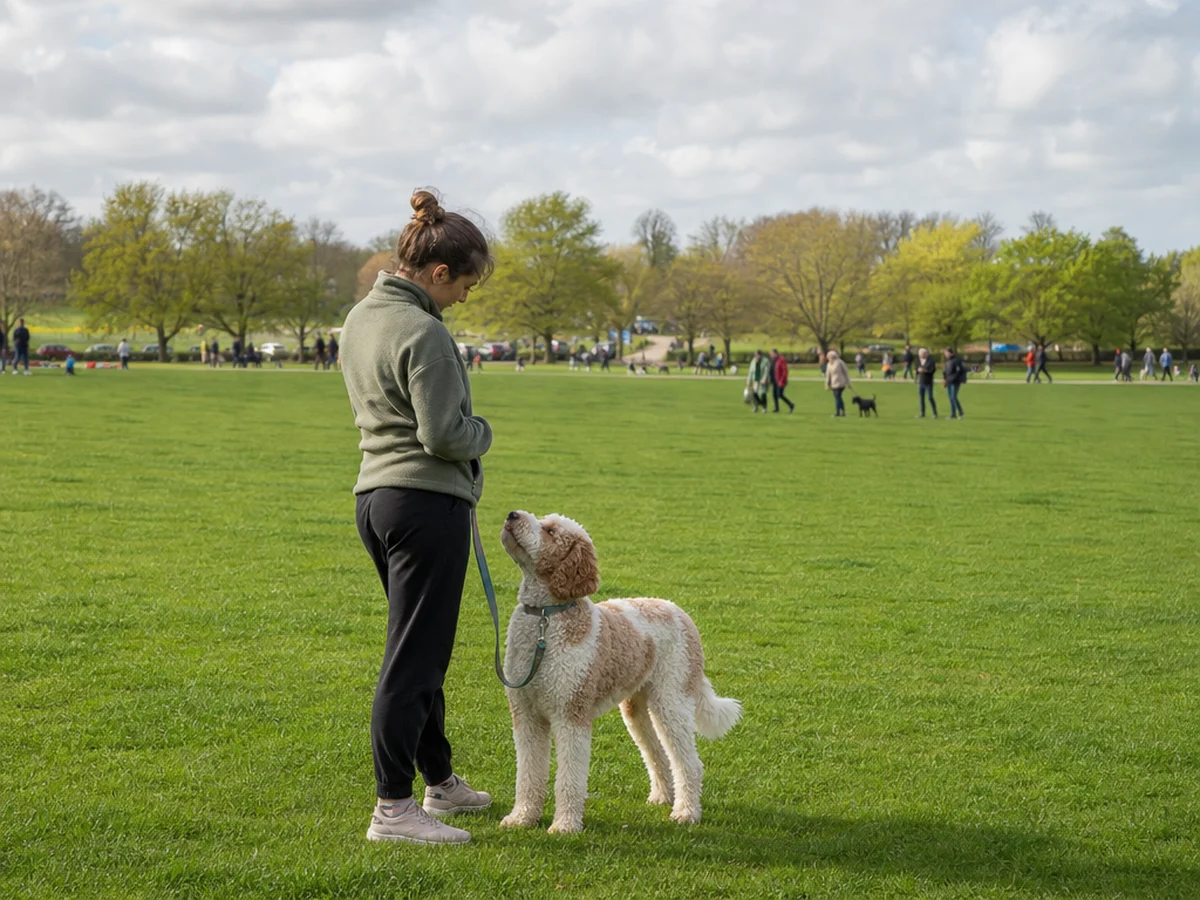
A word that works in the quiet room has passed only the easiest test, and the next ones are harder in ways a Goldendoodle will feel at once. Raise one thing at a time and let the reward rise with it, using lower-value rewards for low-distraction places, like inside your home, and higher-value ones for high-distraction places, like walks outside.
The order of difficulty follows a familiar path: small distractions such as toys, other pets and people come first, then other locations like your yard or driveway, and public places like a park come last. Treat each rung as a new lesson, because a dog who looks at you reliably in the kitchen may need an easier ask at the curb.
Teach a Goldendoodle to Pay Attention Near People
People are the hardest distraction for this dog, so build up to them slowly. Begin with a family member sitting quietly across the room, ask for the look and pay well when it comes. Then try a visitor standing still at a distance, a stranger across the street and finally a friendly crowd, changing one thing at a time. The guide to socializing with strangers covers the meeting side of that work.
Keep regular vet visits on the calendar too, and mention any sudden change in how your dog pays attention, since a dog who stops checking in may need more than a training tweak.
Focus Practice Questions From Goldendoodle Homes
Excitement, practice time and household help are where a lively home needs a plan. Each has a small adjustment that keeps the stages above moving.
What if my Goldendoodle is too excited to look?
Make the setting quieter and the ask smaller. Move to a room with fewer sights, let your dog settle with a chew or a few easy treats first, and pay the smallest turn toward you. A bouncy Goldendoodle may need several calm rounds before the look becomes available at all, and the guide to excitability and settling goes deeper on that.
How often should we practice?
Keep each round short and stop while your Goldendoodle is still keen, which is usually earlier than you expect. Practice whenever you have a pocket of treats and a quiet minute, and short rounds spread across the week will do more than one long session.
Can someone else in the house practice too?
Yes, and a Goldendoodle who adores every family member may do well with several teachers. Agree on the same word and the same quiet starting point so your dog hears one clear request, and have each person pay promptly with the same kind of treat.
A Goldendoodle Who Checks In Before Saying Hello
Everything above builds toward one small order of events: look first, hello second. Your Goldendoodle may well rate the next person or dog as the best reward on offer, so ask for a glance and then say yes to the greeting. That order never takes the joy out of meeting people. A Goldendoodle who learns that checking in is how hellos begin will still greet everyone, just in a better order, and each hello earned this way rehearses the habit you built in the kitchen.
Every lesson after this one begins with a dog who is paying attention, and our free Goldendoodle e-book follows that thread through the rest of their training, with real depth and no jargon, for anyone who asks for a copy here.
 Training basicsClicker Training a Goldendoodle
 BehaviorHow to Fix Goldendoodle Separation Anxiety
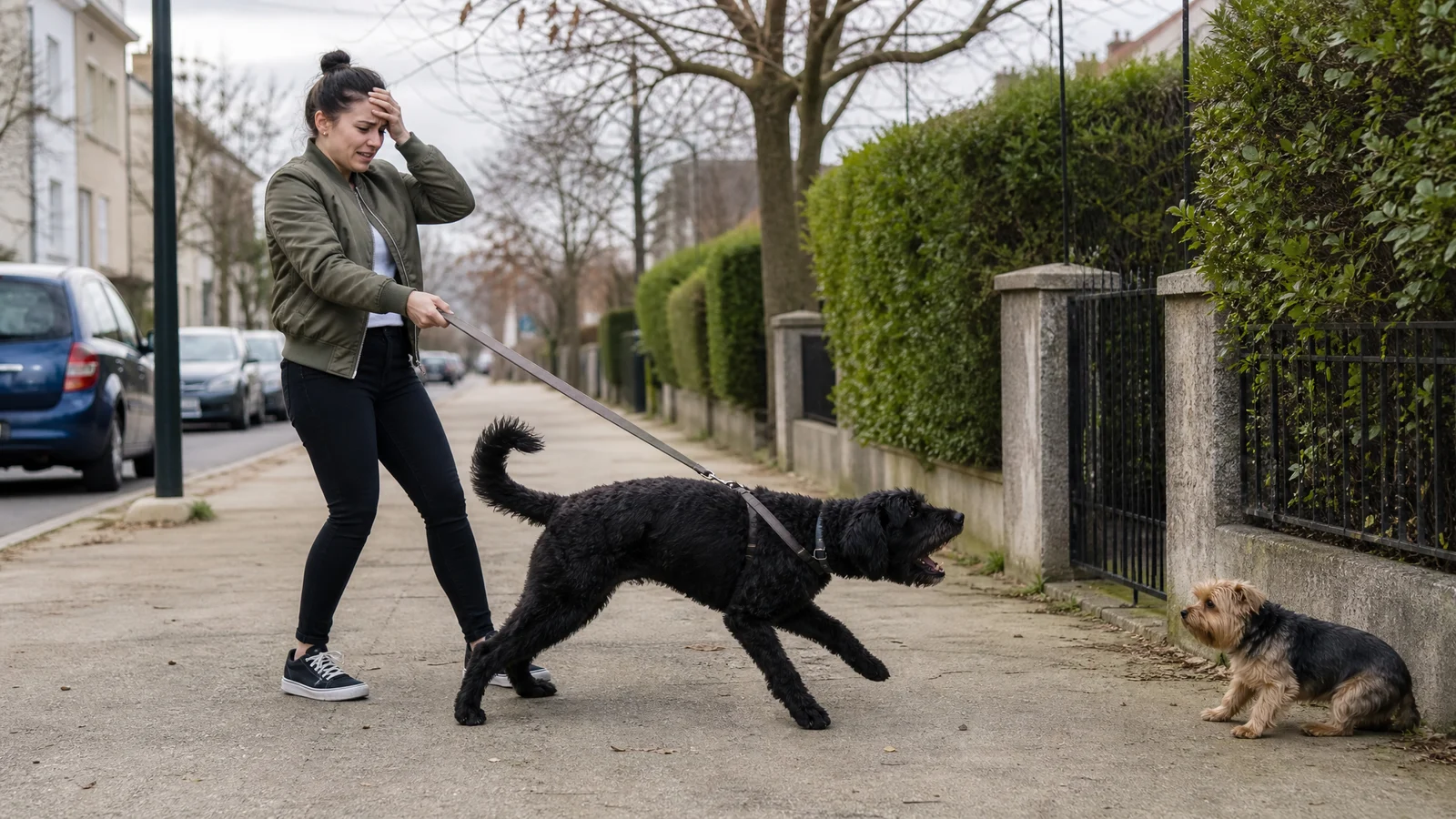 BehaviorGoldendoodle Leash Reactivity: What Helps
