 Goldendoodle
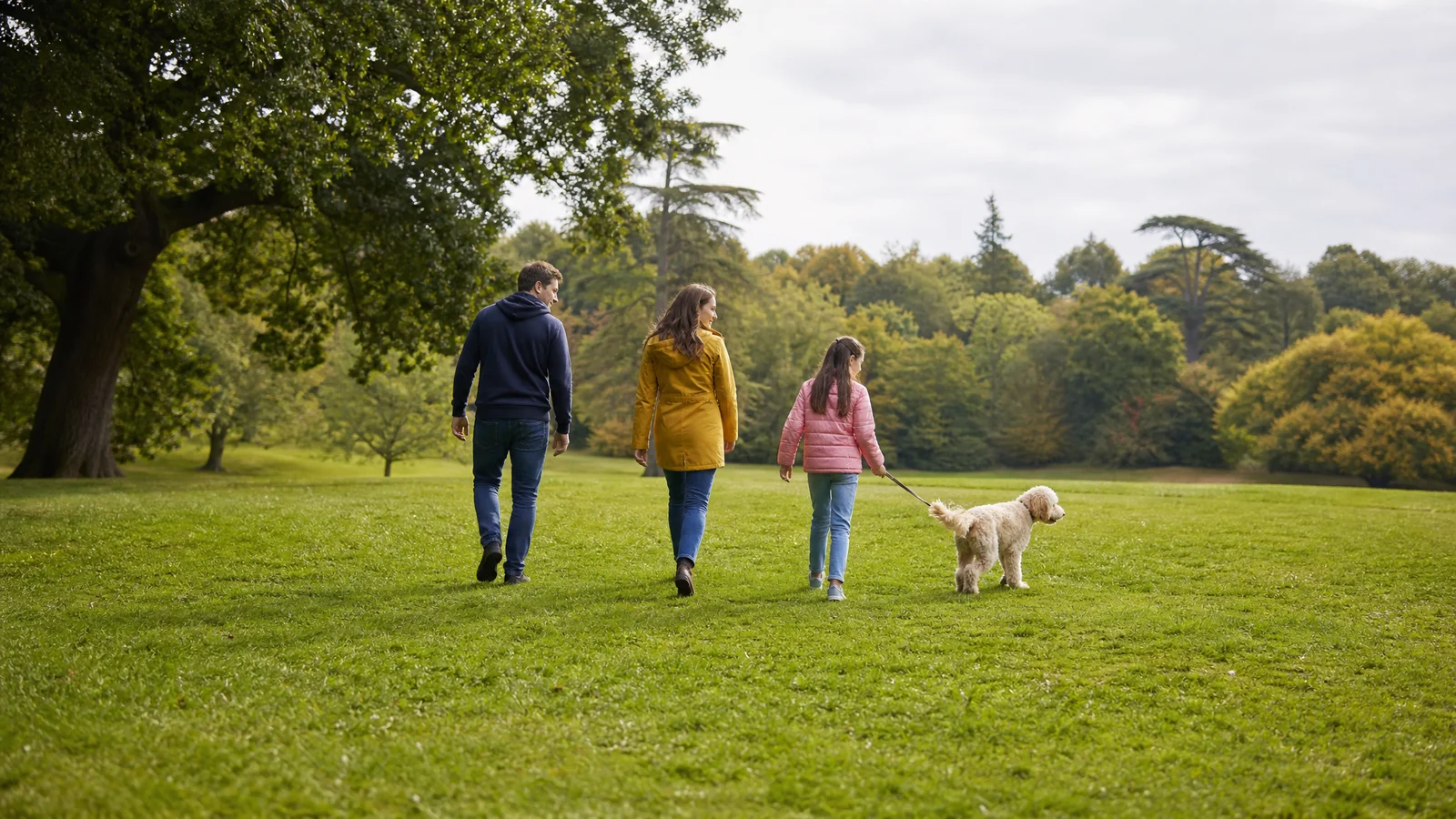
The friendliness that draws people to a Goldendoodle is also where much of the work hides. A dog who adores visitors, follows you from room to room and invites a game at every turn has to be taught what to do with all that enthusiasm, and the teaching falls to your household.
That is why fit depends less on how a Goldendoodle looks than on the hours, patience and routines you can supply. This page walks through the standing jobs the dog adds to a week, the places where a cross makes the picture harder to predict, and the questions worth answering before you say yes.
None of it is meant to talk you out of the dog. It is meant to let you choose with your eyes open.
Training a Dog Who Wants to Be Part of Everything
Start with what the training actually is, because it rarely resembles the obedience class most people picture. Most of what a Goldendoodle needs from you is not a command at all. It is a set of habits for the moments when the dog's wish to join in meets your household's rules: what to do when the door opens, when you leave, when guests sit down, when the brush comes out.
Sit and down are only the tools, and those moments are the job. The two parent breeds explain why. Poodles are very people-oriented, and they are quick to please when practice is fun and consistent. Golden Retrievers have a long reputation for being outgoing and eager. A Goldendoodle may inherit either streak or both, which is how one dog can be quick to learn and hungry for company at the same time.
The word "may" matters, because a cross has no breed standard of its own and no promise about which parent a given dog will resemble. Size is a plain example. Poodle parents come in standard, miniature and toy sizes, and a Goldendoodle may be bred from any of them. Size changes what you can lift, block and carry, but it does not change the habits above, which is why we plan around the habits instead of around a number on a scale.
Why a Goldendoodle Needs Company Before Lessons
The first of those moments is the one households underestimate, because no lesson is involved: it is the hours when nobody is training anything. Both parent breeds are affectionate family dogs, so a Goldendoodle who takes after them will expect to spend the day near people. That is a joy when you work from home and an adjustment when the house sits empty for long stretches.
Any dog can become bored and potentially destructive if left alone all day without an outlet for their exercise, exploring and social needs, a risk that appears in AVMA's dog selection guide. For a Goldendoodle, the useful question about your week is sharper than whether anyone is home: what does the dog do while that person is busy?
From where we sit, the empty hours matter more than the full ones. A few small jobs make an ordinary week much easier to cover:
- A place that is theirs. Teach the dog to relax on a mat or in a crate while you are home and moving around, so settling is a skill they own before you leave.
- Short absences before long ones: practice stepping out while the dog is calm and rewarding a quiet return, well before a real workday asks for it.
- A named backup for the long days is someone the dog has already met, such as a sitter or a neighbor, because a stranger on the hardest day teaches nothing.
None of these asks for a perfect schedule. They ask that the dog's day has a shape you chose, and our Goldendoodle alone-time practice guide walks through the steps. If a dog panics rather than fusses when you leave, ask your vet about it before adding more training.
Greetings and Visitors in a Goldendoodle Home
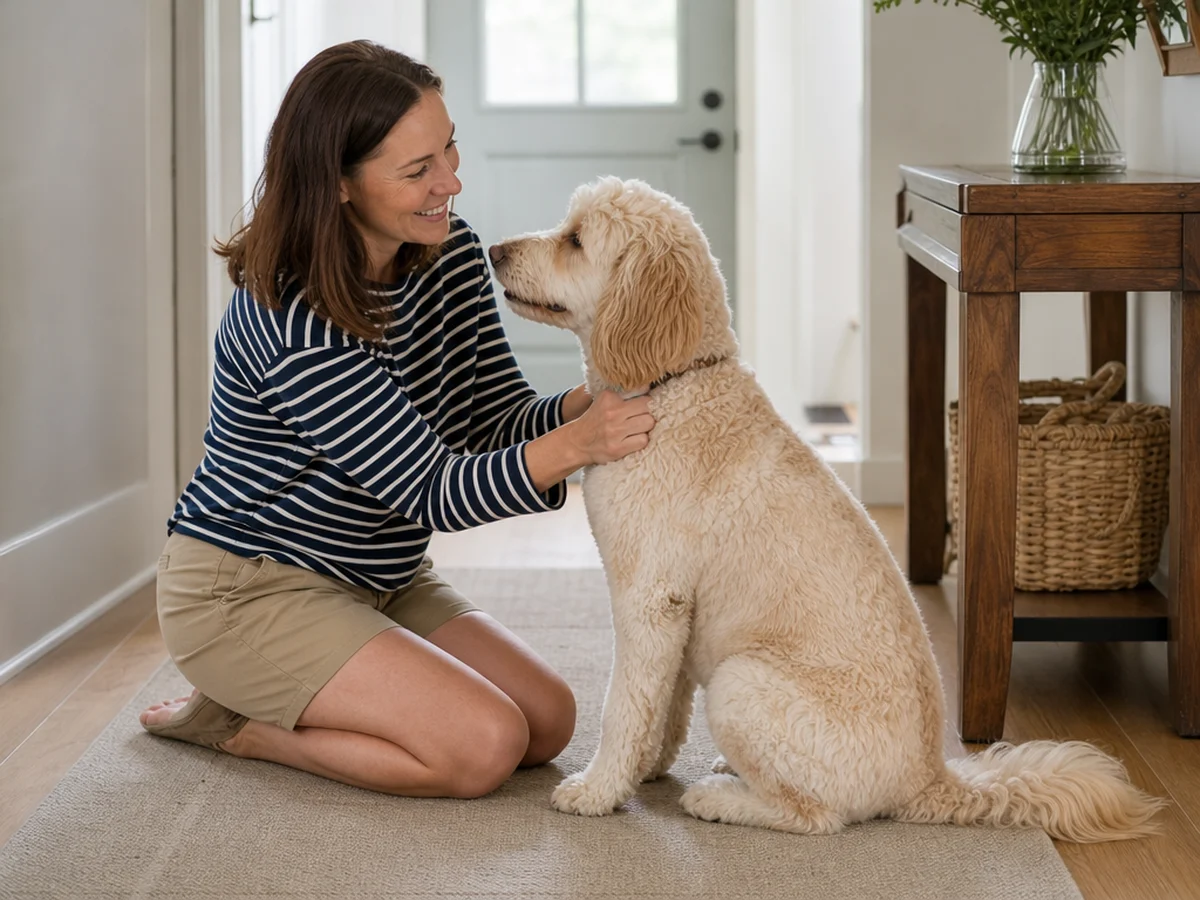
Company does not end at the door, and neither does the work. The warmth that makes a Goldendoodle hard to leave also makes them eager to meet whoever walks in, and both parent breeds are known for being friendly with people they have never met. A bounce that is charming from a puppy gets harder to live with in a full-grown dog, and the guests and neighbors on the receiving end do not get a vote.
The table below sorts the everyday moments where that eagerness shows up and what each one asks you to teach. Read down the right-hand column and notice how much of an ordinary week those lessons touch.
| Moment | What a Goldendoodle may do | What you are teaching |
|---|---|---|
| The doorbell rings | Rushes the door and jumps to reach faces | Four paws on the floor before anyone gets attention |
| Guests sit down | Leans into laps and pushes in for pats | Settling on a mat while people talk |
| A neighbor waves from across the street | Pulls toward anyone who looks friendly | Walking past on a loose leash, then greeting only when invited |
| Another dog appears | Wants a hello with every dog | A short, polite meeting and then moving on |
All four rows rest on the same underlying skill, an easy way to say hello that does not involve the whole body. Teach it once, pay for it every time, and ask everyone in the household to use it too, because a dog who gets cheered for jumping by one friendly visitor will keep jumping for the rest. Our guide to Goldendoodle polite greetings has the steps.
Mental Work Counts as Training Time
Greetings spend some of the dog's wish for company. The wish for something to do needs its own outlet, and it is easy to miss when a schedule counts walks and nothing else. Both parent breeds come from active backgrounds, and Poodles in particular are described as extremely smart, so a Goldendoodle may bring an energetic body and a busy mind to the same afternoon.
Plenty of physical exercise and mental stimulation decreases a dog's stress and enriches their life, a point made in a Texas A&M veterinary college feature on dogs left home alone. We would count the second half of that sentence as training time, because the games below ask the dog to think, wait and choose, and each of those skills carries over to the door and the sidewalk. A few games cover most households:
- Scatter and Search: toss a few treats into the grass or hide them around a room and let the dog sniff them out, which keeps the nose busy and teaches patient waiting while you set up.
- Familiar cues in a new room keep a dog thinking, because sit and down feel different on an unfamiliar floor with new smells, and getting them right there is real learning.
- Meals that take thought: a puzzle feeder or a treat-stuffed toy turns part of a meal into a job, and it gives the dog something rewarding to do while you are busy.
The point is variety rather than volume. Our Goldendoodle brain games guide lays out more options, and the exercise side of the plan lives there too.
A Training Commitment Measured in Years
Add company, welcome and mind work together and what you have is not a course with a graduation day. It is a set of habits you keep tending as the dog changes. The puppy months get most of the attention, yet the stretch from about 6 months to 3 years old can be the most challenging for owners as a dog matures socially and behaviorally, according to AAHA's life stage guidance.
That window is long, and a Goldendoodle may stretch it further. Golden Retrievers are described as keeping a playful, puppyish streak into adulthood, so a Goldendoodle who takes after that parent may stay bouncy long after the puppy months. Planning for an exuberant adult, rather than a puppy who will settle on their own, keeps the habits in place when the novelty has worn off.
Where you start depends on the dog. A puppy gives you a long runway and every job at once, while an adult from a shelter or a previous home arrives with habits already formed, so the first task is finding out what the dog already knows and what they find hard. Either way the commitment runs for years, and our Goldendoodle puppy timeline lays out the first two of them stage by stage.
Weighing the Training Load Against Your Week
So the question is not whether a Goldendoodle can be trained, since the parent breeds give good reason to hope for a willing learner. It is whether your week has room to do the training. Answering takes a few honest minutes with a pencil, and the questions below follow the same order as the jobs above:
- Company: who is with the dog on your longest day, and who covers the day after that when plans change?
- Welcome rules. Will every adult in the house, and every regular guest, ask for the same polite hello at the door?
- Mind work needs a slot somewhere in the week, so where do games and practice naturally fit alongside everything else you do?
- Handling lessons: who will teach the dog to accept brushing, nail care and being checked over, using our Goldendoodle handling lessons as the plan?
- Years, not weeks. Can you see yourself still practicing when the dog is grown and the novelty has faded?
A vague answer is not a verdict. It marks the job to sort out before the dog arrives, and many gaps can close with a plan: a sitter introduced early, a house rule agreed over dinner, a reminder on the calendar for the games.
Whatever the answers, keep regular vet visits on the calendar from the first week. A vet is also the right person to ask whenever you cannot tell whether a behavior is a training question or something that needs a closer look at the dog's comfort.
Goldendoodle Details Worth Checking First
Four practical details can still tip the decision for a household that is otherwise ready: who covers the dog when you travel, how much of the dog's temperament you can know in advance, where to begin once the answer is yes, and whether a smaller home changes anything.
Who looks after the dog when we travel?
Choose the person well before the trip and let them see how your household asks for sit, wait and settle, so the dog hears the same words and earns the same rewards. A sitter who has already visited as a guest can be much easier for a Goldendoodle to accept than a stranger who arrives on the morning you leave. If you board the dog instead, ask the facility how it trains and rewards before you book.
How much can we know about their temperament beforehand?
Less than the photos suggest. Because a cross has no breed standard to point to, the parents' traits are a guide rather than a promise. Time with the actual dog helps more than the label does, and the first weeks at home will tell you more than any description.
Where do we begin once we say yes?
Begin with the habits the first day will ask for: a place to rest, a plan for the doorway and a clear answer to who is responsible for what. Our Goldendoodle training guide pulls the basics together in one place, so you can pick the next lesson from there.
Does a smaller home change the answer?
Less than you might expect, as long as the daily work gets done. Golden Retrievers are described as able to adapt to many different living situations, and a Goldendoodle may share that flexibility, but a flexible dog still needs company, outings and games that use the mind. A big yard does not replace any of those, and a smaller home does not rule the dog out.
A Goldendoodle Who Stays in the Middle of Things
What a Goldendoodle wants most may be a place in the middle of your household: at the door when guests arrive, near the kitchen while dinner is made, along on the walk when a neighbor says hello. Training is the practical way to earn them a spot there. Each habit above lets them join in a little more, because a household that does not have to manage around a dog can include them in more of the day.
A yes starts a long run of lessons, and our Goldendoodle e-book follows a dog through all of them, thoroughly but in plain words. Request it through the sign-up form here and we will email it to you, no charge.
 Training basicsHow to Choose a Goldendoodle Trainer
 BehaviorGoldendoodle Behavior Problems and the Instincts Behind Them
 Training basicsCrate Training a Goldendoodle and Preventing Separation Anxiety
