 Goldendoodle
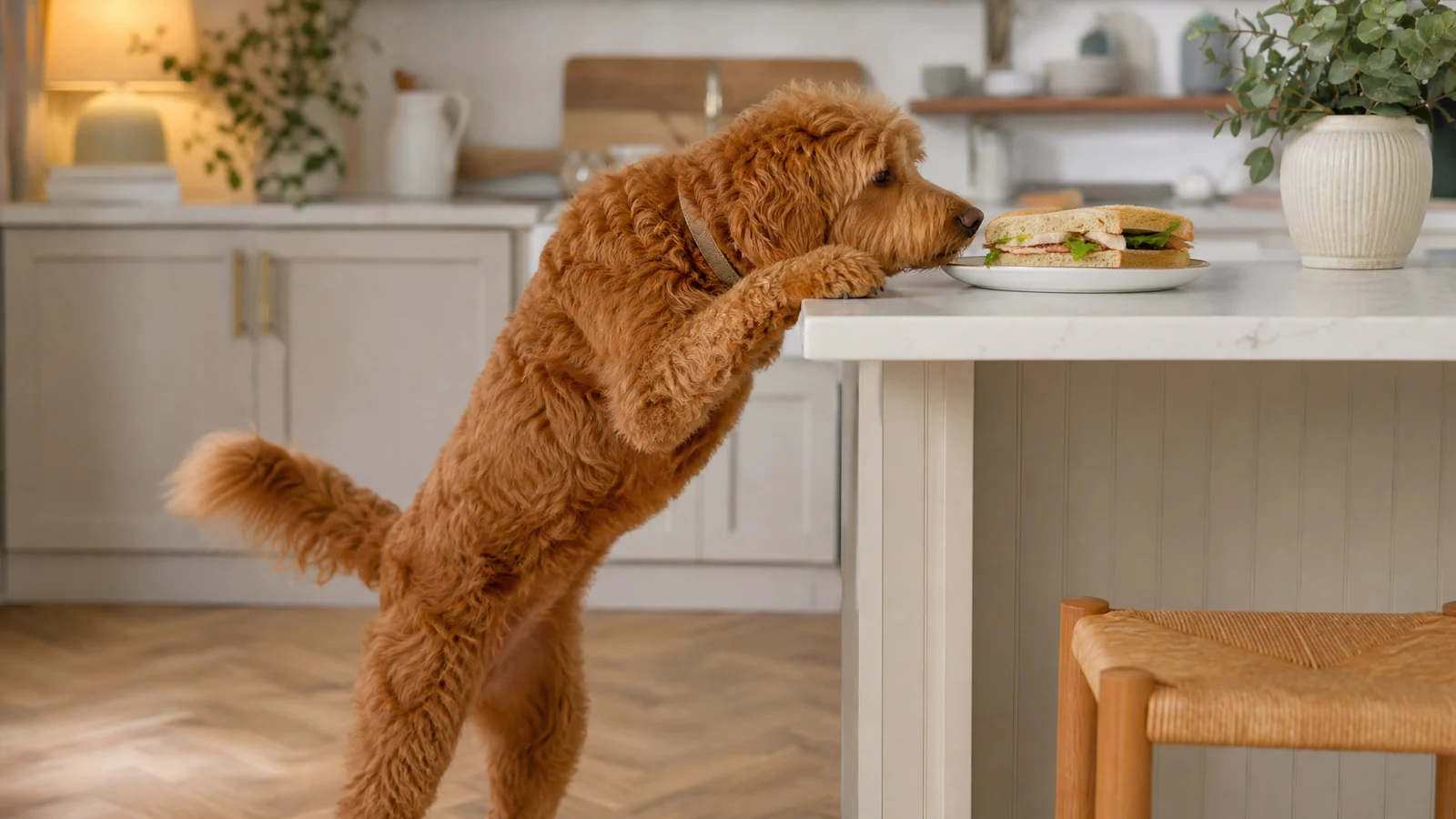
A mat cue can fail for several different reasons in a Goldendoodle kitchen. The dog may follow your movement, watch the food cupboard or leave only when rewards become less frequent. Repeating the cue cannot tell you which problem you have, and adding a longer wait may make the wrong part of the lesson harder.
Use this guide as a small investigation, with food securely stored and no cooking underway. We will compare a quiet baseline with one changed condition, then choose a repair from what the dog actually does. The mat exercises are alternatives to test separately, not a ladder every dog must complete in order. A clear record should help the next adult understand the lesson too, while sensible kitchen management continues protecting the counters.
Secure Counters Before Testing Your Goldendoodle
Clear accessible food, wrappers and tempting utensils before bringing the dog into the practice area. Move chairs or other climbing opportunities when necessary. A lesson should not contain a reachable meal that rewards the dog for leaving their mat.
Choose a waiting location beyond the kitchen's work lane. The dog should be able to lie comfortably without blocking the refrigerator, sink or route to the table. Keep the mat away from heat, falling objects and places where someone carrying a pan may need to step.
Use a secure barrier during cooking that requires your full attention. The dog needs a comfortable arrangement on the other side, with suitable access to water and rest. If they cannot relax there, develop that skill separately instead of opening access to a hazardous workspace.
The AVSAB humane training guidance supports preventing unwanted rehearsal while rewarding useful alternatives. Here, management and mat practice solve different parts of the problem. A closed gate protects the meal even before the dog understands where to wait.
Plan separately for an object already taken. A practiced exchange may help recover something harmless, but uncertain or unsafe swallowing calls for prompt advice from your veterinarian. Keep children out of retrieval attempts, and seek professional help for possession-related stiffening or guarding.
A Goldendoodle Counter Lesson Needs a Baseline
Record what your dog can do with you nearby, facing them, while the room is quiet. Can they approach the mat, remain briefly and leave on a release cue? If those basics are unfamiliar, start with the arrival exercise below before investigating more complicated failures.
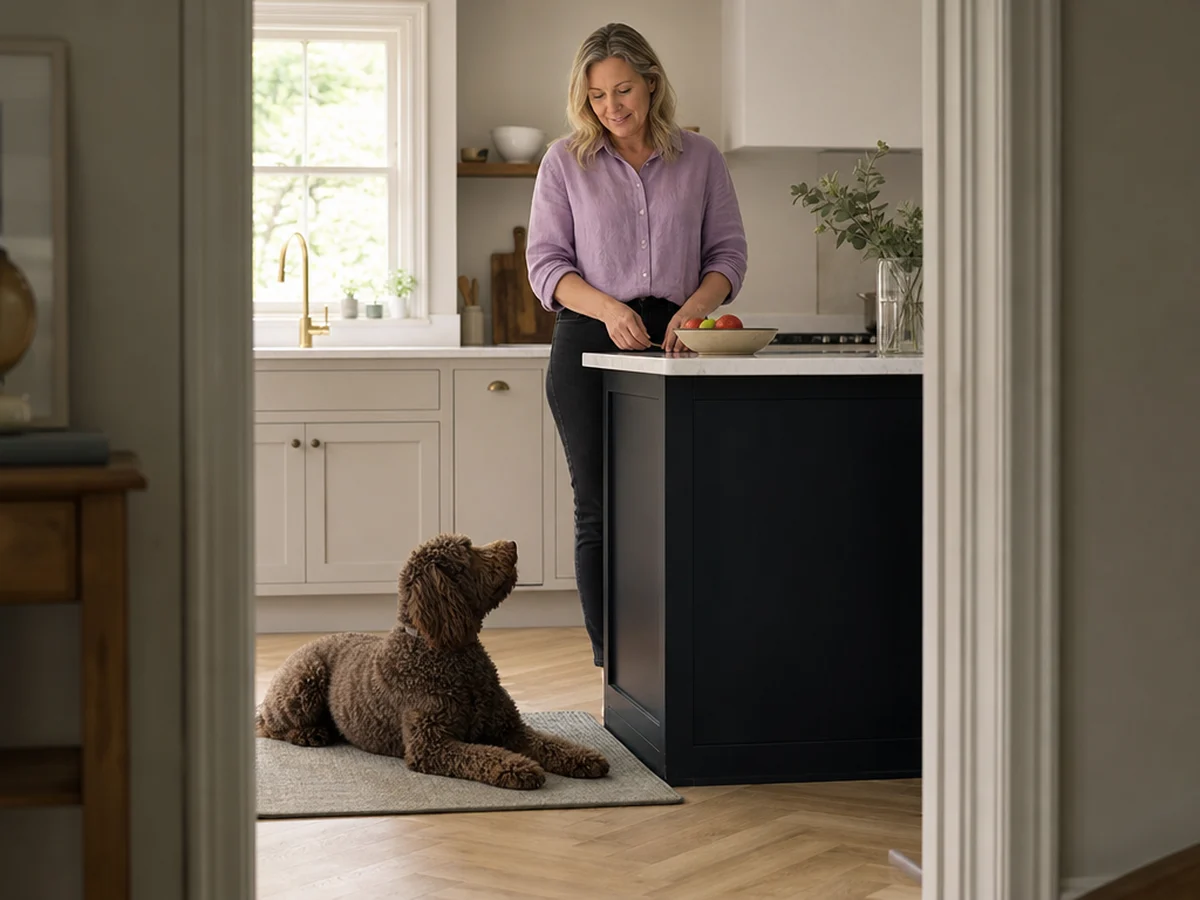
A baseline is not a challenge. Choose a version the dog can comfortably repeat.
| Changed condition | What the response suggests practicing |
|---|---|
| You turn away without taking a step. | Your body movement, separately from waiting longer. |
| You touch a cupboard while remaining nearby. | A kitchen cue, separately from food access. |
| You remain still but delay the next reward. | A shorter, clearer waiting interval. |
| A second adult takes your place. | A caregiver handoff with consistent cues and reward delivery. |
Try just one change, then return to the easy baseline. If the dog struggles even with that familiar version, stop and consider whether they need a break. A single unsuccessful repetition does not prove a permanent problem or identify the dog's motive.
Note the action you made and the dog's first movement. A shoulder turn followed by the dog standing is more informative than writing that they ignored you. It also lets another adult reproduce a gentler version without guessing how far you walked or how long you waited.
Mat Repairs for Different Counter Distractions
Use the observation to choose one practice task. Your Goldendoodle does not need a harder version of every skill at once. Keep the unchanged features easy, and stop the experiment if you cannot preserve comfortable participation.
Finding the Mat Is Still Unclear
Start outside food preparation time, with the mat in a quiet location. Reward a voluntary look toward it, a step onto it and then a comfortable position there. Standing, sitting or lying can be early successes as long as the dog can participate without strain.
- Mark a voluntary movement onto the mat and deliver the reward on its surface.
- Reward another easy moment there before the dog needs to leave to find something useful.
- Say a chosen release word and invite movement into a safe area away from food.
- Reset quietly, allowing the dog to approach the mat again without being placed on it.
Battersea explains how a clear reward marker identifies the action being taught. Mark the arrival before reaching for the food. Otherwise, your reaching hand may become the main signal drawing the dog toward a reward rather than the mat becoming a useful destination.
Add a mat cue only when the voluntary approach is familiar. Say it once as the dog begins the action, then reward the arrival. Repeating the word over and over while they inspect the kitchen does not clarify its meaning.
The release should predict an actual change. If the dog leaves before it, simply make the next stay shorter. Start another easy repetition and release while the dog remains comfortable.
If the dog leaves when your body turns, choose the movement exercises rather than extending duration. You can keep each repetition very brief and reward promptly. The question is whether your motion has become an accidental invitation to follow you.
Following Your Shoulder Turn
Stand near the mat and turn your shoulders slightly, then return and reward the dog for remaining. Keep your feet in place at first. If the dog rises immediately, use a smaller turn and reward sooner while they are still comfortable.
Try that movement from both sides on separate repetitions. The dog may find one direction easier because it preserves a view of your hand. You are checking what they understand, not trying to catch them leaving.
Make the movement ordinary before extending it. A useful repetition ends while the dog still knows what to do.
Following Your Steps Across the Kitchen
Take one small step away and return before rewarding. Keep that distance short enough to remain easy. A full walk across the room adds movement, distance and time together, which can hide the specific feature that made the dog get up.
Then vary where you step. Moving toward the sink, the cupboard or the room's exit can carry different meanings for a people-focused Goldendoodle. Return to the simpler version when a new direction draws them off the mat.
Use familiar signals from the Goldendoodle training foundations. Keep your marker and release consistent while changing the movement. That gives the dog stable information about what earned the reward and when waiting has finished.
If your dog stays through ordinary steps but rises at a cupboard or plate, choose a kitchen-cue exercise instead. Keep your own position familiar and shorten the action. A dog may understand your movement perfectly while still finding one particular sound difficult to ignore.
Leaving at a Cupboard Sound
Touch a drawer handle, reward, then try a small opening movement. Later, set an empty plate down softly or move a clean utensil. Notice whether the dog remains comfortable rather than assuming quiet paws prove they are relaxed.
A sudden sound may bring the dog upright. Let them orient, then choose an easier action or end that repetition. You do not need to insist on lying down while they are still trying to understand what happened.
Keep sessions separate from family meal deadlines. You need freedom to pause without also worrying about dinner.
Watching Food Instead of Resting
Food smells can be introduced with safe storage and a controlled setup, rather than an uncovered plate at the edge. Begin at a distance where the dog can remain engaged in the mat lesson. Put the food away if it draws continuous staring or repeated attempts to leave.
Reward at the mat using food already prepared for the lesson. Reaching across the counter every time can keep attention fixed on that surface. The reward location should support the resting place you are trying to make useful.
Do not leave dangerous foods or utensils within reach as a test. A successful rehearsal should not depend on an unproven response preventing a real hazard. Management remains in place even when the mat behavior looks promising.
Leaving During a Reward Gap
A dog may stay while food arrives frequently and leave when you pause. That tells you about the waiting interval, rather than proving they are deliberately ignoring the cue. Increase the gap in small, comfortable amounts while keeping the surrounding task easy.
Dogs Trust's settling lesson builds relaxed behavior gradually. Watch for a dog who can shift position and look away from your hand, not simply hold a tense down. Reward those quieter moments without turning each one into an exciting celebration.
Vary easy repetitions with slightly longer ones. Every success should not automatically make the next attempt harder. The dog can learn that remaining comfortable sometimes brings another reward soon and sometimes ends with a release into a safe activity.
If barking or repeated departures appear, release into an appropriate break and reconsider the difficulty. Waiting for a louder response before ending every lesson can teach an unhelpful pattern. Finish ordinary repetitions while the dog remains able to participate calmly.
Food delivery is only one part of a comfortable wait. Check the mat's surface, room temperature and whether the dog needs to shift away from household traffic. A place that felt fine during a quiet morning may become awkward when several people enter the kitchen with bags, chairs or dishes.
A Shared Goldendoodle Counter Training Record
A second adult can repeat the baseline before adding any kitchen activity. Show them the reward location and the release word, then let the dog practice an easy arrival. This checks whether the skill transfers between people without turning the next meal into a test.
- Use the same mat position initially so the caregiver is the main change.
- Keep the reward ready before giving the cue, rather than repeatedly walking to a cupboard.
- Release after a short success instead of waiting for the dog to leave.
- Record one helpful adjustment for the next person, including what should remain easy.
Some Goldendoodles follow a familiar person closely, so a handoff may be harder when that person immediately leaves. Let both adults remain present first, with only one delivering cues. Practice the person's departure separately if it repeatedly draws the dog away from the resting area.
Use the record to assign ordinary kitchen responsibilities too. One adult can supervise the dog's short lesson while another does a harmless household task. When nobody can supervise, secure the room and use the established comfortable waiting area rather than silently extending the mat stay.
The Next Counter Lesson Has One Question
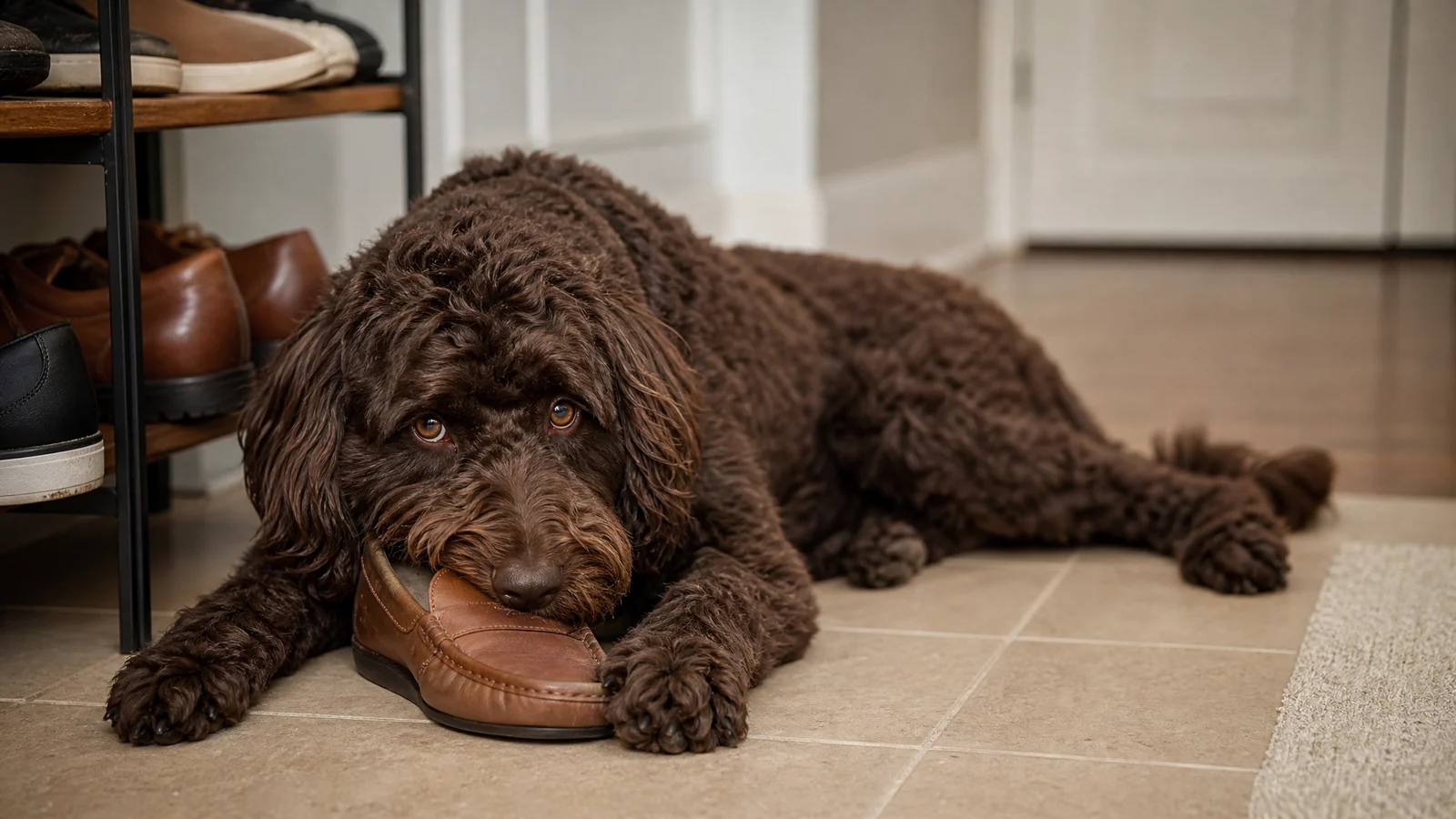
Discuss unexpected appetite changes or persistent nonfood eating during regular veterinary visits. Our shoe and sock guide covers object recovery separately from prevention. A kitchen lesson should fit the dog's comfort and health as well as the family's need to prepare food.
Judge the next attempt by the condition you changed. A quieter response to your shoulder turning is useful even if a cupboard sound still needs work. Preserve secure storage and reward those specific improvements, so your Goldendoodle gains a practical waiting skill without unattended counters becoming an experiment.
 BehaviorTeaching a Barky Goldendoodle to Ask for Play Politely
 CareHow to Groom a Goldendoodle: Teaching Your Dog to Enjoy Handling
 BehaviorGoldendoodles Who Chew Shoes: Trade-Up Games and Better Chews
