 Goldendoodle
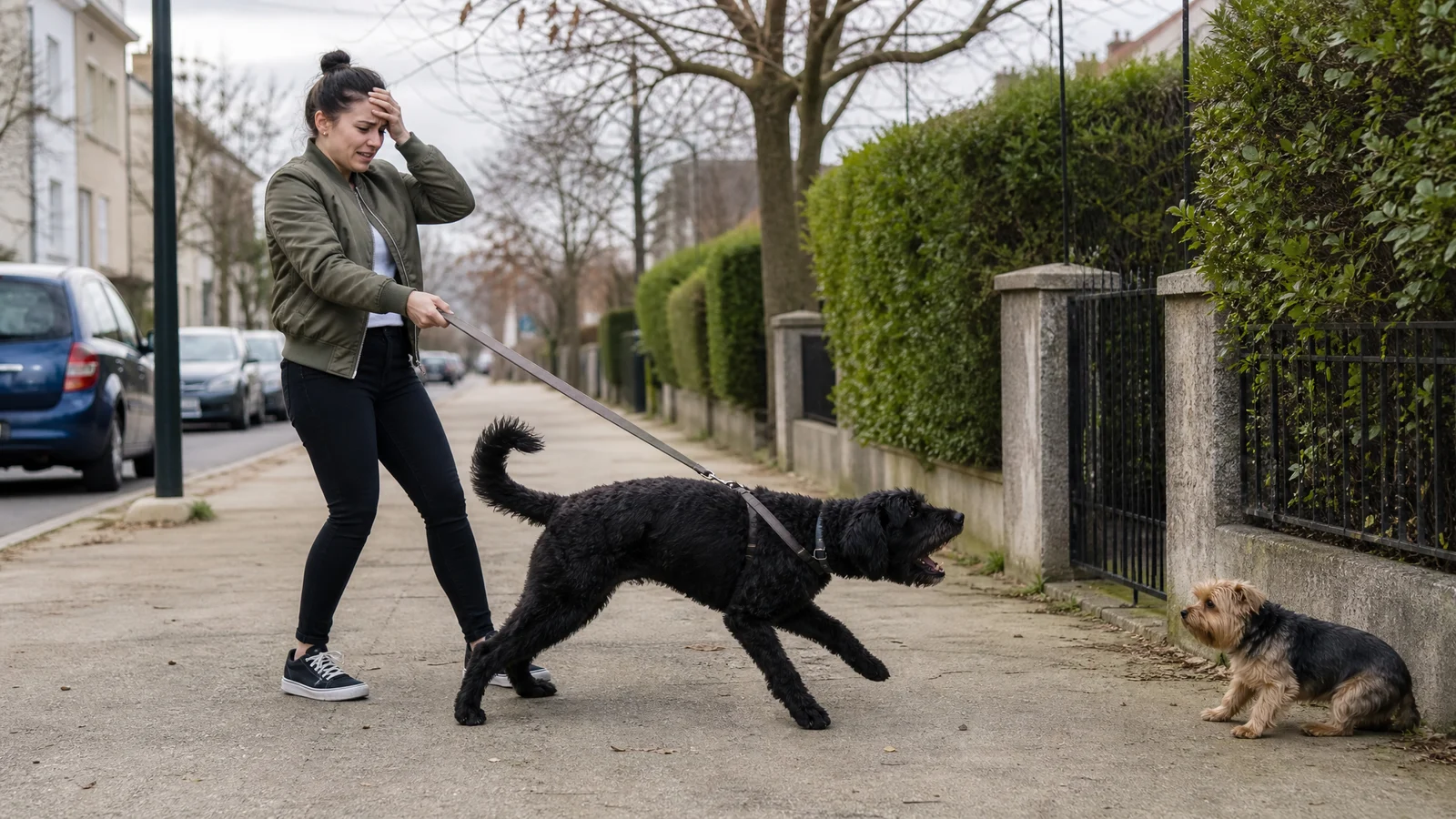
Goldendoodles have a reputation as the friendliest dog on the block, which is exactly why a lunge and a volley of barks at a passing dog feels so out of character. It also leaves you braced on every walk, scanning each corner for the next surprise. What helps most is simpler than the situation feels: more distance from the other dog, and food for staying calm at that distance.
Both pieces can begin on your very next walk, and neither needs your dog to be calm first. This page starts with what usually sits behind the lunge, then moves quickly to skills you can practice tonight and a plan for the real street.
What Drives Goldendoodle Reactivity on Leash
More distance only makes sense once you know what the lunge is doing for your dog. Best Friends Animal Society explains that these behaviors are often rooted in frustration: a dog-friendly dog who sees another dog and wants to meet but cannot might bark and lunge, and the group advises caution with on-leash meetings because the frustration buildup might lead to a scuffle.
That picture deserves to be taken seriously with a Goldendoodle. Both parent breeds are known for being open and friendly toward people, so your dog may arrive wanting to greet everyone and everything, and the Poodle side may add a watchful streak that notices anything unfamiliar. A hopeful dog and a worried dog end up in the same spot, because the leash blocks the hello one of them wants and the exit the other one wants.
We treat both versions the same way, and you can too, because the plan on this page never depends on knowing which feeling is behind a given lunge. Ordinary pulling is a separate problem with its own fixes, and the Goldendoodle leash training guide covers it.
None of this means your dog is being rude, or that earlier training failed. A reaction is a dog doing the best thing they know at the end of a short leash, and the work is to hand them a better option before the moment arrives.
A Practiced Exit Before a Reaction Starts
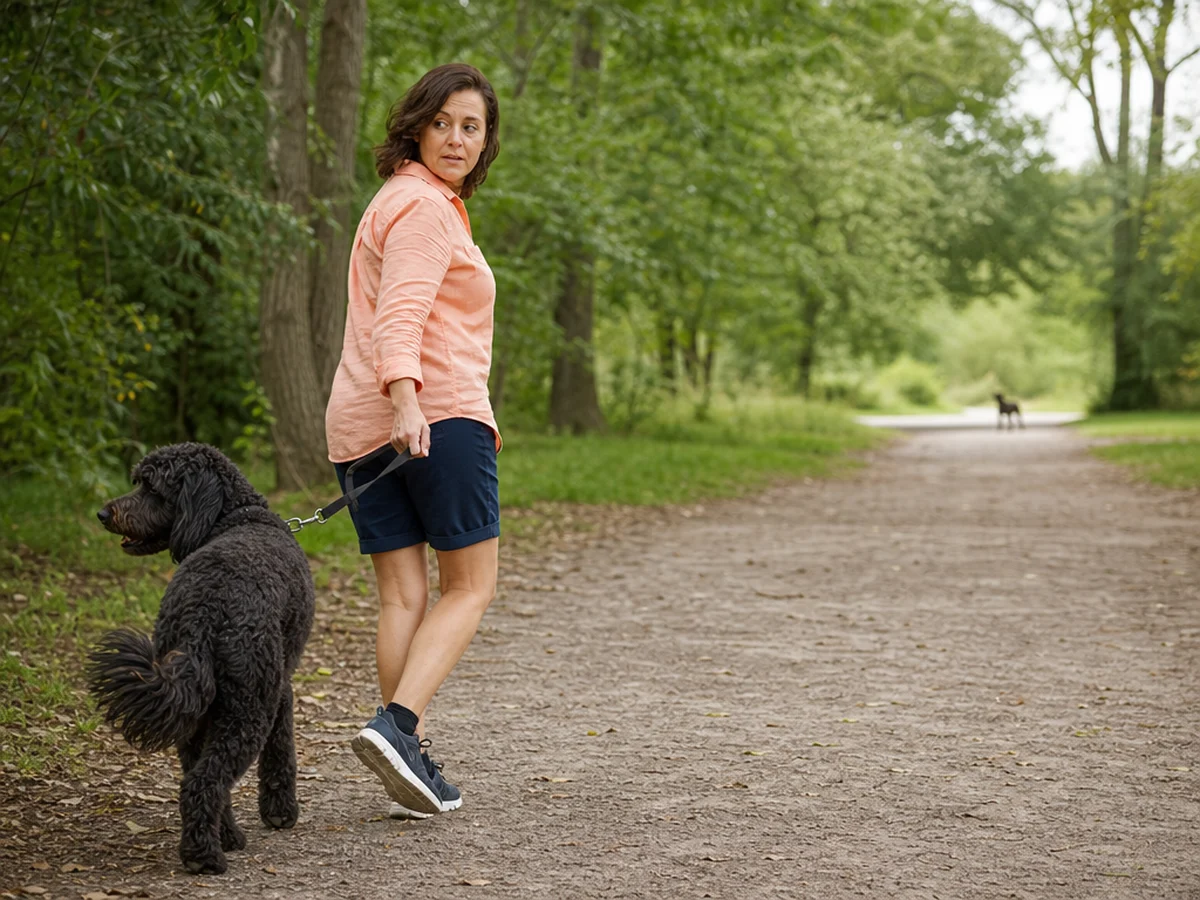
Because the leash leaves your dog without a way out, your first job is to supply one, and a practiced turn is the simplest way to do it. It works best as a game your dog already loves, so that on a tense street it feels like the next round rather than an emergency.
Teaching the Turn With No Dogs Around
Pick a quiet stretch with no other dogs in sight and choose a short, cheerful cue. The practice then runs in two steps:
- Say it, pivot to walk the other way, and pat your leg so your dog swings around with you.
- After a few quick steps, pay with a treat, because the payment is what makes the turn worth repeating, and let your dog sniff while it is eaten.
Repeat this on boring routes until your dog whips around with a bounce. A turn that has only ever happened during a crisis will feel like a crisis, while one that has paid off again and again on easy walks feels like a favorite trick.
Using the Turn on a Real Street
On a real walk, use the cue when your dog first fixes on the other dog, well before the bark or the lunge, and keep walking until there is room to pay. Leaving is the relief your dog was hoping for, so a reward at the end of the turn teaches them that looking and then turning with you gets them out of a tight spot.
Strangers tend to assume a Goldendoodle wants to be petted, and some keep coming closer after you have turned away. That is where speaking up for your dog comes in.
Cornell University's Dr. Katherine Houpt advises being your dog's advocate, and says that calmly telling a person who keeps approaching that your dog is working, shy or in training usually helps most people understand the need to respect your space. A short, polite sentence also lets you keep walking, which matters more than winning the conversation.
Finding the Distance That Quiets a Reaction
A turn buys you space, and the next question is how much space your dog actually needs. The answer is a working distance, the gap at which your dog can still see the other dog and still take food. Inside it, treats stop mattering and the reaction takes over, while outside it your dog can notice the other dog and think.
Your dog tells you where that line sits long before the bark does. Watch for these as the other dog gets closer, and widen the gap at the first one you notice:
- Treats lose their pull, and a dog who happily eats at home turns away from food or takes it without seeming to notice.
- The body locks on, with a fixed stare, a stiff stance and a head or tail held tense.
- The leash goes tight because your dog is leaning toward the other dog, even though no sound has come yet.
- A whine, a huff or a first bark arrives, which means the line was crossed a few steps earlier.
Whichever one you notice first, step back toward the last spot where treats still worked and treat that spot as your starting distance for the day. It is a working number rather than a fixed one, because a tired dog, a busy sidewalk or a strong smell on the breeze can all shrink it from one walk to the next, and on those days the right distance is simply farther.
Counter-Conditioning a Reactive Goldendoodle
With a working distance in hand, you can start changing what the other dog means. Counter-conditioning is the plain idea behind it: the sight of another dog predicts food, so over many repetitions that sight starts to feel good instead of frightening or frustrating. The order matters more than anything else, which is why the session below puts the sight first and the food second.
One Session, Start to Finish
Run it at your working distance, with a pouch of treats far better than anything your dog gets at home. Keep each session short, and stop while your dog is still doing well.
- Stand at your working distance and wait until your dog notices the other dog, because the sight has to come first or the food turns into a bribe.
- The moment your dog notices, start feeding small treats one after another with almost no gap, so the other dog's presence becomes the signal that food is flowing.
- When the other dog leaves or you walk your dog farther away, the treats stop, which teaches your dog that the food belongs to the sight.
- Once your dog eats easily and looks relaxed, mark each glance at the other dog with a cheerful "yes" and pay when your dog turns back to you, so looking and then checking in becomes the new habit.
- Move a little closer only after several easy rounds, and step back the moment your dog stops eating, since a session that goes too far teaches the old reaction.
Most days will end earlier than you planned. An easy, early finish is a good result, because a session that ends in a reaction teaches the reaction.
Using a Calm Helper Dog
A friend with a calm, steady dog makes the best practice partner, because two people can agree on the distance and change it quickly. Ask your friend to stand still or walk slowly on the far side of an open space while you feed at your working distance, and to move farther away the moment your dog stops eating.
A helper does not need to bring a perfect dog, only a quiet one. The first sessions should look uneventful to anyone watching, which is a sign you have picked the distance well, and once your dog is relaxed at one spot your friend can drift a little closer.
Walks and Recovery Time After Reactive Moments
Practice sessions fill only a sliver of the week, so the walks in between decide whether the learning sticks. Every lunge on an ordinary walk is more rehearsal for the lunge, which is why the rest of the week needs a plan too.
Routes and Hours That Keep Reactions Rare
Walk when fewer dogs are out, and pick routes with long sightlines and room to turn, such as wide sidewalks, empty lots or the far edge of a field. Open ground lets you spot the next dog early enough to use your turn. As Goldendoodle enthusiasts, we know the dog park feels like exactly where these dogs belong, which is why skipping it while you practice can feel like a loss.
A crowded, off-leash scene is the opposite of a controlled distance, though, so give it a rest for now. Play does not have to stop, because it can move home or to a friend's yard.
The Goldendoodle exercise guide has games for days when neighborhood walks pause, and the Goldendoodle polite play guide covers what good play with a known dog looks like.
The Minutes After a Close Pass
When a dog gets close anyway, turn away and keep moving until your dog can take a treat again, then let them sniff and shake off. A dog who has recovered eats, looks around and walks on a loose leash again, while a dog who is still scanning and refusing food needs more time before any practice.
Skip lessons for the rest of that outing and head somewhere quieter. A chew or a stuffed toy at home gives a tired dog a way to unwind, since working near a trigger is hard on them too, and a recovery that comes faster than last week's is a sign the plan is working even if the bark still happened.
Decisions That Sit Around Reactive Practice
Three decisions sit around the practice rather than inside it: how long to expect the work to take, what to carry on every walk, and when to bring in backup. Each one shapes how the plan feels from week to week.
How long before walks feel easier?
Wisconsin Humane Society cautions that it may be many weeks or months before a dog has the skillset to work in close proximity to other dogs while on leash. That is a long stretch to hold on to, so measure progress in smaller things, such as a few more feet of comfortable gap, a turn that comes faster or a recovery that takes less time than last week.
Which treats work near other dogs?
Choose soft, tiny pieces of something far better than everyday food, such as cheese or bits of cooked chicken, so your dog can swallow quickly and feeding can stay continuous. Keep those treats for this work only, since their value comes from not being available the rest of the day.
When should a professional step in?
Fear Free advises that when there is a safety concern for you, your dog, other animals or other people, you should avoid walking your dog and contact a qualified behavior specialist, such as a board-certified veterinary behaviorist.
Reactions that keep getting worse, a dog who cannot be kept at a workable distance, or anything that worries you about safety all count. Mention the reactions at your Goldendoodle's regular veterinary visits as well, so a vet can weigh in on anything physical.
A Goldendoodle Who Still Loves Meeting Dogs
Nothing in this plan asks your Goldendoodle to stop caring about other dogs, and that is worth holding onto when the work feels slow. The wish to meet them is where the frustration comes from, and it is also what keeps the work moving: a dog who wants company has a reason to take food near it, to turn back to you for the next piece and to put up with all that patient distance.
The aim is a dog whose wanting no longer takes over the walk, a dog who can see another dog across the street, feel the pull and still walk on with you, rather than one who has stopped wanting other dogs at all.
The free Goldendoodle e-book we offer treats your dog's training as a whole, with enough depth to cover what a Goldendoodle needs and explanations clear enough to read on a tired evening.
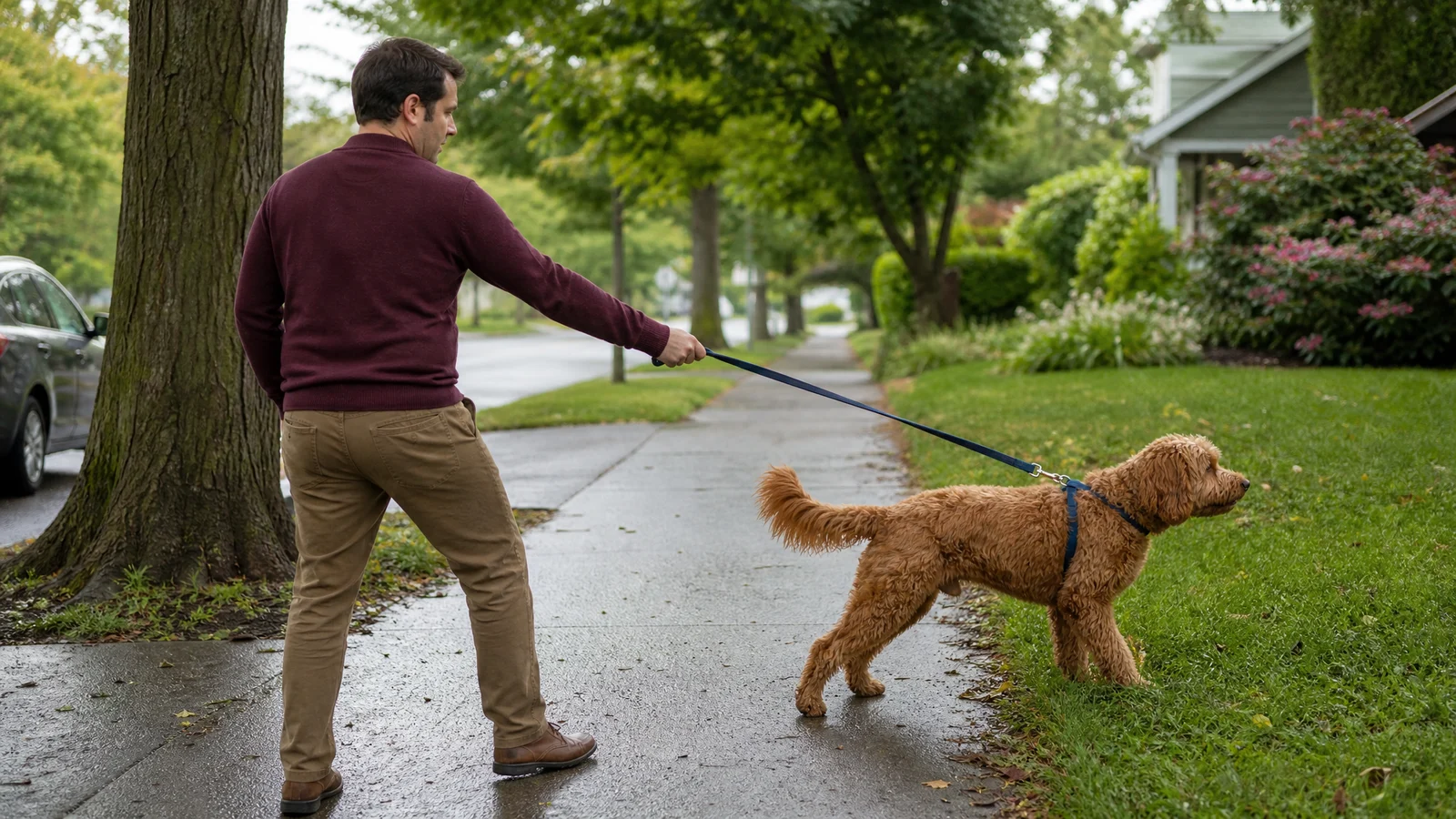 BehaviorHow to Stop a Goldendoodle Pulling on the Leash
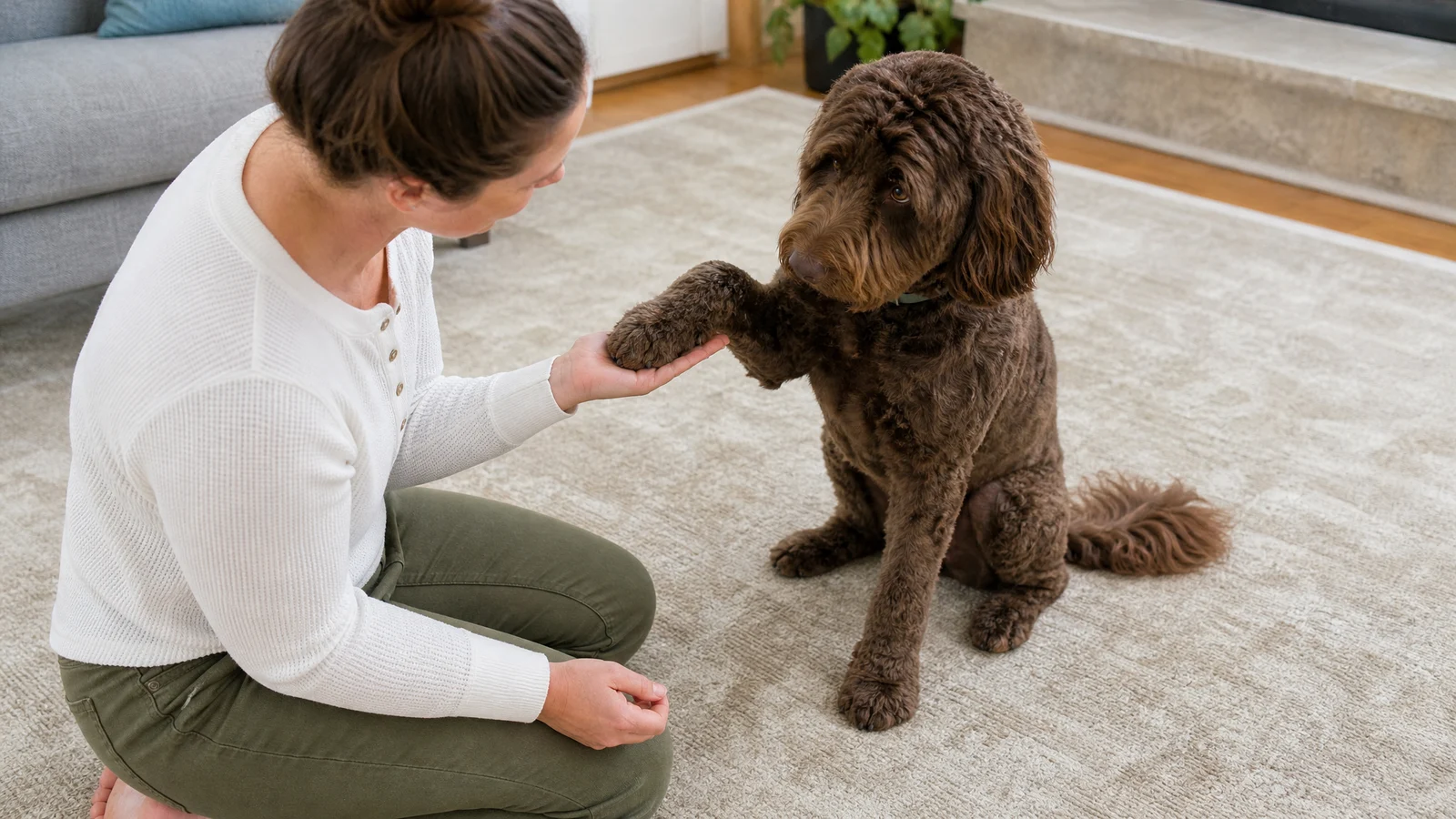 Exercise and jobsHow to Teach a Goldendoodle to Shake and High Five
 Exercise and jobsHow to Teach a Goldendoodle to Spin
