 Goldendoodle
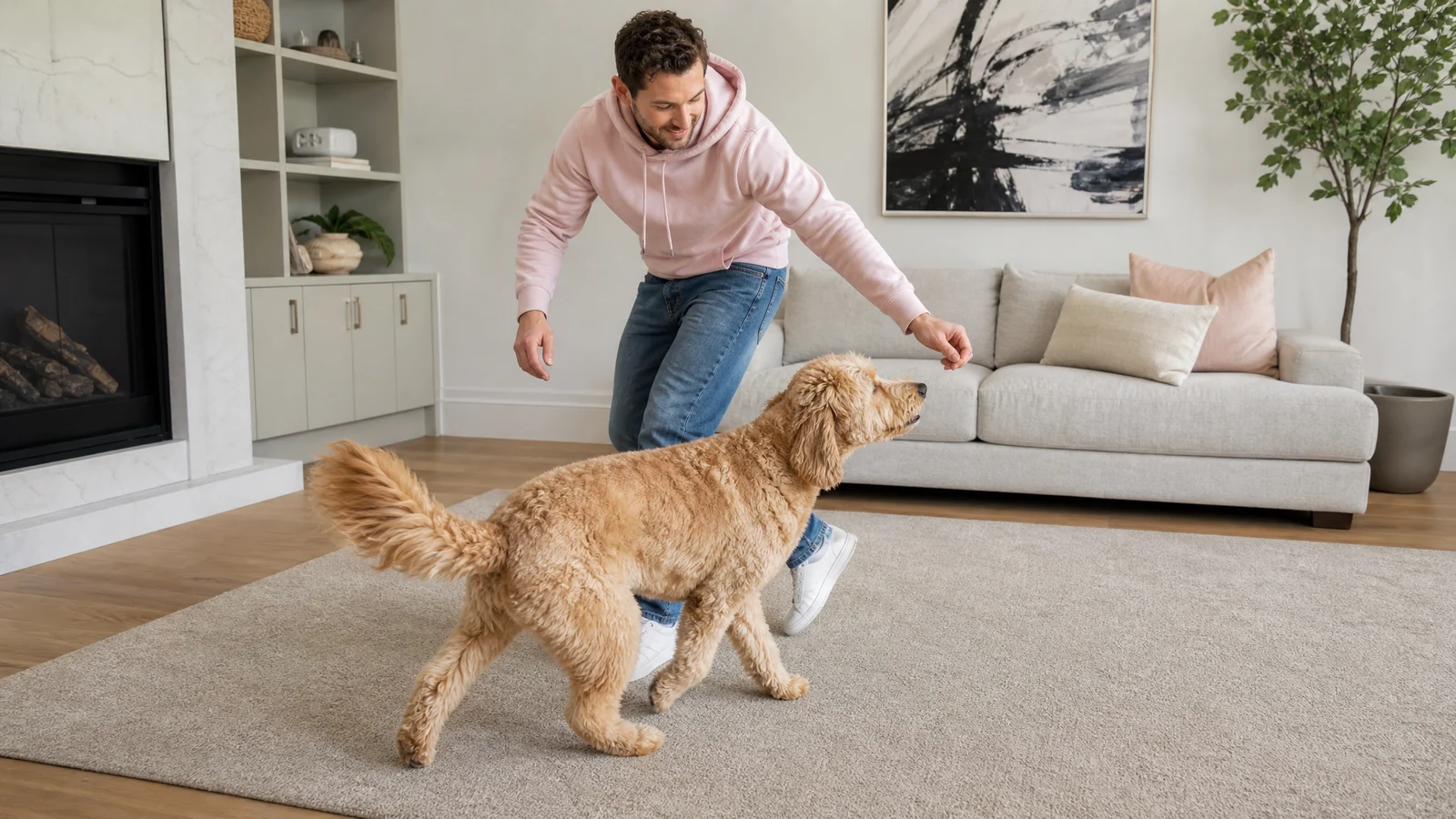
Your Goldendoodle's first spin will probably be about a quarter of a circle, and that is exactly the right place to begin. A treat held at the nose, a head that turns to follow it and a quick marker word with a reward make up the whole opening move, and every later stage grows out of it.
Both parent breeds are described as playful, so a Goldendoodle may enjoy the circle from the first try and then want more laps than you asked for. This page gives every stage its own steps, including the stalls, so the quarter turn becomes a full spin you can ask for with one word.
A Quiet Floor Before a Goldendoodle Spin
A spin needs very little: a bare patch of floor, a handful of tiny treats and a spot where nothing else is going on. Starting in a quiet, calm, distraction-free area will help your dog focus on the task at hand, and that matters here because a circle is far easier to follow when nothing else is competing for your dog's head.
Footing comes next. Choose a floor where paws grip, such as a rug that will not slide, because a slip in the middle of a turn can make a dog wary of the whole trick. Goldendoodles range from mini to standard, so scale the space to your dog: a small dog needs a patch about as wide as a bath mat, while a large dog needs enough clear floor to walk a full circle around you without brushing furniture.
A spin twists the body, so we like to begin only when your dog moves comfortably on all four legs. Regular veterinary visits are the place to raise any question about how your dog walks or turns, and a dog with a movement worry should skip this trick until the vet agrees it suits them.
Teach a Goldendoodle to Spin in Quarter Turns
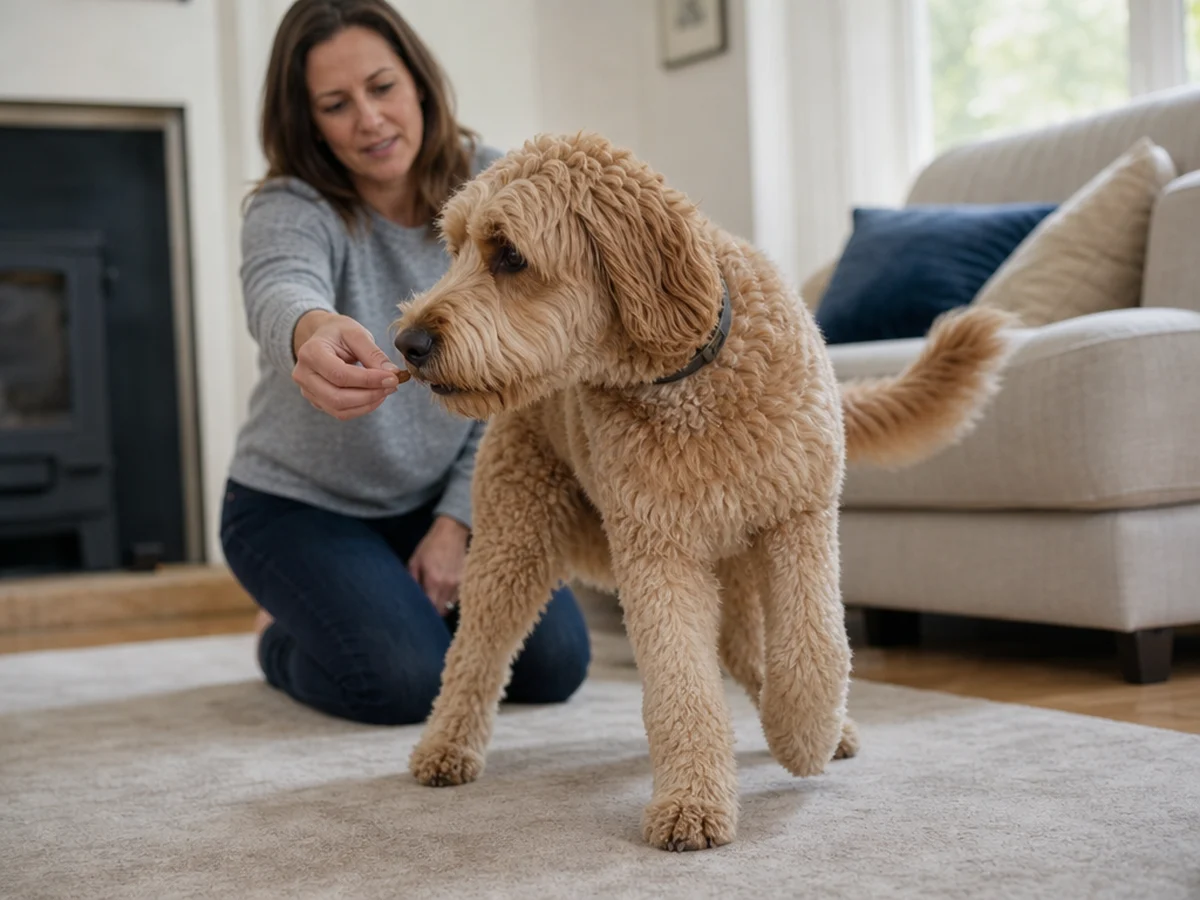
With the floor ready, cut the circle into four quarters and pay for each one before asking for the next. Stand facing your dog, hold a treat in one hand and pick a single direction to start with, because switching sides in the first lessons only muddles the picture. Mark each success with a short word such as yes, then pay. Here are the four stages in order, each with its own test for moving on:
- First quarter. Hold a treat at your dog's nose, close enough to sniff but not to grab, and draw it slowly toward their shoulder until the head turns. The moment the head turns and a front paw shifts, mark and pay. Move on when this happens smoothly several times in a row.
- Half turn. Keep drawing the treat along the flank so the front feet step around until your dog faces away from where they began. Mark the instant they face the far side, then pay. Stay here until the half turn comes smoothly several times in a row.
- Three quarters. This is the stage where the back legs have to follow, so keep your hand low and slow past the tail. Mark the moment the rear feet step around and pay generously, since this stage asks the most of your dog's body. Move on once it is smooth several times in a row.
- Full circle. Finish the loop so your dog ends up facing you again, mark as they arrive and pay right then. That whole loop, from the first nose-follow to facing you, is one spin. Repeat until it is smooth several times in a row, then take a short break.
Keep the Hand Slow and Level
The American Kennel Club's spin lesson rests on the same idea of a lure drawn slowly in a large circle just above the head, with the dog expected to follow the hand. So your hand is the whole lesson: keep it slow and level, because a hand that rushes or climbs lifts the front end and you get a hop or a sit instead of a turn.
When the Back Legs Stay Put
Every dog stalls somewhere. If the head follows but the back legs stay put, the arc is too fast or too high, so slow down, lower the hand and pay the half turn for a while before asking for more. A big jump in difficulty is what turns a lesson into a scramble for a playful dog, and every step forward in training must be small enough that your dog has a good chance of getting it right.
Moving From Treat to Hand Signal to Word
Once the full circle is smooth, the treat has done its job. The next stages take it out of sight, one change at a time, so the spin does not depend on visible food.
Switch to an Empty Hand
Lead the same circle with an empty hand and keep a treat in your other hand, out of view. Mark the instant your dog finishes the loop, then pay from the other hand. If they stop partway because the leading hand smells like nothing, rub it with a treat first, and keep leading with food for a few more turns before trying again. Move on when the empty-hand circle is smooth several times in a row.
Shrink the Hand Signal
Now turn the leading hand into a signal, changing only one thing per step. Point a finger instead of using the whole hand, then make the motion smaller, then lift it away from your dog's nose. Mark and pay every finish. If your dog hesitates after a change, you probably shrank two things at once, so give the previous size another few rounds until it is smooth again.
Adding a Goldendoodle Spin Command
Say spin once in a friendly voice, pause for a beat, then give the hand signal. Over several rounds many dogs begin to turn on the word and meet the signal halfway, and when yours does, pay generously. If they wait for the hand every time, lengthen the pause a little at a time until the word alone starts the circle.
Keeping the Spin Steady Beyond the Living Room
A word that works on your kitchen floor has passed only its first test, so this stage stretches it in four ways: the other direction, other places, less food and fewer laps. Each one is a small restart, and each gets the same readiness test as the stages before it.
Teach the second direction as its own short ladder, starting again at the first quarter with your hand traveling the other way. It may go faster than the first time, but it is still a new movement for your dog's body, so pay each quarter again until it is smooth several times in a row.
Then change one thing about the place: a different room, a quiet corner of the yard, a little more going on nearby. Ask for the spin once, and if your dog looks puzzled, show the hand signal along with the word. A new place is a small restart for them, not a failure. Once the word holds in several places, pay some spins with a treat and others with praise or a quick game, so the reward stays interesting.
Playful dogs often keep circling after the first lap, because the spinning itself has become the game. Pay the first lap, give a release word such as okay and toss a toy or walk away, so the spin ends as one lap per cue. When that is easy, our guide to Goldendoodle puppy tricks has more skills to build with the same marker word.
Spin Details Owners Ask About
These three choices shape how the spin grows from here, so it helps to settle them before the word turns up everywhere in daily life. Each answer is short because the steps behind it are already on this page.
Does the other direction need its own word?
Yes, a separate word keeps the two circles distinct for your dog, such as spin for one way and twirl for the other. Teach the second word the way you taught the first: hand signal first, then the word after a longer pause.
How often should I pay once it works?
Pay every spin while the word is new, then skip the treat on some turns while keeping praise on all of them. If the spin gets slower or sloppier, you thinned the pay too fast, so pay every turn again for a few rounds.
Does a mini Goldendoodle spin differently?
The steps are the same, but the circle shrinks with the dog, so a small dog needs less floor and a lower, closer hand that never makes them stretch upward. Our mini Goldendoodle games page has more ideas sized for a smaller dog.
When a Quick Learner Wants to Skip Spin Stages
A keen Goldendoodle can make the early stages look finished before they are, and that is the quiet risk of this trick. Both parent breeds are described as eager to please, so your dog may circle happily at the half turn and tempt you to add the word. A dog who is keen is not the same as a dog who understands, and the difference shows up later, when the word meets a new room.
So linger where the work feels dull, at the first quarter and the empty hand, until the finish comes smoothly several times in a row. Those two stages hold the whole spin together, and a few extra rounds there cost far less than rebuilding a word that arrived too soon.
This page cut one trick into small stages, and our Goldendoodle e-book gives every other skill your dog needs the same careful breakdown, so their whole training is covered without losing you along the way.
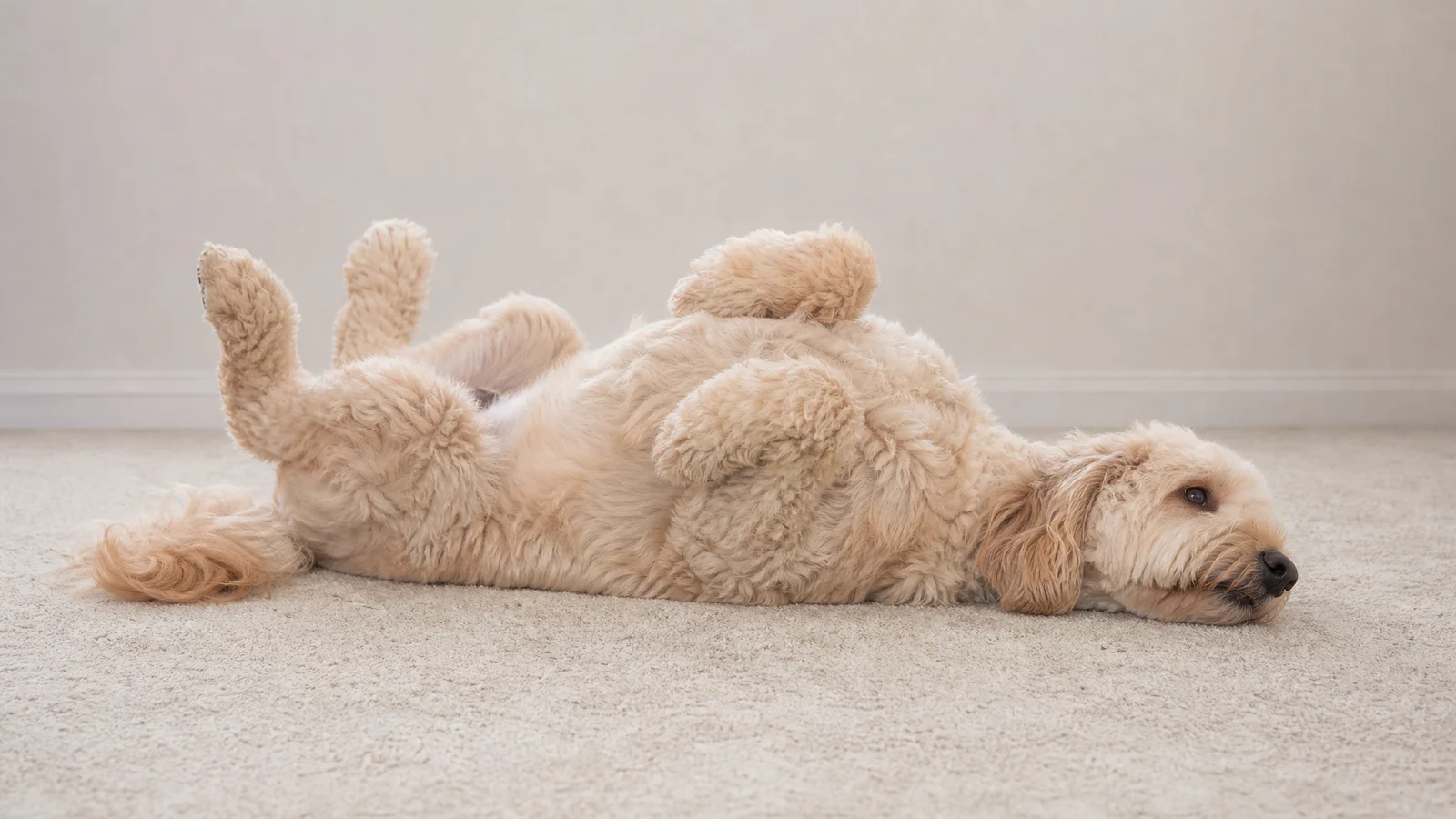 Exercise and jobsHow to Teach a Goldendoodle to Roll Over
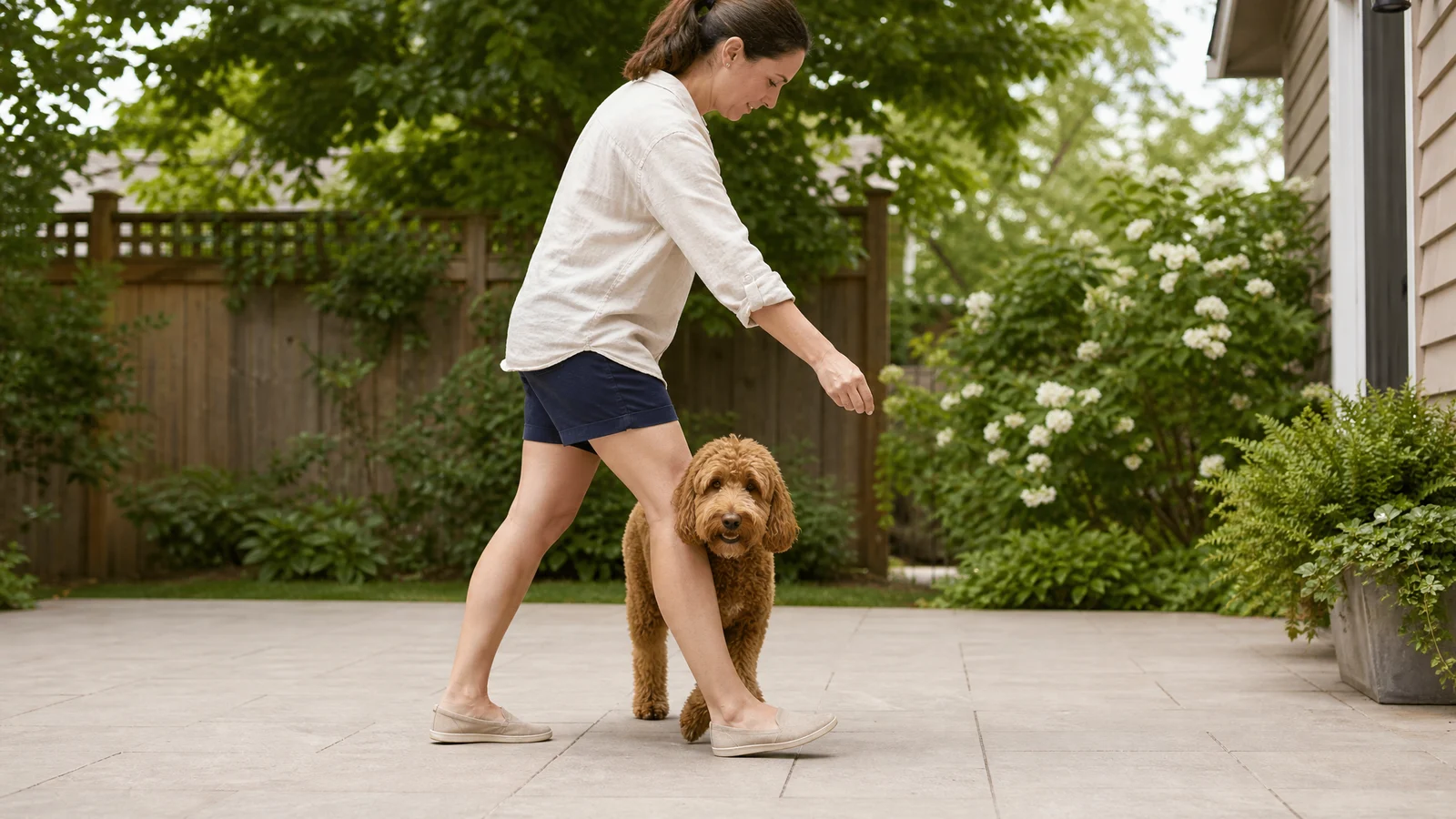 Exercise and jobsHow to Teach a Goldendoodle to Weave Through Your Legs
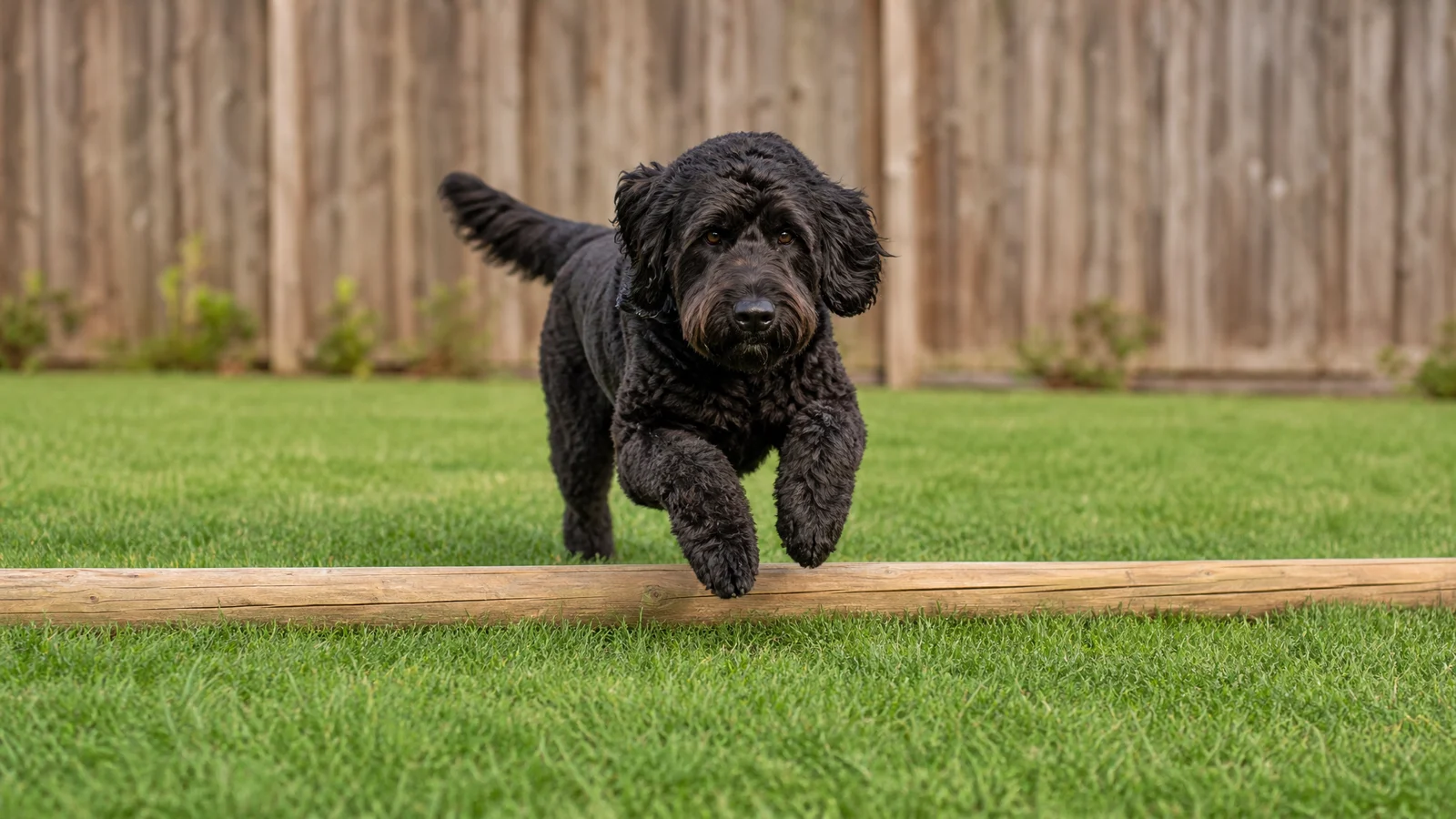 Exercise and jobsHow to Teach a Goldendoodle to Jump Over Obstacles
