 Goldendoodle
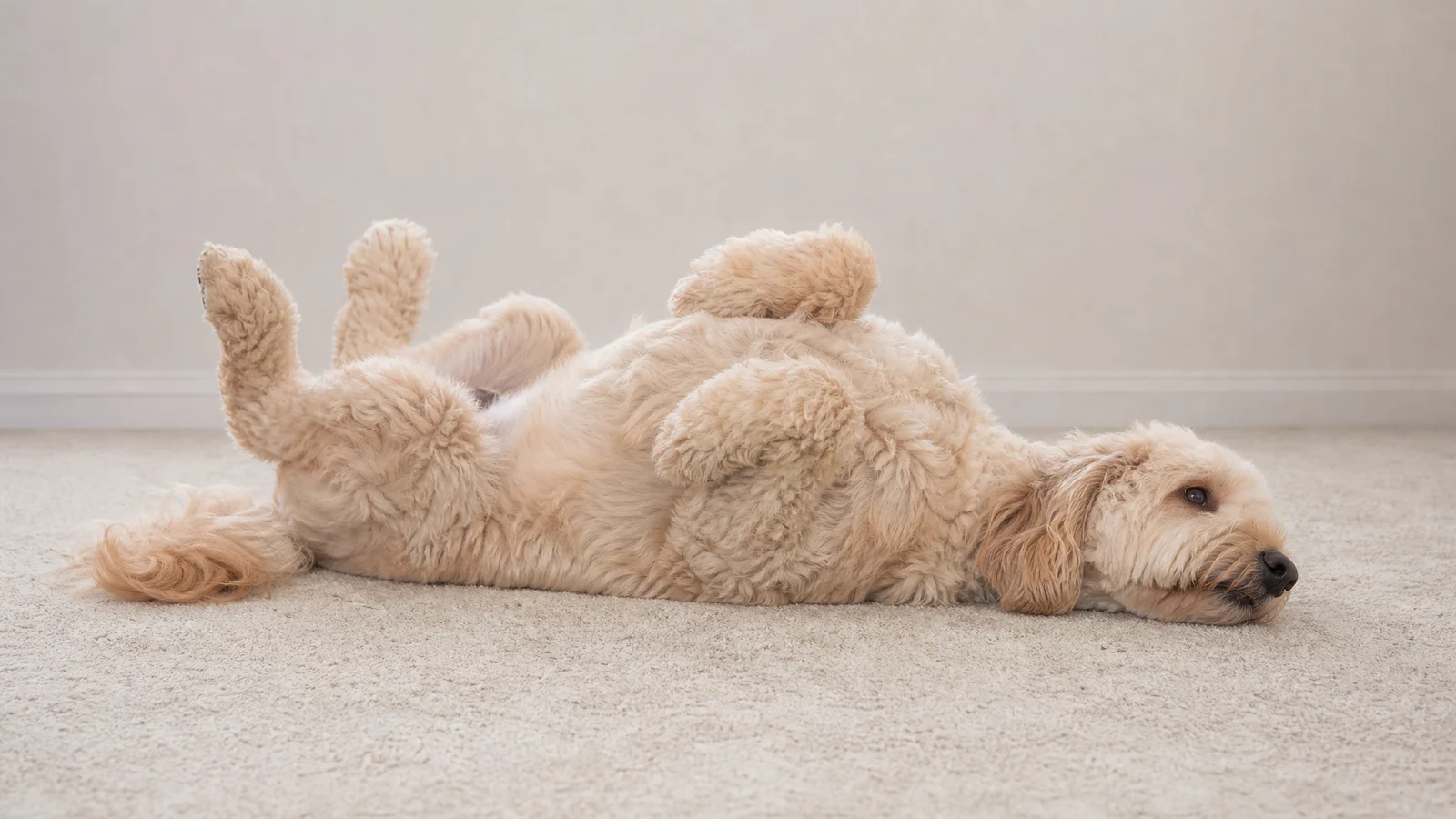
Teaching a Goldendoodle to roll over goes best when you stop treating it as one trick. It is four small ones in a row, a down, a tip onto one hip, a trip across the back and a landing on the far side, and your dog will show you within a few minutes which of them needs the most time. Below, we set up the floor and the treats, teach each stage with a plan for when it stalls, then add the word and shrink the hand until the lure disappears.
Keep that in mind with this breed mix. A Goldendoodle may inherit the Golden Retriever's eagerness and the Poodle's intelligence, which makes for a quick learner who is also quick to rush.
What a Goldendoodle Needs Before Roll Over Starts
Each stage that follows leans on the setup, so it pays to settle the basics before your dog ever tips onto a hip. A reliable down comes first, because every roll begins from one, and a dog who still wanders out of a down will turn the first stage into a chase around the room. Four things make the early sessions easy to run.
- A dependable down: your Goldendoodle should drop on cue and stay there for a few seconds, since the whole roll starts from that position.
- A surface with grip and give: a rug, a yoga mat or a folded blanket on a hard floor lets a dog tip over without skidding, and it is kinder under the spine than bare tile.
- Tiny, soft treats: pieces small enough to swallow in one gulp keep the lure hand moving and the session quick, so choose something your dog loves rather than their everyday meal.
- A marker word: a short, bright "yes" at the instant your dog reaches each target, or a click if you already use a clicker, tells them exactly which moment earned the treat.
If any of the four is missing, fix it first, because a stall at stage one is often a setup problem rather than a dog problem. A dog who seems sore, stiff or unwilling to lie on a side should skip the trick for now, and the change is worth mentioning at their next regular vet visit.
Teach a Goldendoodle to Roll Over Through the Side Lie
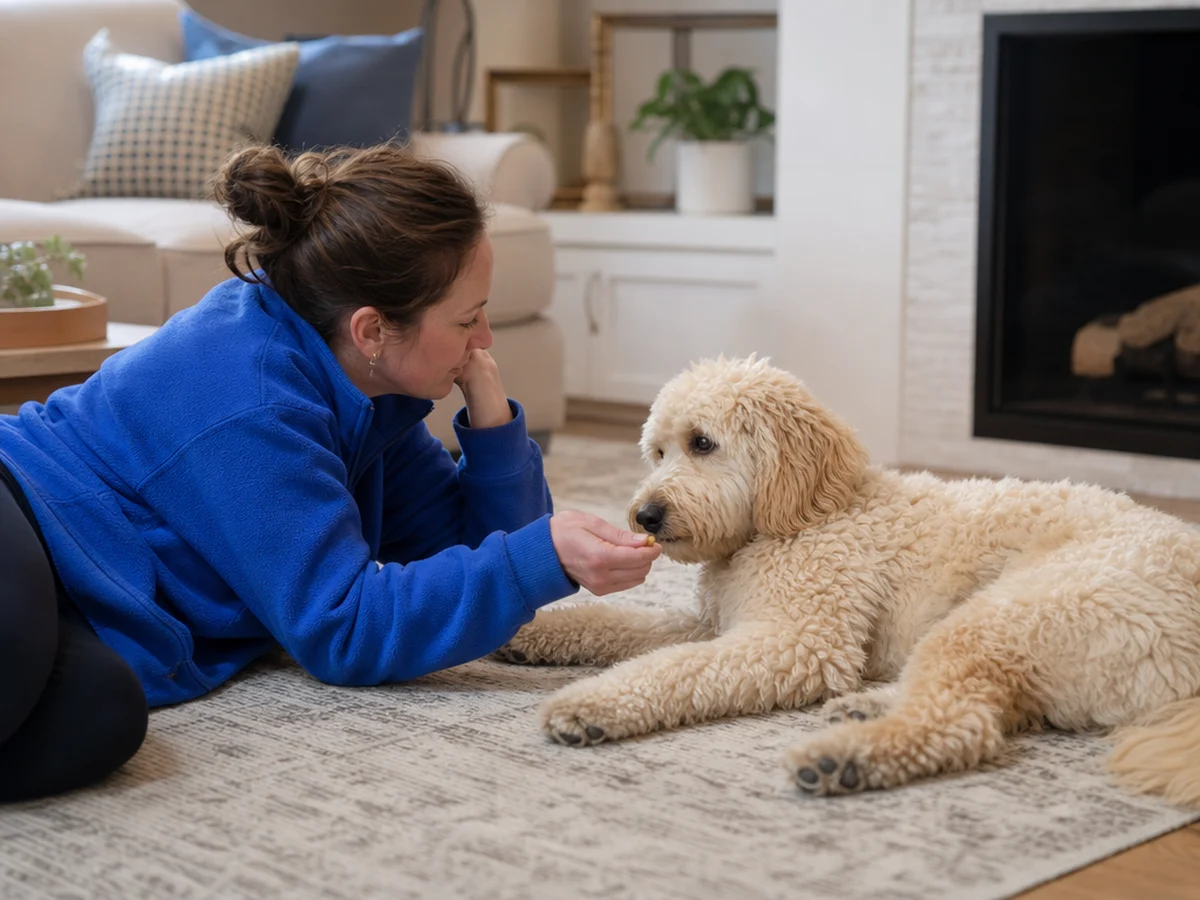
With the floor and treats ready, the first stage is the smallest of the four: getting your Goldendoodle from lying on their belly to resting on one hip. The steps follow the AKC's roll over lesson, where a solid down is helpful before you begin and the treat goes to a dog who follows the lure and lies flat on their side with their head on the floor.
- Ask for a down in front of you, then kneel beside your dog so you can reach their head and shoulder.
- Hold a treat at the side of their head, near their nose, so they can smell it but cannot take it.
- Move your hand slowly from their nose toward their shoulder, and let their head follow so their weight shifts onto one hip.
- The moment they are flat on their side with their head on the floor, say your marker word and give the treat.
- Let them up, ask for a fresh down and repeat until the tip onto the hip looks smooth several times in a row.
Moving on only when the tip looks smooth matters, because every later stage borrows this one. We see many Goldendoodles pop up into a sit the instant the treat rises, which usually means the hand went too high or traveled too far, so keep it low and pay the first small tilt before asking for more.
If your dog stands up instead, pay the down again and shorten the arc of your hand. If their head follows the treat but their hips stay put, reward any small lean first and ask for a little more each round, so the hip roll grows from something your dog already offers.
The Roll Across the Back and Onto the Far Side
Once the side lie is easy, the trick gets harder in one specific way: your Goldendoodle has to leave the side they know and turn up onto their back. Taking the back and the far side as two separate stages keeps that change from arriving all at once.
Getting Across the Back
The target here is a dog whose back touches the floor, even for a moment. Start every attempt from a finished side lie so your dog is already relaxed, then work the hand slowly.
- From the side lie, hold the treat at your dog's shoulder with the lure hand low and close to their body.
- Carry the treat slowly from the shoulder toward their backbone, so their head tips back and their shoulders follow it onto the floor.
- Mark and pay the instant their back touches down, even if they wobble and tip straight back to the side.
- Reset with a down and a side lie, then ask again until the back touch is easy.
A Goldendoodle who scrambles to stand when the hand reaches the back is telling you the step is too big. Pay a few more side lies, then move the treat more slowly with your hand closer to their body. Some dogs never enjoy lying on their back, however gently the stage is built, and for them the side lie is a finished and perfectly good trick.
Carrying the Roll to the Far Side
When the back stage is easy, the last piece is mostly more of the same movement: you keep the hand going instead of stopping at the back. Your dog turns over onto the opposite side, and the roll is complete.
- Lure from the side lie to the back exactly as before, but keep the treat moving past the backbone.
- Continue the hand around so your dog's head follows it over onto the other side.
- Mark and pay when they are lying flat on the far side, then release them to stand.
- Repeat from the down until they follow the treat all the way around without stopping.
If your dog turns back toward the first side, bring the hand along a slightly longer, lower line, or pay at the back and begin the far-side move again from there. When they follow the treat all the way around every time, the trick is ready for a word.
Putting a Word on the Roll and Shrinking the Hand
A dog who rolls all the way around every time is ready for the two jobs left: giving the trick a name and taking the lure out of your hand. Say "roll over" once, just before your hand starts to move, and then lure exactly as you have been doing. Spoken before the movement, the word comes to predict it, while a word said during or after the roll is only background noise.
Shrinking the Hand
Next, make the hand smaller, round by round, until a small circle in the air is enough and your lure hand is empty. The treat's job changes as the hand shrinks, because it stops being what your dog follows and becomes what they earn, and it is important to be quick about giving the treat afterward so the roll never depends on a bribe held in view.
Shrinking too fast is the usual way this stage stalls. If the roll breaks down at a smaller size, make the hand a little bigger again for a few rounds before you shrink it further.
Practical Questions on Roll Over and Other Goldendoodle Tricks
The staged method covers the teaching itself. A few practical choices sit around it, and each one is worth a straight answer.
Can my Goldendoodle practice roll over outside?
Yes, once the trick works in your quiet room. A sensible order is to start indoors and move outdoors after your dog has mastered it, which is probably easier on both of you than testing a half-built roll beside a busy sidewalk. Pick a flat patch of lawn and expect the first outdoor tries to look like an earlier stage of the trick.
What if my Goldendoodle flops onto their side alone?
Then you have a head start on the first stage. When you see your dog settle on their side, say nothing, mark the moment and pay, and a dog who lands there on purpose can often move to the back stage sooner. Never push or tip them over, because the whole point is that your dog chooses the position.
Should roll over come before other tricks?
Any order works as long as each trick is solid before the next one starts. Roll over begins from a down, so it fits naturally once that cue is dependable, and a list of Goldendoodle puppy tricks shows where it sits among the others. Two brand-new tricks in one session tend to blur together, so give each its own practice time.
The Quiet Middle of a Goldendoodle Roll
The most important second of a roll is the one in the middle, when your Goldendoodle is on their back with their feet in the air and nothing under them to push against. For most dogs that is the least familiar position in the trick, so keep your voice low, your hand slow and your payment plain while they are there, and save the big, happy reaction for when they are back on their feet.
A Goldendoodle may carry the playful, people-loving streak of both parent breeds, and a lively celebration after the roll gives all that enthusiasm somewhere to go. The contrast is what teaches the middle to feel dull and safe while the finish feels like the party, and a dog who learns that tends to offer the roll more willingly each time. Calming a bouncy Goldendoodle afterward is a separate skill, and our guide to settling a Goldendoodle covers that.
Whatever comes after roll over, from loose-leash walking to settling at the door, is built from small steps in its own order, and our Goldendoodle e-book lays out that order for every other lesson on the list, thoroughly yet in words that are easy to follow. It reaches your inbox after you register.
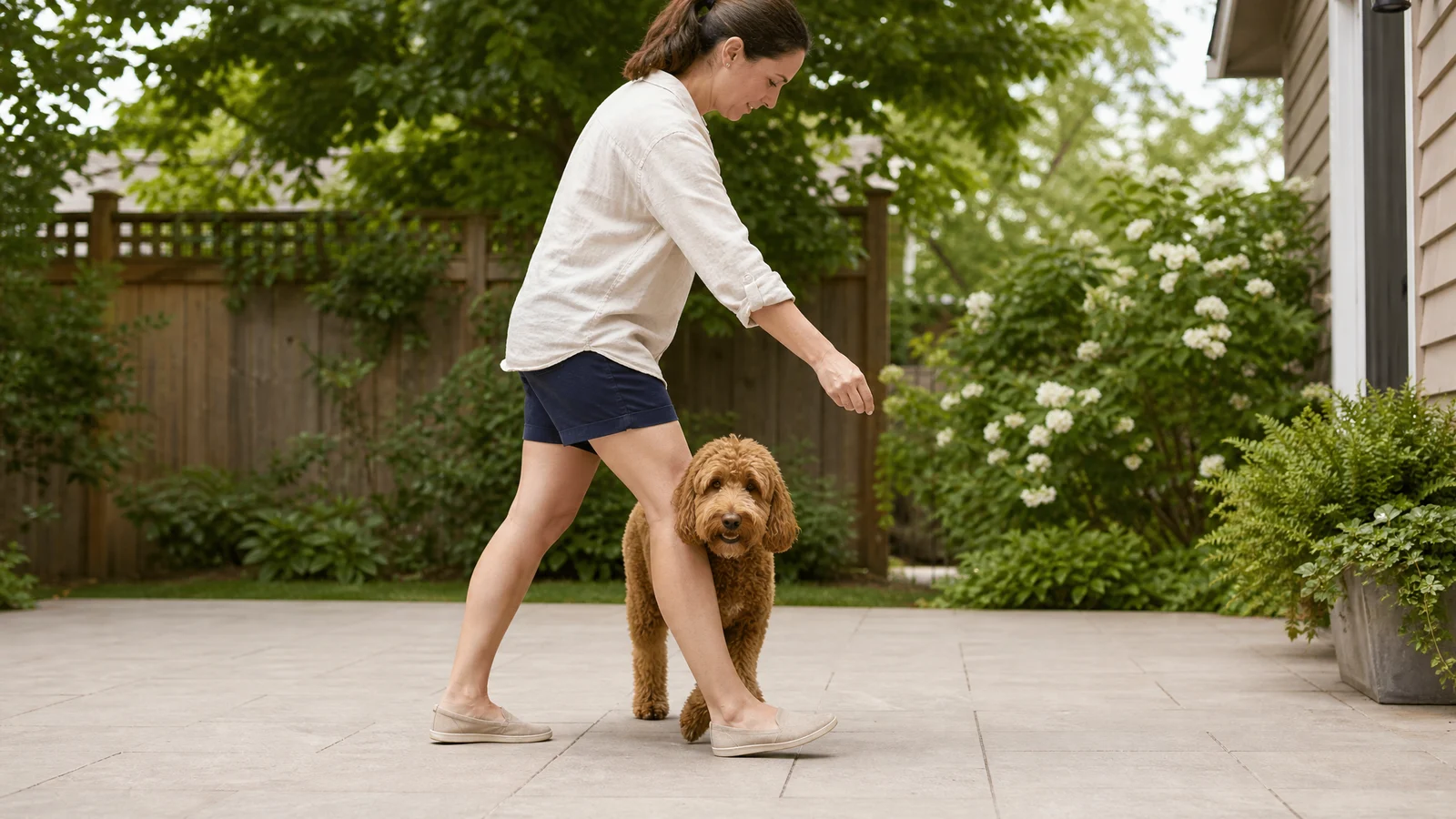 Exercise and jobsHow to Teach a Goldendoodle to Weave Through Your Legs
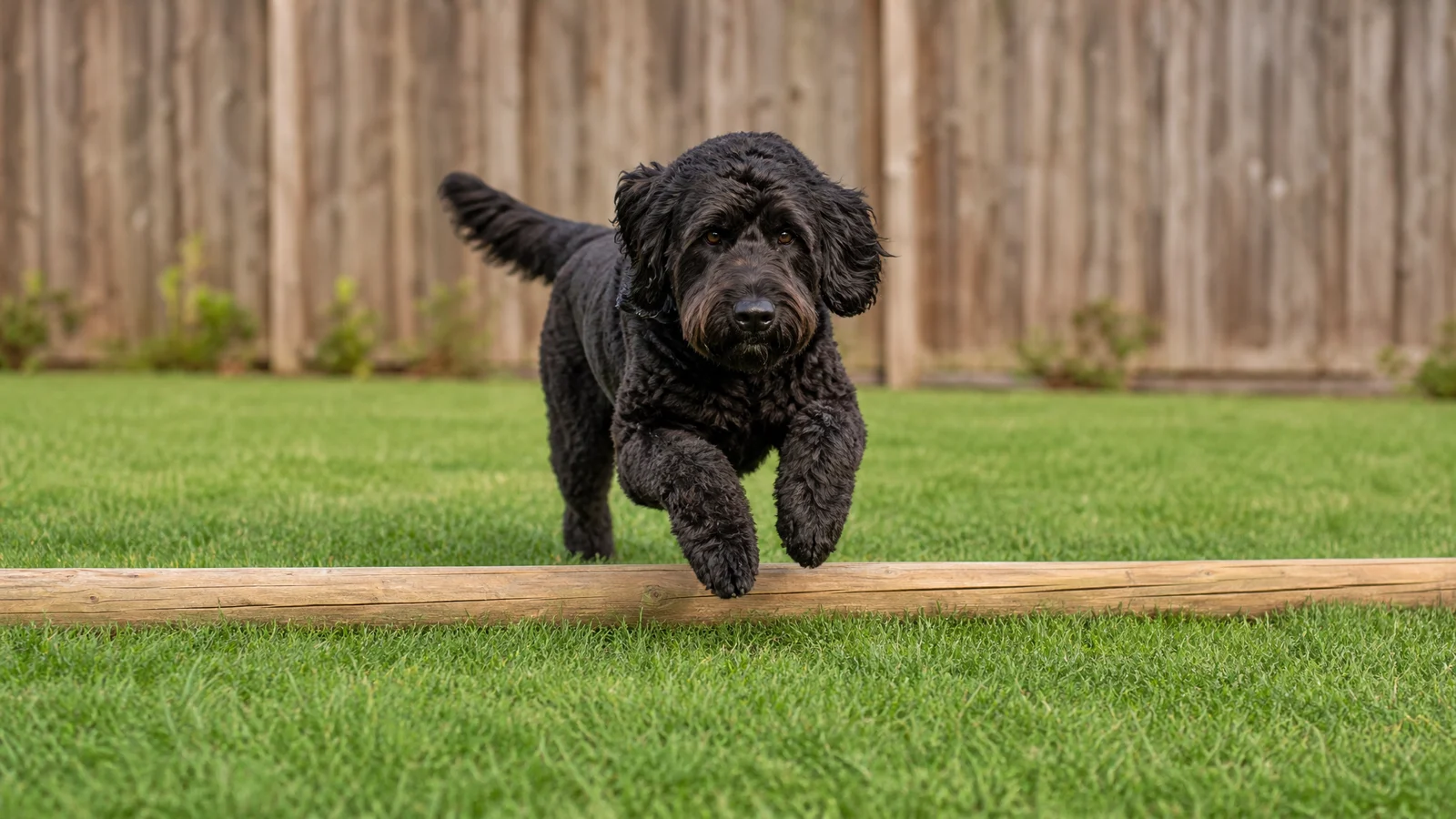 Exercise and jobsHow to Teach a Goldendoodle to Jump Over Obstacles
 Training basicsAre Goldendoodles Easy to Train? Smart or Stubborn
