 Goldendoodle
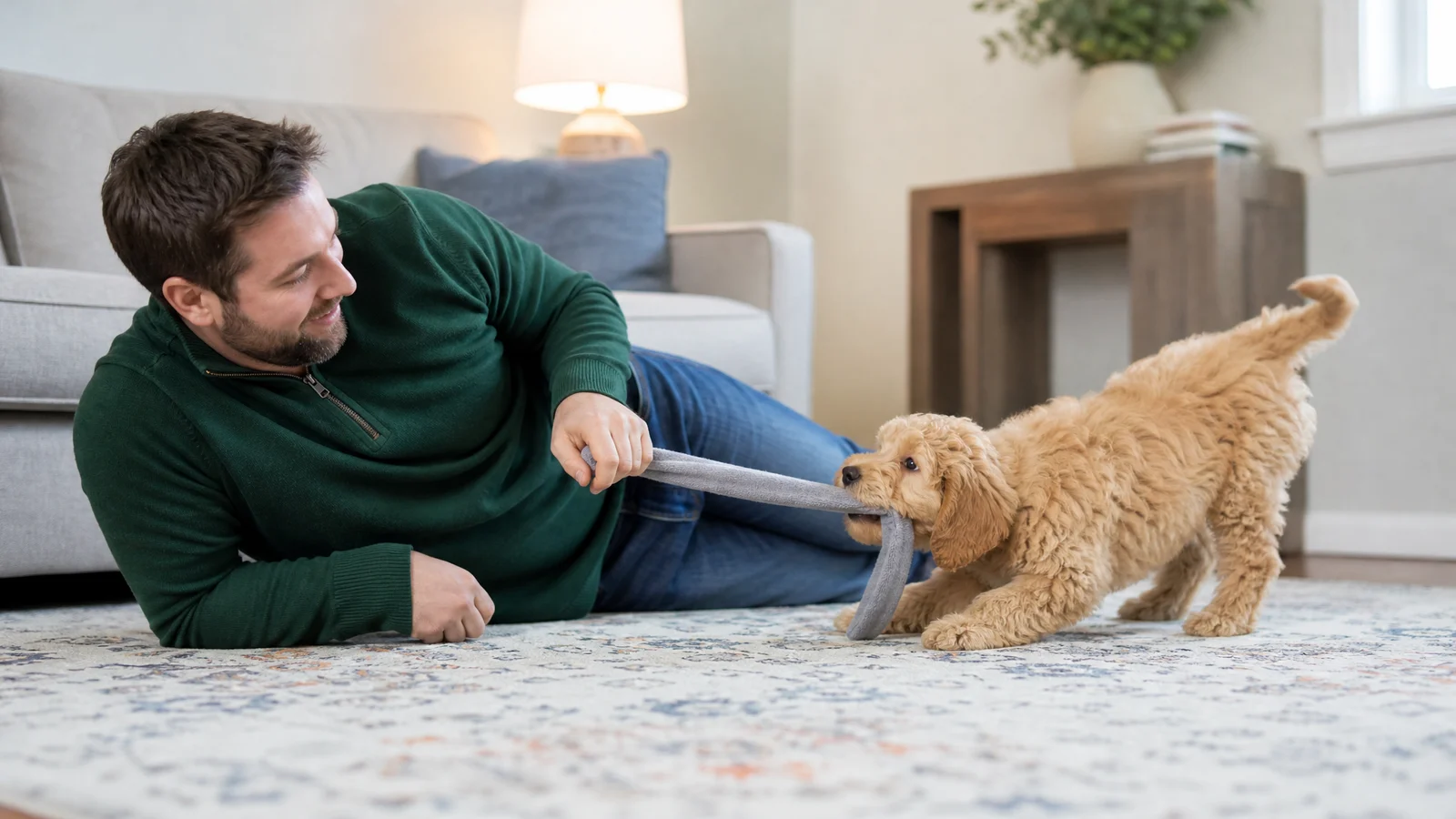
Teeth on a moving sleeve and teeth on a hand holding a brush may look like the same Goldendoodle puppy problem. The moment before contact can tell a different story. One puppy may be inviting a chase, while another is asking for an uncomfortable interaction to stop. Offering a toy without noticing that difference can leave the original problem untouched.
This guide uses the contact itself to choose the next step. We will look at hands during play, clothing during movement and mouthing during handling, then put rest and consistent adult responses around those lessons. Your puppy may enjoy carrying because of their retriever ancestry, but their own behavior supplies the useful evidence. The goal is comfortable interaction with people, with appropriate objects available for the mouth to explore.
What Happens Before Goldendoodle Puppy Biting
Describe the preceding action before deciding why the puppy bit. Someone may have waved a hand, walked away, lifted a paw or continued playing after the puppy became tired. A brief note about that action is more useful than labeling every episode as naughty behavior.
Watch the whole puppy. Loose movement and repeated invitations can accompany play, while turning away, stiffening or trying to leave should make you stop the interaction. No single tail movement or sound establishes what the puppy wants.
| Contact happens when | First useful adjustment |
|---|---|
| Hands move around the puppy's face during play. | Put the activity on a suitable toy and keep fingers outside the play area. |
| Sleeves or pant legs swing past. | Manage access during busy movement, then practice a slower version with an adult. |
| A person touches or holds a body part. | Stop the touch and examine comfort before attempting more handling. |
| The puppy becomes increasingly frantic. | End the demanding activity and check rest, water and bathroom needs. |
The ASPCA describes puppy mouthing as part of exploration and play. Normal development still needs practical boundaries. People should not have to tolerate painful contact while waiting for the puppy to become older.
Keep children safely away during observation and practice. An adult should take responsibility for arranging the space, not ask a child to discover which response works. If contact is hard, repeated or frightening, professional help belongs in the plan early.
Goldendoodle Play Biting Around Hands
Give the game an obvious object before the puppy chooses a hand. A toy long enough to hold comfortably away from their mouth can make the target clearer. Select it for the individual puppy's size and use, then supervise so damaged pieces are removed promptly.
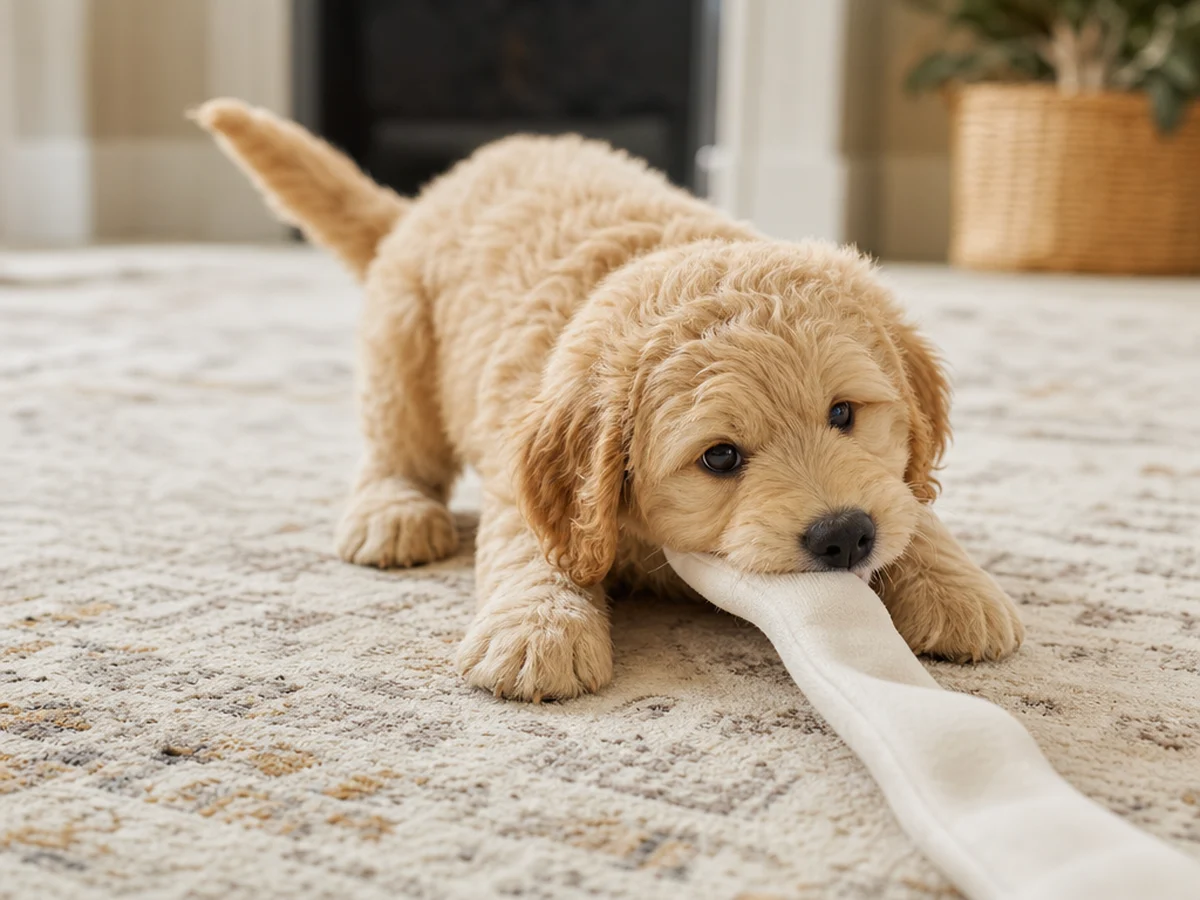
The Toy Carries the Movement
Keep the interesting motion on the toy rather than on fingers that repeatedly dart toward the puppy. Move it gently at a level they can reach without launching upward. Reward engagement with the object by allowing a brief, enjoyable game.
Pause while the puppy can still respond. Offer an easy exchange or let the toy become still, then resume if they remain comfortable. You are teaching that a game can change pace without requiring a bite to the person.
A Goldendoodle who prefers to carry may enjoy walking a short distance with a suitable toy. A puppy who prefers searching may like finding it nearby. Neither needs to perform a retrieve simply because both parent breeds have retrieving histories.
When Teeth Find Skin
Stop the hand movement and end that moment of play calmly. Create enough separation to keep skin safe, using an available barrier if needed. Resume an easier toy activity only when the puppy can engage without immediately returning to hands.
Do not remain within reach while repeatedly offering fingers as a test. If the same contact happens again, shorten the game or change the setting. A puppy who cannot redirect may need a break from social activity, not a more exciting toy waved faster.
Notice the quiet starts too. Offer the toy when the puppy approaches gently, before any bite occurs. Otherwise, they may get many repetitions in which skin contact is what brings the interesting object into view.
Our Goldendoodle puppy trick sessions offer another way to share brief, rewarding activity. Choose an easy known action when the puppy is receptive. A string of cues is not a useful rescue plan once they are already overwhelmed.
Clothing Biting During Household Movement
Loose fabric makes a moving target, especially when people hurry through a room. Arrange busy jobs so the puppy cannot repeatedly grab clothing while you are carrying laundry or helping a child. A comfortable pen or gated area can provide separation when active supervision is unavailable.
Practice movement at another time. Start with an adult standing near the puppy and reward grounded attention or interest in an appropriate toy. Add one slow step before trying a longer walk across the room.
Keep your path clear. You need somewhere to go if the puppy becomes mouthy.
- Begin with clothing that does not trail into the puppy's face, so the first lesson is easy to read.
- Reward the puppy before your movement produces a grab, using a location away from your feet.
- Make the next movement smaller if they start following the fabric instead of their activity.
- Use separation for actual busy household traffic until the practice skill is more reliable.
If a sleeve is already caught, stop adding movement and arrange a safe release without turning the fabric into a tug game. A familiar exchange for an appropriate toy can help when the puppy is able to respond. If that is not safe or reliable, ask a reward-based professional to demonstrate a suitable response.
Children running through a room should have space separate from the puppy. Telling them to stand perfectly still after being grabbed asks too much of a frightened child. Prevention remains the adult's job while the dog learns.
Handling Biting Needs a Different Response
Mouthing during brushing or paw handling deserves its own investigation. Stop the action and check whether the puppy was trying to withdraw before their mouth became involved. Continuing to hold them while offering food may conceal the problem rather than make the touch comfortable.
A Smaller Touch With a Clear Ending
Begin with a body area the puppy already accepts. Offer a brief gentle touch, then remove the hand and provide a reward. Let the puppy remain free to move away, and wait for voluntary re-engagement before another repetition.
Separate duration from location. A familiar shoulder touch lasting slightly longer is a different task from touching a paw for the first time. Change one feature so you can identify which part made the puppy uncomfortable.
Battersea notes that mouthing can reflect discomfort with handling as well as excitement or tiredness. The relevant improvement is a puppy who can remain comfortable during a manageable touch. A mouth kept busy while the rest of the body stiffens is not the same result.
Grooming Practice Without a Battle
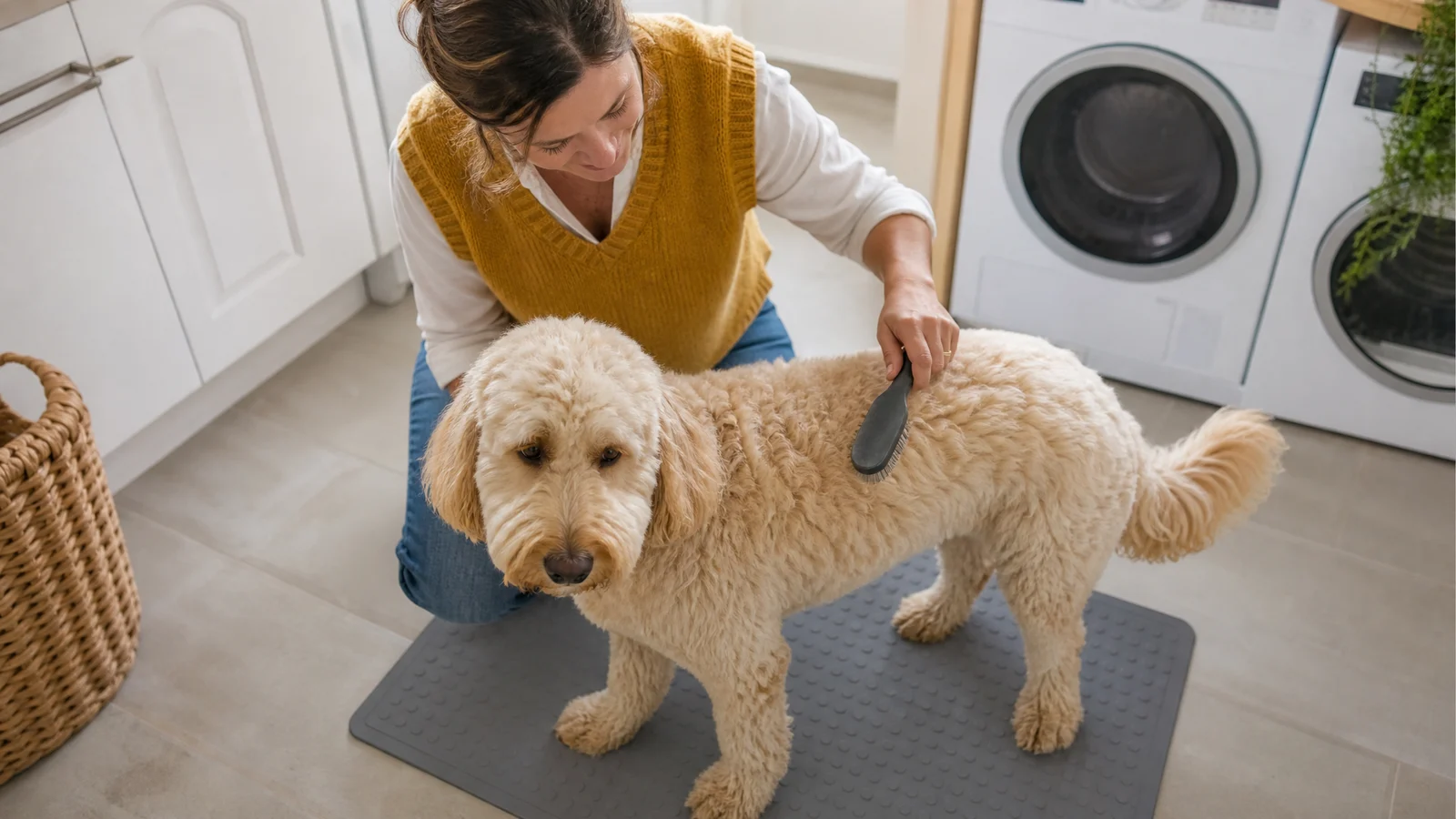
A Goldendoodle's coat may need substantial attention, so teach grooming-related handling before a full session is necessary. Let the puppy see the brush, reward calm investigation and put it away. Later, introduce a brief touch with the tool separately from brushing through fur.
Ask a groomer to show you suitable coat care and discuss a plan for work the puppy cannot yet tolerate. Necessary maintenance should not become a daily struggle that overwhelms the training. The Goldendoodle grooming handling plan explains how to coordinate those two needs.
At regular veterinary visits, mention new sensitivity or a sudden change in response to familiar touch. Contact the clinic sooner if the puppy seems unwell or touch is unexpectedly difficult. A handling lesson should never be used to explain away a physical concern.
Rest Before Another Round of Puppy Biting
Look at the activity leading up to the mouthy period. A visitor, a noisy room and a long play session can arrive close together, even when each seems reasonable alone. The puppy may need fewer demands and a quieter place rather than another round of entertainment.
Offer a bathroom opportunity when appropriate, check access to water and allow rest in a familiar comfortable space. Stay close enough to notice whether the puppy settles. Distress behind a barrier calls for adjusting that arrangement, not waiting for exhaustion to end it.
Do not schedule sleep by watching for the worst biting of the day. Notice earlier signs that activity is becoming disorganized. A puppy who repeatedly misses the toy or rushes from one target to another may benefit from ending the interaction sooner.
A useful rest break changes the surroundings as well as the activity. Lower household commotion where possible, put exciting toys aside and allow the puppy to choose a comfortable resting position. If a family member immediately starts another game, the puppy has not received the quiet opportunity you intended.
After rest, return to an easy version of the activity. Improvement there supports keeping that adjustment. Persistent difficulty across quiet, well-managed situations deserves a closer assessment instead of a larger exercise requirement.
One Adult Response to Goldendoodle Mouth Contact
Agree on what the household will do before the next busy period. Best Friends emphasizes consistent responses to mouthing. Consistency here means protecting skin, offering appropriate activities and respecting withdrawal, rather than allowing rough hand play with one adult and expecting the puppy to recognize different rules with everyone else.
- Keep suitable toys accessible to adults in the places where supervised play happens.
- Choose a safe way for an adult to step out of reach when contact becomes too rough.
- Stop handling when the puppy asks for space, then arrange an easier practice task later.
- Tell caregivers which activities and times of day have recently been difficult.
Demonstrate the routine instead of leaving a vague instruction to be consistent. Show where the toys are stored, how the barrier works and what a comfortable touch looks like. A caregiver should be able to use the arrangement without inventing a response in the middle of a bite.
Reward the puppy's early alternatives. A quiet approach or voluntary toy pickup deserves attention before teeth reach a person.
The Biting Pattern Worth Tracking
Record which contacts become easier, rather than expecting every form of mouthing to disappear together. Less clothing grabbing does not automatically mean brushing is comfortable. Repeated hard bites, stiffening, guarding or difficulty keeping people safe call for individualized reward-based help and veterinary guidance.
Keep the next lesson tied to the actual trigger. A slower step, shorter game or smaller touch gives your Goldendoodle a clear opportunity to respond differently. Those small changes build safer contact while leaving the puppy plenty of appropriate ways to play, explore and carry.
 BehaviorCounter Surfing Goldendoodles: Management and Mat Training
 BehaviorTeaching a Barky Goldendoodle to Ask for Play Politely
 CareHow to Groom a Goldendoodle: Teaching Your Dog to Enjoy Handling
