 Goldendoodle
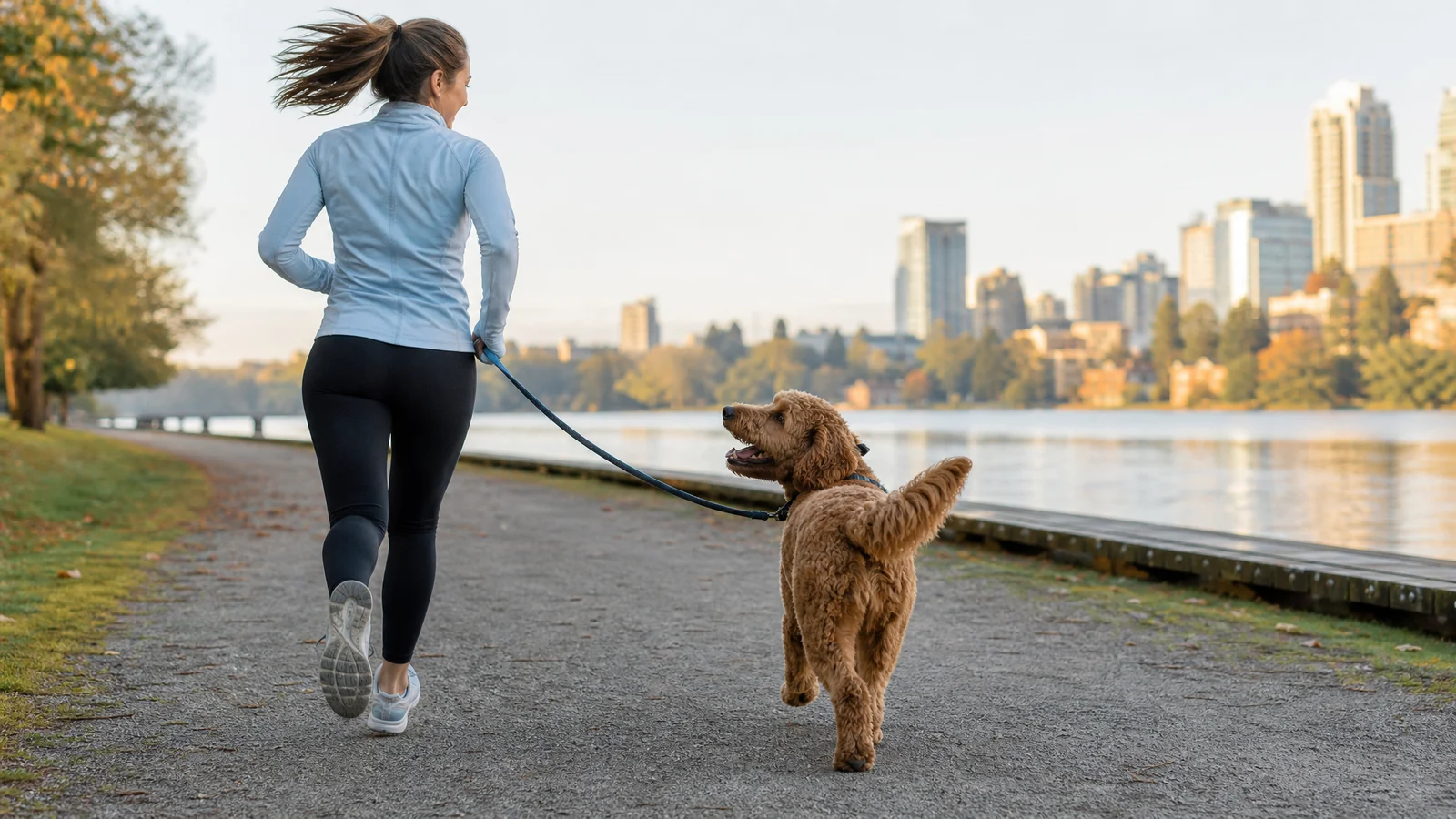
A Goldendoodle needs enough daily movement and mental work to settle comfortably, but there is no reliable number that fits every dog in this cross. Size, age, health, environment and individual interest all change the answer. A useful plan begins with a modest baseline, then lets the dog's behavior tell you whether to add challenge, change the activity or protect more recovery.
In our approach, this guide treats exercise as an adjustable budget rather than a stopwatch target. You will learn how to read the period after activity, pair physical outlets with brain games and change one variable at a time. The goal is not to exhaust a dog. It is to create a repeatable rhythm in which the Goldendoodle can move, think and then rest.
A Goldendoodle Exercise Baseline
Begin with activities your dog already understands in settings where they can remain engaged. A walk with sniffing, a few rewarded recalls in a secure place and a calm food puzzle give you three different kinds of information. Watch willingness, coordination and recovery rather than trying to reach an impressive total.
The two parent breeds provide possibilities, not a formula. A Goldendoodle may inherit more of the Poodle parent's drive for daily activity, more of the Golden parent's moderate energy, or a different blend altogether. Parent traits cannot tell you exactly how much this individual needs.
Record Responses, Not Just Minutes
Use a simple note after each activity. Record whether the dog stayed connected, became frantic, slowed down or settled afterward. The same walk can be easy for one Goldendoodle and mentally demanding for another because traffic, smells and novelty change its load.
Keep the first baseline consistent for several ordinary days. If both the route and the game change constantly, you cannot tell which part produced the response. Consistency creates a fair comparison without pretending the first plan is permanent.
The Dog's Response After Exercise
The period after activity is more useful than a tired-looking face at the finish. A workable session is often followed by drinking, normal movement and the ability to relax. Persistent pacing, frantic grabbing or an inability to respond to an easy cue may mean the activity was too exciting, too difficult or simply not the kind of outlet the dog needed.
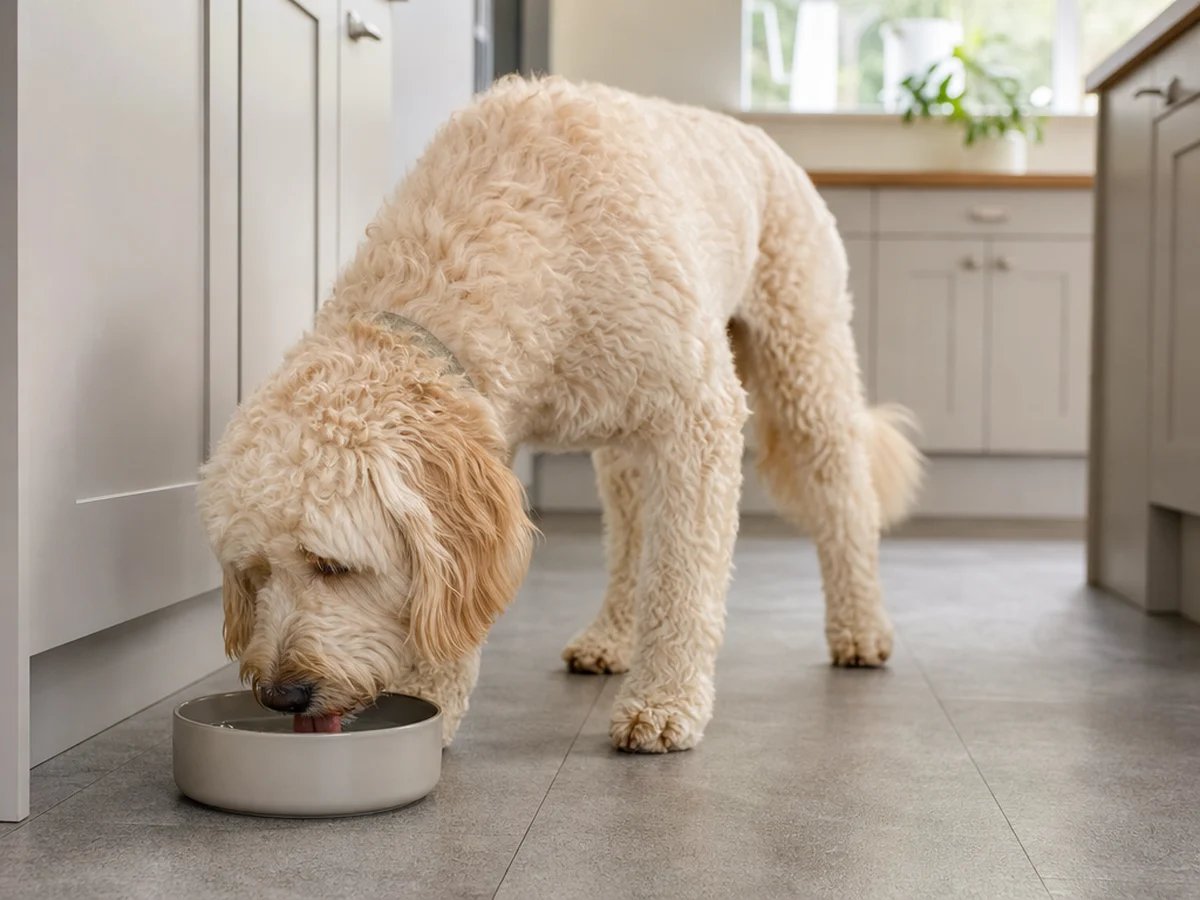
Restlessness does not always mean add more running. A dog can be physically tired and mentally wound up at the same time. Before extending the next outing, consider whether a quieter sniffing task, a shorter route or a clearer transition to rest would answer the problem better.
Look for a Repeatable Recovery
Recovery means the dog can move from activity into ordinary home behavior without a prolonged struggle. It does not require immediate sleep. A Goldendoodle who can take a drink, respond to a familiar cue and settle with an approved chew is showing a useful change of state.
If recovery becomes worse across several comparable sessions, lower one demand. Shorten the active portion, choose a quieter location or reduce rapid repetitions. Keep regular veterinary visits, and ask your veterinarian about a new or persistent change in stamina, gait or willingness to move.
Movement and Brain Games in Balance
Mental work adds a different load alongside movement. It cannot stand in for appropriate physical activity. The ASPCA suggests using meals for enrichment and notes that food puzzles can slow eating while providing mental stimulation. A Goldendoodle can therefore work for part of a meal after a suitable walk instead of receiving every kind of challenge at once.
Choose brain games that produce thought rather than frantic repetition. Searching for scattered food, finding a toy in an easy box setup or learning one small cue can be enough. Increase difficulty only while the dog continues to search methodically and accept rewards.
| Response You See | Likely Planning Need | Next Adjustment |
|---|---|---|
| Settles after movement but wakes ready to engage | The balance is probably workable | Keep the baseline and vary the activity gently |
| Paces after fast play | Arousal may be outrunning recovery | Use slower sniffing and a calmer finish |
| Loses interest in a puzzle | The game may be too hard or not rewarding | Make the search obvious and reward success |
| Demands activity all evening | The day may lack structure or thinking work | Add a short training task before adding distance |
| Seems sore or unusually reluctant | A training change may not be the answer | Pause the plan and contact a veterinarian |
Rotate the Kind of Effort
A rotation keeps one physical pattern from carrying the whole week. Walking, careful play, scent searching and reward-based skill work ask different questions. For more options, the Goldendoodle exercise circuit offers small-space games that can also suit larger dogs when the setup is safe.
Novelty should be modest. A new location, new search object and new cue on the same day can overload a dog who handles each one separately. Change one feature, preserve familiar rewards and finish while the dog still understands the game.
A Weekday Goldendoodle Exercise Budget
A budget distributes effort instead of placing it all in one demanding outing. Start with an active period, a thinking period and protected recovery. Their order can change with the household, but each part should have a clear beginning and finish so the dog is not waiting for entertainment all day.
Use the following framework as categories, not fixed durations. The amount within each category belongs to the individual dog. A smaller adult is not automatically low energy, and a larger Goldendoodle is not automatically suited to harder impact.
- Choose one main movement outlet that allows sniffing, comfortable motion and check-ins with you.
- Add one brief reward-based thinking task, such as a food search, shaping game or familiar cue in a new position.
- Include ordinary decompression, with water and a quiet place where interaction is not continually restarted.
- Save vigorous play for a setup where footing, space and the dog's response make it appropriate.
- Review the whole day before adding more, since training, visitors and new environments also use mental energy.
Use Sports as One Part of the Budget
A sport can supply movement, learning and shared focus, but it should not become a daily test of maximum output. The Goldendoodle sports guide helps match an activity to what the individual enjoys. Foundation lessons can be valuable even if competition never becomes the goal.
Schedule easier days around demanding classes or outings. A dog who learns in a novel environment may need less extra stimulation afterward, not more. The budget works when it accounts for invisible effort as well as distance covered.
Exercise Across Puppy and Older Years
Puppies need opportunities to explore and learn, but their coordination, attention and physical development are still changing. Use short, voluntary activities on suitable surfaces and stop before form deteriorates. Avoid turning a young dog's enthusiasm into proof that endless repetition is appropriate.
Development also varies between individuals. Humane World notes that age, size and previous habits affect the course of puppy house training. The practical lesson for exercise is limited but useful. A developmental label does not erase individual differences, so observation must guide the plan.
Make Puppy Brain Games Easy to Win
Let a puppy find food in an open container before hiding it among several choices. Reward one or two successful responses to a new cue rather than drilling until attention disappears. The Goldendoodle puppy training skill tree gives a progression that protects clarity.
Setbacks are part of development. Battersea's house-training guidance explains that setbacks are normal while a puppy gains reliability. Exercise plans deserve the same calm review when growth, sleep or a new environment temporarily changes the dog's response.
Preserve Choice for an Older Dog
An older Goldendoodle may still enjoy familiar routes, searches and training, with the intensity adjusted to their present mobility and senses. Offer comfortable footing and more time to investigate. A shorter, engaged outing can be more useful than pushing through a former routine.
Sudden reluctance is not a signal to motivate harder. Stop and seek veterinary guidance, especially when movement, breathing or recovery changes. Reward-based planning includes respecting a refusal that may be communicating discomfort.
When a Goldendoodle Exercise Plan Fails
When a plan fails, identify the earliest point where behavior changed. If the dog became scattered before leaving home, the outing did not create the entire problem. If focus disappeared only near a busy corner, the route may be harder than the distance suggests.
Change one factor and compare the result. Move the game indoors, increase space from activity or use a more familiar reward. In its guidance on fear, AVSAB explains how management protects learning while training proceeds at the dog's pace. The same principle supports a manageable exercise setup without claiming that ordinary excitement is fear.
Do Not Chase Exhaustion
Repeatedly adding distance can build stamina without teaching a transition to calm. It can also hide the fact that the dog needs scent work, clearer training or more rest. Judge the plan by usable behavior across the day, not by how completely the dog collapses afterward.
If water retrieving interests your dog, the Goldendoodle training guide begins on land and keeps choice central. Fetch should remain one outlet among several. It should not become the only way the dog knows how to engage.
The Goldendoodle's Next Exercise Step
Review three questions at the end of an ordinary week. Could the dog engage during activity, recover afterward and remain comfortable the next day? A steady yes supports keeping the baseline. A mixed answer tells you which category needs a smaller or different challenge.
A Goldendoodle's parent breeds may influence energy, retrieving interest and trainability, but inheritance is not guaranteed. Build for the dog in front of you. Adjust one part, observe honestly and preserve a rhythm that leaves room for movement, thinking and sleep.
If the plan produces escalating distress, unsafe behavior or a persistent physical change, stop experimenting alone. A veterinarian can address health concerns, while a reward-focused training or behavior professional can help arrange the environment and learning task. Good exercise is not a number won. The useful baseline fits ordinary weekdays without borrowing recovery from the following day and remains valuable over time. It is a sustainable match.
 Training basicsHow to Potty Train a Goldendoodle Puppy Without the Setbacks
 Exercise and jobsDaily Exercise and Brain Games for a Mini Goldendoodle
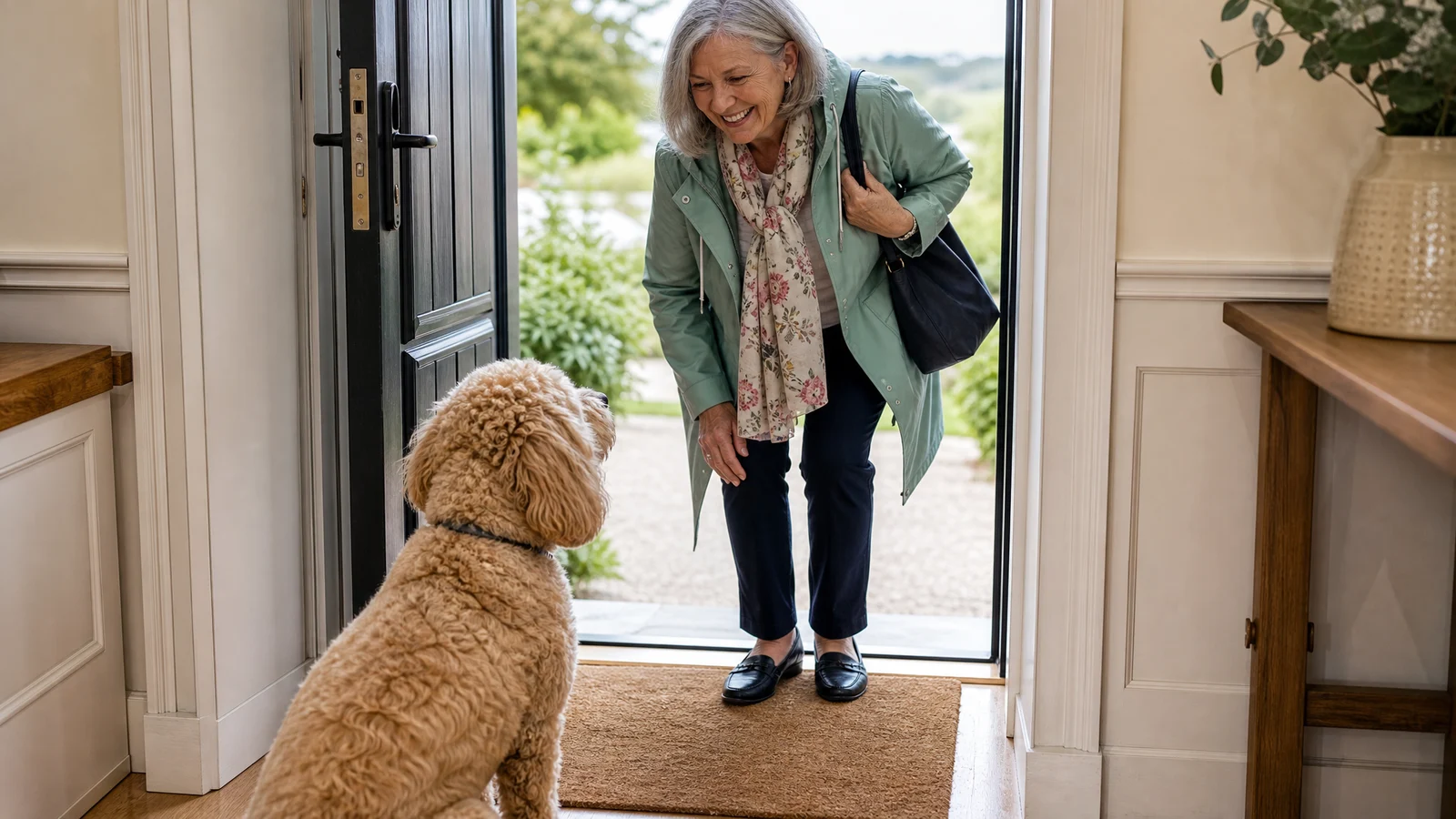 BehaviorTurning a Goldendoodle's Big Welcome Into a Polite Hello
