 Goldendoodle
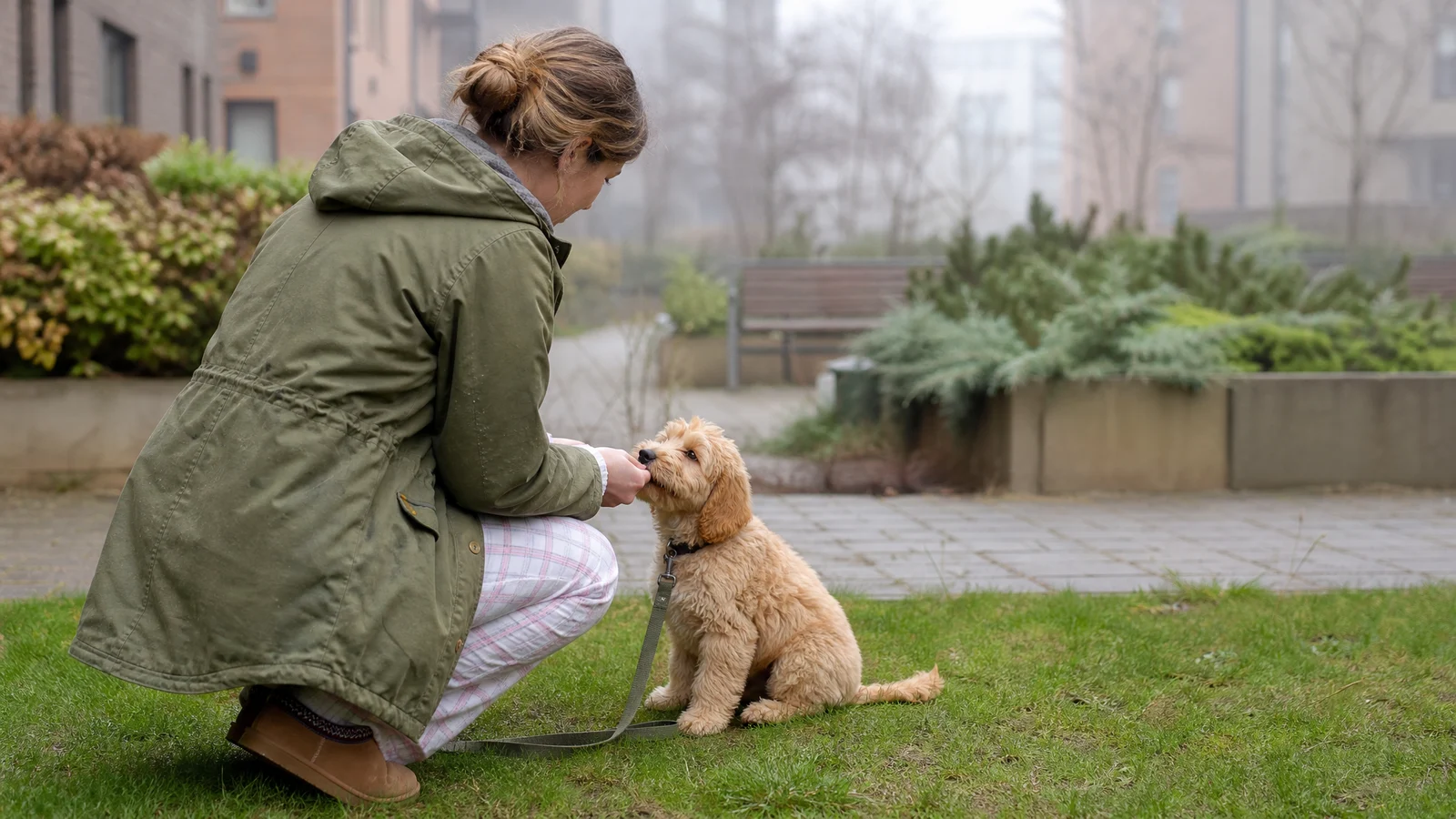
Picture a puppy who trots in from the yard, sniffs across the rug, and squats before the door has fully closed. Nothing is wrong with the puppy. Usually they were distracted outside and never finished, so the urge caught up with them indoors.
That scene explains most of what goes wrong in house training, and it is fixable. Both parent breeds are rated 5 of 5 for trainability, so a Goldendoodle often learns quickly once the setup is right.
Below, you'll find the breed's background and what it means for training, what a young puppy can realistically manage, a wake-up-to-bedtime schedule with a night plan, reward timing, and the reasons setbacks return, including the signs that call for a vet. Done well, the routine gives you a dog who tells you at the door when it's time. Done carelessly, it drags into months of cleanup.
Water Retrievers Behind the Goldendoodle
The Goldendoodle is a cross between the Golden Retriever and the Poodle. Both parents were shaped by working alongside people, which is why your attention and your rewards do so much of the work in house training.
The Golden Retriever side comes from gundog stock. These dogs are described as energetic and powerful, fond of outdoor play, and joyous enough to keep a puppyish approach to life into adulthood. They are also called outgoing, loyal, and eager to do your bidding. For potty training, the playful streak matters, because a puppy who treats the yard as a playground may forget the errand entirely.
The Poodle side adds people focus and sharp thinking. Poodles of any size are described as very people-oriented and extremely intelligent. They respond eagerly to upbeat, positive training and need good daily exercise. A bright, busy puppy learns your routine fast and also notices every gap in it.
A Goldendoodle may inherit any mix of these traits. Your puppy might lean toward the easygoing Golden side, the busier Poodle side, or something in between. Size varies too, and we have no reliable data on how miniatures and standards differ in house training, so watch your own puppy instead of a chart.
What a Retriever's Past Means for Potty Training
Dogs that work closely with people tend to care about your reaction, and that is the lever in house training. Adaptability is rated 5 of 5 for the Golden and 4 of 5 for the Poodle, which suggests a puppy may adjust to a new routine readily, though individual dogs vary.
Read your puppy's response and adjust from there. If they are food-driven, a small treat at the potty spot is usually the strongest motivator, and many owners report that treats with excited praise made going outside worth the trip. If they care more about play than food, make a short game the reward once they finish. If they drift and sniff instead of going, shorten the trip, stay quiet, and save the fun for afterward.
If your puppy seems startled or hesitant in the yard, slow down and keep the routine calm and predictable. Early, gentle socialization helps a cautious puppy settle into outdoor life.
Eager to please does not mean already knows where to go. It means rewards and consistency tend to work well, and a puppy who is slow at this is rarely stubborn. More often their schedule or supervision needs tightening. Some owners still describe Goldendoodle house training as hard or stressful, and a few found it harder than with a Golden Retriever, so expect a range.
Is a Goldendoodle Puppy Ready for Potty Training at Eight Weeks?
You can start on day one, but a young puppy learns the routine long before their body can keep up with it. Most puppies settle into a routine within four to six weeks, while dependable habits tend to arrive near the six-month mark, once physical control improves. Setbacks along the way are normal.
That gap defines your job. At this age you are not testing whether your puppy can hold it. You are preventing accidents and rewarding every success, so the right habit forms while the body catches up.
Many owners report success with very frequent trips, anywhere from every 15 minutes to every hour and a half, paired with a cue word, treats, praise, and a trip out after play or excitement. A common piece of advice is to wait until the puppy asks to go out. Young puppies rarely ask yet, so the schedule has to carry the work for the first stretch.
Some owners find that even hourly trips and post-meal treats did not stop accidents, including accidents shortly after coming inside. If that describes your puppy, the usual answer is closer supervision and a smaller indoor space, with a pee pad as a backup until they reliably ask to go out. Reported ages for reliability vary widely, so do not hold your puppy to a stranger's timeline.
The Goldendoodle Potty Training Schedule From Wake-Up to Bedtime
A good schedule follows events, not the clock, because a puppy's bladder and bowels call for attention after particular moments. If you meet those moments at the door, most accidents never start. Daytime comes first, then the night.
Daytime Trips
Take your puppy to the same spot, on a leash, at these moments:
- First thing in the morning, before anything else happens.
- Right after waking from any nap, since many puppies go within minutes of waking.
- Soon after meals, and regular mealtimes make that timing easier to predict.
- After play or excitement, which is when many owners say accidents sneak up.
- Before crating and before bed.
Stay out until they have gone. If you head back inside early because nothing happened, the rug is likely to be their next stop.
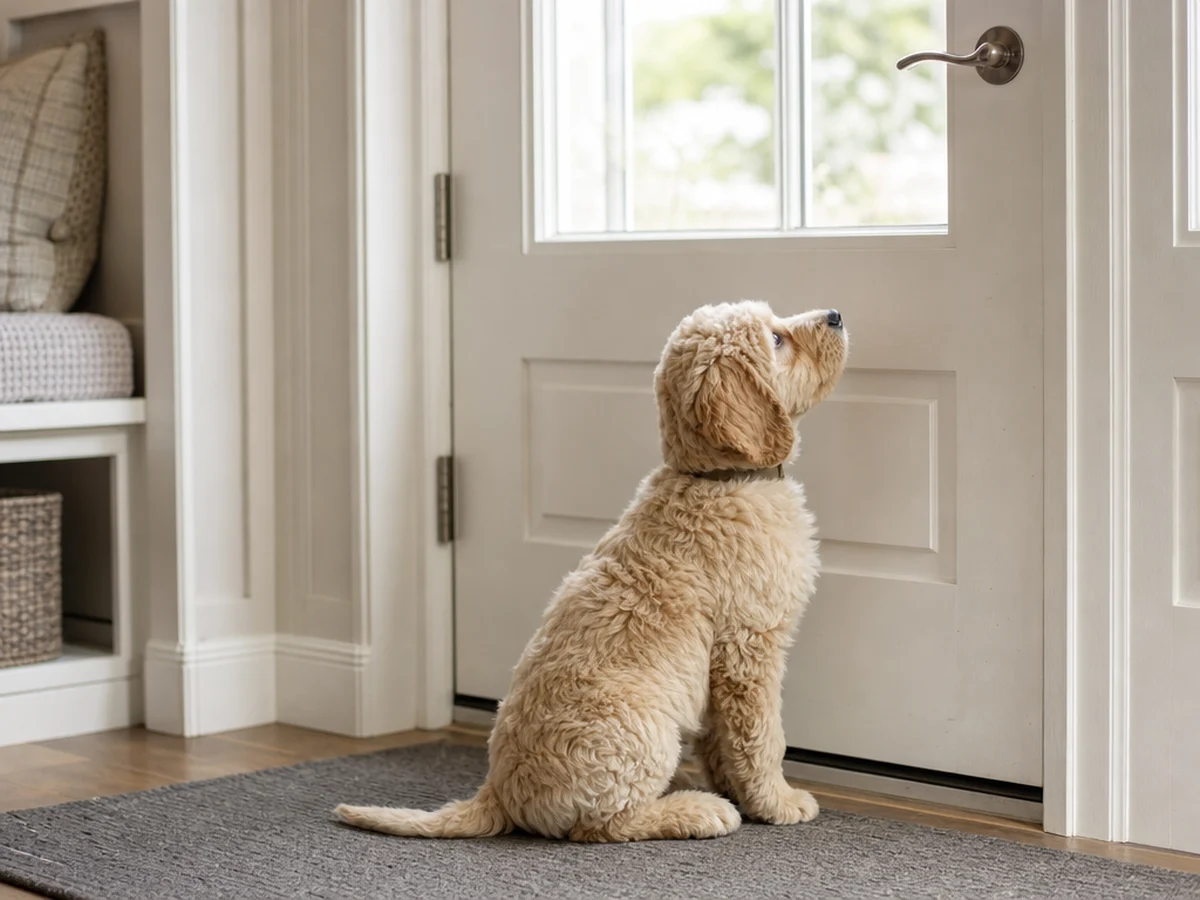
Learn your puppy's own signals, because owners who watch closely report that accidents drop sharply. Some dogs spin before pooping, and others stare at the back door or balcony door. Many owners admit they missed these signs early on. If your puppy stares at the door, treat it as a request and go.
Bells help some dogs and not others. Owners who guide the paw to the bell or ring it themselves every time at the door report puppies picking it up fast, sometimes within a day. Other dogs never connect the bell to needing to go, ring it only when asked and rewarded, or settle on a steady stare instead. If the bell is not working, the stare is a perfectly good signal.
Overnight and Crate Details
Most puppies avoid soiling where they sleep, which is why a crate helps, but the details decide whether it works. Keep crate stretches for a young puppy to two to three hours at most. Leaving a puppy shut in so long that they have to go in their own bed can lead to serious house-training problems. Treat the crate as a safe haven for rest, and never use it to punish your puppy.
If accidents happen in the crate, check two things before blaming your puppy:
- Some puppies pee on blankets and beds, so owners go bare or use only a thin washable pad.
- Extra room led to crate accidents for some owners, and a smaller crate stopped them. Buying a big crate to grow into is common advice, but block off the spare space until your puppy is reliable. A dog who is already trained often does fine in a large one.
Overnight, young puppies often need a trip out. Some owners set a quiet alarm for a potty trip until their puppy's bladder matures. Keep these trips dull, with no play and no chatter, so night stays for sleeping. If your puppy poops indoors at night in roughly the same spot, block that area, clean it thoroughly, and make the last trip of the evening a patient one.
Rewards That Make Potty Training Worth It
Timing is most of the skill. Reward immediately with praise or a treat as soon as your puppy finishes, while they are still standing at the spot. A treat handed over at the back door teaches them that coming inside is the goal.
Give your cue word as they start to go, then a marker word or bright praise the instant they finish, then the treat, then play. When going quickly leads to fun, puppies start going quickly. If your puppy loves food, keep the treats tiny and the praise loud.
Accidents are information. If you catch your puppy partway, make a neutral sound, guide them outside, and praise at the right spot if they complete it there. If you find a mess later, clean it quietly, because your puppy cannot link a past event to your reaction. A calm response keeps them willing to go in front of you.
Cleaning matters more than most owners expect. Owners report that repeat accidents in one spot stopped after vinegar cleaning, sometimes with an enzyme odor remover. If your puppy keeps returning to the same corner, assume it still smells like a toilet and clean again.
Why Do Potty Training Accidents Return After Weeks of Success?
Regression is common with Goldendoodles, and it usually has a trigger. Some puppies go weeks clean and then slip with no warning, including peeing right after waking or while waiting at the door for shoes. Look for the cause before deciding your puppy has forgotten everything.
Check these triggers first:
- Owner slack. Owners who believed their dog was fully trained report surprise accidents once they relaxed the routine.
- Disrupted routines. A different walker while you are away can unsettle a dog who was fine with you, and indoor accidents may appear a few days into the absence.
- Excitement. Guests arriving can trigger peeing, and in some dogs it continues for years. Owners cope by asking guests to ignore the dog at first.
- Changes around six months. Some dogs refuse to poop at their usual times for about a week.
- Night habits. Pooping indoors overnight in roughly the same spot is a repeat report.
Once you have a likely cause, reset calmly. Go out after meals and stay out until they go, reward every success as if training had just begun, supervise more, and shrink their indoor space for a while. Many owners report that going back to basics alone fixed it. For excitement peeing, keep greetings low-key and let your dog calm down before the fuss begins.
If accidents arrive suddenly with no trigger you can name, tell your vet before assuming it is a training problem. Regular vet visits belong in the plan anyway.
Potty Training Progress and When to Call a Vet
A Goldendoodle wants to work with you, and house training goes best when that willingness has a clear routine, quick rewards, and a plan for setbacks. Judge progress by the trend over weeks, because one bad day tells you little. These signs mean the training is working.
The clearest sign is that accidents are becoming less frequent, even if they are not gone yet. You will also see your puppy go soon after reaching the potty spot instead of wandering, and they may start to signal at the door with a bell, a stare, or a trip to the door. Another good sign is that they return to normal quickly after a disrupted day. And when an accident does happen, you can usually name the cause.
These signs mean it is time to ask a vet or trainer:
- Your puppy urinates very frequently or seems to be going much more often than usual.
- They strain or seem uncomfortable when they try to go.
- Accidents appear suddenly after a long clean stretch with no trigger.
- They seem stressed, fearful, or reluctant to go outside.
- Accidents show no improvement after several months of a steady, consistent routine.
 Exercise and jobsDaily Exercise and Brain Games for a Mini Goldendoodle
 BehaviorTurning a Goldendoodle's Big Welcome Into a Polite Hello
 Training basicsLeash Training a Full Grown Goldendoodle Who Pulls or Lunges
