 Goldendoodle
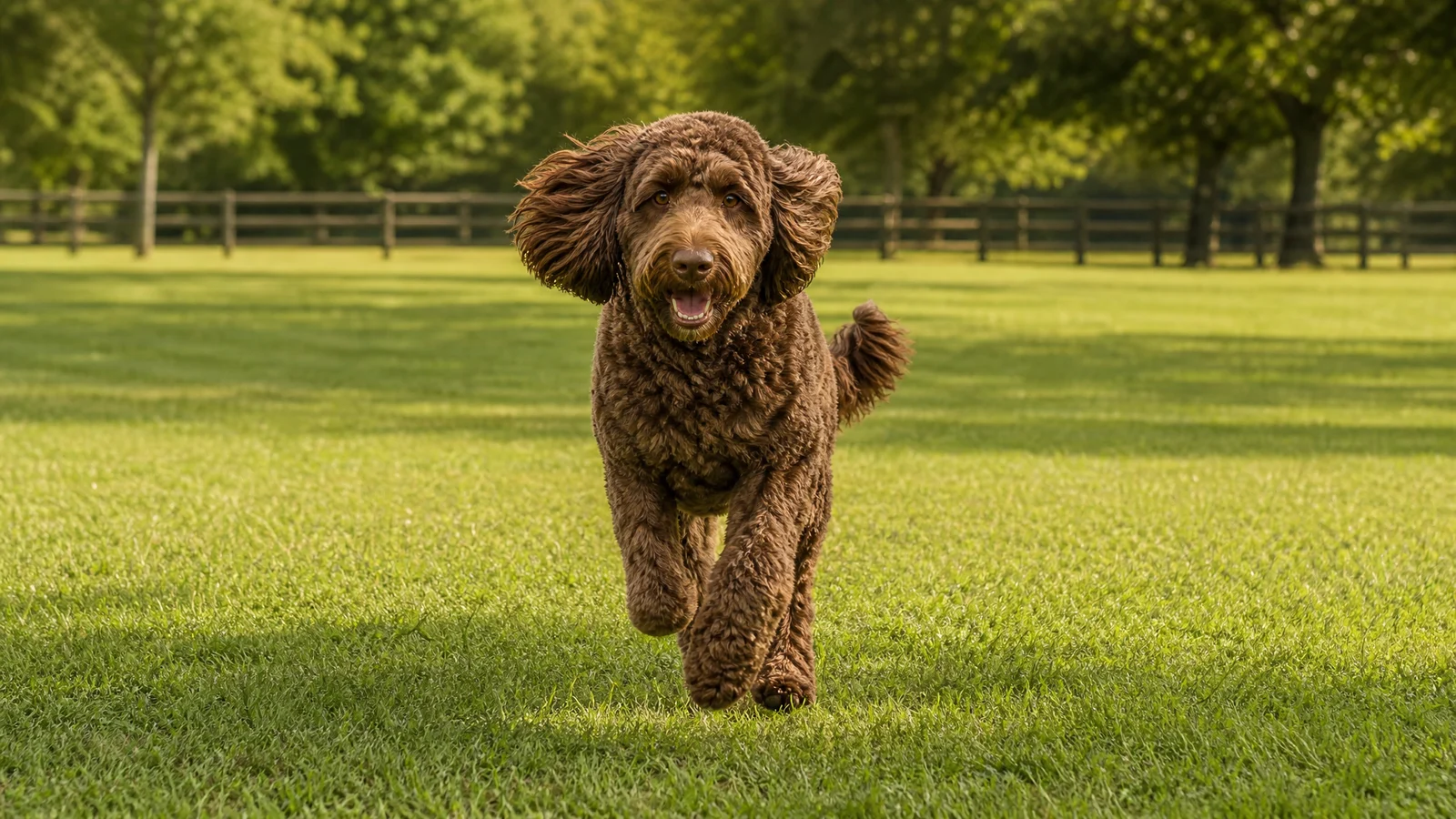
By the time a Goldendoodle needs a recall that truly works, the word has often been spent on dinner, the car and every other small errand. After that, the one moment that matters gets a word the dog has heard a thousand times for nothing. That is the whole problem in a sentence, and it has a tidy fix: give the important call its own word and teach it with extra care.
The sections below start with what a call has to compete against, then build both words and the hand-on-collar arrival that makes them useful. Nothing here needs a fenced field or special gear to begin, only a quiet room, a pocket of soft treats and a few calm minutes.
What Your Goldendoodle's Recall Is Up Against
A word only has to beat whatever else is pulling at your dog in that moment, so it pays to name those pulls before choosing anything. Think of a visitor stepping through the door, another dog trotting past the fence, or a family member coming back from the car.
A social dog's strongest pulls tend to be people and other dogs. The AKC rates the Golden Retriever parent 5 of 5 for openness to strangers, the top of its scale at "Everyone Is My Best Friend," and a Goldendoodle may or may not share that, so watch which of the three your own dog rushes toward first.
Keep that short list in mind, because each item becomes a practice target later. How to handle the moments themselves lives in our Goldendoodle greeting manners and polite Goldendoodle play guides. This page is about the call that cuts through them.
A Pair of Recall Words, One Everyday and One Reserved
Once you can name what your dog will choose between, the weakness of a single recall word is easy to see. Everyday calls carry low stakes: dinner, the car, back inside. A call for a gate left open carries high ones, and a single word asked to cover both ends gets blurry for the dog.
The San Francisco SPCA says it is best to have two different commands, using "here" or "let's go" for everyday situations and reserving "come" for times when you need a bulletproof recall. That frees you to be relaxed about the everyday word and strict about the reserved one, which you pay with the best prize you own every time it is used.
Whichever words you pick, leave your dog's name out of them. PetMD advises a recall word other than your dog's name, since you probably say the name frequently, and lists "come" or "here" as words that work best. The name can stay what it has always been, a way to earn a glance, while the recall words do the bringing.
Indoor Calls That End With a Hand on a Goldendoodle's Collar
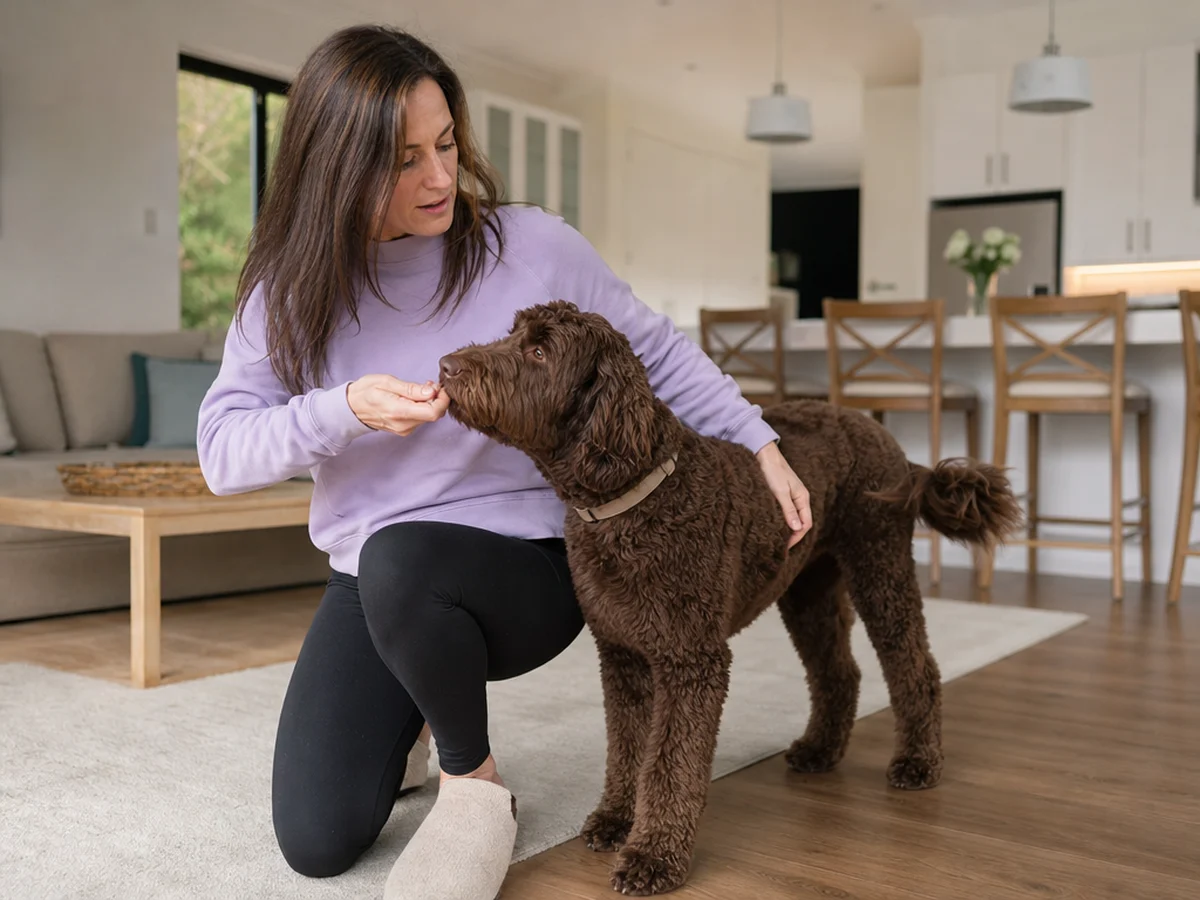
A call that brings your dog to you still fails if you cannot safely take hold when they arrive, so the collar deserves its own small lesson. It is quick to teach and it changes what every later call can safely do.
The collar matters because a dog who backs away from reaching hands will not stay put for a safe grab, and many dogs do, especially from a hand over the head. Animal Humane Society reports that some bites happen when reaching over a dog for their collar, so we never improvise the grab. A shy or sensitive dog needs the most patience, so start with a hand that never touches, reward every moment they stay relaxed, and later work up to the collar under the chin.
Mealtimes make easy practice, because the touch becomes a sign of dinner before it ever signals the end of a game. Before the first call, settle three small decisions:
- The room. A closed room with nothing interesting in it, so the only good news is you.
- The prize. Small, soft and saved for this lesson, so it keeps its shine.
- The spot. The place you will pay, right at your knees, where a finger can slip under the collar.
With those settled, wait until your dog has drifted a few steps off, say the everyday word one time, then stay still and pay the moment they reach your knees. Slide a finger under the collar while they chew, then let them go back to whatever they were doing, so that arriving never ends the fun. Add the reserved word later as its own short game, once the everyday call turns your dog around without a pause.
Recall Practice With a Long Line and a Real Temptation
Indoor calls are easy because nothing competes, so now borrow one of the pulls from your short list and make it small. The aim is a dog who turns toward you even with something interesting in view.
Our trainers like to begin with the dullest version. Put a toy your dog barely cares about a few feet away from your leashed dog, let them look at it, and pay when they look back at you. Over later sessions move up to better objects. For a door or a visitor, call while the dog is still far from it, and when they turn toward you, let them have what they were after, whether that is the open door or the hello.
A long line gives you room to practice outside while someone can still stop the dog from leaving. Use it as insurance, never to reel a dog in, and see our Goldendoodle leash training guide for gear. Returning a toy is a separate skill that our Goldendoodle fetch games guide owns.
Practice improves the odds, but it does not promise that your dog will return reliably when off leash. Keep the line on or the gate shut in any place that asks more of your dog than they can give yet.
Regular vet visits are the place to rule out anything physical if a dog who used to come starts hesitating, and a qualified reward-based trainer can watch the two of you if the hesitation lingers.
Putting Two Recall Words to Work Day to Day
Splitting one word into two raises a few practical questions about order, emergencies and rewards. Each one has a short answer built on the same reward-based steps.
Do I teach both words at once?
Start with the everyday word, since it gets used all day and the practice builds itself. Bring in the reserved word as a separate short game once the first one turns your dog toward you without a pause. Teaching both on day one can blur them.
What counts as a reserved moment?
Anything where a delay could mean harm: a gate left open, a dropped leash, a door swinging wide. Everything else gets the everyday word, even when it is annoying. In our experience a short list is easier for the whole family to follow.
Does the reserved word need its own prize?
If you can manage it, yes. Pick a treat your dog loves and never gets anywhere else, and bring it out only for the reserved word, so hearing it always promises something special.
Ordinary Days With Two Recall Words
None of this makes daily life more formal, and that is the point. Calling your dog in from the yard, wrapping up a visit and loading the car stay plain chores with a plain word, and nobody has to sound urgent.
The reserved word waits in the background with its own prize and a hand-on-collar arrival already rehearsed. Every training need your Goldendoodle has is covered in our free Goldendoodle training e-book, a comprehensive resource written to be simple to follow.
 Puppy trainingGoldendoodle Puppy: What to Expect and How to Start Training
 Puppy trainingGoldendoodle Puppy at 3 to 4 Months: Teething and Mouthing
 BehaviorGoldendoodle at 1 Year and Up: When Do They Calm Down?
