 Goldendoodle
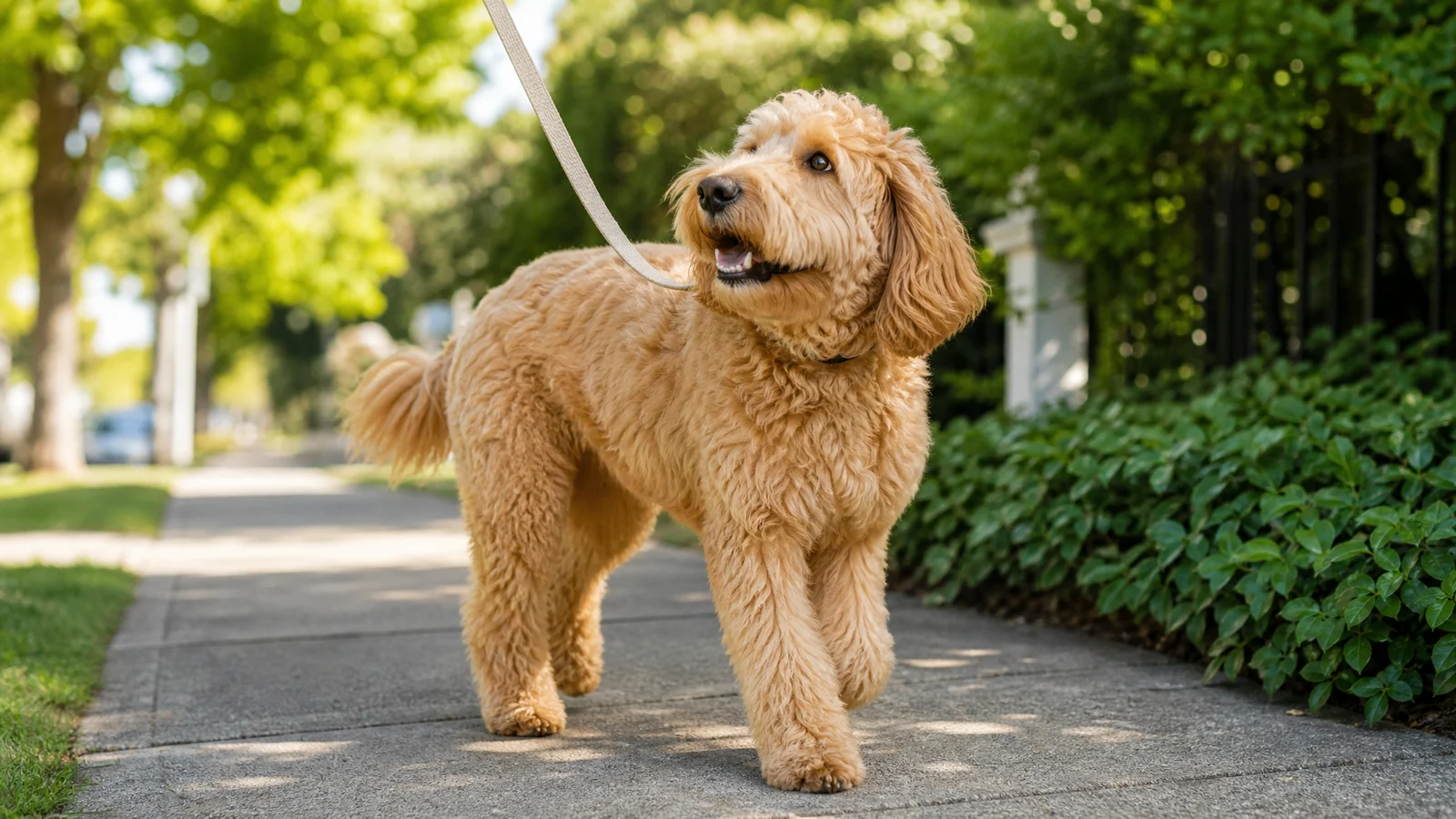
Your Goldendoodle probably enjoys walking beside you, right up until something more interesting turns up across the sidewalk. Heel is how you ask for a few strides of exact company anyway: shoulder level with your leg, leash slack, attention on the walk you are sharing. It is a short, precise job, so a quiet hallway teaches it and the sidewalk only tests it. Keeping to that order, hallway first and street second, is the backbone of the plan.
Heel is not the same as loose-leash walking, where your dog may roam on a slack line. Here you ask for a position on purpose and release it afterward. Below, we start with the spot itself and let the walking come second.
A friendly Goldendoodle may want to greet everyone and everything. That is why the spot beside you has to pay better than the surroundings.
Finding the Goldendoodle Heel Position Beside You
Paying better starts with a spot your dog can find. For heel, that spot is simple to describe: your Goldendoodle's shoulder level with your leg, close enough that the leash hangs in a loose curve and far enough that you can both take a step without tangling.
Choosing a Side You Will Keep
The AKC's heeling lesson lets you pick whichever side you like, with left as the traditional heel side in obedience and rally competitions. We would choose the side you will repeat every time, because one fixed side keeps the lesson about a single place instead of two.
Gear for the First Lessons
You need very little: a leash your dog already wears comfortably, a pouch of treats cut small enough to swallow in one gulp, and a room with few smells. Pick a treat your Goldendoodle would work for even in a distracting place, because the same treats will have to compete with the sidewalk later.
Teaching the Heel Spot Without Taking a Step
With treats ready and the room quiet, the first lesson needs no walking at all. Standing still keeps the whole job on one question, where the shoulder goes, and it gives a bouncy dog far less to get wrong. We build it in this order:
- Stand in a quiet hallway or spare room with your chosen side toward your dog, the leash loose and treats ready at your waist.
- Say your dog's name and pat your leg, then mark with a click or a bright "yes" the instant they step alongside.
- Pay right at your leg with the hand closest to your dog, so the treat arrives in the spot and your dog never learns to cross in front of you for it.
- After a few rounds, stop patting and stay quiet. When your Goldendoodle walks to the spot on their own, mark and pay generously, because that choice is exactly what you are building.
- Take a step away so they can leave the spot, wait for them to return, and pay each return the same way.
Move on when your Goldendoodle swings into the spot smoothly several times in a row. If they stall, make the job easier instead: stand closer or use a better treat.
Adding Steps, Turns and the Word Heel
A spot that holds while you stand still is half of heel; the other half is keeping it when you move. Each new piece below borrows the same mark-and-pay rhythm, and it only arrives after the last one is easy.
One Step, Then a Few
Take a single step forward and mark the moment your dog moves with you into the spot, paying at your leg as before. Then string two steps together, then several, always paying while their shoulder is level with your leg rather than a stride later. Keep the strides short, because accuracy matters more than distance.
Turns That Make Them Find the Spot Again
Turns do some of the teaching for you, because each one nudges your dog out of position and gives them a chance to find the spot again. Start with a wide, lazy curve, mark the moment they are level again, and tighten the turns only once the curves are easy. Try both directions, since each asks something different of your dog.
Adding the Heel Command in Goldendoodle Training
Once your dog finds the spot on their own through steps and turns, say "heel" just as they arrive, then mark and pay. After many repeats the word can come a beat earlier, and your Goldendoodle starts moving into the spot because they recognize it. If they ignore the word, the spot is not solid enough yet, so return to the previous step instead of repeating it louder.
Taking Goldendoodle Heel Out to the Sidewalk
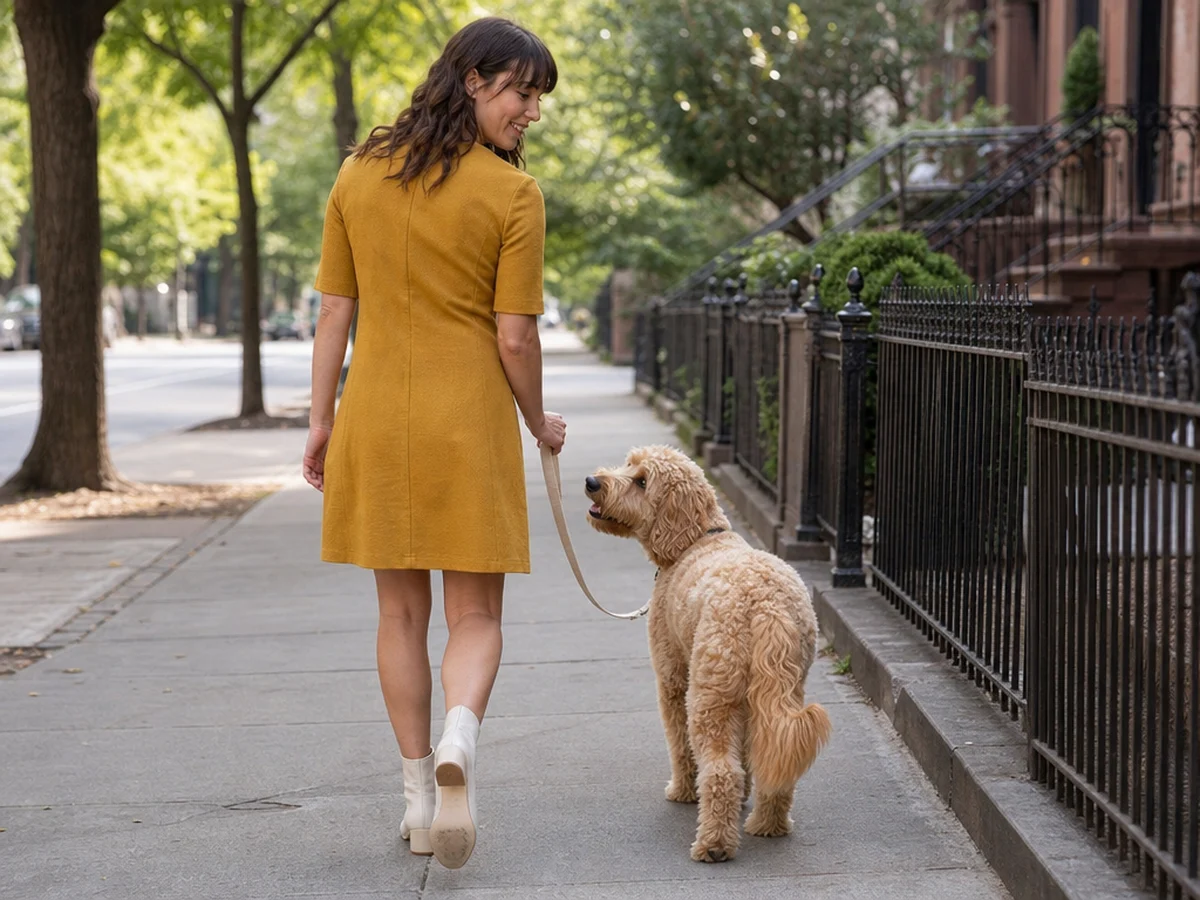
A cue that works in the hallway still has to meet the street, so change one thing at a time: the driveway first, then a quiet block, then somewhere with a few distractions. Ask for heel in short stretches and finish each with a release word such as "okay", so your Goldendoodle learns that the position has an ending and a reward waiting.
Between stretches, go back to ordinary loose-leash walking and let the leash hang slack. When another dog is the distraction, the greeting side of the picture lives in polite play with other dogs, and heel is only the tool for getting past.
Short, upbeat sessions work best, and around 5 to 10 minutes at a time, ended on a positive note, matches the advice in American Humane's walking tips. If a dog who walked beside you happily suddenly refuses to, or moves differently, see your vet before training continues, and keep regular vet visits on the calendar.
On-Leash Details That Trip Up Heel
Once heel meets real walks, a friendly dog's energy tends to land in the space beside you in three familiar ways. Each has a small adjustment that keeps the spot worth choosing.
What if my Goldendoodle bounces beside me?
A bouncy walker is usually a happy one, so keep the mood light and change the pay instead. Mark and pay the strides when all four paws are moving along with you, and shorten the stretch until those strides come easily.
Can my Goldendoodle sniff between heel stretches?
Yes, and it can help. Give sniffing its own cue, such as "go sniff", so the walk has a clear time for exploring. The idea comes from Fear Free Happy Homes, whose walk-or-sniff article calls it a technique that can improve heel, because the chance to sniff around is a great reward for good behavior. Your dog still keeps a loose leash while they explore.
What if my Goldendoodle crowds my legs?
A friendly dog may lean in just to be close, and that can trip you up on a walk. Mark and pay the moments with a little daylight between their shoulder and your leg, and keep the stretches short so the lean does not build.
A Heel That Moves With You
Bounce, sniff time and leaning all come back to one idea: heel is a place, and a place only works if it stays worth reaching. Sit, down and stay ask your Goldendoodle to hold a place while you stand still, and heel asks for the same thing in motion, like a mat you carry along.
Pay the spot the way you would pay a mat at home, generously when your dog finds it and calmly when they drift. A friendly dog who knows where to be beside you has an easier job on a busy street.
The hallway-first approach carries into every other cue your dog will need, and our e-book spells each one out with thorough detail that stays clear enough to read with a leash in one hand. Readers who register on this site receive it at no charge.
 Training basicsHow to Teach a Goldendoodle to Leave It
 Training basicsHow to Teach a Goldendoodle to Focus on You
 Training basicsClicker Training a Goldendoodle
