 Goldendoodle
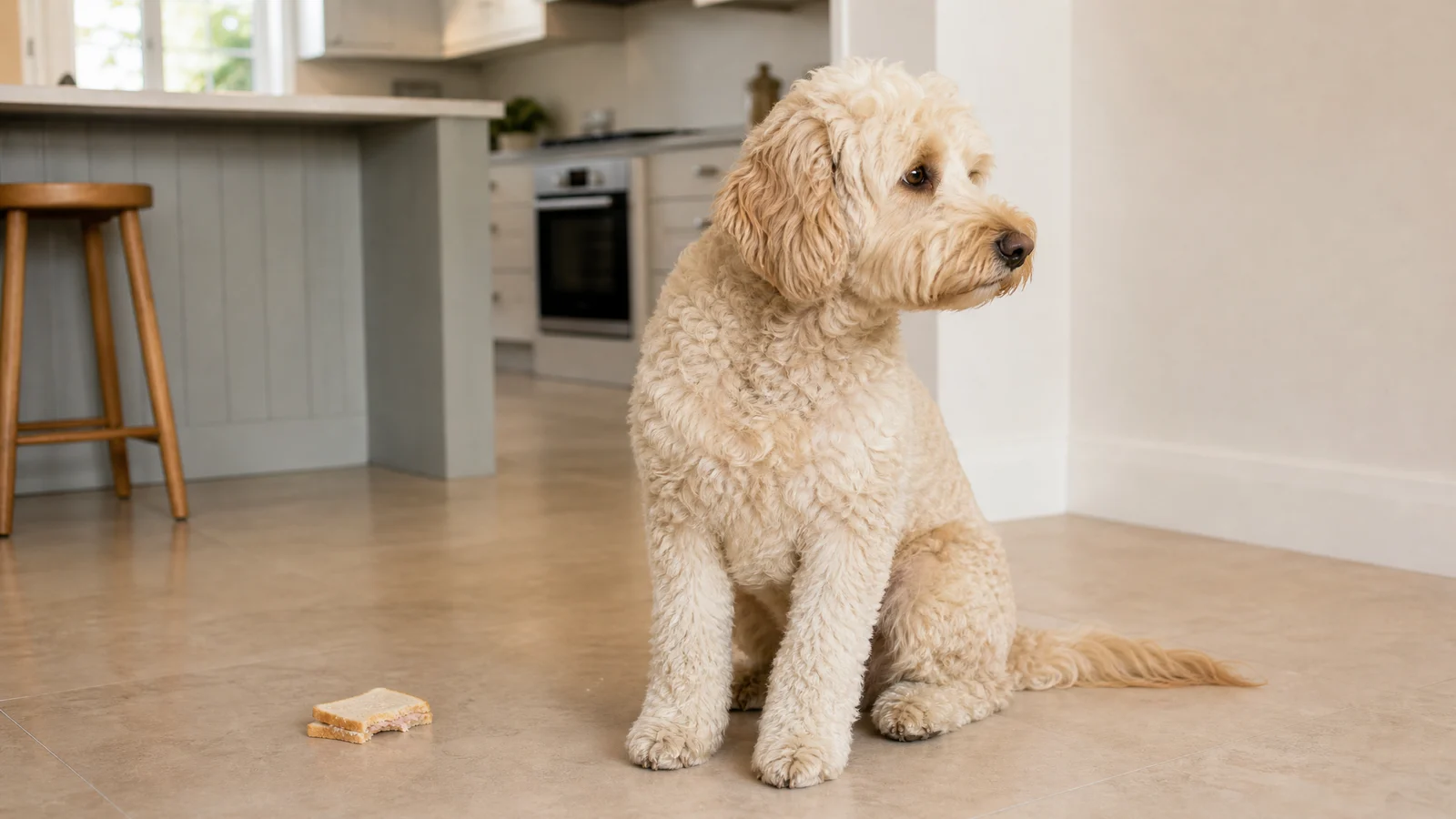
At a cookout, a Goldendoodle meets a crowd of hands holding food. Some of that food is going to hit the grass.
A Goldendoodle may inherit the Poodle side's impulse to retrieve, so a dropped bite can look like an invitation to scoop it up before anyone reacts. The cue that fits that moment is leave it, and it works best when your dog learns it long before the bite falls.
Leave it asks your dog to turn away from something good before the mouth closes, then pays them well for the choice. This page defines the cue, walks through each stage from a covered treat to everyday items on the floor, shows what to do when a stage stalls, and ends with a few details beyond the steps.
Leave It Starts Before the Item Is Taken
That timing is the whole definition. Leave it applies while the item is still on the floor, in a hand or on a plate, and your Goldendoodle has noticed it but has not taken it. What you pay for is the turn toward you, which makes it a choice your dog makes rather than something you do to them.
Safety is the reason to bother. A dog who answers the cue can be the difference between a quick word of praise and a trip to an emergency vet clinic, and the hazards worth leaving alone include toxic foods and chemicals, broken glass, and even another animal. Three situations show where the cue starts and stops:
- An item on the floor, on a low table or in a hand, which your Goldendoodle has spotted but not taken, is exactly what leave it is for.
- An item already in your dog's mouth is a different lesson, and our guide to trade-up games covers it, because this cue cannot undo a grab.
- An item your dog defends by freezing, stiffening or growling needs a qualified reward-based professional, not a cue.
Keeping the cue for untaken items matters, because a leave it that sometimes arrives after a loss is one your dog may learn to distrust. It also pays to start early: VCA's puppy training schedule lists leave it among the commands to begin at three to four months, in preparation for short walks.
Goldendoodle Leave It Training Starts With a Covered Treat
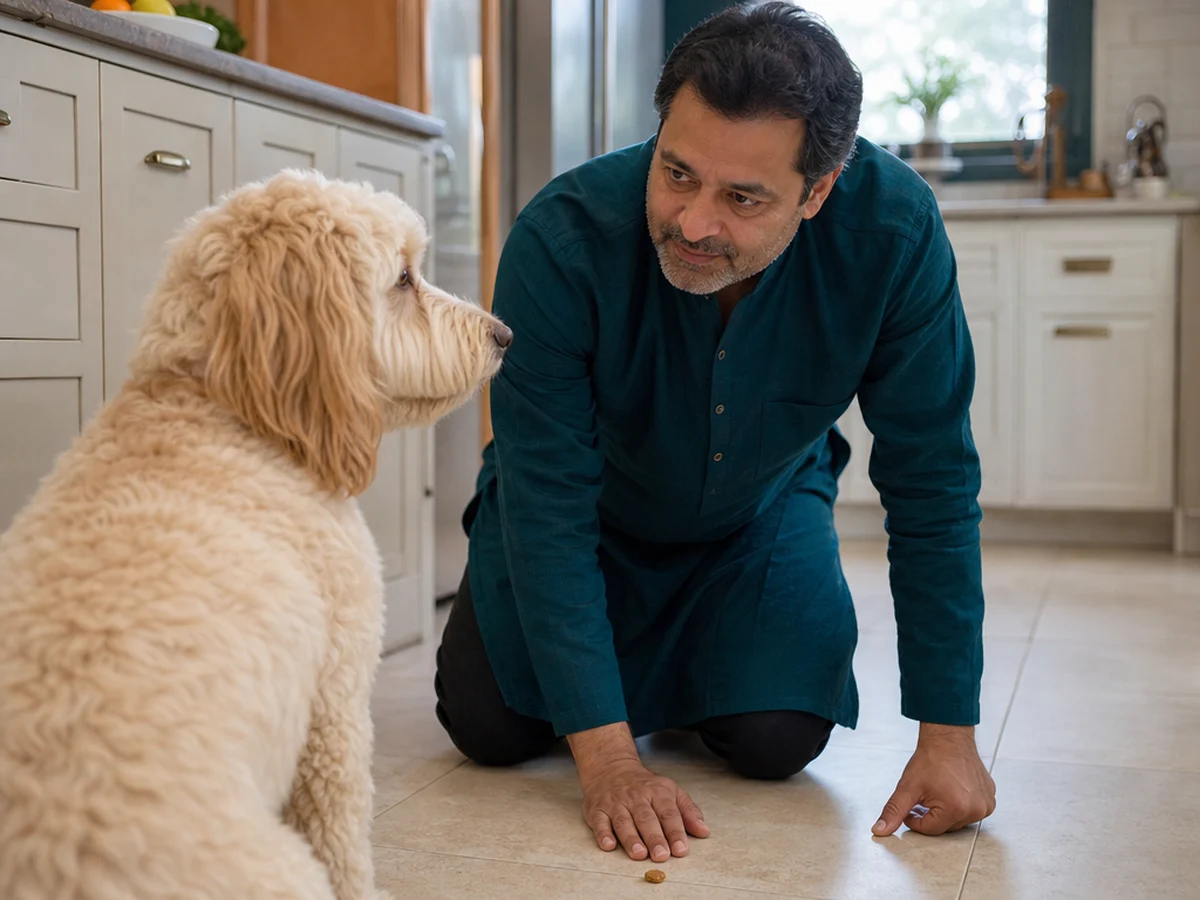
The first stage takes the temptation off the floor and puts it under your hand, where it is easy to control and impossible for your dog to grab. Gather two kinds of treats, a dull one your Goldendoodle likes well enough and a better one they love, and pick a quiet spot with nothing else going on. Then work through the stage in this order:
- Put the dull treat on the floor and cover it with your palm, with the better treat ready in your other hand.
- Let your Goldendoodle sniff and nudge at your hand while you say “leave it” once, in a calm voice, and then wait.
- The instant the sniffing stops and your dog backs off or glances at you, say “yes” or click, and pay with the better treat from your other hand.
- Repeat until your Goldendoodle pulls away from your hand as soon as they hear the cue, several times in a row.
The wait in the second step is the heart of the stage. Your dog discovers that backing away, not pushing in, is what opens the better treat. Never pay from the floor or uncover the dull treat as the reward, because that teaches your Goldendoodle that leave it eventually delivers the item.
Some dogs stall here. A Goldendoodle may paw, mouth or stare at your hand instead of backing off, and the answer is to hold still and wait rather than push the hand away or repeat the cue. We see the pause stretch out when the covered treat is more exciting than the payoff, so swap in a duller treat on the floor or a better one in your hand and try again.
Leave It on a Leash, Then Around the House
A hand cannot cover everything your Goldendoodle will meet, so the second stage moves the treat out of reach and lets a leash do the covering. That keeps the choice with your dog while making a grab impossible. Stage two runs like this:
- Clip on the leash and toss a dull treat just beyond where the leash lets your dog reach.
- Say “leave it” once and wait, letting the leash hold the line without any tugging from you.
- When the pulling and sniffing stop, even for a moment, mark with “yes” or a click and pay with the better treat from your hand.
- Repeat until your dog eases off the leash as soon as they hear the cue.
If your Goldendoodle lunges at the treat instead of settling, toss it a little farther away and keep the leash short. A grab that never succeeds soon stops being worth the effort.
Climbing From Dull Items to Tempting Ones
With the leash stage smooth, run the same exchange with items from around the house, climbing from dull to tempting. Start with things your Goldendoodle barely notices, such as a paper cup or a cardboard tube, move on to a clean sock or a plastic lid, and leave real food and favorite toys for the end. Jumping straight to the exciting items sets your dog up to fail, so drop back a rung whenever the pause stretches out.
Items on a counter or table are a management and mat question, which our guide to counter surfing and mat training covers. Anything your Goldendoodle does manage to swallow is a call to the vet, and regular vet check-ups are the place to mention a habit of mouthing things.
A Goldendoodle Leave It Command That Holds Up Outside
A leave it that works in the kitchen only counts for the kitchen, so the next job is changing where and how you practice. Change one thing at a time: a new room, then the porch, then the yard, and only then a quiet sidewalk. Each new place resets the difficulty, so open each new place with the easiest version, the covered hand, and work back up.
Rotate what you pay with, too. A Goldendoodle may inherit the Golden Retriever's playful approach to life, so on some turns a squeaky toy and a quick game can pay as well as a treat, and the lesson stays a game rather than a chore. Keep sessions short and stop for a break as soon as your dog's attention drifts.
Leave it should sound the same from everyone in the house. Say the word in a calm voice, try not to repeat it while your dog thinks, and keep verbal cues short and uncomplicated, with every family member using the same ones, since a dog may get confused otherwise.
Details Behind Leave It Practice
These details sit just outside the stages. Each one changes what you do in your next session.
Does leave it spoil fetch for my Goldendoodle?
No, as long as the two games stay separate. Leave it covers items your dog should not take, while a toy that is meant for retrieving gets its own cue and a clear start, so the retrieving streak a Goldendoodle may inherit still has somewhere to go. Our guide to Goldendoodle fetch games covers the play side.
Do I keep paying for leave it?
While the cue is new, every right answer earns a treat. Later, let some answers earn a game or a pat and let treats arrive less predictably, but never pull the pay away overnight, because a cue that stops paying tends to fade.
Why does a sock beat my treat?
To your dog, the sock may simply be worth more than what you are offering. Drop back to a duller item on the ladder, or upgrade the pay until it clearly wins, and keep socks out of reach until leave it holds on easier items.
A Goldendoodle Who Notices Everything
None of this asks your Goldendoodle to stop noticing things. The crumb, the dropped glove and the open lunch bag will all keep getting spotted, because an alert dog sees plenty, and leave it adds only one move after the notice. Your dog's eyes and nose stay as busy as ever; what you have changed is what happens next.
Turning away from a crumb is a first chapter in everything a Goldendoodle needs to learn, and our e-book follows the whole path with explanations that assume nothing. It reaches your inbox once you join the reader list on this site.
 Training basicsHow to Teach a Goldendoodle to Focus on You
 Training basicsClicker Training a Goldendoodle
 BehaviorHow to Fix Goldendoodle Separation Anxiety
