 Goldendoodle
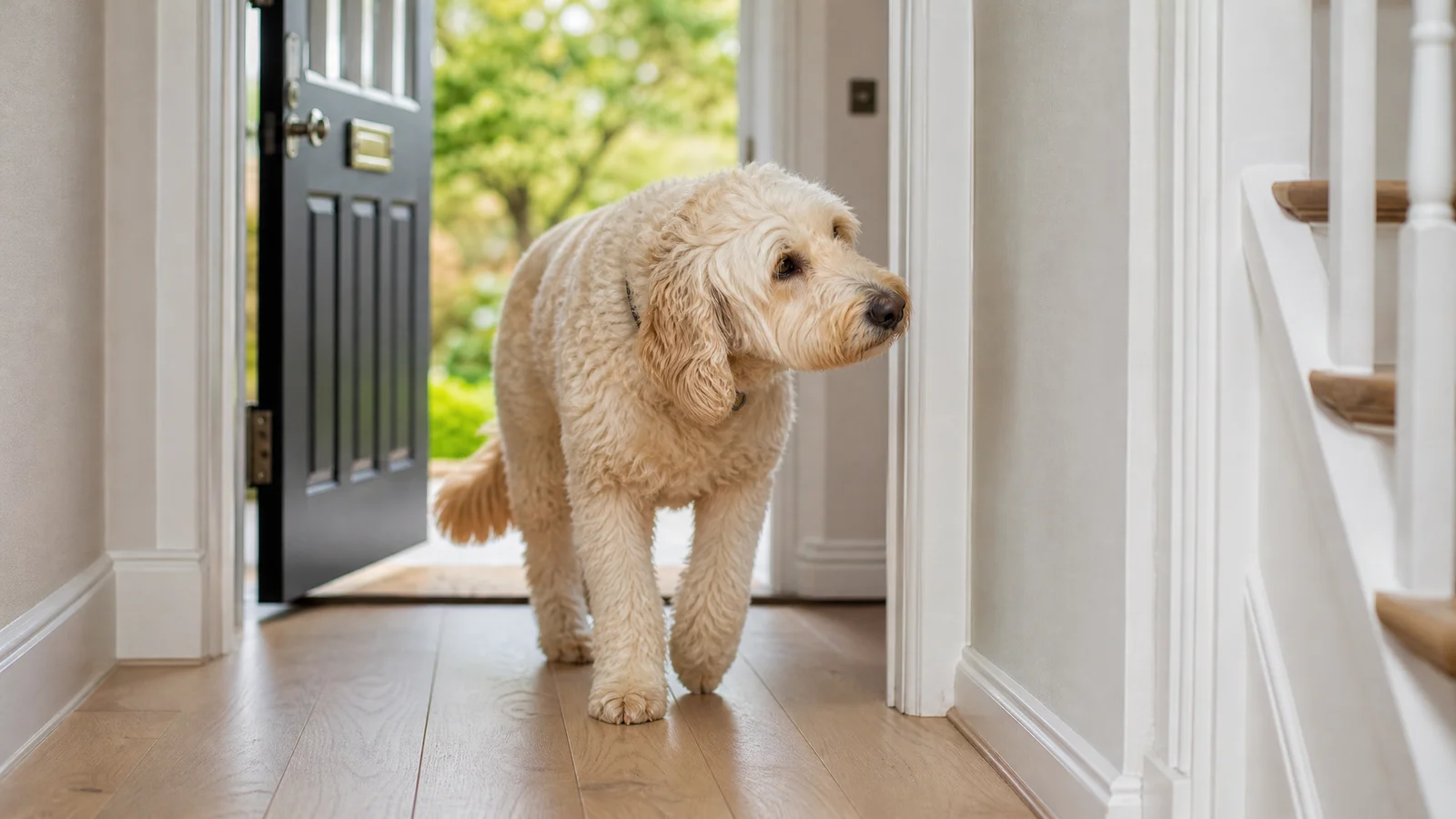
An adopted Goldendoodle may greet you like an old friend within the hour, and that warmth is worth protecting even while you sort out everything else. It does not tell you how much of your home they have worked out yet.
An older or adopted dog arrives with years of learning you never saw: cues that worked in one house, habits that made sense in another, and a few gaps nobody filled in.
So the work is less about teaching from scratch than about finding what is already there and making the rest easy to learn. Read on for where to begin, what to test first and what can wait.
Your Guide to Adopting a Goldendoodle Who Is Already Grown
That friendly first hello is real, and it hides a catch: a sociable dog can look settled long before they are. How long the settling takes is open-ended, because adjusting to a new home can take days, months or longer, especially for a dog who has lived in several homes or shelters. So do not hold this dog to a deadline of your own.
Goldendoodles have no breed standard of their own, so we read the Golden Retriever and Poodle sides as hints rather than promises. Both parent breeds are known for loving people and for taking to training, and the Golden Retriever side tends to stay playful well into adulthood, which is why an older Goldendoodle may still act like a goofy youngster. A cross may or may not inherit any of it, and the dog in front of you has the final say.
A Quiet Start for an Adopted Goldendoodle
Adoption also comes in a few shapes, and the shape picks your first step. A dog who has just moved in needs a settling plan before any lesson. A long-time family dog who never learned certain manners needs a relearning plan, and a senior dog starting over in a new household needs both, paced to a body that may tire sooner.
Whichever shape you have, the first days go better when the house stays small and uneventful. A Goldendoodle may greet every visitor like a long-lost friend, which makes it tempting to show off the new arrival, but a dog still learning your floors, doors and schedule has plenty to process without a crowd. These few anchors give a new dog something steady to read:
- Offer one resting spot, such as a bed, a crate or a quiet corner, and let the dog use it undisturbed.
- Keep meals, walks and bedtime close to the same hours each day so the routine becomes predictable.
- Stick to quiet, familiar routes for outings, and save busy parks and crowded stores for later.
- Invite visitors one at a time, and ask them to let the dog approach before anyone reaches for a pat.
Together they let the dog learn the house by repetition instead of by surprise. Book a veterinary check early on, and keep regular veterinary visits going as the years add up. Assume house-training is unfinished until the dog proves otherwise, with frequent trips outside and a treat the moment they finish there, using the steps in our potty training guide. If the resting spot turns into a worried one, our crate and alone-time guide helps you rebuild it.
Reading an Adopted Goldendoodle's Unknown Past
After the first week or two the dog starts showing you things the paperwork never mentioned: a startle at the doorbell, a refusal to eat with you in the room, a flawless sit in the kitchen that disappears outdoors. Each one is a clue about a house you will never see, and each is easy to over-read. Two kinds of clue come up most.
A New Owner's Guide to Flinches and Fears
It is common to assume that a dog who cowers or shies from hands must have been abused. Fear Free notes that this is not necessarily the case, and that it is more likely the dog had little to no socialization. That changes your job: you are not undoing a story, you are introducing a world the dog may never have met.
So let the dog set the distance. Stay low and quiet nearby, pay with a treat for any sign of relaxing, even from across the room, and let every approach be the dog's own idea.
Greetings Practiced in Another House
A habit survives because it paid off somewhere. An older Goldendoodle who leaps at visitors or mouths hands in greeting may simply have been rewarded for it in the old home, with attention, laughter or a pat, and a people-loving cross has plenty of reason to keep trying. Treat the habit as a skill the dog already has and give it a better outlet: ask for four paws on the floor or a sit, pay for it, and let the visitor's attention be the second reward.
Finding Out What Your Older Goldendoodle Already Knows
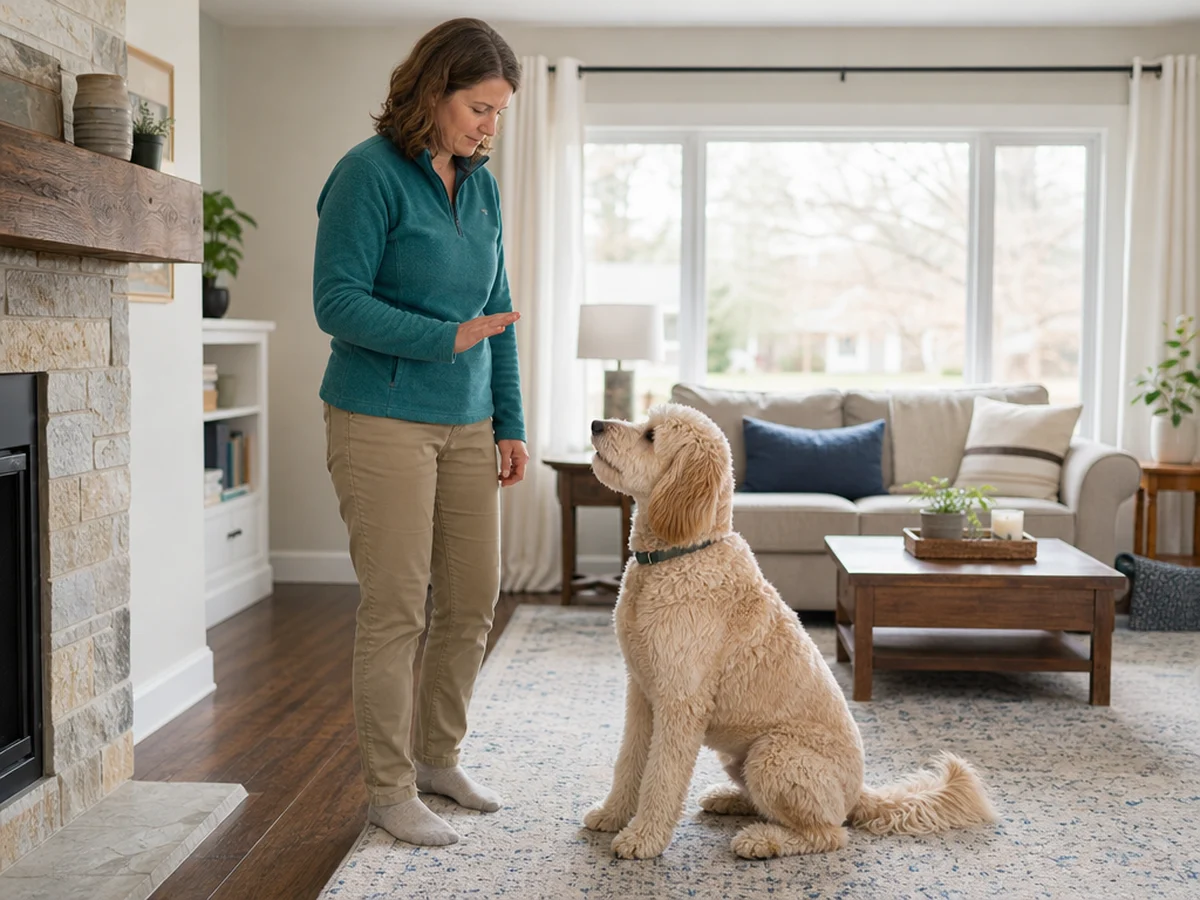
Once the flinches are sorted from the habits, the next question is practical: which lessons are already in place? Guessing either way costs you, because assuming too much leaves holes and assuming too little wastes a dog's head start. A short test in your quietest room settles it without any drama.
- Ask once, in a calm voice and with a treat ready, for a cue you think the dog knows, such as sit, and wait a few seconds without repeating yourself.
- If they respond, say a bright yes and pay at once. If they do not, lure the movement with the treat, pay the moment they get it and treat the cue as brand new.
- Change one thing at a time, first the room, then the person asking, then the outdoors, and notice where the cue stops working.
That last step is the useful one. A dog who sits in the kitchen and not at the door has not forgotten anything; the cue simply has not traveled yet, and now you know where to practice. Pay generously at the start, then thin the rewards slowly, because cutting them too fast can make the behavior fade.
When Age Is Part of the Picture
Age adds a second question, and it concerns the body. Because behavior changes can be the first signs of aging, a dog who suddenly ignores a cue might be dealing with discomfort or pain, worsening sight or hearing, certain diseases or normal aging, and older pets might not respond as well to voice commands. Pair your word with a simple hand signal, and tell your veterinarian exactly what you have noticed.
If the basics turn out to be missing altogether, the order of skills in our puppy training timeline still works as a map for a grown dog, just at a grown dog's pace. Our leash training guide picks up the walking basics.
Questions Adopters Ask After the First Few Weeks
A steady routine brings decisions of its own. These three tend to stall adopters, and each has a short answer that fits a grown dog.
Should my dog greet every stranger?
Not at first. A people-loving cross may rush toward anyone, but a new dog is still working out who and what is safe, so ask strangers to wait while the dog chooses whether to approach, and keep early hellos brief. Once the dog is settled, you can let the friendliest greetings back in, one person at a time.
What if they hide or skip meals at first?
That can happen in the first days of a big change, and it usually means the dog is overwhelmed rather than rude. Leave food in a regular spot, give space and skip the coaxing. If appetite or energy has not recovered after a few days, or the dog seems unwell, call your veterinarian.
Should grooming wait for a new dog?
Not entirely, but start small. Both parent breeds need regular coat care, the Poodle side more than the Golden Retriever side, so a grown Goldendoodle's coat may need attention soon after arrival. Handle one area for a few seconds, pay, and build up, using the steps in our grooming and handling guide. If the coat is already tangled or the skin looks sore, ask your veterinarian or a professional groomer for help.
Paying for the Calm That Is Already There
By the time the routine holds, your Goldendoodle will have offered quiet moments you never asked for: a settle on the rug while you cook, a glance up when the door opens, a pause before bounding over to a visitor. These are the cheapest lessons in the house, because the dog has already done the work. Notice them and pay with a small treat while the dog is still doing it, and the habit starts to belong to them.
However old your Goldendoodle was on adoption day, the list of things worth teaching is a long one, and our free Goldendoodle e-book meets each need on it thoroughly, yet it is simple enough to read between chores.
 Training basicsHow to Teach a Goldendoodle to Come When Called
 Puppy trainingGoldendoodle Puppy: What to Expect and How to Start Training
 Puppy trainingGoldendoodle Puppy at 3 to 4 Months: Teething and Mouthing
