 Goldendoodle
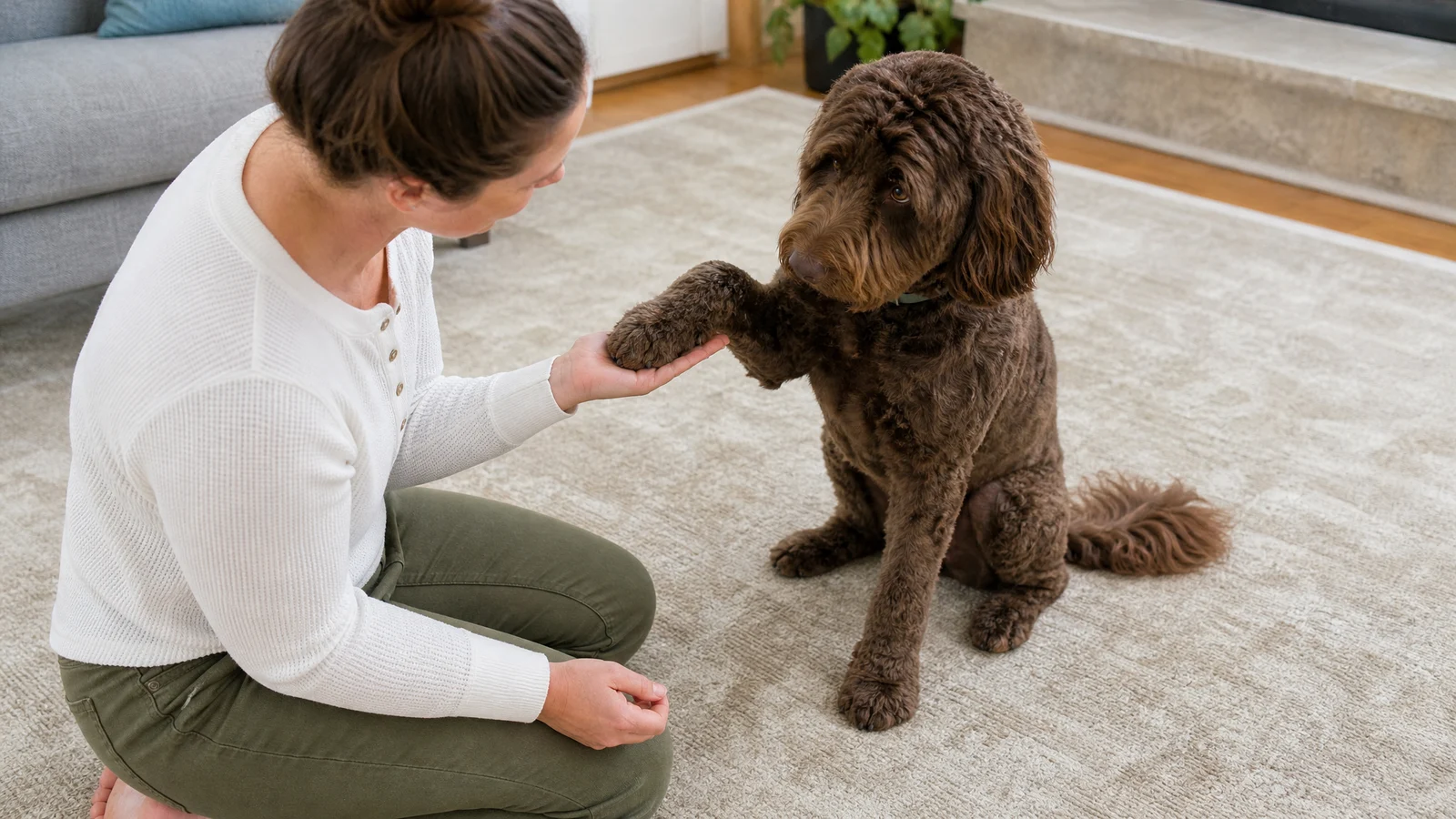
Hold an open hand out to your Goldendoodle and the first reply is usually a sniff or a lick, not a paw. That is a fine place to begin, because shake is built from the moment a paw finally lands in your palm, and every later stage only asks your dog to do a little more of what already earned a treat.
Both parent breeds are described as eager to please, so many Goldendoodles take to this quickly, though an eager dog can also race through a lesson faster than your timing. This page follows the trick in the order you will meet it, from the first paw to a high five, with a fix for each place where dogs tend to stall.
Teach a Goldendoodle to Shake Starting With a Paw
The first paw touch is the entire job of stage one, so set the lesson up to be easy to win. Choose a quiet room with the television off, because a distraction-free space is the place to begin a new trick, and you will probably want to move outdoors only once your Goldendoodle has mastered it. Fill a pocket with small treats your dog loves, and pick one marker word, such as “yes”, to say the instant a paw lands.
Stage one teaches a single thing: a paw that touches your hand earns a treat. Work through it in this order, and keep every repetition short and light.
- Sit or stand facing your Goldendoodle, with an open hand held low and palm up and the treats in your other hand.
- Ignore sniffs and licks. They are early guesses, and paying for them would teach your dog to keep guessing instead of trying a paw.
- The moment a paw touches your palm, say your marker word and hand over a treat with the other hand.
- Offer the open hand again right away, and repeat until a paw arrives quickly every time the hand appears, so the paw becomes the first thing your dog tries.
That sequence follows the paw-offer method in the American Kennel Club’s tricks guide, where licking and sniffing go unrewarded and the marked paw is repeated until it comes reliably. Move on only when a paw reaches your hand within a moment of it appearing, because the later stages stretch that touch and a hesitant start would stretch with it.
When No Paw Appears
If your Goldendoodle only sniffs, shrink the target instead of waiting. Pay first for any paw that leaves the floor, then for a higher lift, then for a touch to your palm, a progression known as shaping that rewards something close to the finished trick before asking for a little more.
A weight shift can start that first lift for you. With your dog sitting, slide a treat from just above their nose slowly toward one side until they lean onto the nearer front leg and the other paw comes up, then mark the lift and meet it with your flat hand. Either way, you are paying for progress toward a paw rather than waiting for the whole trick to appear.
Turning the Paw Touch Into a Shake on Cue
A touch that arrives the moment your hand appears is ready to grow into a handshake, which needs the paw to stay put for a beat. The next three stages each change one thing, so change only one at a time and step back whenever your Goldendoodle falters.
Stage Two Adds a Pause
Wait a beat before you mark. Let the paw rest on your palm for a second or two, then mark and pay, and lengthen the wait slowly as your Goldendoodle gets the idea. A paw that lifts away before you can mark has told you the wait grew too fast, so shorten it and pay for a quick, light contact again.
Stage Three Adds the Word
Once your dog places the paw and waits every time, say “shake” just as your hand appears. A word attached to a habit your dog already has is learned quickly, whereas a word offered too early only teaches them to ignore you. Then turn your palm sideways as if for a handshake and add a small up-and-down bob while the paw rests, so the picture begins to look like the finished trick.
Stage Four Hides the Treat
If your Goldendoodle watches your pocket instead of your open hand, keep the treat hand behind your back and reach for the treat only after the paw lands. The open hand should be the only thing that asks, and the treat should always arrive afterward, so the paw is what your dog is working on. If both paws climb onto your arm, hold your hand lower, wait for all four paws to be on the floor and pay only for a single paw.
A Goldendoodle High Five Trick Built on the Shake
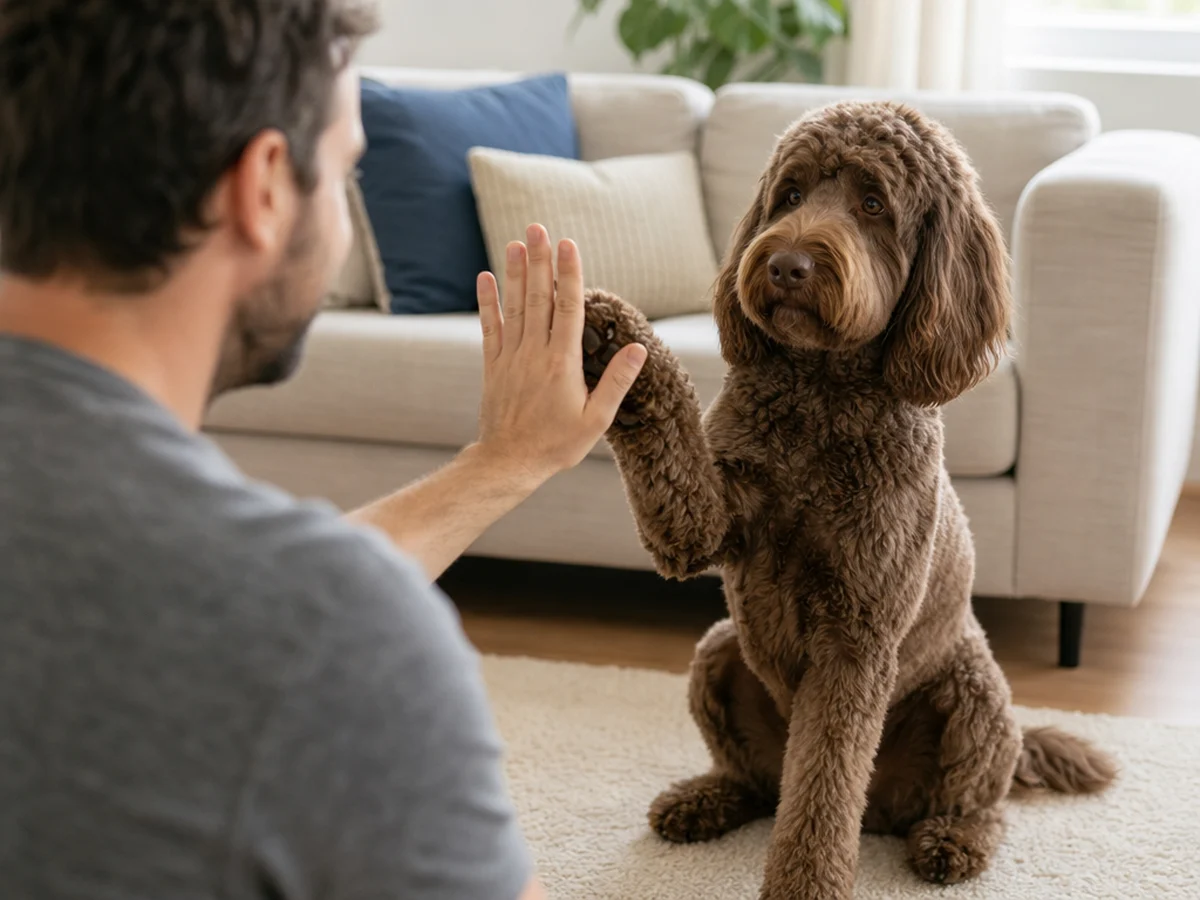
A dependable shake already holds most of a high five, because your dog knows where your hand is and only its angle has to change. Tilt the palm in small steps, in this order, and give each tilt its own run of easy successes.
- Offer your hand for a normal shake and, as the paw rises, tilt your palm slightly more upright than usual. Mark and pay for the touch.
- Repeat at that tilt until it is as dependable as the sideways hand, because a new angle only sticks once the old one is secure. Then tilt a little further.
- Keep going until your palm is fully upright, held at a height your Goldendoodle can reach without leaving the floor.
- When the upright palm gets a touch every time, say “high five” as you present it, and keep “shake” for the sideways hand.
Two words and two hand pictures let your Goldendoodle tell the tricks apart, so a high five never muddies a shake and either one can be asked for alone. If the paw swings past the palm, hold the palm closer and still. If your dog drops back to a plain shake, return to the last tilt they handled well and pay there for a few easy rounds before trying again.
Keeping a Shake Dependable in New Places
A shake that works in the living room has only passed the easiest test. We like to change one thing at a time from here: another room, then the yard, then a family member’s hand instead of yours. Each change is new to your Goldendoodle, so expect a missed paw or two and go back to quick, easy repetitions in the new spot rather than deciding the trick has been forgotten.
As the paw becomes dependable, pay for it less often, so treats arrive most of the time, then sometimes, and praise carries more of the work. Thin the pay gradually, since an abrupt switch from every success to none can leave a keen dog puzzled.
If a Goldendoodle who once offered a paw easily seems reluctant to lift one, mention it at their next regular vet visit instead of coaxing the trick, and when the paw is solid, our Goldendoodle puppy tricks guide has more to try.
Mouthy Hands and Other Paw Questions
Two snags can quietly undo a shake that otherwise looks solid, and both come down to what your Goldendoodle is being paid for. The answers are short.
What if my Goldendoodle mouths my hand?
Treat a mouth on your hand like a sniff or a lick, with no marker and no treat. Hold your hand slightly lower so a paw is the easier way to reach it, and mark the first paw that touches. A young Goldendoodle who mouths hands constantly may also need the lessons in our Goldendoodle puppy mouthing guide before hand games feel comfortable.
Can a toy replace treats for shake?
Yes, anything your Goldendoodle truly wants can pay for a paw, including a favorite toy, a short game or petting. Food is quickest to deliver, though, and quick matters, because a reward that takes a long time to appear blurs the link between the paw and the payment. If you use a toy, keep it close to your other hand so the pay still comes within moments.
When Affection Gets Into a Goldendoodle Shake
That question of what gets paid never quite goes away with an affectionate dog. Both parent breeds are described as affectionate and people-oriented, so a Goldendoodle may keep adding extras to a handshake for a long time, such as a lick on your wrist, a wiggle or a leaning hug.
Those extras may simply be affection rather than confusion, so there is no need to fight them. What matters is that you decide which part of the trick earns the pay. Reward the paw landing on your palm and let the wiggles pass without comment, and the paw stays the part your dog works for while the rest remains personality.
Teaching a paw is one lesson on a long list, so we put the whole list into a Goldendoodle e-book that covers every training need in thorough but readable detail, and after you sign up we email it to you at no charge.
 Exercise and jobsHow to Teach a Goldendoodle to Spin
 Exercise and jobsHow to Teach a Goldendoodle to Roll Over
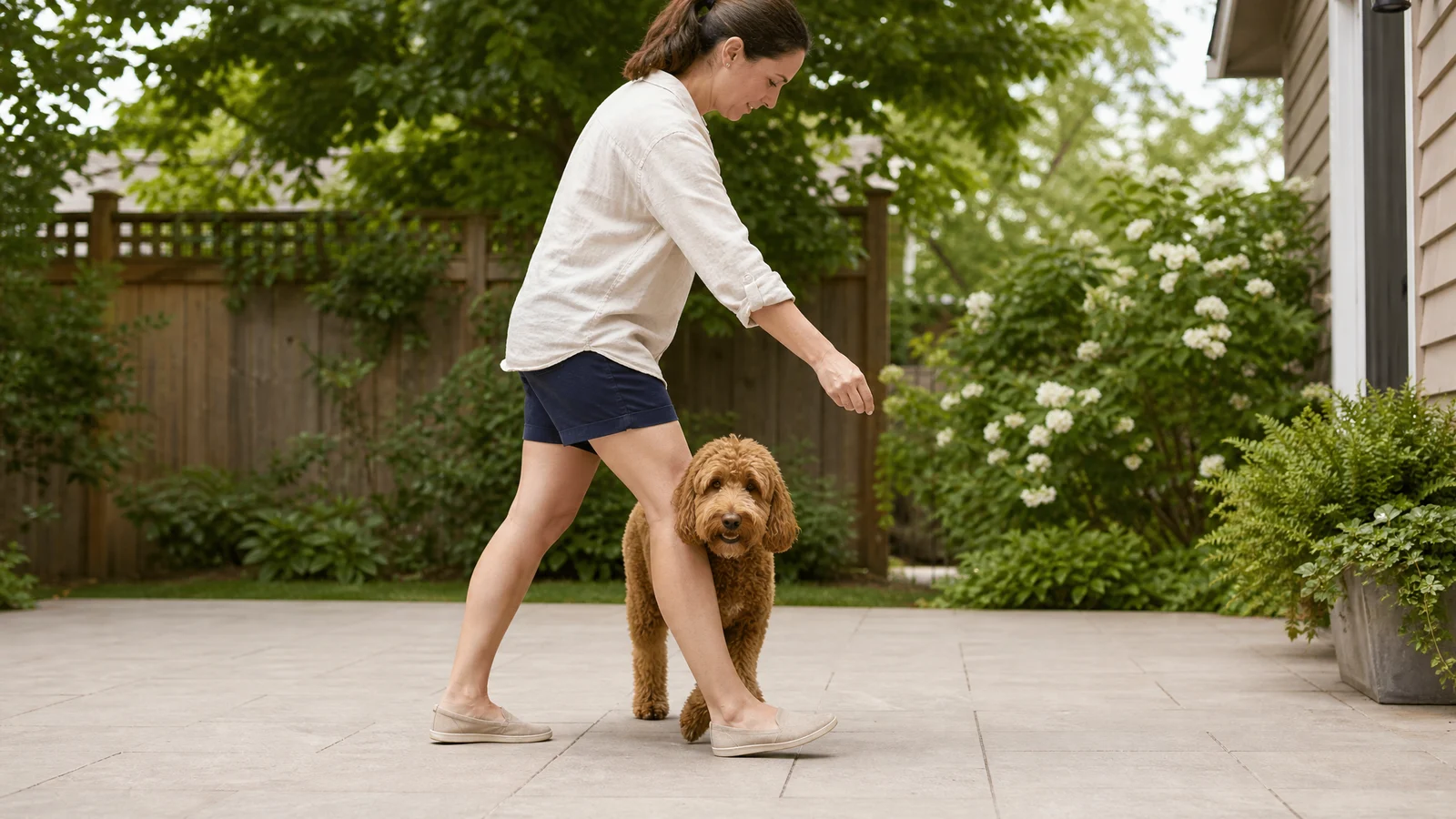 Exercise and jobsHow to Teach a Goldendoodle to Weave Through Your Legs
